This site is supported by our readers. We may earn a commission, at no cost to you, if you purchase through links.
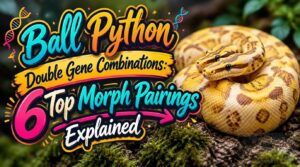
Two genes. One snake. Suddenly a plain ball python becomes a banana-yellow, speckled showstopper that stops you mid-scroll.
That’s the magic behind ball python double gene combinations. Each gene sits at its own locus and adds its own effect, so a Pastel brightens the color while an Enchi sharpens the pattern. Pair them right and you get something neither parent could deliver alone.
Pair them wrong and you get surprises you didn’t plan for. Recessive genes hide, Punnett Squares multiply, and welfare matters more than price. Here are six combos that show you how it all works.
Table Of Contents
Key Takeaways
- Each gene in a double-gene ball python sits at its own locus and adds its own effect, so you can predict a combo’s look by working out each gene separately, then multiplying the odds.
- Dominant and co-dominant genes show up with a single copy, which makes combos like Pastel Enchi and Pastel Banana easy to produce, while recessive genes like Albino, Clown, and Pied stay hidden until you’ve got two copies.
- Accurate records, proven parents, and genetic testing are what make your pairings predictable, because a het or a mislabeled animal can quietly derail an entire season.
- Welfare comes before market price, so you should screen parents for health problems, avoid inbreeding, skip risky genes like Spider, and breed only females around 500 grams and males around 400 grams.
What Makes a Ball Python Double-Gene?
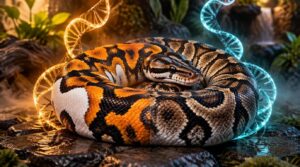
Genetics decides everything here, and a double-gene ball python simply carries two separate morph genes in one animal. Think of it as two instruction sets running at once. Each gene sits at its own locus, and each one adds its own effect to the look.
Because dominant and recessive genes combine so predictably, a guide to ball python morphs with unique patterns can help you work out what a double-gene pairing will actually look like.
Here’s the catch. Dominant and co-dominant genes show up with a single copy. Recessive genes need two copies before you see them. So double recessive morphs demand both genes in homozygous form, and a het animal just carries the code quietly.
Why does it matter? You can’t build morph combinations on guesses. Genotype accuracy starts with pairing records and proven parents. Nail that, and your breeding strategies get sharper. Skip it, and morph stability suffers.
Popular Visual Double-Gene Ball Python Combos
Ready to see what two genes can do when they team up? Below, you’ll meet three visual double-gene combos that show off dominance and co-dominance at work. Each one teaches you something new about reading a snake’s genetics at a glance.
Pastel Enchi
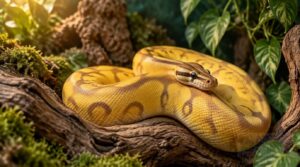
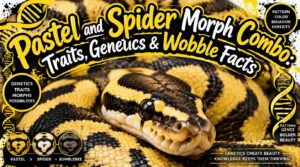
Pairing a pastel with an enchi gets you a visual morph that’s brighter, cleaner, and busier than either parent. Pastel Enchi is one of the easiest morph combinations to master. Why? Both genes show in single copy.
Genotype accuracy matters here. Track every pairing, and your breeding strategies will deliver predictable clutches. Ready to build yours? Start with documented parents.
Once your lineage records are solid, studying carpet python pattern variations will help you anticipate how inherited traits may show up in each hatchling.
Pastel Banana
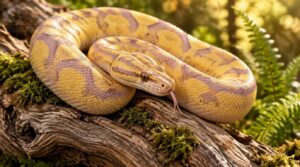
Love Pastel Enchi? Then Pastel Banana is your next win. Both are co-dominant traits, so the Banana morph and the Pastel morph show in single copy. Expect a yellow base with soft speckling.
A heterozygous het offspring looks like a dimmer single-gene animal, so track every genotype. Want bolder color? Match it with enchi. Your clutches will reward the effort.
Super Pastel Enchi
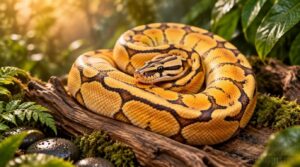
Ready to push color further? Super Pastel Enchi is where you’ll land. Because Pastel and Enchi are codominant morphs, two copies of each intensify everything: a brighter body, a sharper head stamp, bolder lateral lines.
Plan your breeding strategies early. With compatible carrier parents, about 25% of hatchlings may show the full look. Track every heterozygous het across morph combinations.
Double-Gene Combos With Recessive Morphs
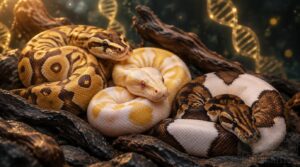
Recessive genes are where ball python breeding gets sneaky, because the trait stays hidden until both copies show up. Ready to see how a recessive morph changes your pairing math? Here are three combos you’ll want to know: Pastel Clown, Albino Pied, and Clown Pied.
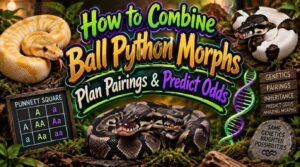
Once you’ve mapped out your target phenotype, this guide to combining ball python morphs shows how to build pairings that avoid risky combinations and still hit your goals.
Pastel Clown
Want a morph combination that turns heads and teaches you something? Meet the Pastel Clown. It pairs a co-dominant pastel with a recessive clown, so you need two clown copies for the facial pattern to show. Pastel brightens the color. Clown trims the black barring. Your reward is serious head-pattern drama.
Track your breeding outcomes carefully, and you’ll master it.
Albino Pied
An Albino Pied is where two recessive genes finally meet. Think of it as a locked double door. You need two keys, one per parent.
With dominant recessive traits in play, carriers look normal. Sketch Punnett Squares for each gene, then multiply. Genotype phenotype correlation tells you what’s visual and what’s silent. Master that, and these visual morphs turn predictable.
Keeping a dry erase Punnett square board nearby lets you sketch each pairing, wipe it clean, and test the next breeding combination.
Clown Pied
Picture clean white patches framed by crisp, high-contrast clown markings. That’s a Clown Piebald, a Pied morph with attitude.
Since Pied and clown are each a recessive morph, you need two copies of both genes to see the full visual phenotype. Pair two genetic carriers of both genes and you’ll get your first shot at it. Plan smart, breed smarter.
How Double-Gene Inheritance Affects Offspring
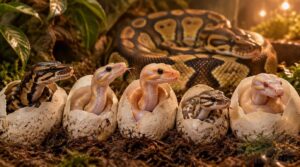
Say you pair a Pastel Enchi male with a Pastel Banana female. What hatches? Not just two kinds of babies.
Double-Gene Inheritance works one locus at a time, and your Punnett Squares show it. Each gene splits on its own, so genetic probability multiplies across loci. Your phenotype can hide the real genotype, too. A solid ball python morph guide can help you decode which visual traits are dominant, co-dominant, or recessive before you plan your pairings.
Here’s what to expect:
- Each clutch mixes normals, singles, and doubles.
- Every locus follows its own 25 percent or 50 percent odds.
- Recessive traits stay hidden until both copies show up.
- Juveniles can shift color as they mature.
Track every pairing and label every hatchling, and you’ll predict outcomes with real confidence every time. Mastery starts with clean records. So what will your next clutch reveal?
Choosing Double-Gene Combos With Welfare First
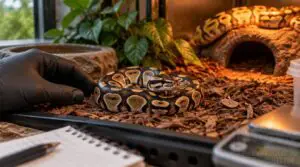
Would you trade a healthy snake for a flashy one? Don’t. Ethical breeding starts with animal welfare, not market price. Smart breeding strategies protect your animals first and your profits second.
Ethical breeding puts animal welfare before market price, protecting your snakes first and your profits second
Before you pair anything, run this check:
- Screen both parents for genetic health risks, including wobble, kinking, and feeding trouble.
- Practice inbreeding avoidance by tracking every lineage back several generations.
- Set minimum standards for temperament, growth, and feeding success.
- Test each generation for growth, feeding, and stress before you stack more genes.
Skip any pairing that raises stress or neonate mortality. Your best pairing is the one that produces calm, thriving hatchlings. Master that, and the colors take care of themselves. That’s real mastery, and it’s yours to claim.
Frequently Asked Questions (FAQs)
What is a holy grail ball python?
A holy grail ball python is the morph you dream about owning. It’s a rare, line-bred combo, like a piebald woma or hypo pastel spider, with serious market value.
Want one? Chase proven, healthy lineage.
What’s the rarest ball python morph?
A breeder once sold a unique designer combo for $40, Why? Genetic rarity assessment drives morph value estimation.
The rarest ball python morph is whichever proven combo few breeders can reproduce. Master selective breeding strategies.
What ball python genes are recessive?
Your recessive genes include Albino, Clown, Ghost, and Pied. You need homozygous recessive pairs to see them, while heterozygous expression stays hidden. Map genetic inheritance patterns with Punnett Squares, and you’ll predict every single clutch.
What ball python morphs to avoid?
Skip the Spider morph. It carries Spider wobble syndrome, a neurological flaw you can’t breed out.
Check genetic compatibility before pairing incomplete dominant traits, because lethal super forms can appear. Why gamble with their welfare?
How can you verify a double-gene ball pythons genetics?
One mislabeled pastel enchi can wreck a whole season’s pairings. Don’t gamble.
Run genetic testing for genotype verification, then check pedigree records against trait inheritance. Solid morph prediction starts with real, tested proof, not hype.
How old should a double-gene ball python be for breeding?
Weight beats birthdays. Your breeding age target is 500 grams, roughly two years, for females and 400 grams for males.
Ready? Confirm genetic compatibility in your double het morph pairing, then map all offspring outcomes.
Conclusion
Picture a Pastel Enchi hatchling, glowing yellow with crisp, broken patterning, sitting next to a clutch of normal siblings. Same parents. Different gene luck. That’s the whole game.
Once you understand ball python double gene combinations, you stop guessing and start planning. Map each locus, check Punnett Squares, and respect recessive surprises. Choose pairings that keep welfare first, because healthy snakes outlast trends. Your next clutch isn’t a lottery ticket. It’s a design you earned.