This site is supported by our readers. We may earn a commission, at no cost to you, if you purchase through links.
The genetic blueprint of a ball python can produce over 4,000 documented morphs, each carrying a pattern signature no breeding program can replicate on demand. Some collectors spend years chasing a single animal with the right piebald spread or a pinstripe line that runs clean from neck to tail.
Understanding ball python morphs with unique patterns goes well beyond aesthetics. Recessive genes, dominant alleles, and multi-gene combinations drive pattern expression in ways that affect both an animal’s health and its market value. Knowing how to read those patterns separates an informed buyer from an expensive mistake.
Table Of Contents
- Key Takeaways
- How Ball Python Morphs Create Unique Patterns
- Piebald, Clown, and Pinstripe Morphs
- Spider, Banana, Pastel, and Axanthic Morphs
- Mojave, Enchi, and Designer Pattern Morphs
- Choosing a Healthy Patterned Ball Python
- Frequently Asked Questions (FAQs)
- What’s the rarest ball python morph?
- What are some of the weirdest morphs found in ball pythons?
- What are the prettiest ball python morphs?
- What is a holy grail ball python?
- How do patterns change as ball pythons age?
- What lighting conditions enhance unique morph patterns?
- Can diet affect ball python color intensity?
- How do seasonal changes impact morph coloration?
- What substrates best showcase patterned ball pythons?
- Do male and female morphs differ in patterning?
- Conclusion
Key Takeaways
- Every ball python morph pattern traces to specific genetic mechanisms—recessive genes like Piebald and Clown need two copies to express, while dominant traits like Pastel and Pinstripe show with just one, making inheritance predictable and calculable.
- The Spider morph’s striking web pattern is inseparable from wobble syndrome, a permanent neurological condition caused by neural crest development errors that every Spider carries and no selective breeding can eliminate.
- Pattern appearance isn’t fixed at hatching—markings shift over the first 18–24 months, and enclosure factors like UVB lighting, humidity, substrate contrast, and temperature all shape what you actually see day to day.
- Before buying, verify lineage through pedigree records or DNA testing and watch for breeder red flags, since gene-stacked designer morphs ($800–$3,000+) can carry hidden health risks and unpredictable patterns without documented parental genotypes.
How Ball Python Morphs Create Unique Patterns
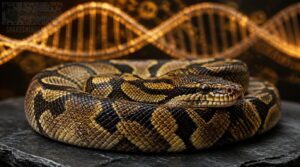
Ball python morphs aren’t random accidents of color. Every pattern you see traces back to specific genetic mechanisms that control pigment production, distribution, and how cells migrate during development. Here’s what shapes those patterns from the ground up.
Understanding these mechanisms gets a lot clearer when you dig into ball python morph genetics and inheritance patterns, which breaks down exactly how recessive, dominant, and co-dominant traits interact.
Wild Type Versus Morph Markings
Wild-type ball pythons show irregular dorsal patterning with pebble-like ground color and consistent lateral markings shaped by natural genetic diversity. Morphs break that baseline entirely. A single allele can restructure how color expresses across the entire body, producing repeatable, inheritable patterns you won’t find in any wild population. That fundamental predictability is what separates morph-induced pattern shifts from natural variation.
Recessive Pattern Genes
That predictability sharpens considerably with recessive genes. The Recessive Piebald gene needs two copies to express; one copy produces a carrier with no visible change.
Breed two heterozygous carriers and you get a 25% chance of a homozygous piebald per clutch.
Pigment suppression at the recessive locus drives those signature white patches, making pattern inheritance both calculable and selective.
Dominant and Incomplete-Dominant Traits
Unlike recessive genes, dominant alleles express with one copy. Pastel brightens contrast across the entire pattern from a single allele. Incomplete-dominant traits produce intermediate phenotypes in heterozygotes, a key distinction in Mendelian inheritance.
Four morphs showing this:
- Pastel shifts yellow saturation visibly
- Mojave softens alien-head side markings
- Spider webs the dorsal pattern
- Enchi compresses lateral banding noticeably
Pattern Changes With Age
The morphs above don’t lock in their final look at hatching. Pattern changes with age happen across most gene combinations, especially in the first 18-24 months. Pattern blushing can soften alien-head markings on Mojaves, while color fading mutes Pastel’s yellows before restabilizing.
Marking intensity and scale patterning plateau by age two, so don’t judge a juvenile’s adult potential too early.
Environmental Effects on Color
Even after genetics set the blueprint, your enclosure directly shapes what you actually see day to day.
Five environmental factors influence perceived color: Tracking all five with a reliable ball python temp and humidity monitor takes the guesswork out of dialing in your enclosure conditions.
- UVB lighting effects boost pigment saturation and visibility
- Substrate contrast sharpens or mutes pattern brightness
- Humidity control affects scale sheen and clarity
- Photoperiod regulation can trigger gradual color fading
- Temperature gradients shift melanin distribution in banded morphs
Piebald, Clown, and Pinstripe Morphs
Among pattern morphs, Piebald, Clown, and Pinstripe stand out for their striking visual signatures that serious keepers recognize instantly. Each one carries a distinct genetic story behind the pattern it produces. Here’s what sets them apart.
Color morphs like banana ball python genetics and phenotypes add another layer to this story, where a single gene copy visibly shifts expression and two copies push it into the strikingly pale super banana form.
Piebald’s High-White Patches
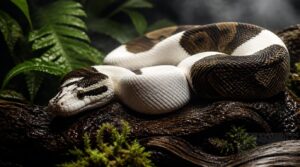
The piebald is pattern chaos frozen in scale. Two copies of the recessive Piebald gene produce stark, unpigmented sections across the torso and head. High-white patches expand from ventral origins, and no two animals match exactly.
Push toward leucistic territory through careful allele pairing, and white coverage climbs dramatically. Incubation temperature and humidity both shape the final result.
Clown’s Teardrops and Reduced Pattern
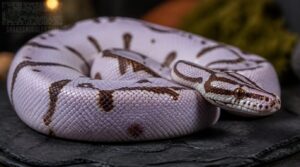
Because the clown morph is a recessive trait, you need two alleles to show its signature teardrops and reduced pattern expression. No two animals express identically.
- Teardrop alignment near the eye area
- Fragmented, reduced dorsal banding
- Cleaner lateral sides than most visual morphs
- Stronger head stamps with allele pairing
- High contrast between base and remaining pattern
Pinstripe’s Long Dorsal Lines
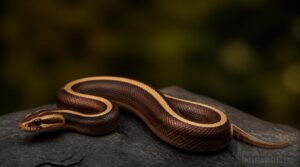
Few pattern traits read as cleanly as the pinstripe’s unbroken dorsal stripe running the full spine. That continuity comes from dominant alleles active during embryogenesis, not surface pigment luck. Modifier genes extend or compress line spacing.
Clarity fades slightly with age, and recombination in offspring often breaks the stripe into shorter segments. Document lineage before breeding for consistent pattern expression.
Albino Piebald Combinations
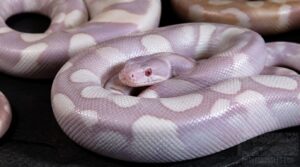
Combining albino and piebald means both recessives must be present in double-dose. The result is large, irregular white patches over a pale base, often paired with pinkish or blood-red eyes that boost the contrast dramatically.
Genetic testing is non-negotiable here. Visual confirmation alone won’t verify whether clutchmates carry both alleles, and modifier genes can shift patch size unpredictably across siblings from the same clutch.
Key Identification Differences
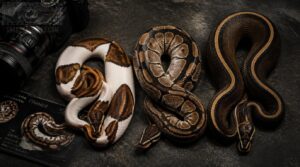
You’re staring at three entirely different genetic blueprints. Lock in the key identification differences through pattern expression:
- White patch placement and scale coverage signal piebald
- Teardrop saddle shapes with reduced contrast mark clown
- Dorsal stripe intensity running the full body confirms pinstripe
- Keyhole marking disruption reveals phenotypic variation from stacking
Always photograph each clutchmate before committing to any morph call.
Spider, Banana, Pastel, and Axanthic Morphs
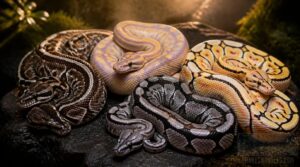
These four morphs sit at the center of most beginner and intermediate collections, each with a personality as distinct as its pattern.
Whether you’re drawn to Spider’s chaotic web lines, the soft lavender of Banana, Pastel’s punchy contrast, or Axanthic’s stripped-down grayscale, knowing what sets them apart helps you buy smarter and breed better.
Here’s what you need to know about each one.
Spider’s Web-Like Markings
The Spider morph delivers one of the most visually striking web-like pattern expressions in ball pythons. Fine, irregular lines fragment the standard alienhead pattern into scattered webbing along the dorsal.
Dorsal stripe intensity varies considerably between individuals, with some showing near-continuous lines and others displaying loose, disconnected patches. That genetic variability is part of what makes Spiders so visually compelling.
Spider Wobble Health Concerns
That visual appeal comes with a real cost. The Spider morph carries wobble syndrome, a neurological condition caused by vestibular malformation in the inner ear. Every spider morph has it. Severity ranges from mild head tremors to debilitating corkscrewing, and stress worsens symptoms. It can’t be bred out.
Every Spider morph carries wobble syndrome—a permanent neurological condition no amount of selective breeding can eliminate
Breeder ethics demand full transparency about this genetic disorder risk before purchase.
The condition stems from neural crest development errors during embryonic growth, which disrupt both pigment distribution and neuron placement.
Banana’s Speckles and Lavender Tones
The Banana morph offers a striking alternative without neurological baggage. Its dark speckle patterning intensifies as the snake matures, breaking up the base color unpredictably across the dorsum.
That base carries cool lavender tones driven by reduced eumelanin alongside residual pheomelanin. Speck density varies by individual lineage, not strictly age alone. Pairing with Lavender Albino genetics deepens pattern expression considerably.
Pastel’s Brighter Pattern Contrast
Where Banana reduces eumelanin, Pastel brightens the red-to-yellow pigment range, lifting background hue so lateral blotches appear sharper by contrast. That lighter ground forces your eye to read darker pattern elements as more defined.
Homozygous super pastel animals push this further, delivering near-white backgrounds with dramatically intensified contrast. Incubation temperature and post-hatch feeding both influence how cleanly that pattern expression develops.
Keeping eggs at a stable 88–90°F throughout incubation—easy with a quality ball python egg incubator—gives super pastels the best shot at expressing that crisp, high-contrast patterning cleanly from the start.
Axanthic’s Monochrome Markings
The axanthic morph makes color genetics tangible: reduced pheomelanin production does all the work.
- No yellow or orange anywhere on the body
- Gray-scale banding replaces all warm background tones
- Recessive inheritance patterns require two alleles to express
- Black-brown markings hold sharp contrast through adulthood
- Pattern expression stays monochrome across all morph lines
You won’t confuse it with anything else.
Mojave, Enchi, and Designer Pattern Morphs
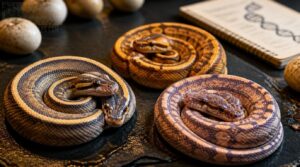
For mid-tier and designer morphs, Mojave and Enchi sit at the crossroads of accessibility and visual impact. These morphs form the backbone of many multi-gene breeding projects, making them essential to understand before stacking combinations. Here’s what sets each apart at the pattern level.
Mojave’s Keyhole Side Markings
The Mojave morph centers on keyhole side markings, paired teardrop shapes running along the lateral mid-body. Two Mojave alleles drive the full recessive inheritance pattern, which locks in those distinctive lateral patches.
| Feature | Detail |
|---|---|
| Gene type | Recessive |
| Location | Lateral mid-body |
| Development | Sharpens with age |
Genetic variations continue sharpening the keyhole markings after each molt, making this pattern morph instantly recognizable.
Enchi’s Reduced Banded Pattern
The Enchi morph’s signature is understated. This co-dominant pattern morph narrows dorsal bands and softens their edges, producing broken banding with diffuse lateral definition. Look for splotchy band segments with intermediary luminance between the dark ground and pale banding. Phenotype variation is real: homozygous traits intensify the reduction, while genetic variations from stacked morphs can soften or complicate it further.
Blue-Eyed Leucistic Combinations
The Blue Eyed Leucistic is a multi-gene result, not a single morph. Stack Mojave, Lesser, Butter, Russo, or Highway genes correctly and you get a fully white snake with bright blue eyes that persist into adulthood. Pattern identity vanishes completely.
Verify parentage through genetic testing or documentation because visual confirmation alone won’t reveal which specific genes produced the white phenotype.
Multi-Gene Designer Patterns
Stacking genes produces patterns no single morph can create on its own. Multigene combinations depend on allele dosage and gene interaction to reshape markings entirely.
- Mojave-Enchi stacking reduces banding, sharpening midline dorsal striping
- Axanthic pairings strip yellow pigment, clarifying overall pattern contrast
- Piebald combos intensify high-white patch borders dramatically
Always carefully document parental genotypes before breeding any designer morph combination.
Rare Morph Pattern Stability
Rare morphs carrying stacked genetic variations don’t always breed true to visual expectations. Hatch rate stability drops when multigene combinations involve epistatic interactions between pattern alleles, causing unexpected markings that surprise even experienced breeders.
Lineage documentation becomes non-negotiable here. Without confirmed parental genotypes, pattern shifts across clutches are unpredictable. Always verify breeder records before purchasing any high-complexity designer animal.
A dedicated reptile breeder record keeping logbook makes tracking parental genotypes, clutch outcomes, and morph lineage across generations far more reliable than scattered notes.
Choosing a Healthy Patterned Ball Python
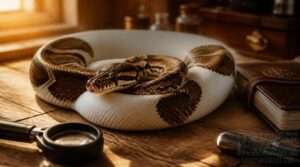
Picking the right ball python means looking past a striking pattern and asking sharper questions. A morph’s visual appeal tells you nothing about its lineage, genetic health risks, or the breeder behind it. These five checkpoints will sharpen your eye before you commit to a purchase.
Pattern Identification Checklist
A reliable checklist starts at the head and works toward the tail. Check for dorsal stripe continuity, then note any pattern fragments along the flanks.
Document scale pattern symmetry and identify color variation between the dorsal and lateral fields.
Pattern classification becomes easier when you photograph each body segment under consistent, neutral lighting before drawing any conclusions about morph identity.
Lineage and Genetic Testing
Once your visual checklist confirms a morph candidate, lineage verification picks up right where photography stops. Request pedigree records from established breeder lineage, tracing sire and dam back at least two full generations.
Genetic testing via DNA haplotyping confirms specific allele expression where visual ID falls short. A complete genetic chart greatly reduces costly misidentification when purchasing high-value designer morphs.
Gene-Stacking Health Risks
Lineage records don’t always reveal what’s lurking genetically. Codominant traits like Spider carry neurological risks when combined; the Spider wobble worsens noticeably in certain multi-gene pairings.
Super forms of some codominant morphs can produce lethal homozygous outcomes. Before purchasing a heavily gene-stacked designer morph, confirm that the breeder tested for known genetic disorder risks in the specific combination.
Ethical Breeder Red Flags
When gene-stacking risks are very real, so are bad actors in the hobby. Before committing to a purchase, check for:
- Refusal to provide health records or lineage documents
- Inconsistent or missing genetic test results across pairings
- History of selling stressed or malnourished animals
- No transparency about selective breeding decisions
Your breeder ethics standards protect both your investment and the animals.
Pricing, Rarity, and Reputation
Since market saturation softens prices on well-established morphs, rarity and reputation become your clearest pricing signals.
| Morph | Typical Price Range |
|---|---|
| Pastel | $50–$150 |
| Piebald | $200–$600 |
| Designer Morphs | $800–$3,000+ |
| Ultra-Rare Combos | $5,000+ |
Breeder reputation isn’t just community goodwill. It translates directly into price premiums you can justify. Sellers with documented lineage, verified genetic testing, and published health records consistently outperform anonymous listings. When you’re choosing between two animals at similar prices, reputation is the deciding factor.
Frequently Asked Questions (FAQs)
What’s the rarest ball python morph?
What’s the rarest ball python morph? Collectors would trade kingdoms for one. The Blue Eyed Leucistic tops most lists, but Panda Pied, Scaleless, and Woma combinations rival it. True Genetic Fluke morphs are nearly impossible.
What are some of the weirdest morphs found in ball pythons?
Some of the weirdest morphs include scaleless animals, chimeric patterns, and spider morphs tied to wobble syndrome. Designer morphs stacking multiple genetic mutations can produce outcomes even the most experienced breeders don’t ever fully predict.
What are the prettiest ball python morphs?
Beauty in ball python morphs is subjective, but the Blue-Eyed Leucistic stuns most keepers. Pastel morphs glow golden; Piebalds show striking white patches; Banana and Enchi designer morphs deliver lavender-speckled elegance.
What is a holy grail ball python?
In ball python collecting, a holy grail morph is the dream animal you chase for years—often a blue-eyed leucistic or high-white piebald. These designer morphs combine multiple genetic variations, making morph pricing steep and lineage verification essential.
How do patterns change as ball pythons age?
Pattern drift in ball pythons is real. Melanin deepens with age, while some lavenders and blues fade—melanocyte migration shapes how juvenile markings mature. Expect subtle shifts, not dramatic ones.
What lighting conditions enhance unique morph patterns?
What lighting conditions improve unique morph patterns? Full-spectrum bulbs at 6000K–7000K support natural photoperiods and true color separation—lighting optimizes what DNA already coded, never forcing pattern inheritance or mutations.
Can diet affect ball python color intensity?
Diet won’t rewrite genetics, but nutrition shapes color intensity. Carotenoids and vitamin A support pigment production and chromatophore activity, keeping Pastels vivid and Axanthics crisp. Feed varied, balanced prey—dull scales often signal deficiency.
How do seasonal changes impact morph coloration?
Yes, your morph’s colors genuinely shift seasonally. Cooler temperatures slow chromatophore activity and pigment production, often muting pattern contrast. Shorter daylength reduces melanocyte migration, while seasonal fasting dilutes color intensity—especially in Pastels and Axanthics.
What substrates best showcase patterned ball pythons?
Coincidentally, the same coconut husk that holds humidity also frames your snake’s pattern. Dark, matte substrates make light morphs pop—Pinstripe lines and Yellowbelly blushing stay crisp—while fine-grain hides pattern fragments. Choose naturalistic, Choose naturalistic, non-reflective materials for designer morphs.
Do male and female morphs differ in patterning?
Do male and female morphs differ in patterning? No. A Pinstripe morph or Yellowbelly series animal shows identical dorsal stripe and pattern fragments regardless of sex—genetics, not chromosomes, drives design.
Conclusion
Every great collection begins with a single animal that stops you mid-scroll.
Ball python morphs with unique patterns reward the keepers who study genetics before they spend, and that patience pays off in healthier animals and smarter purchases.
Learn the genes. Verify the lineage. Walk away from questionable breeders without hesitation.
The pattern you chase today becomes tomorrow’s breeding project, so choose one worth keeping for decades.