This site is supported by our readers. We may earn a commission, at no cost to you, if you purchase through links.

A snake can go weeks without food and nobody notices, but skip cleaning the tank for a few days and the consequences show up fast: ammonia from waste builds up, humidity swings, and your snake starts breathing through an open mouth.
Knowing how to maintain a snake’s tank is what separates a thriving animal from a sick one. Most problems, respiratory infections, scale rot, dysecdysis, trace back to something that slipped in the enclosure before the keeper caught it.
This guide walks you through every step, from initial setup to deep cleaning, so your snake’s environment stays stable and safe.
Table Of Contents
- Key Takeaways
- Set Up a Snake Tank That’s Easy to Maintain
- Check Temperature, Humidity, and Equipment Daily
- Spot-Clean Waste and Refresh Water Daily
- When Should You Replace Substrate and Deep-Clean?
- Deep-Clean Your Snake Tank Step by Step
- Frequently Asked Questions (FAQs)
- What should you put in a snake tank?
- Do any snakes like to be held?
- What 7 scents do snakes hate?
- How often should a snake enclosure be cleaned?
- What do you put in the bottom of a snake tank?
- What not to put in a snake enclosure?
- What is needed for a snake tank?
- How often do you clean a snake tank?
- How to take care of a snake for beginners?
- How often should I mist my snake tank?
- Conclusion
Key Takeaways
- Your enclosure setup determines how hard every future maintenance task will be, so choosing the right substrate, hides, and heating from day one makes daily upkeep faster and your snake healthier long-term.
- Daily checks on temperature, humidity, waste removal, and water freshness are non-negotiable, since ammonia and bacterial buildup develop faster than most keepers expect.
- Respiratory symptoms like open-mouth breathing or wheezing signal ammonia toxicity from decaying waste, and they demand immediate action rather than waiting for your next scheduled clean.
- Deep cleaning follows a strict sequence—remove the snake, discard substrate, scrub, disinfect, rinse completely, dry fully, reassemble, then verify conditions before returning your snake—and skipping any step creates problems the next one can’t fix.
Set Up a Snake Tank That’s Easy to Maintain

From within your vivarium setup, every maintenance decision starts with what you build from the beginning. Add secure locking latches to the enclosure so your snake can’t push out. For substrate, reptile carpet or paper towels cut your sanitation protocol down to minutes. Always avoid cedar or pine shavings; the aromatic oils irritate respiratory tissue.
For a deeper look at which materials pass the safety test and which don’t, safe snake cage substrate options and replacement schedules break down the choices worth trusting.
Your temperature gradient matters as much as the enclosure itself. Warm side: 82–88°F. Cool side: 72–78°F. Place a hide on each end so your snake can regulate temperature on its own terms. Keep the water bowl well away from direct heat sources to maintain stable humidity levels and prevent rapid evaporation. Set this up right once, and every daily task becomes faster and more controlled.
Check Temperature, Humidity, and Equipment Daily
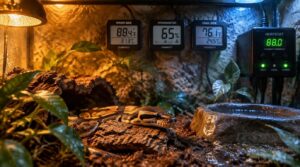
Once the enclosure is built correctly, daily checks keep it stable and controlled. Each morning, use a digital hygrometer and two thermometers to verify your temperature gradient is holding. Position sensors at the height your snake actually occupies, not just near the floor.
Temperature monitoring tells you whether your warm zone holds 82-88°F and your cool side stays at 72-78°F. Check humidity levels too, since your heating elements can drop relative moisture even with water present. An under tank heat mat paired with a thermostat gives you precise, consistent warmth that’s easier to monitor and adjust.
Run through these four checks every morning:
- Warm zone temperature at basking height
- Cool zone temperature at resting height
- Humidity levels via your digital hygrometer
- Thermostat indicator lights and controller status
Log daily readings so gradual drift in heaters or sensors doesn’t go unnoticed.
Tracking those readings over time is especially worthwhile because, as this guide on reptile temperature monitoring and why it matters explains, even small unnoticed shifts can affect your reptile’s health and behavior.
Spot-Clean Waste and Refresh Water Daily
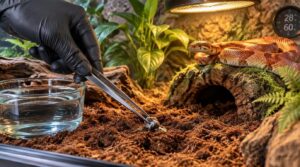
Daily checks don’t stop at temperature and humidity. Once you’ve logged your morning readings, your next step is to spot clean waste before it has time to break down.
Remove waste, including feces and shed skin, as soon as you find it. Ammonia accumulates quickly in humid setups and can affect your snake’s respiratory health if it’s left unchecked. Daily spot cleaning keeps bacterial load low between full substrate changes.
Refresh your water bowls every single day. Snakes soak and often defecate in their water, so clear-looking water can still carry bacteria. Wipe each bowl with reptile-safe soap or a diluted vinegar solution, rinse thoroughly, and refill with dechlorinated water. This level of enclosure hygiene stops biofilm before it forms.
For a deeper look at keeping your setup stable and spill-free, snake water bowl tipping prevention tips can help you avoid the damp substrate that speeds up bacterial growth.
When Should You Replace Substrate and Deep-Clean?
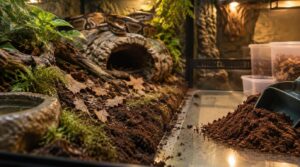
Spot-cleaning keeps the surface manageable, but it doesn’t fully reset the microbial load building inside the substrate. For most tropical species, replace substrate every 6 to 12 months, and watch for signs that push that timeline forward.
If a persistent foul odor lingers after daily spot-cleaning, schedule a full substrate replacement within one to two weeks. The same applies if your water turns turbid within 24 to 72 hours of a change, or if you spot visible mold or substrate that stays wet for more than a day.
Respiratory signs like wheezing often point to elevated ammonia from decaying substrate. When you see those signs, act immediately, not at the next scheduled interval.
Wheezing means act now—ammonia from decaying substrate waits for no schedule
Plan your deep-clean around every substrate change.
Deep-Clean Your Snake Tank Step by Step
A thorough deep clean follows a specific sequence, and skipping steps creates problems you’ll have to fix later. Each phase of the process builds on the one before it, so working through them in order keeps the job efficient and safe for your snake. Here’s what each step looks like in practice.
Move Your Snake Safely

Before you scrub anything, remove the snake first. Your handling techniques here are simple: scoop under the midbody with both hands, lift smoothly, and keep the head pointed away from you.
Safe handling during cleaning keeps both you and the animal calm. Place it into a temporary holding container with a locked lid for escape prevention, and let it settle.
Remove Substrate and Wash Surfaces
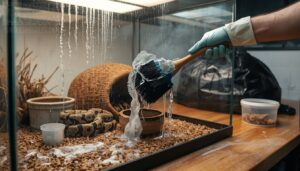
On a clean, disposable surface, secure your snake in a safe temporary container. Bag and discard the old substrate right away, then remove hides, bowls, and decor.
Wash tank walls with warm water and a dedicated reptile scrub brush. Focus on corners and seams, since that’s where waste collects. Wash hides and bowls the same way before setting them aside.
Disinfect, Rinse, and Dry
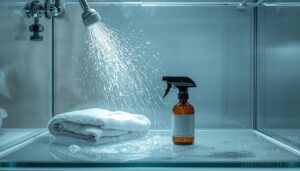
Think of chemical residue clinging to glass like an invisible film. Disinfect the tank with safe cleaning agents, letting the product dwell to kill bacteria, fungi, and protozoa on every surface.
Your proper rinsing technique matters here. Flush until runoff is clear since chemical residue rinsing can’t be rushed. Finish by drying enclosure completely with airflow or a clean towel.
Reassemble and Check Conditions
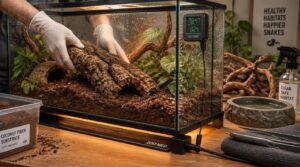
A misplaced heat mat after cleaning causes more burns than a faulty one ever will.
Before you reassemble the tank, run a quick tank inspection for wear: check cords, clips, and seals. Secure and stabilize every element, then restore your substrate and decor. Don’t skip the postcleaning safety check: confirm temperature and humidity hit targets before you return your snake.
Frequently Asked Questions (FAQs)
What should you put in a snake tank?
A corn snake kept on cedar shavings can develop serious respiratory issues within a few weeks. Start with reptile-safe substrate, two hides at the warm and cool ends, a water dish, and a heating element.
Do any snakes like to be held?
Some snakes genuinely do tolerate handling well. Captive-bred boas and pythons tend to build that tolerance the fastest. Watch your snake’s body language: relaxed movement and willingness to explore are the clearest signs it’s comfortable.
What 7 scents do snakes hate?
Like a chemical tripwire, your snake’s vomeronasal organs detect threats instantly. The seven scents they hate most: cinnamon oil, peppermint oil, citrus, clove, garlic, capsaicin, and naphthalene. Always keep these well away from feeding zones.
If you’re taking your snake on the road, this checklist of snake travel essentials covers the gear and comforts that keep stress low.
How often should a snake enclosure be cleaned?
Miss one day and it’s chaos. Spot clean waste and refresh water daily.
Your vivarium cleaning frequency has two tiers: regular maintenance daily and deep cleaning monthly. Adjust your substrate replacement schedule when odor lingers.
What do you put in the bottom of a snake tank?
You’ll put substrate at the bottom of your tank. Aspen shavings, coconut fiber, paper towels, and reptile carpet are all solid choices. Each controls moisture and cleaning differently, so pick based on your snake’s species.
What not to put in a snake enclosure?
Avoid cedar and pine substrates; their oils irritate your snake’s skin and respiratory tract. Skip sharp rocks, glass decorations, and anything coated with toxic paint or chemical residue. Fine sand compacts and raises impaction risk.
What is needed for a snake tank?
You need a secure, properly sized tank, heating elements with a thermostat for temperature gradient maintenance, the right substrate for your species, a large water dish, two cork hides, and reliable humidity regulation in enclosures.
How often do you clean a snake tank?
Skipping cleans even once is the fastest way to compromise your snake’s health. Do daily spot cleaning for waste, then monthly deep cleaning: remove the snake, dispose of old substrate, and replace with fresh substrate.
How to take care of a snake for beginners?
Start with a beginner-friendly species like a corn snake or ball python. Research their specific heating, humidity, and feeding needs well before your tank setup, and you’ll always want to use frozen prey for safety.
If you’re still deciding where to begin, this step-by-step guide to getting your first pet snake covers choosing a species, setup, and what to expect.
How often should I mist my snake tank?
Check your hygrometer and mist whenever humidity drops near the lower end of your species’ target range. There’s no universal or fixed schedule; substrate type, temperature, and ventilation all directly affect how quickly moisture dissipates.
Conclusion
A well-kept tank runs with quiet consistency: temperature holds, humidity stays level, and your snake moves through it like everything is exactly right.
Once you know how to maintain a snake’s tank properly, that balance stops being luck and starts being routine.
Small habits hold it together. Check conditions daily, spot-clean the moment waste appears, and deep-clean on schedule. When you do, your snake’s enclosure works every day, not just after problems force your hand.