This site is supported by our readers. We may earn a commission, at no cost to you, if you purchase through links.

Buying frozen feeders works until the box arrives late, prices climb, or your snake’s meals no longer match the sizes in the freezer. A well-run rat colony can turn that uncertainty into a steady supply, but it isn’t a shortcut or a set-it-and-forget-it project.
Breeding rats for snake food means managing living animals: clean air, water, records, and humane decisions. A pair can produce a litter in roughly three weeks, so small mistakes in space, sex separation, or sanitation multiply fast.
Start with numbers, build housing that stays dry and calm, then develop a breeding routine you can sustain.
Table Of Contents
- Key Takeaways
- Calculate Costs and Plan Your Feeder Rat Colony
- Set Up Safe Feeder Rat Enclosures
- Feed and Care for Breeder Rats
- Manage Breeding, Litters, and Colony Genetics
- Prepare Rats Safely for Snake Feeding
- Frequently Asked Questions (FAQs)
- Can I breed rats for my snake?
- How to properly breed rats?
- Where can I get rats to feed my snakes?
- Can I breed mice for snake food?
- Should you breed rats for snake food?
- How are live rats used as food for snakes?
- Can you feed a snake a rat colony?
- Is it a good idea to breed snakes’ food supply?
- What is the Best Way to Feed a Snake?
- Are There Any Risks Associated With Feeding a Live Rodent to a Snake?
- Conclusion
Key Takeaways
- Start with a cost and demand plan, because a small colony only saves money when it reliably produces the feeder sizes and monthly quantity your snakes need.
- Build dry, well-ventilated housing with enough space, stable temperature, clean water, low-dust bedding, and a fixed cleaning routine to prevent stress, ammonia, and illness.
- Manage breeding closely by recording pairings and births, providing secure nesting areas, separating pups by sex by four weeks, and tracking lineage to prevent crowding and inbreeding.
- Put welfare and safety first by quarantining new or sick rats, following local rules, using trained humane euthanasia methods, and feeding properly sized frozen-thawed rats whenever possible.
Calculate Costs and Plan Your Feeder Rat Colony

Before you buy cages or bring home breeders, make sure the numbers work for your snakes and your budget. A small, well-planned colony can cut feeder costs, but only if it produces the sizes and quantities you actually use. Start with these planning steps before choosing your enclosure setup.
Review these DIY snake cage ideas to compare space-saving designs that fit your colony’s size and budget.
Compare Homebred and Frozen Costs
Start with a feeder rat cost analysis before buying cages. Homebred colonies need roughly $550 to $1,200 upfront, then $50 to $120 in monthly costs for bedding, utilities, and feed expenses. Each home-raised rat averages $1.50 to $3.50. For larger operations, breeder software for tracking records, expenses, and colony data can help manage things much more easily.
- Frozen rats cost $2 to $5 each.
- Bulk orders may cut prices 10–25%.
- Homebred colonies add daily labor, waste, and mortality risk.
Estimate Your Snake’s Feeder Demand
Once your cost baseline is clear, figure out how many feeder rats you need monthly. Feed prey sized 1-1.5 times your snake’s midbody width, once or twice weekly.
Multiply that by your snake count to get your monthly total. Breeding rats for snake food yields litters of 8-12 pups every three weeks, helping offset monthly feed expenses as your demand grows.
Budget for Startup Equipment
Once you know your monthly demand, you can price out the gear you’ll need. A basic setup, one cage rack with 6 cages plus a dedicated breeding tub, runs $400 to $900.
Add heating, bedding, feeders, and sanitation supplies, and your total startup investment lands between $600 and $1,500. Keeping colony size small at the start keeps that number manageable.
Calculate The Break-Even Timeline
With your startup costs mapped out, the next step is figuring out when costs and revenue balance.
Divide your total monthly fixed costs by your contribution margin per rat (price minus variable cost). At $1.50 per rat with $0.50 in variable costs and $60 in fixed monthly costs, you need 60 sales to break even. Most small colonies hit that point within two to four months.
Check Local Laws and Policies
Before you spend a dollar on equipment, check your local rules.
- Zoning laws may prohibit home breeding entirely
- State permits are required in some areas for sales
- Animal welfare codes dictate housing and euthanasia
- Biosecurity and quarantine requirements apply during inspections
- Sales records may be legally required per transaction
Skipping this step costs more than any feeder rat.
Set Up Safe Feeder Rat Enclosures
Your enclosure setup is the foundation everything else rests on — get it wrong and you’ll fight health problems, odor, and stressed rats from day one. A few key decisions early on will shape how smoothly your colony runs for months to come. Here’s what you need to think through before you house a single rat.
For enclosure essentials, these hatchling snake terrarium setup tips offer useful guidance on secure, low-stress housing.
Your enclosure choices shape your colony’s health, odor control, and success from day one
Choose Cages or Rack Systems

Your two main options are wire rat cages and rack systems. Cages are modular, easy to move, and simple to reconfigure when your colony grows.
Racks save floor space by stacking uniform bins vertically, which matters in a small room.
Cages suit beginners who need flexibility. Racks suit larger, established colonies where efficiency takes priority.
Provide Adequate Colony Space

Plan for 2 square feet per adult rat as your baseline. Tight rat housing pushes stress hormones up and triggers aggression surprisingly fast.
Add shelves and platforms to make the most of vertical space. Multi-level layouts meet rat housing requirements without expanding your footprint. Your rat colony needs room to move, and solid colony management means measuring actual floor space, not just guessing.
Control Temperature and Humidity
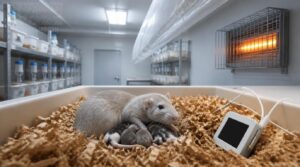
Stable air prevents colony setbacks. For breeding rats for snake food, hold rooms at 21–23°C with 50–60% humidity. Newborn litters may need a slightly warmer refuge, but never let heat build up.
Use thermostatic heaters, calibrated digital sensors, and gentle ventilation systems. Place probes near bedding and away from heaters. Log daily highs and lows. Sudden swings stress feeder rats, reduce breeding performance, and invite respiratory trouble.
Select Safe, Absorbent Bedding
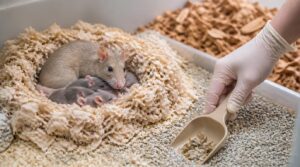
Dry bedding protects litters. Choose low-dust paper pellet bedding, aspen, or paper pulp. Avoid cedar, fragrances, dyes, and high-aromatic pine. Good rat bedding helps rat nesting behavior without irritating lungs or skin.
- Lay 2–3 inches deep
- Spot-remove wet areas daily
- Keep nesting zones dry
- Replace compacted substrate promptly
Paper pellets simplify cleanup, while soft paper pulp improves animal welfare.
Manage Ventilation, Odor, and Ammonia

Rat ventilation is ammonia control. Aim for 4–6 air changes hourly with ventilation systems that pull odor away from cages, not across pups.
| Check | Target | Action |
|---|---|---|
| Humidity | 40–60% | Remove damp bedding |
| Ammonia | Low | Test weekly |
| Fans | Continuous | Clean filters |
| Enrichment | Safe | Keep environmental enrichment devices dry |
Seal door gaps and add localized exhaust near dirty zones. Clear blocked vents promptly.
Feed and Care for Breeder Rats

Healthy breeder rats produce stronger litters, grow feeders more reliably, and keep your colony on track. Daily care is straightforward, but small lapses in diet, water, or sanitation can snowball fast. Focus on these five care habits to keep your breeders healthy and productive.
Balance Protein, Fat, and Minerals
Use a breeder diet near 16–23% protein and 4–8% fat. “1623 protein and 48 fat” means roughly 16.23% protein and 4.8% fat, a workable feeder rat nutrition target.
Keep the calciumtophosphorus ratio around 12151, or about 1.2:1.
Sound rodent breeding helps produce healthier pups and better reptile nutrition.
Provide Fresh Water Daily
A balanced diet only works when water is always available. Check water bottles every morning, refresh them daily, and test each nozzle before you walk away.
Empty and rinse containers so clean water doesn’t mix with residue. During heat or heavy nursing, inspect again later. Watch your rat feeding schedule and drinking habits: wet bedding, empty bottles, or sudden changes in intake can signal a leak, blockage, overheating, or rat health problem.
Follow a Consistent Cleaning Schedule
Clean cages on a fixed rhythm. Daily maintenance means wiping droppings from shelves, checking bottles, and removing wet bedding around feeders.
Do weekly substrate changes, wash bowls, and scrub trays with hot water and unscented detergent. For breeding rats for snake food, consistent sanitation protocols keep feeder rats drier, reduce ammonia odor, and make the colony easier to manage.
Monitor Health and Quarantine Illness
Daily cleaning makes illness easier to spot. During health checks, watch appetite, water use, posture, breathing, coat condition, droppings, and activity.
Quarantine all incoming rats in a separate area for 30 days, with separate tools and no shared airflow. These biosecurity protocols support health and disease prevention.
Move any sick rat to isolation immediately, handle it last, record symptoms and weights, and seek veterinary help for severe breathing problems, bleeding, or rapid decline.
Add Enrichment and Reduce Stress
Why do calm colonies produce better breeders? Rats need environmental enrichment to hide, climb, chew, and choose where to rest. Add ramps, solid platforms, chewable hides, and paper nesting material with clear entrances and exits. Replace damp nesting during cleaning so nest building stays useful. Offer chewable rat hideouts made from untreated wood or cardboard to encourage safe gnawing and retreat.
Keep handling short and predictable. Rotate a few safe objects weekly, but don’t disrupt nursing does or breeding groups. These handling approaches support stress reduction and animal welfare.
Manage Breeding, Litters, and Colony Genetics

A breeding colony stays productive when you manage timing, pups, and pairings with the same care you give feed and sanitation. Small oversights can quickly lead to crowding, losses, or accidental inbreeding. Use the steps below to keep each litter healthy and your colony organized.
Track Mating and Gestation
Record every pairing. Note pair IDs, mating date, observed receptivity, and any vaginal plug. Rats cycle every 4 to 5 days, and the receptive window lasts 12 to 24 hours.
Rat gestation runs 21 to 23 days. Weigh females weekly; pregnancy signs include steady gain, enlarged abdomen, and mammary development. Litter size varies, usually 6 to 12 pups, with maternal age, nutrition, and genetics affecting outcomes.
Prepare Nesting and Birthing Areas
Set up the rat nest before the end of the rat gestation timeline. Use a dark, washable chamber at least 12 by 18 inches, with a removable top and solid sides. A washable rat breeding chamber with smooth, nonporous surfaces makes routine cleaning safer and less disruptive for an expectant doe.
Add 3 to 5 inches of low-dust aspen or shredded-paper bedding, plus clean nesting material. Keep it 68 to 75°F and dry. Good conditions protect rat maternal care and support steady rat pups development.
Wean, Sex, and Separate Pups
Weaning at 21 days starts the shift from dam to colony life. Offer soft gruel, shallow water, and pellets; most weanlings manage solid food by 6 to 8 weeks.
For sexing pups, check anogenital distance:
- Males have wider spacing.
- Females have shorter spacing.
- Separate sexes by 4 weeks.
When separating litters, keep siblings together briefly. Monitor rat pup development, appetite, weight, and activity.
Prevent Inbreeding Through Recordkeeping
Good records stop accidental sibling pairings. Assign every rat an ID at weaning, then log sire, dam, birth date, sex, health tests, and retirement date. Your recordkeeping protects genetic diversity and strengthens inbreeding avoidance across the breeding colony.
| Track | Why |
|---|---|
| Parents | Avoid close relatives |
| Pairings | Guide genetic selection |
Review lineage before each mating; choose the least-related suitable pairing available.
Prepare Rats Safely for Snake Feeding

Preparing feeders is the final step, and it deserves the same care as the rest of your colony routine. Your choices affect both rat welfare and your snake’s safety at feeding time. Use the following practices to prepare, store, and offer feeders responsibly.
Compare Live and Frozen-Thawed Feeding
Frozen-thawed feeding is the safer default for most snake diets. Frozen rats can’t bite, scratch, or stress your snake during a missed strike, and batch storage gives you predictable feeder sizes.
Live rats may trigger reluctant eaters through movement and body heat, but they require constant supervision. Never leave live prey unattended. Use proper feeder rat thawing techniques, warm prey to near body temperature, and remove anything uneaten promptly.
Use Humane Euthanasia Methods
Frozen-thawed feeding makes ethical animal euthanasia your responsibility. Choose humane euthanasia methods you’re trained and authorized to perform, follow veterinary guidance and local rules, and never improvise.
- CO2 euthanasia: introduce gas gradually; never pre-fill.
- Confirm death fully through cardiac and respiratory arrest.
- Cervical dislocation requires certification and proficiency.
- Use decapitation with sharp, appropriate equipment.
- Anesthetic overdose may need secondary confirmation.
Freeze, Label, and Store Feeders
After humane euthanasia, cool and package feeders promptly. Vacuum-seal frozen rats in portions, excluding liquid, then freeze rapidly. Aim for cryogenic storage at 20C to 40C below zero for quality.
| Your system | Your payoff |
|---|---|
| Clear labels | Calm inventory |
| FIFO rotation | Less waste |
Record lot, breeder, date, size, and thaw window. Organized feeder rat storage methods make live vs frozen feeding decisions easier.
Match Rat Size to Snakes
Labels matter when each packet fits its snake. Select feeder rats about 1 to 1.5 times your snake’s midbody width, not “115 times your snakes midbody width,” which would be oversized.
Track rat pup development stages in your rat colony so rat breeding produces reliable sizes: 60–90 g juveniles, 100–150 g subadults, and 180–250 g adults.
When uncertain, choose smaller.
Thaw and Handle Feeders Safely
A properly sized meal still fails if it is thawed carelessly. To thaw and handle feeders safely:
- Thaw frozen rats overnight in a sealed container in the refrigerator.
- For faster use, seal in a watertight bag and submerge in lukewarm water, never boiling water.
- Use gloves, discard leftovers, and disinfect surfaces.
Sanitation protocols protect your snake and uphold responsible rodent husbandry after humane euthanasia.
Frequently Asked Questions (FAQs)
Can I breed rats for my snake?
Ready for the work? You can breed rats if you can manage rat colony management, breeding feeder rats, rat reproduction, the rat weaning process, sanitation, records, and humane euthanasia safely, consistently, and within local rules.
How to properly breed rats?
Build a breeding colony with unrelated adults, track mating dates, and provide nesting space. Rat reproduction depends on rat sexual maturity; monitor rat litter size factors, then follow the rat weaning process at 3–4 weeks.
Where can I get rats to feed my snakes?
Buy frozen-thawed or live rats from pet stores, reputable online breeders, reptile expos, or local breeders. Choose clean, healthy stock with known sizing.
Reliable suppliers also support breeding feeder rats, rodent breeding, and sound animal husbandry practices.
Can I breed mice for snake food?
Yes, because grocery stores were invented to test patience. Mice suit feeder rodent production for small snakes; but breeding feeder rats offers meals. Learn rat breeding behavior and rodent breeding records for sustainable pet feeding.
Should you breed rats for snake food?
Breeding feeder rats suits committed keepers with space, time, and firm welfare standards. Breeding rats for snakes can lower feeder rodent production costs, but ethical considerations and legal considerations must come before convenience.
How are live rats used as food for snakes?
Live rats may stimulate a reluctant snake to strike, but supervise continuously because feeder rats can bite. Use properly sized rat babies, never rat food substitutes. For breeding rats for snakes, frozen-thawed is safer.
Can you feed a snake a rat colony?
A rat colony feeds snakes, yet it’s not a feeding enclosure. Remove feeder rats after health checks; never offer colony mates together. Colony size management limits parasite risks and controls snake food production safely.
Is it a good idea to breed snakes’ food supply?
It can provide food security and lower long-term costs, but only if you can sustain feeder rats with colony size management, health checks, and quarantine protocols. Breeding Rats for Snake Food demands consistent welfare-focused care.
What is the Best Way to Feed a Snake?
Feed pre-killed or frozen-thawed feeder rats, sized near your snake’s widest point, every 7–14 days. Meet nutritional requirements with rodent block, track growth rate monitoring, and never offer live prey unsupervised.
Are There Any Risks Associated With Feeding a Live Rodent to a Snake?
A live rodent can bite, scratch, and cause serious infection in your snake. It also raises stress and keeper-injury risks. Quarantine new rats for respiratory infection and zoonotic disease prevention. Frozen-thawed feeders are safer.
Conclusion
Slow and steady wins the race: breeding rats for snake food succeeds when your daily care is as reliable as your breeding plan.
Track pairings, births, weaning dates, health concerns, and freezer inventory before small gaps become colony problems.
Keep cages dry, water flowing, and breeding stock well fed.
Humane routines protect both rats and snakes.
When each task has a place on your calendar, your feeder supply becomes dependable rather than a costly gamble.