This site is supported by our readers. We may earn a commission, at no cost to you, if you purchase through links.

That woodpile by your back fence could be hiding a copperhead right now, pressed flat in a gap running 10 degrees cooler than the air around it. Copperheads don’t wander in the open during peak daylight hours. They tuck themselves into the overlooked spots most people walk past without a second glance.
That camouflage they carry makes it worse. Their hourglass markings on bark and stone disappear so completely that stepping within a foot of one is genuinely easy to do.
Knowing where copperheads hide during the day puts you ahead of the problem before it becomes one.
Table Of Contents
- Key Takeaways
- Where Do Copperheads Hide During The Day?
- Why Do Copperheads Hide During The Day?
- When Are Copperheads Most Active?
- How Can You Spot a Hidden Copperhead?
- How Can You Safely Reduce Copperhead Hiding Spots?
- Frequently Asked Questions (FAQs)
- What do copperheads hate the most?
- How can you tell if a copperhead is near?
- What month are copperheads most active?
- If you find one baby copperhead, are there more around?
- How do you know if a copperhead snake is around?
- What attracts copperheads to your yard?
- What time of day are copperheads most active?
- How long do copperheads stay in the same area?
- Do copperhead snakes stay in the same area?
- Do copperheads return to the same hiding spots?
- Conclusion
Key Takeaways
- Copperheads hide during the day in cool, dark, secluded spots—rock crevices, fallen logs, leaf litter, animal burrows, woodpile gaps, and foundation cracks—because they can’t regulate their own body heat and need to escape midday temperatures.
- They’re most active at dawn and dusk (crepuscular), shifting to nighttime hunting in peak summer heat, with May through July being the highest-risk months for encounters.
- Their hourglass markings and copper coloring blend so perfectly into bark, stone, and leaf litter that you can step within a foot of one without noticing—watch for subtle movement in debris, a wide triangular head, and a frozen, coiled posture.
- You can cut encounter risk significantly (one study showed nearly 40%) by removing yard clutter, elevating firewood 15–30 cm off the ground, sealing foundation gaps over 1/4 inch, and maintaining a cleared 2–3 meter zone around sheds.
Where Do Copperheads Hide During The Day?
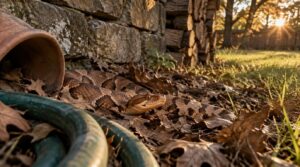
Copperheads are masters at disappearing in plain sight, and they’ve got plenty of favorite hiding spots right in your backyard. Knowing where they hole up during daylight hours is the first step toward staying safe. Here are the most common places you’ll find them.
Brushing up on copperhead identification features and markings can help you quickly distinguish them from harmless snakes before they vanish into the leaf litter.
Rocks, Logs, and Leaf Litter
Along rocky hillsides and beneath fallen logs, copperheads find their ideal daytime refuge. Their natural camouflage mirrors bark and stone so well that you’ll walk right past one without a second glance. If you’re hiking in rocky terrain where copperheads blend invisibly into their surroundings, carrying a pair of snake tongs for safe handling lets you move a hidden snake without ever putting your hands near it.
Leaf litter is another prime copperhead hiding spot. Damp, decomposing layers about 2–4 cm deep trap moisture and transform the forest floor into a surprisingly effective ambush zone.
Crevices and Animal Burrows
Go deeper than logs and rocks, and you’ll find copperheads claiming rock crevices and abandoned burrows left behind by voles or gophers. These spots work as natural microclimate shelters, holding steady temperatures between 20 and 28°C even on scorching afternoons.
Cool, dark, and secluded is the copperhead dream. In winter, groups even share snake hibernation dens deep in rocky outcrops.
Woodpiles and Yard Debris
Your wood piles are five-star snake hotels. Gaps between logs stay 5-15°F cooler than ambient air, creating perfect copperhead hiding spots for sheltering. Elevating logs on an outdoor firewood storage rack improves airflow and eliminates the ground-level gaps copperheads love to claim.
If you’re wondering whether snakes have already moved in, these signs of snakes in your yard can help you spot trouble early.
Watch these five yard areas:
- Firewood stacks
- Leaf piles
- Brush heaps
- Garden debris mats
- Loose yard debris corners
Clear them out with two simple moves: Store Firewood Properly and Remove Leaf Litter and Debris around your yard.
A leaf blower vacuum combo makes quick work of clearing debris piles that snakes love to hide in.
Foundations and Retaining Walls
If firewood stacks are five-star hotels, your foundation is the penthouse. Gaps, weep holes, and crevices stay cool, dark, and secluded, making them ideal copperhead hiding spots.
| Feature | Risk |
|---|---|
| Weep holes | Easy entry |
| Pour joint gaps | Daytime retreats |
| Downspout zones | Moisture pockets |
| Stone walls | Hidden crevices |
| Utility penetrations | Thermal refuges |
Seal those gaps and install snakeproof barriers to stay snakefree.
For even better protection, understanding whether snakes can climb glass surfaces helps you identify which barriers will actually hold them out.
Why Do Copperheads Hide During The Day?
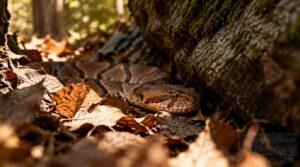
The short answer? Survival. Copperheads hiding during the day isn’t laziness; it’s a finely tuned strategy.
Thermoregulation in reptiles drives most of this behavior. Copperheads can’t generate their own body heat, so they use their environment like a thermostat. Midday sun pushes ground temperatures dangerously high, and retreating to something cool, dark, and secluded keeps their internal temperature in a safe range.
Natural camouflage does the rest. Pressed flat under leaf litter or tucked into a rock crevice, a copperhead becomes nearly invisible. That invisibility isn’t just about hiding from you; it’s also about waiting for unsuspecting prey to wander past.
They’re wired for crepuscular behavior, peaking at dawn and dusk when temperatures are just right and predator pressure drops.
When Are Copperheads Most Active?

Most of the time, copperheads follow a crepuscular behavior pattern, meaning their activity peaks at dawn and dusk when ground temperatures sit comfortably in the 70-85°F range. Think of it as their Goldilocks window, not too hot, not too cold. Step outside that range and you won’t see one.
Their diurnal habits shift sharply come midsummer. As the sun climbs and heat builds, they pull back from surface movement. That’s the classic diel shift at work, pushing them underground or under shade when ground temps crest 90°F.
Their seasonal activity cycle extends things beyond daily timing, though. Juveniles stay active during mild late-spring days. Heavy rainfall cools the ground fast and can spark a brief nocturnal activity pattern even in peak summer heat.
How Can You Spot a Hidden Copperhead?
Imagine scanning a pile of autumn leaves and realizing the "pattern" blinking back at you is actually alive and moving. That’s copperhead natural camouflage at its finest: masterful, patient, and right at your feet.
What you mistake for a leaf pattern may already be watching you
For reliable venomous snake identification, train your eyes on these four clues: A dedicated venomous snake identification field guide sharpens all four of these clues with detailed illustrations and regional species breakdowns.
- Hourglass-shaped markings running across the back, not just along the sides.
- Broad, triangular head that’s noticeably wider than the neck.
- Subtle movement in leaf litter, like a slow ripple rather than a fast bolt.
- Heat signatures at dusk, when fading light reveals contrasts against cooler surrounding ground.
Copperhead hiding spots cluster near shade-to-sun transitions. Always approach from multiple angles, sweep your gaze low across the ground, and watch for deliberate slithering along debris edges.
How Can You Safely Reduce Copperhead Hiding Spots?

One study found homeowners who cleared yard debris reduced snake encounters by nearly 40%. That’s not nothing.
Reducing copperhead hiding spots starts with thinking like a copperhead. They want shade, moisture, and cover. Deny all three, and they’ll relocate.
Here’s where to focus:
- Raise wood piles 15-30 cm off the ground and cover them with a wildlife-proof tarp
- Seal foundation gaps over 1/4 inch with expanding foam and metal mesh
- Rake leaf litter monthly, especially during peak activity months
- Clear a 2-3 meter zone around sheds and garden debris
Wear thick gloves whenever you’re disturbing piles, and always probe with a stick first to check for inhabitants. Yard snake prevention doesn’t require chemicals, just consistency and a little elbow grease.
Frequently Asked Questions (FAQs)
What do copperheads hate the most?
Ironically, copperheads hate exactly what you probably want more of: open, exposed yards. Clear ground cover, bright sunlight, and regular disturbance wipe out their shelter, making habitat modification your best tool for yard snake prevention.
How can you tell if a copperhead is near?
A rustle in dry leaves with nothing visibly moving is your first clue. Watch for a slightly raised head, a coiled, frozen posture, or that faint cross-hatched pattern well hidden under logs and debris nearby.
What month are copperheads most active?
May through July is your peak danger window. Copperheads are most active as temperatures climb, with warm humid summer nights driving nocturnal foraging and snake behavior staying elevated well into late summer and early fall.
If you find one baby copperhead, are there more around?
Almost certainly. Juvenile copperheads cluster together in communal dens early in life, so if you spot one, you should assume there are more hiding nearby within 20-30 meters, likely under the same rocks or debris.
How do you know if a copperhead snake is around?
Look for hourglass-shaped markings on a copper-toned body blending perfectly into leaf litter, shed skins nearby, a distinctive musty odor, and S-shaped ground tracks. Their natural camouflage makes spotting them far harder than you’d expect.
What attracts copperheads to your yard?
Ever wonder what turns your yard into snake real estate? Rodents, tall grass, wood piles, and dense bushes top the list. Add water sources, garden debris, and cozy gaps under decks or rocks, and copperheads move right in.
What time of day are copperheads most active?
Here’s a fun theory: copperheads are strictly nocturnal. Not quite! They’re crepuscular, meaning they’re wired for dawn and dusk. During scorching summer months, they’ll shift toward nighttime hunting, while daytime heat sends them into hiding.
How long do copperheads stay in the same area?
Copperheads are homebodies! They’ll often stay in one territory for life when food and shelter hold steady. Expect days to weeks at a single hiding spot, relocating only after disturbance, scarce prey, or temperature shifts.
Do copperhead snakes stay in the same area?
Yes, copperheads are homebodies. They stick to familiar territories, reusing the same hiding spots and hunting grounds within small home ranges. They only wander when seeking mates or food, showing strong site fidelity.
Do copperheads return to the same hiding spots?
You’ll find that copperheads show modest site fidelity, returning to the same general shelter area, like a favored woodpile crevice or burrow, especially when it offers stable moisture, good cover, and successful hunting.
Conclusion
Picture that same woodpile tomorrow, but this time you’re scanning it like a detective instead of strolling past. That’s the shift that keeps you safe.
Once you know where do copperheads hide during the day, every rock, burrow, and foundation gap becomes a place you check first, not last. Clear the clutter, wear your boots, and use a light before you reach.
The snake hasn’t changed. Your awareness has. That’s your best defense.