This site is supported by our readers. We may earn a commission, at no cost to you, if you purchase through links.

Your snake can’t tell you when its enclosure is failing. It can only refuse a meal, press against the glass, or slip through a latch you thought was secure.
Creating a natural snake habitat means more than filling a tank with bark and a water dish. A ball python thrives at 60–80% humidity, while a corn snake needs 40–60%. Get that wrong and you invite stress, mold, and respiratory infections. Every choice, from substrate depth to hide placement, shapes how your snake eats, sheds, and rests.
If you’re still weighing your options, this guide to natural versus glass terrariums for snakes shows how each setup holds heat and humidity.
If your snake’s skin already looks rough or retains stuck shed, this guide to common snake scale problems and how to prevent them explains what to adjust first.
Here’s how to build a home that mimics its wild biome, one deliberate step at a time.
Table Of Contents
- Key Takeaways
- Plan a Natural Habitat Around Your Snake’s Species
- Choose a Secure, Ventilated Enclosure Sized for Adulthood
- Set Up The Temperature Gradient, Humidity, and Lighting
- Build a Naturalistic Interior
- Monitor Your Snake and Maintain The Habitat
- Frequently Asked Questions (FAQs)
- How to make a snake habitat?
- What do snakes need to be happy?
- What material can snakes not bite through?
- How to make a homemade snake enclosure?
- What is the natural habitat of a snake?
- What makes a good snake habitat?
- Can I build my own snake enclosure?
- How to attract snakes naturally?
- How often should I fully replace the substrate?
- Can different snake species share the same habitat?
- Conclusion
Key Takeaways
- Research your snake’s native biome first, because its species decides your humidity, substrate, hides, and enclosure shape, and getting that wrong invites stress, mold, and respiratory infections.
- Buy a secure, ventilated enclosure sized for your snake’s adult length plus 20%, with two-stage chew-resistant latches, since most escapes happen through gaps under 1 cm.
- Build a steady temperature gradient (about 28–32°C basking to 20–24°C cool) with thermostat-controlled heat, and check it with probes and a hygrometer in both zones every day.
- Watch your snake’s behavior and weight, plus monthly habitat checks, because refusing to bask, constant hiding, or stuck sheds usually signal a setup problem before anything else does.
Plan a Natural Habitat Around Your Snake’s Species
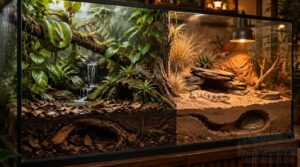
Because every snake evolved for a different corner of the world, your species-specific habitat starts with research, not shopping.
Once you know where your snake comes from, a species-specific snake habitat design guide can help you match humidity, substrate, and hiding spaces to its native environment.
Where does your snake come from? A rainforest canopy, a desert scrub, a burrow under leaf litter? That answer shapes everything.
Arboreal snakes need branches and height. Fossorial species want deep substrate and secure burrows. Terrestrial snakes feel safest under low-profile hides. Tropical species thrive at 60–80% humidity, while arid ones need 40–60%, so plan your moisture management before you buy a misting bottle.
Mimic the native biome. Copy its textures and plants, and you’ll watch your snake forage and bask the way nature intended. That naturalistic setup also makes thermal regulation easier.
Let those needs guide every enclosure design choice.
Choose a Secure, Ventilated Enclosure Sized for Adulthood
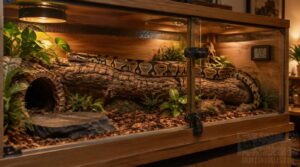
Your species research now points to one big purchase: the enclosure. Buy for the adult size, not the hatchling in your hand.
Aim for an enclosure size that lets your snake stretch out fully, plus 20% extra. Arboreal species need height, while terrestrial ones need length.
Check four things before you buy:
- Locking mechanisms: choose two-stage, chew-resistant latches so your snake can’t push its way out.
- Ventilation and airflow: corrosion-resistant vents with roughly 1.5 cm mesh, placed away from sleeping spots.
- Material: smooth, sealed plywood or food-grade plastic. Skip untreated wood and corroding metal.
- Access: front doors for feeding and cleaning, plus a mounting point for a thermometer and hygrometer.
A secure enclosure protects your snake and your peace.
Since every species has its own temperature, humidity, and space requirements, it helps to review snake species habitat needs before choosing and setting up your enclosure.
Set Up The Temperature Gradient, Humidity, and Lighting
Your enclosure is built. Now make it breathe like the wild.
Start with the temperature gradient. Run a heat mat on one end, controlled by a thermostat with a backup sensor. Aim for a 28–32°C basking spot, 24–28°C mid-range, and 20–24°C cool refuge. Nights can drop to 22–26°C. Track it with two digital probes.
Next, dial in humidity levels. Target 60–80% for high-humidity snakes, without wall condensation. Put a hygrometer in both zones and keep ventilation flowing. Above 85% invites mold.
Add UVB lighting for diurnal snakes: 5–8%, mounted 30–40 cm above the basking spot on a 12–14 hour timer. Replace bulbs every 6–12 months. Log readings daily to confirm the thermal gradient holds. Then watch how your snake behaves.
Build a Naturalistic Interior
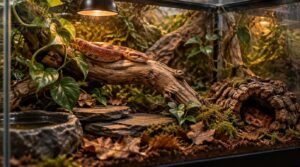
Your snake’s enclosure is more than a box, so make it feel like home. A naturalistic interior turns bare glass into a place where your snake can hide, hunt, climb, and rest with confidence. Work through the three steps below in order, and your setup will come together without guesswork.
Choose Substrate and Place Hides
Picture a forest floor: loose, cool earth that swallows your snake’s body as it burrows. Your substrate choice builds that world. Layer 2–4 inches of moist coconut fiber or aspen, never cedar or pine.
Offer three hiding spots: warm, cool, and humid, spaced 15–25 cm apart. Match them to your enclosure size, with plant cover nearby. Refresh bioactive substrate monthly.
Add Water, Plants, and Climbing Features
Placing your water bowl right decides how healthy your snake stays. Choose a shallow, wide dish, larger than your snake’s head, and keep it away from heat.
- Fill it 2–5 cm deep.
- Anchor live plants like pothos.
- Angle branches and vines across vertical space.
Skip flimsy perches. Space perches 5–15 cm apart safely. Sturdy climbing structures keep your snake secure.
Build an Optional Bioactive System
Building a bioactive setup takes patience, but it rewards you with a self-cleaning habitat.
Layer clay drainage, then a coconut fiber and soil bioactive substrate 2–4 inches deep. Skip calcium-rich sands. Add a microfauna cleanup crew: 20–40 isopods per 10 gallons, plus springtails. Keep humidity at 60–80% for two weeks.
Smell ammonia? Adjust your cleanup crew or substrate depth fast.
Monitor Your Snake and Maintain The Habitat
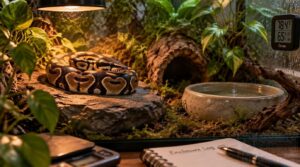
One ball python I cared for stopped basking for three days before any other sign showed up. Your snake tells you everything, if you’re watching.
Your snake speaks in small changes, like a ball python that quit basking three days before any other warning sign appeared
Build a routine around behavioral observation. Check twice daily and log stress cues:
- Refusing to bask or drink
- Persistent hiding or pacing
- Arched back, open-mouth gaping
Practice spot-cleaning daily and refresh water every morning. Scrub the bowl weekly for solid habitat hygiene.
Watch for shedding troubles too. Stuck skin or delayed sheds usually mean humidity is off, so verify it sits at 40–60% for most colubrids.
Weigh your snake monthly. Sudden loss signals trouble. Audit the habitat monthly: check hides, seals, and thermal gradient, and keep a log. Small fixes now prevent big emergencies later.
Frequently Asked Questions (FAQs)
How to make a snake habitat?
Ready to protect your new snake? Start with a secure enclosure sized for adulthood, using ventilated enclosure materials.
Create a temperature gradient with a 30°C basking spot, hold humidity levels steady, and add substrate depth.
What do snakes need to be happy?
What does a snake actually want? Security. Give it a species specific habitat, a clear temperature gradient, steady humidity levels, snug hiding spots, and behavioral enrichment, and you’ll soon see a calm, feeding, exploring snake.
What material can snakes not bite through?
Think of your enclosure as a fortress.
No material is truly bite-proof, but polycarbonate sheets (4–6 mm) and welded metal resist fangs best. Prioritize enclosure security, sturdy locking mechanisms, and material durability for escape prevention.
How to make a homemade snake enclosure?
Most escapes happen through gaps under 1 centimeter. So build tight. Use a melamine cabinet with two locking latches, add vents for airflow, and scale the floor to adult length. Monitor temperatures with probe thermometers.
What is the natural habitat of a snake?
Nearly 4,000 species slither across six continents, so species-specific habitat matters.
Deserts demand dry burrows, rainforests need humid branches.
Use habitat mimicry in your naturalistic terrarium: sturdy climbing limbs, loose substrate, and varied microhabitat temperatures.
What makes a good snake habitat?
What does your snake truly need? Habitat mimicry.
Build a warm-to-cool temperature gradient, keep humidity levels steady, add secure hiding spots on both ends, and choose safe, burrowable substrate. Size everything for full adult length.
Can I build my own snake enclosure?
Why overpay when you can build your own? You can. Scale the enclosure size to adult length, seal plywood against moisture, add locks and vents, then confirm temperature and humidity hold steady before adding substrate.
How to attract snakes naturally?
A snake is a shadow you shouldn’t invite. Skip the hiding spots and water access that lure them. Build a natural habitat for owls and toads, and save enclosure design and substrate options for pets.
How often should I fully replace the substrate?
Your substrate refresh cycle is longer than you’d think. Do a full enclosure clean every 12–24 months, sooner with mold or odor.
In a bioactive setup, reset every 12–18 months to protect your natural environment.
Can different snake species share the same habitat?
Think different species can bunk together peacefully? Myth. Species compatibility is rare, and territorial behavior causes stress and injury. Scale your enclosure size, run a quarantine protocol, and confirm species identification. Safest answer: separate homes.
Conclusion
Picture a ball python at dusk, coiled in a humid hide, warm belly pressed to the substrate, water dish glinting nearby. That stillness is your reward.
Creating a natural snake habitat isn’t a weekend project you finish and forget. It’s a living system. Check your thermostat and hygrometer daily, spot-clean waste, and watch behavior closely. When your snake eats eagerly, sheds in one clean piece, and rests without fuss, you’ve built it right. Rest easy.