This site is supported by our readers. We may earn a commission, at no cost to you, if you purchase through links.
Your snake just soaked in its water bowl, pooped in it, and sipped from it. All in the same hour. Gross? Sure. Dangerous? It can be.
Leftover suds, harsh fumes, and slimy biofilm turn a simple dish into a health hazard, and snakes absorb whatever lurks in that water. I’ve treated plenty of scaly patients whose trouble started right there. The fix isn’t fancy, though. Learning safe ways to clean a snake’s water bowl takes a soft brush, the right soap, and a little know-how.
Here’s how to scrub smarter, rinse cleaner, and spot the bowl that’s past saving.
Table Of Contents
- Key Takeaways
- How to Clean Your Snake’s Water Bowl Daily
- Choose Snake-Safe Cleaners and Avoid Harsh Chemicals
- Remove Biofilm With Gentle Scrubbing
- Disinfect The Water Bowl Safely When Needed
- Inspect and Replace Bowls That Are Hard to Clean
- Frequently Asked Questions (FAQs)
- How to disinfect a reptile water bowl?
- Can I use Dawn to clean my reptiles water bowl?
- How often should you change a snakes water bowl?
- Can I put tap water in my snakes water bowl?
- How to clean a snakes water bowl?
- How do you make tap water safe for snakes?
- Should I put a penny in my snakes water bowl?
- How to clean water bowls during travel?
- Can dishwasher-safe bowls be used for snakes?
- What are signs of water bowl wear?
- Conclusion
Key Takeaways
- Scrub your snake’s bowl daily with a dedicated soft brush, unscented mild soap, and hot water, rinse until no suds or smell remain, and let it air-dry fully.
- Stick to snake-safe cleaners like mild soap, diluted vinegar, baking soda, or reptile-safe disinfectant, and never mix products or use bleach, ammonia, or fragranced cleaners for routine cleaning.
- Give the bowl a weekly deep clean with extra attention to seams and the rim to remove slimy biofilm, and disinfect thoroughly after any illness or contamination.
- Replace any bowl that feels scratched or cracked, looks cloudy, or stays slimy after scrubbing, and choose a heavy, smooth, non-porous one instead.
How to Clean Your Snake’s Water Bowl Daily
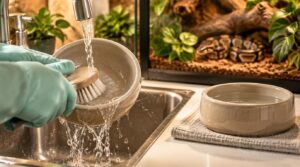
Always empty the bowl the moment you spot poop, shed bits, or substrate. Waiting lets gunk dry and spread. Fast wins here!
If you’re unsure how often your snake’s bowl really needs attention, this guide to how often to clean a snake water dish breaks down daily, weekly, and deep-cleaning routines.
Ready for daily cleaning? Grab a softbristled brush or cloth that’s only for reptile stuff. No sharing with the kitchen sponge, okay? Scrub with a drop of reptilesafe cleaner and hot water, then rinse until every trace of soap is gone. Snakes soak in that water, so leftover suds are a no-go.
Now for the air-dry step. Set the bowl somewhere clean, away from bedding, and let it dry completely. Skip household towels, since lint and germs love to hitch a ride. Trapped moisture invites microbes back in. Water bowl sanitation is just a habit. Stick with it.
Choose Snake-Safe Cleaners and Avoid Harsh Chemicals
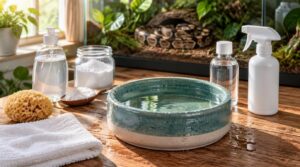
Rinsing away every suds bubble is half the battle. The other half? Picking the right product to begin with.
Snakes drink and soak in that water, so whatever stays on the bowl ends up in your pet. Here’s your simple cleaner lineup:
Since a clean bowl also supports healthy eating habits, it helps to pair good hygiene with the best snake food for digestion to keep your pet comfortable.
- Mild soap: Plain dish soap, unscented, no bleach, no antibacterial claims.
- Diluted vinegar: Great for mineral film. Rinse well afterward.
- Baking soda: A gentle scrub paste for stubborn spots.
- Reptilesafe disinfectant: Follow the label, then rinse.
Reptilesafe cleaners work great too, just read the label first. Skip fragranced cleaners, ammonia, and anything with bleach. Never mix products, because fumes can turn dangerous fast. Still smell something odd after rinsing? Rinse again. Your snake’s nose is sharper than yours!
Remove Biofilm With Gentle Scrubbing
Soap and vinegar are ready, so let’s tackle the slimy stuff. That cloudy, slippery film on the bowl is biofilm, and it laughs at a quick rinse. Remove Biofilm With Gentle Scrubbing and you’ll win every time.
If the film keeps coming back or the bowl feels slick again within days, these signs your snake’s water dish needs cleaning can help you catch it early.
Grab a dedicated brush or soft, non-scratch pad, used only for your snake’s bowl. Add mild soap or reptilesafe cleaners, then scrub in small circles with light pressure. Focus on seams, crevices, and the rim, because biofilm loves to hide there. Rinse between passes so residue doesn’t spread.
Now run a finger over the inside. Still slick? Keep scrubbing. Check the rim twice, since biofilm lingers. Smooth and squeaky means you’re done. Scratchy plastic that stays slimy? That’s a hint, not a failure.
Disinfect The Water Bowl Safely When Needed
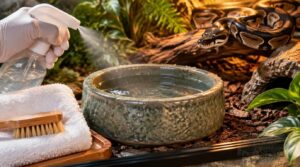
Scrubbing gets your snake’s bowl clean, but disinfecting it safely gets it germ-free. You don’t need to do it every day, just when the situation calls for it. Here are the two times it matters, so you’ll know exactly when to pull out the disinfectant.
Routine Deep Cleaning
Think daily rinses are enough? Nice try, but slime sneaks past. Weekly deep cleaning techniques fix that.
- Empty the bowl.
- Scrub with a dedicated brush.
- Try disinfecting with reptile-safe disinfectants.
- Rinse until no residue remains.
- Finish by drying bowls thoroughly.
Skip harsh fumes, and your snake stays safe. Let the bowl dry fully before refilling, because damp corners invite microbes.
After Illness or Contamination
The bowl from a sick snake is a germ hotel, so let’s evict the guests. Scrub every speck of residue first, using fresh water each time. Then go for water bowl sterilization with a reptilesafe disinfectant or a diluted bleach solution.
Let it sit wet, rinse, and dry completely. Skip that, and your daily cleaning routine won’t deliver bacteria prevention.
Inspect and Replace Bowls That Are Hard to Clean
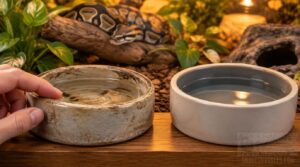
Water bowls have a shelf life. Yours might be past it. Regular bowl inspection takes thirty seconds, so make it part of your water bowl maintenance routine.
Run a finger around the base, seams, and waterline. Do you feel cracks or scratches? Does the surface look cloudy or rough? Those tiny grooves hide residue that scrubbing can’t reach, and a swirl test shows where debris clings.
Tiny cracks and scratches in your snake’s water bowl hide residue that no amount of scrubbing can reach
Still see film or smell odor after a proper soak and scrub? That’s your cue. Warped, flimsy, or quickly restained bowls are done.
Bowl replacement is cheap, and bowl material safety matters more than sentiment. Toss the old one without guilt. Choose a heavy, smooth, non-porous bowl, and your snake gets a fresh start.
Frequently Asked Questions (FAQs)
How to disinfect a reptile water bowl?
Worried disinfecting is overkill? It isn’t. Scrub first, then use a reptilesafe disinfectant, chlorhexidine, or diluted bleach solution. Rinse, air-dry, done. Water bowl sanitizing means real bacterial growth inhibition. Skip it, and germs throw parties.
Can I use Dawn to clean my reptiles water bowl?
Soap near a snake’s drink? Sounds backwards, but yes, Dawn works as a mild soap for nontoxic cleaning. Choose unscented, rinse 3–4 times for chemical residue avoidance, use reptilesafe disinfectant wipes during water bowl maintenance.
How often should you change a snakes water bowl?
Would you drink from yesterday’s bathtub? Your snake won’t! Stick to daily cleaning as your baseline water change frequency, and swap immediately after poop or soaking.
Add water quality monitoring to your regular cleaning schedule.
Can I put tap water in my snakes water bowl?
Tap water usually works for your snake.
Check your local water quality first, because sitting won’t remove chloramine.
Unsure? Try simple water testing. Reptile hydration needs and water bowl maintenance both benefit.
How to clean a snakes water bowl?
Picture a ball python’s bowl after three days: slimy film, floating shed.
Scrub it with hot water, mild soap, and diluted vinegar, or baking soda for stubborn spots. Rinse well, use reptile-safe disinfectants, dry, refill.
How do you make tap water safe for snakes?
Tap water needs a quick makeover! Add a water conditioner made for reptiles to handle chlorine and chloramine. Letting water sit only clears chlorine. Try water testing for better water quality and reptile water hygiene.
Should I put a penny in my snakes water bowl?
Nothing says "I love my snake" like metal in the drinking water, right? Wrong. Skip the penny. Copper leaches and harms your snake.
Bacteria control? Water bowl cleaning and reptile hygiene keep water quality high.
How to clean water bowls during travel?
Too much hassle during travel? Not really! Pack a backup water bowl for bowl rotation, then keep cleaning routines simple: scrub with soap, rinse with bottled water, dry completely.
Need extra power? Use reptile-safe disinfectants.
Can dishwasher-safe bowls be used for snakes?
Can dishwasher-safe bowls work for snakes? Yes, but handwashing wins. Detergent residue can harm snakes.
Pick stainless steel bowls or foodgrade plastic, rinse thoroughly, use reptile-safe disinfectants when needed, and keep a bowl rotation system.
What are signs of water bowl wear?
Even water bowl durability has limits. Check for cracks or scratches, cloudy spots, or a wobble. Those trap gunk.
Among bowl material options, nonporous materials last longest, but bowl replacement frequency still depends on wear.
Conclusion
Picture a crystal-clear bowl, sparkling under the heat lamp, with not a speck of slime in sight. That’s the goal. Your snake deserves it, and you can deliver it.
Master the safe ways to clean a snakes water bowl, and you’ve got a simple routine: scrub daily, rinse until no soap lingers, disinfect when needed, and swap out any bowl that scratches or stays stubborn.
Clean water means healthier snakes. Go make that bowl shine!