This site is supported by our readers. We may earn a commission, at no cost to you, if you purchase through links.

Pull your ball python out every single day and you’ll end up with a snake that flees your hand instead of trusting it. That’s the mistake I see most in the exam room: owners who love their snake so much they handle it into a stress case. Snakes aren’t dogs. They don’t crave attention, and too much contact spikes cortisol, kills appetite, and triggers defensive strikes in an otherwise calm animal.
So how often should you handle a snake? The honest answer depends on species, age, and temperament, but most healthy adults do best with 1 to 3 sessions weekly. Get the frequency right, and you’ll build a snake that tolerates, even seems to enjoy, your hands.
Table Of Contents
- Key Takeaways
- How Often Should You Handle a Snake?
- Handling Frequency by Species and Age
- When Should You Avoid Handling?
- How Snake Body Language Guides Frequency
- Build Trust With Safe Handling
- Frequently Asked Questions (FAQs)
- Is it okay to handle a snake daily?
- Do snakes enjoy being handled?
- Is owning a snake high maintenance?
- How long should you wait to handle a snake after getting it?
- Can you handle snakes during breeding season?
- How long should each handling session last?
- What time of day is best for handling?
- Should you handle snakes before or after enclosure cleaning?
- How does room temperature affect handling frequency?
- Can you handle a snake right before shedding starts?
- Conclusion
Key Takeaways
- Most healthy adult snakes do best with 1 to 3 handling sessions a week, since too much contact raises stress hormones, kills appetite, and can trigger defensive strikes.
- Let temperament, not just species or age, guide your schedule—shy or aggressive snakes need more space between sessions, while calm or curious ones can handle more frequent contact.
- Skip handling entirely during digestion (24-48 hours after feeding), shedding or the "blue phase," the first 1-2 weeks after bringing a new snake home, and anytime you spot illness or injury.
- Watch your snake’s body language over the clock—relaxed movement and tongue flicking mean you’re good, while hissing, balling up, or repeated escape attempts mean it’s time to stop.
How Often Should You Handle a Snake?

There’s no single answer that fits every snake, but there is a solid starting point you can trust. Frequency depends on a few moving parts—species, age, temperament—that stack together to shape the right routine for your snake. Here’s how to work out where yours falls.
If you’re still narrowing down species or temperament before handling frequency, this guide on choosing the right snake for your lifestyle can help you match your routine to the right fit from the start.
Most Snakes: 1–3 Times Weekly
A good rule of thumb? One to three sessions weekly covers most pet snakes. Some settle in fine with a weekly baseline; others handle daily interaction without blinking.
Age, temperament, and health all shift that number. Watch your snake’s body language, and always skip handling right after feeding, digestion needs quiet time to finish its job. This matters because snakes rely heavily on thermoregulation and behavior patterns to properly digest their food, so extra handling stress during this period can disrupt the process.
Ideal Handling Session Length
How long should each handling session last? Start small: five minutes, building toward ten as your snake stays relaxed.
Juveniles need brief, frequent contact, two to four times weekly for five to ten minutes.
Adults tolerate one longer, 20-minute weekly session. Keep duration predictable and stress-free, then adjust based on behavior, not the clock.
Adjusting Frequency by Temperament
Duration matters, but temperament decides frequency. Individual temperament trumps species rules every time.
- Calm Snake Checks: daily, under 5 minutes
- Shy Snake Sessions: biweekly, 2-4 minutes
- Aggressive Snake Limits: every 7-10 days
- Curious Snake Tolerance: weekly, up to 8 minutes
- Monthly Temperament Review: recheck and adjust
Watch stress signals closely. Species-specific handling gives you a starting point, not gospel.
Consistency Without Overhandling
Once you’ve read temperament, stick to it. A consistent weekly schedule beats sporadic marathon sessions every time, snakes anticipate routine.
Keep windows short (2-5 minutes), pair handling with stable enclosure temps, and watch for tongue flicks or balling. Respect postfeeding wait time. This isn’t rigid species-specific handling, it’s rhythm. Gradual trust building happens through repetition, not intensity. Consistency without overhandling means less is genuinely more.
Handling Frequency by Species and Age

Not every snake reads from the same handbook — a ball python’s comfort zone looks nothing like a hognose’s. Species and age both shift the math on how often you should open that enclosure lid. Here’s how the numbers break down by the snakes you’re most likely to own.
Ball Python Handling Frequency
Ball pythons are famously easygoing, but that doesn’t mean you skip the rules. Handling new snakes starts small: 5-10 minutes, building to 15 as trust grows, never past 30.
For hatchlings especially, sticking to two or three short sessions a week helps them settle in, a rhythm covered nicely in this corn snake care and handling guide.
Session duration tips:
- Start short, extend gradually
- Cap at 30 minutes
- Watch for stress signals
Aim for 2-3 sessions weekly. Skip handling around feeding, always respect postfeeding wait time.
Corn Snake Handling Frequency
Six sessions a month is plenty for most corn snakes, though many handlers find their snake tolerates twice-weekly contact better than a strict weekly baseline.
Start at 5-10 minutes, add a few minutes as calm behavior continues. Nervous individuals need just one session; confident ones handle three or four. Quality beats quantity here, always.
Boa Handling Frequency
Rarely does a boa need daily handling to stay tame. Stick to 1–2 sessions weekly, 10-15 minutes for adults, 5-10 for juveniles.
New boas need 1-2 quiet weeks acclimating first. Watch for calm tongue flicks versus tense coiling, that’s your cue.
Consistent days build trust; overhandling breeds defensiveness and feeding refusal.
Kingsnakes, Gopher Snakes, and Hognoses
Kingsnakes handle beautifully, calm once settled, tolerating 2-3 sessions weekly at 25 minutes. Gopher snakes match that pace but hiss loudly when startled, a bluff worth respecting.
Hognoses need gentler handling, watching for defensive behavior signs like flattened necks or playing dead. Always support the whole body, and skip handling after feeding.
Hatchlings, Juveniles, and Adults
Age changes everything about handling tolerance. Hatchlings, still building confidence, need minimal contact. Juveniles thrive on brief, frequent sessions, 2-4 times weekly for 5-10 minutes, easing defensiveness. Adults settle into a weekly baseline, 20-minute sessions once temperament’s established.
- Hatchlings: minimal handling, high fragility
- Juveniles: 2-4x weekly, 5-10 minutes
- Adults: weekly, 20-minute sessions
- Temperament always overrides age generalizations
When Should You Avoid Handling?

Knowing when to handle your snake is only half the equation — knowing when to leave it alone matters just as much. Certain conditions turn a routine handling session into unnecessary stress or even physical risk for your snake. Here are the five situations where the best move is to simply close the enclosure and wait.
After Feeding and Digestion
Picture your snake’s stomach as a busy kitchen mid-meal, you wouldn’t yank the chef away from a hot stove. That’s the postfeeding waiting period.
You wouldn’t yank a chef from a hot stove mid-meal, so don’t rush your snake through digestion
Give 24-48 hours after feeding before handling, longer for bigger meals, since gastric emptying delay and the nutrient absorption window need quiet time. This digestion rest period protects your snake’s digestive system and prevents regurgitation.
During Shed or Blue Phase
Once your snake’s eyes turn cloudy or blue, its vision is gone. That’s your cue to skip handling entirely until things clear up.
Avoid handling your snake entirely during shedding cycles when vision is impaired. Keep humidity around 50-70% and check the water dish, comfort measures that ease the process while you simply wait it out.
New Snake Acclimation Period
Shed cycles pause handling, but bringing home a new snake calls for its own patience.
Give it one to two weeks of quiet acclimation first, brief tank-side contact only, stable temps and hydration, before regular handling begins.
Rushing this window spikes stress hormones and undoes trust before it starts.
Illness, Injury, or Breathing Problems
Health trumps schedule, always. Watch for open-mouth breathing, wheezing, or bubbles at the mouth, these signal respiratory infection and mean vet care within 24 hours, not a handling session.
Skip contact with visible injuries, burns, or unexplained weight loss too. Your snake’s body is telling you something. Handling can wait; healing can’t.
Defensive or Repeated Escape Behavior
A body that won’t settle is telling you something. If your snake keeps bolting toward cover, coiling tight, or hissing with rigid posture, that’s your cue to stop. Repeated escape attempts signal genuine distress, not shyness.
Watch tongue flicks, tail position, and muscle tension. Respect these defensive cues now, and you’ll build trust for calmer sessions later.
How Snake Body Language Guides Frequency
Your snake can’t tell you when it’s had enough, but its body speaks a language you can learn to read. Every flick of the tongue, every curl or coil, is giving you real-time feedback on how the session’s going. Here’s what to watch for, and what each signal means for your next move.
Relaxed Movement and Tongue Flicking

A calm glide across your palm tells you more than any checklist ever could. Watch for slow, deliberate pacing and steady tongue flicking, a relaxed rhythm as your snake samples the air.
Body stays aligned, head to tail, no jerky stops. That easy exploration means you’re reading the room right, and your snake’s comfortable enough to keep going.
Tension, Balling, and Head Hiding
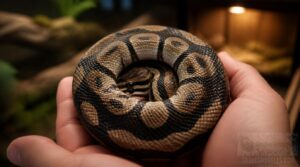
Sometimes the first clue isn’t dramatic at all, it’s a subtle stiffening under your palm. Watch for neck tension, tight coiling, or a head tucking toward the chin, eyes turned away.
- Muscle tightening along the spine
- Balling into a defensive posture
- Head hidden beneath body coils
These signals mean back off before things escalate.
Hissing, Striking, and Musking

A hiss isn’t just noise, it’s air forced through a narrowed glottis, and rising volume often signals strike readiness. Watch for a raised, forward-leaning head and rigid coiling, those are your cues to retreat.
Musking (more common in young snakes) is a chemical plea for space.
Together, these are clear signs your snake wants to be left alone.
Repeated Escape Attempts

One escape attempt is a fluke; three in a row is your snake voting with its body. This usually means poor support or a threatening environment, not just bad mood.
Common triggers:
- Uneven grip pressure
- Loud noise or bright light
- Unsupported tail
- Recent shed
- Harsh handling history
When to End Handling
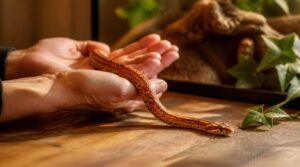
Good handling ends on a high note, not a battle. Wrap up when your snake settles into relaxed movement, breathing normally, or wanders off to explore rather than cling.
Tense head-raising without a strike? Finish calmly anyway. Watching your snake’s body language beats any clock, hissing, rigid coiling, or repeated escape attempts mean stop now, no exceptions.
Build Trust With Safe Handling

Frequency charts only get you so far — how you handle matters just as much as how often. A snake that feels secure in your hands will settle faster and trust you sooner, session after session. Here’s what good technique actually looks like in practice.
Wash Hands Before and After
Here’s a truth beginner keepers skip: your hands carry more risk than your snake does.
Wash hands thoroughly with warm water (100-110°F) and mild soap for a full 20 seconds before and after every session, this single habit blocks Salmonella transmission almost entirely. Dry with a clean towel, don’t rub. Hand sanitizer works only as backup, never a substitute.
Approach Calmly and Confidently
Clean hands set the stage, but how you approach the tank seals the deal. Snakes read body language fast, so keep your calm posture, use slow movements, and skip sudden reaches.
Quick pre-handling checklist:
- Quiet environment, no loud noise
- Approach from the side, not above
- Confident grip, no hesitation
- Predictable motions throughout
- Short sessions to start
Support The Snake’s Entire Body
A snake’s body is one long spine, so treat it that way. Cradle the chest with a flat palm, steady the shoulders with your other hand, and let the tail rest along your forearm.
| Body Region | Support Technique |
|---|---|
| Head | Freedom to explore |
| Midbody | Even palm pressure |
| Tail | Forearm alignment |
Gentle, confident movements build trust fast.
Begin With Brief Sessions
Once your grip feels steady, don’t rush the clock. Cap early sessions at one to three minutes, one calm movement at a time, close to the enclosure with warm hands and low light. Watch for tongue flicks and relaxed posture, your green light to continue.
Stress signs mean stop, reset, try tomorrow. This paced start builds real trust, especially for juvenile socialization.
Supervise Children and Beginners
Kids and first-timers need a second adult within arm’s reach, full stop.
Demonstrate first, let them watch tongue flicks and calm posture, then guide their hands with gentle touch and proper body support. Keep the enclosure nearby for quick returns.
If fear creeps in, either theirs or the snake’s, pause immediately. Wash hands after, every time.
Frequently Asked Questions (FAQs)
Is it okay to handle a snake daily?
Only rosy boas and hognoses handle daily well. Most species need rest days, since daily handling risks overtaxing tolerance thresholds and triggering stress or defensive coiling. Juvenile sensitivity means shorter, less frequent sessions, not more.
Do snakes enjoy being handled?
Enjoy" might be a stretch, but many do show calm behavior indicators, relaxed movement, and steady tongue flicking that signal genuine comfort. Gentle, consistent handling builds trust and positive associations over time, especially with juvenile snake socialization.
Is owning a snake high maintenance?
Not really. Daily care runs 5 to 15 minutes for temperature and humidity checks, feeding happens every 1-2 weeks, and cleaning takes under an hour monthly. Manageable once your routine’s set.
How long should you wait to handle a snake after getting it?
Like Rip Van Winkle waking to a changed world, your snake needs time to adjust too. Give it a 1-2 week acclimation period before handling, starting only with brief, stress-free tank-side contact.
Can you handle snakes during breeding season?
Yes, but keep it brief. Hormones override curiosity now, so watch for breeding stress signs, check female receptivity, manage male aggression, and let pairs rest post-mating instead of handling on your usual schedule.
How long should each handling session last?
Aim for five to ten minutes with juveniles, stretching toward 20-minute sessions for calm adults. Watch closely: rigid posture or tail rattling means it’s time to stop, no exceptions.
What time of day is best for handling?
Timing works like tide charts, snakes rise and settle with the day’s rhythm. Skip midday heat stress and pick evening handling instead, when cooler room temperature affects handling frequency and calm behavior matches most species’ natural circadian rhythm.
Should you handle snakes before or after enclosure cleaning?
Handle your snake before cleaning, not after. A freshly scrubbed enclosure carries unfamiliar scents that unsettle scent-driven reptiles, so touching first avoids stacking two stressors. Wash hands beforehand to limit pathogen transmission, then clean once your snake’s back home.
How does room temperature affect handling frequency?
A cool room saps your snake’s energy and digestion alike. Stick to stable room temps of 22-24°C for consistent handling, adjust session duration below 20°C, and expect livelier tongue flicks near 26°C.
Can you handle a snake right before shedding starts?
Picture blue, hazy eyes staring back at you, that’s your cue to stop. Skip handling entirely: vision impairment, heightened stress, and skin tear risk make pre-shed contact one of the three critical no-handling periods.
Conclusion
You might think skipping handling for weeks keeps your snake calmer, but neglect breeds skittishness just as fast as overhandling breeds stress. The real answer to how often should you handle a snake isn’t a fixed number, it’s a conversation with the animal in front of you.
Watch the body language, respect the shed cycle, and let confidence build gradually. Do that, and your snake stops tolerating your hands. It starts trusting them.