This site is supported by our readers. We may earn a commission, at no cost to you, if you purchase through links.
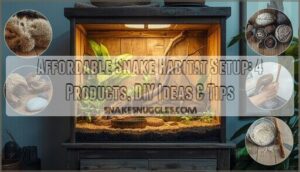
A healthy snake habitat doesn’t have to drain your wallet. Some keepers spend hundreds on fancy enclosures, but a simple setup—done right—can keep your snake safe and comfortable without breaking the bank.
The secret is knowing which features matter most for your species and where you can cut costs without sacrificing quality. From using coconut fiber instead of pricey substrates to repurposing old cabinets for enclosures, affordable snake habitat setup is all about smart choices.
With the right products and a few DIY tricks, you can create a space that accommodates your snake’s natural behavior and keeps maintenance manageable.
Table Of Contents
Key Takeaways
- You can create a safe and comfortable snake habitat on a budget by focusing on enclosure size, heating, substrate, and basic accessories.
- Repurposing cabinets, using plastic tubs, or building wooden terrariums lets you customize your setup while saving 40–60% compared to commercial options.
- Affordable products like ECOFLEX enclosures, PVC tanks, and LED lighting help cut energy costs and reduce environmental impact without sacrificing quality.
- Regular spot-cleaning, bulk buying feeders, and using low-cost monitoring tools keep maintenance simple and expenses under control.
Budget-Friendly Snake Habitat Essentials
Setting up a proper snake habitat doesn’t have to drain your wallet. You can create a safe and comfortable home for your pet by focusing on a few key elements that work together.
Let’s break down the essentials you’ll need to get started without overspending.
Choosing The Right Enclosure Size
Your snake’s size determines its enclosure needs. Match the snake habitat to its natural behavior and length. Here’s what you need:
- Enclosure Sizing: Choose reptile enclosures with a footprint 1.5–2 times your snake length for terrestrial species.
- Habitat Depth: Provide substrate depth exceeding your snake’s girth by 2–3 inches for burrowers.
- Climbing Space: Arboreal species need vertical terrarium designs with climbing options.
- Thermal Gradients: Verify animal enclosures support temperature zones across their full length.
When designing the habitat, consider using topic planning tools to organize and visualize the space effectively.
Affordable Heating and Lighting Solutions
Heat Sources like ceramic emitters paired with thermostats cut energy costs by 12–25% annually while maintaining Thermal Control. Lighting Options matter too—LED fixtures reduce electricity use by up to 60% compared to halogens. Budget thermostats under $50 provide stable temperature zones. These Energy Savings choices support proper reptile care without breaking your budget.
You’ll find reptile-specific heat mats under $25 deliver reliable warmth for small to mid-sized species.
Conducting a literature review process is essential for understanding the importance of energy efficiency in reptile care.
Cost-Effective Substrates and Decor
Once you’ve sorted heating, it’s time to look at substrate options and decor ideas. Coconut fiber or cypress mulch slash costs, while newspaper keeps things simple for DIY snake cage setups.
Cardboard boxes or PVC pipes make great budget materials for reptile enrichment.
Eco-friendly touches—like safe branches or leaf litter—bring your terrariums to life without straining your wallet.
Basic Accessories for Snake Comfort
Once you’ve set up your substrate and decor, focus on comfort accessories. Snake Hides give your pet snake a safe retreat. Water Bowls keep hydration simple.
Thermometer Probes and Humidity Gauges help you track conditions in any glass tank or DIY Snake Cage.
Climbing Structures—branches or shelves—add adventure and enrichment, making Reptile Enclosures feel more like home.
Top 4 Affordable Snake Habitat Products
You don’t need to spend a fortune to give your snake a safe and comfortable home. The right enclosure balances affordability with functionality and long-term durability.
A safe, comfortable snake home is possible with the right enclosure—affordable, functional, and built to last
Here are four solid options that won’t break the bank while meeting your snake’s essential needs.
1. Eco Friendly Reptile Terrarium Enclosure
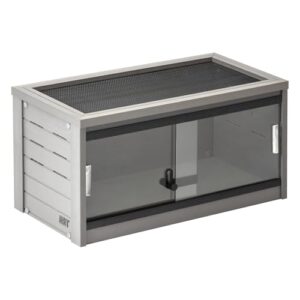
You want your reptile pet to thrive without breaking the bank or harming the planet. This glass tank terrarium checks both boxes. Its moisture-resistant ECOFLEX build uses eco materials that cut production emissions by up to 40%. The sliding front doors and vented panels give you easy access while maintaining airflow.
At 24″L x 12″W x 12″H, it fits small to medium snakes comfortably. Energy savings come from pairing it with LED lighting. The 10-year warranty means sustainable designs that last, making green options practical for your snake habitat.
Best For: Eco-conscious reptile owners who want a durable, low-maintenance enclosure for small to medium snakes, lizards, or tortoises without spending a fortune on energy bills.
- Eco-friendly ECOFLEX material cuts production emissions by up to 40% while offering moisture resistance and a solid 10-year warranty.
- Sliding front doors with lock and vented side panels make feeding, cleaning, and daily checks super easy without disturbing your pet.
- Pairs perfectly with energy-efficient LED lighting to slash electricity costs by 50–70% compared to old-school incandescent setups.
- No built-in cord ports for heating or lighting equipment, so you’ll need to drill holes yourself or find workarounds.
- The large mesh screen top can make it tricky to maintain humidity for species that need it, and may require extra sealing.
- Mesh top won’t support heavy fixtures, and the riser design isn’t stackable if you’re planning multiple enclosures.
2. Reptile Habitat Enclosure Tank
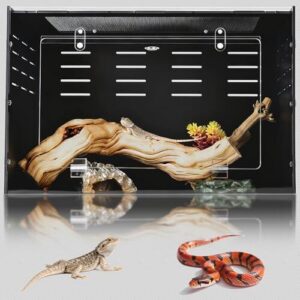
This 25-gallon PVC and acrylic tank offers spacious dimensions—24″x16″x16″—ideal for ground dwellers like ball pythons or arboreal species needing vertical space. The tank materials resist moisture, and the front-opening panel reduces stress during feeding or cleaning.
Ventilation systems include side and rear holes to prevent humidity spikes. Assembly is straightforward, though some users report magnet strength inconsistencies. At 9.7 pounds, it’s lightweight for repositioning.
Tank security is crucial: check door latches regularly, as they can loosen over time. For snake care on a budget, this reptile habitat enclosure tank balances affordability with essential design features.
Best For: Snake owners seeking a budget-friendly, lightweight enclosure with good ventilation and easy access for small to medium-sized ground-dwelling or arboreal species.
- Spacious 25-gallon design with 24 inches of vertical space works well for both ground dwellers like ball pythons and climbing species
- Front-opening panel makes feeding and cleaning less stressful for your snake compared to top-entry designs
- Lightweight at under 10 pounds, so you can easily move it for deep cleaning or rearranging your setup
- Door latches and magnets can be weak or loosen over time, requiring regular checks to prevent escapes
- Ventilation slits may be large enough for small snakes or hatchlings to squeeze through
- Build quality is hit-or-miss according to reviews, with some users reporting assembly frustrations or moisture leakage issues
3. Reptile Habitat Enclosure Tank System
A 40-gallon glass terrarium with built-in storage creates a practical snake habitat while consolidating your setup. The wooden cabinet underneath holds supplies like extra substrate and cleaning tools.
Tank materials include heat-resistant metal mesh for habitat lighting placement, plus sliding glass doors with locks to prevent escapes. Ventilation systems incorporate the top mesh screen to maintain thermal gradients.
This animal enclosure requires several hours for assembly, but enclosure design offers both display appeal and function. For reptile care on a budget, it’s a solid DIY snake cage alternative without the construction hassle.
Best For: Reptile owners who want a ready-made enclosure with built-in storage and don’t mind a longer assembly process.
- Cabinet storage keeps substrates, tools, and supplies organized in one spot instead of scattered around your space
- Heat-resistant mesh top works with various lighting and heating setups while keeping airflow steady
- Locking sliding doors add security for escape-prone snakes, though determined animals might still find weak points
- Assembly takes several hours and requires patience with labeled parts and instructions
- Plastic doors can bend under pressure from stronger snakes, creating potential escape gaps
- Not waterproof, so it won’t work for turtles or high-humidity setups that need frequent misting
4. Reptile Habitat Eco Friendly Enclosure
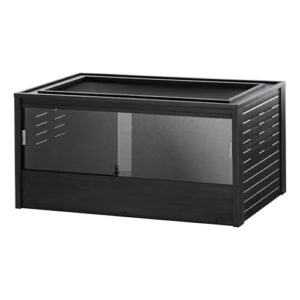
Eco materials like recycled glass and BPA-free plastics cut environmental impact by up to 40% while costing less than standard acrylic. This 48x24x22.8-inch enclosure features moisture-resistant ECOFLEX construction with sliding glass doors and vented panels for enhanced airflow. You’ll appreciate the tool-free assembly and 10-year warranty.
Green options like biodegradable substrate packaging reduce plastic waste by 25-35%. The energy efficiency of LED lighting and ceramic heaters saves 18-25% on power costs, making sustainable reptile habitat design practical for your wallet and the planet.
Best For: Eco-conscious reptile owners who want a spacious, low-maintenance habitat with strong airflow and easy cleaning while reducing their environmental footprint.
- Moisture-resistant ECOFLEX material makes cleanup simple and prevents odors from building up over time
- Sliding glass doors with a lock give you quick access while keeping your pet secure, plus the vented panels help maintain stable temperature and humidity
- Tool-free assembly and a 10-year warranty mean less hassle upfront and long-term peace of mind
- Some units arrive with cracked parts, which can be frustrating to deal with right out of the box
- No built-in cord ports means you’ll need to drill holes yourself if you want to run heating or lighting cables cleanly
- The large mesh top makes it tough to maintain humidity for species that need it, and the mesh staples aren’t always reliable
DIY and Low-Cost Snake Enclosure Ideas
You don’t need to spend hundreds of dollars on a commercial enclosure to keep your snake safe and comfortable. With a little effort and the right materials, you can create a functional habitat that meets your pet’s needs without breaking the bank.
Let’s look at four practical options that work well for budget-conscious keepers.
Repurposing Cabinets and Shelving Units
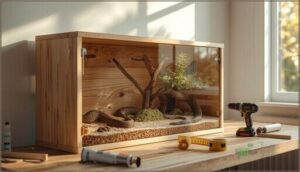
Old kitchen cabinets and freestanding shelving units can become solid snake habitats at a fraction of retail prices. You’ll find repurposed materials slash setup costs by 40–60% while giving your pet a secure home. DIY enclosures offer customization that store-bought options can’t match.
- Convert taller base cabinets laid sideways for larger species
- Add tempered-glass fronts for visibility at half the price
- Seal seams and cross-brace joints for long-term safety
Using Plastic Tubs for Small Snakes
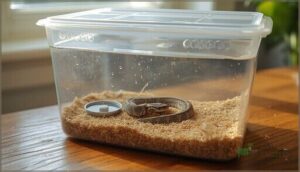
Clear plastic tubs deliver practical housing for hatchlings and small species without draining your wallet. You’ll maintain 60–80% humidity with proper Snake Tub Ventilation—drill quarter-inch holes along upper sides for steady air exchange.
Tub Humidity Control stays consistent, supporting Small Snake Behavior like burrowing in 2–4 inches of substrate.
This lightweight Pet Habitat simplifies Snake Tub Hygiene and reduces stress during routine cleaning by 15–25%.
Building Wooden Terrariums on a Budget
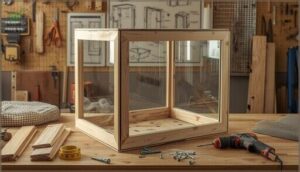
You can build your own wooden terrarium for $50–$150 using budget materials from local hardware stores. This DIY approach gives you control over terrarium design and delivers cost savings of 40–60% versus commercial options.
Follow these steps for your snake habitat:
- Select untreated plywood for a wooden frame that holds glass or acrylic panels
- Reference free DIY plans online to guide your terrarium design and construction
- Install proper ventilation to maintain airflow in your animal enclosure
Stackable and Expandable Enclosure Options
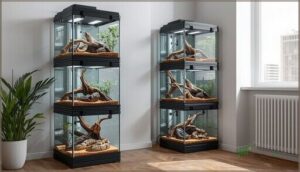
Modular designs let you grow your snake habitat as your reptile grows. These stackable systems cost 20–40% less per liter than single large tanks. You’ll save space in small rooms—68% of keepers choose modular designs for this reason. Building a snake enclosure with add-on modules increases volume by 42% without doubling your footprint.
| Feature | Benefit | Cost Impact |
|---|---|---|
| Stackable tiers | Maximizes vertical space | 20–40% savings per liter |
| Add-on modules | Grows with your snake | 42% more volume |
| Standardized heights | Reduces escape risk | 15–25% fewer incidents |
| Cross-brand compatibility | Flexible customization options | Reuses existing accessories |
| Secure locking systems | Enhances reptile safety | Prevents handling accidents |
These animal enclosures work for DIY projects too—standardized dimensions mean your accessories fit across brands.
Maintenance Tips for Affordable Snake Habitats
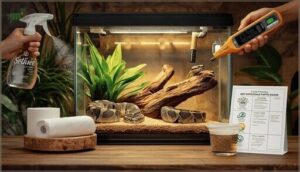
Keeping costs low doesn’t stop once you’ve built or bought your snake’s enclosure. Regular maintenance affects your budget just as much as the initial setup.
Here’s how to manage temperature, feeding, cleaning, and monitoring without breaking the bank.
Efficient Temperature and Humidity Control
You’ll need precise control over thermal gradients and humidity to keep your snake healthy without breaking the bank. Heat mats paired with thermostats cut energy use by 15–30% while maintaining climate zones within ±2°C.
Humidity sensors and hygrometers track moisture levels accurately for under $25.
Temperature cycling mimics natural rhythms, supporting reptile health and wellness through smart heat mapping across your enclosure.
Feeding and Cleaning on a Budget
Budget feeding starts with bulk buying frozen rodents—you’ll save 30–60% over single purchases. Adult corn snakes need just 2–4 feeders monthly, while ball pythons eat 4–12 depending on age.
For economical sanitation, spot-clean several times weekly and do full cleanings every 4–6 weeks using diluted bleach (1:10 ratio). Paper towels make cheap substrate that shows waste instantly, keeping reptile health solid without expensive products.
Monitoring Habitat Health With Low-Cost Tools
Often, low-cost tools keep reptile keeping simple and safe. Sensor calibration matters—affordable thermometers drift ±2°C in six months. For reliable reptile care and maintenance, use two sensors and review data logging weekly.
Humidity control works best with well-placed meters. You’ll catch health alerts early and keep your enclosure stable with:
- Dual temperature monitoring
- Rolling average data logging
- Targeted humidity control
Reducing Ongoing Maintenance Expenses
Every month, small changes add up in reptile care and maintenance. For instance, swapping household liners for specialty ones cuts costs by 20–30%. Scheduled preventive maintenance lowers emergency repairs by up to 50%. Here’s a quick guide for budget planning and habitat optimization:
| Energy Savings | Cost Control |
|---|---|
| Nighttime heat drop | Reclaimed substrate |
| LED lighting | Fewer decor pieces |
Frequently Asked Questions (FAQs)
What snake species are best for beginners?
Ball pythons and corn snakes dominate beginner choices—roughly 25% and 60–70% of first-year setups. California kingsnakes and garter snakes follow.
These species tolerate handling, adapt to varied habitats, and support solid reptile health without complex herpetology knowledge.
How often should I replace substrate material?
Your enclosure cleaning schedule depends on waste load and humidity. Small snakes need substrate replacement every two to four weeks.
High-waste hatchlings require weekly changes to prevent ammonia buildup and protect snake health.
Can I house multiple snakes together safely?
Most snakes don’t tolerate cohabitation well. Stress, aggression, and disease spread quickly when snakes share an enclosure.
You should house each snake separately to minimize cohabitation risks and guarantee proper pet care and maintenance.
What are signs of an unhealthy snake?
Watch for lethargy, refusal to eat, abnormal stool, or shedding problems. Open-mouth breathing or cloudy eyes point to health issues.
These health signs often stem from Habitat Stress, Feeding Issues, or poor Animal Enclosure Options—prompting Veterinary Care.
Do all snakes need UVB lighting?
Not every snake relies on UVB lighting. Some species need it for calcium metabolism and Vitamin D3, but most thrive with a proper diet and Reptile Lighting Alternatives.
Snake Species Research helps you choose the Reptiles Perfect Habitat for yours.
Conclusion
It’s no coincidence that your search for an affordable snake habitat setup aligns with your snake’s needs. When you make practical choices—like repurposing a cabinet or choosing low-cost substrates—you’re creating a space that reflects both care and resourcefulness.
Each decision, whether it’s a DIY fix or a budget product, shapes your snake’s comfort and safety. The best setups aren’t about spending more—they’re about understanding what matters most. Your habitat becomes a home, built with intention and respect.
- https://www.ncbi.nlm.nih.gov/books/NBK481583/
- https://foreman.hms.harvard.edu/sub-topics-or-subtopics
- https://www.merriam-webster.com/dictionary/subtopic
- https://www.gsmaintelligence.com/research/2024-research-themes-topics-shaping-the-industry-and-driving-our-focus
- https://www.informatechtarget.com/blog/3-universal-themes-facing-todays-industries/