This site is supported by our readers. We may earn a commission, at no cost to you, if you purchase through links.

Most people spend more on their snake’s first enclosure than they ever needed to. A $400 glass tank with chrome hardware looks impressive at the pet store, but your corn snake doesn’t care about aesthetics—it cares about heat gradients, security, and enough space to stretch out. The right setup can cost a fraction of that without cutting corners on what actually matters.
Affordable snake housing options have quietly gotten better. PVC panels that hold heat like a thermos, stackable tubs that serious breeders swear by, and front-opening glass terrariums under $30 all prove that budget doesn’t mean compromise. Here’s worth your money.
Table Of Contents
- Key Takeaways
- Top 9 Affordable Snake Enclosures
- 1. Exo Terra Flat Home Terrarium
- 2. REPTI ZOO Glass Terrarium Sliding Top
- 3. Terroute Dual Reptile Terrarium with Stand
- 4. Acrylic Mini Reptile Feeding Box
- 5. REPTI ZOO PVC Reptile Terrarium with Sliding Door
- 6. Happy Habitat Ventilated Breeder Box
- 7. Exo Terra Medium Plastic Terrarium
- 8. REPTIZOO Black Glass Snake Terrarium
- 9. JIHAQUA Natural Rock Reptile Hide
- Choose The Right Enclosure Size
- Compare Budget Enclosure Materials
- Budget Setup Essentials That Matter
- Save Money Without Sacrificing Safety
- Frequently Asked Questions (FAQs)
- What can I use as a snake enclosure?
- Where do snakes go in October?
- What type of housing does a snake need?
- Is a 50 gallon tank enough for a corn snake?
- What is the best habitat for snakes?
- What to put in the bottom of a snake tank?
- Should you upgrade your snake’s enclosure?
- Do snakes need a vertical enclosure?
- How do I keep snakes out of my enclosure?
- How do I choose a substrate for a snake?
- Conclusion
Key Takeaways
- You don’t need to spend $400 on a glass tank — a $30 front-opening terrarium or a plastic tub does everything your snake actually cares about.
- Material matters more than looks: PVC holds heat far better than glass, which means your heating equipment works less and your energy bill stays lower.
- Match the enclosure size to your snake’s growth stage — too small stresses it out, too large makes it hard to find food and feel secure.
- The cheapest setups fail on the basics, so lock down your lid, place hides on both the warm and cool sides, and never skip a thermostat.
Top 9 Affordable Snake Enclosures
Finding a solid snake enclosure doesn’t have to drain your wallet. These nine options cover different sizes, materials, and setups — so there’s something here whether you’re housing a hatchling corn snake or a full-grown ball python.
If you’re focused on corn snakes specifically, you’ll find even more ways to stretch your budget with these affordable corn snake accessories and setup tips.
Take a look at what made the list.
1. Exo Terra Flat Home Terrarium
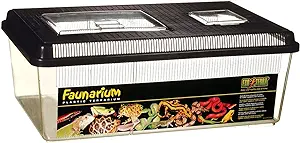
The Exo Terra Flat Home Terrarium keeps things simple — and that’s exactly what beginners need. Its front-opening double doors make feeding feel less stressful for both you and your snake.
The clear glass panels give you an unobstructed view so you can monitor behavior without disturbing the setup. A raised bottom frame fits heat mats neatly underneath, which saves you from extra hardware headaches.
It’s compact, clean, and genuinely easy to work with right out of the box.
| Best For | Hobbyists and beginners who need an affordable, no-fuss enclosure for short-term quarantine, transport, or housing small reptiles, amphibians, and invertebrates. |
|---|---|
| Material | Impact-resistant plastic |
| Ventilation | Lid and side slits |
| Price Range | Budget |
| Ease of Cleaning | Easy – removable divider |
| Escape Prevention | Snap-shut door |
| Suitable Species | Small reptiles, amphibians |
| Additional Features |
|
- The removable divider lets you house two animals or isolate a sick one without buying a second tank.
- Non-porous plastic is quick to clean and disinfect between uses.
- At $21.99, it’s an easy buy for anyone who needs a temporary or backup enclosure.
- The lid is flimsy and has been known to crack during shipping — always inspect it when it arrives.
- Ventilation holes are large enough for tiny critters like isopods or spiderlings to squeeze through.
- The plastic has a yellow tint and can warp near heat sources, so it’s not great for species that need regulated warmth.
2. REPTI ZOO Glass Terrarium Sliding Top
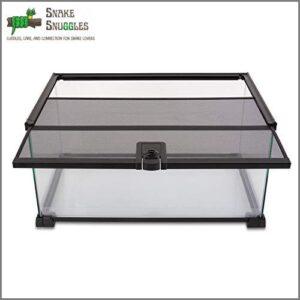
If front-opening doors made the Exo Terra feel approachable, the REPTI ZOO Glass Terrarium Sliding Top takes a different angle — and it works just as well for small snakes.
The "Lift and Pull" screen top slides open smoothly, so feeding stays quick and low-drama.
At 20 × 12 × 10 inches with a 10-gallon capacity, it fits hatchlings and small juveniles without wasting space.
The removable PVC tray makes cleanup genuinely painless, and assembly takes about two minutes flat.
| Best For | Small reptile owners — especially those keeping hatchling or juvenile snakes — who want easy top-access feeding and simple daily maintenance. |
|---|---|
| Material | Tempered glass |
| Ventilation | Full screen top |
| Price Range | Mid-range |
| Ease of Cleaning | Easy – removable top |
| Escape Prevention | Snug sliding screen |
| Suitable Species | Small reptiles, amphibians |
| Additional Features |
|
- The "Lift and Pull" screen top slides open smoothly, making feeding quick and stress-free for both you and your animal.
- 360° tempered glass walls give you a clear, unobstructed view from every angle without having to open anything.
- The removable PVC tray makes substrate swaps and cleaning genuinely fast — no fuss.
- There’s no built-in heating, lighting, or humidity control, so you’ll need to budget for extra gear on top of the purchase price.
- It’s not water-tight — the corners can leak, so it won’t work as a humid hide or semi-aquatic setup.
- The sliding screen lid can get sticky over time and may need some fiddling to seat properly.
3. Terroute Dual Reptile Terrarium with Stand
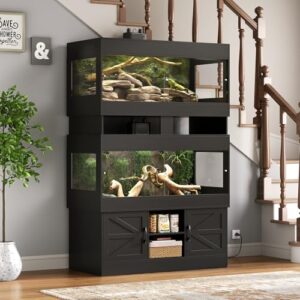
If you’re housing more than one snake, the Terroute Dual Reptile Terrarium with Stand pulls serious weight. It fits two separate 120-gallon enclosures — each measuring 4 ft × 2 ft × 2 ft — within a single footprint, so you’re not doubling your floor space.
The built-in 4-outlet power strip keeps cords tidy, and the sliding acrylic doors make feeding clean and calm.
Assembly takes two people and some patience, but the cabinet storage underneath makes daily care genuinely easier.
| Best For | Reptile owners with two or more animals who want separate habitats without taking up twice the floor space. |
|---|---|
| Material | MDF engineered wood |
| Ventilation | Removable mesh top |
| Price Range | Premium |
| Ease of Cleaning | Moderate – large unit |
| Escape Prevention | Sliding acrylic doors |
| Suitable Species | Medium-large reptiles |
| Additional Features |
|
- Two full 120-gallon enclosures in one stand — great for keeping snakes, geckos, or bearded dragons side by side
- Built-in 4-outlet power strip cuts down on cord clutter from heat mats, UVB lights, and foggers
- Cabinet storage underneath keeps food, substrate, and cleaning supplies close at hand
- Assembly is a two-person job and can get frustrating with inconsistent pilot holes or missing hardware
- The lid has no latch, so you’ll need to add your own securing hardware — not ideal right out of the box
- At around $500, the MDF construction may feel like a stretch, especially if back panels need reinforcing down the road
4. Acrylic Mini Reptile Feeding Box
Not every snake care task needs a full enclosure.
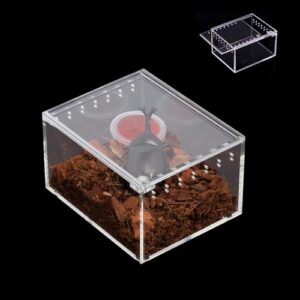
The Acrylic Mini Reptile Feeding Box is a compact, purpose-built solution for separating your snake during feeding — keeping prey, substrate, and stress out of the main habitat. Its magnetic sliding lid locks securely, so your snake can’t push out mid-meal.
Fully transparent walls let you watch the whole process without lifting a finger. At roughly 4 × 3 × 2 inches, it’s lightweight, easy to rinse clean, and genuinely worth keeping on your shelf.
| Best For | Hobbyists keeping small climbing invertebrates like slings, juvenile tarantulas, or scorpions who need a compact, easy-to-monitor enclosure. |
|---|---|
| Material | Clear acrylic |
| Ventilation | Multiple holes |
| Price Range | Budget |
| Ease of Cleaning | Easy – sliding lid |
| Escape Prevention | Magnetic closure |
| Suitable Species | Tiny invertebrates |
| Additional Features |
|
- Crystal-clear acrylic on all sides makes it easy to keep an eye on your critters without disturbing them.
- The magnetic sliding lid keeps things secure and makes feeding or cleaning quick and hassle-free.
- Lightweight, pre-assembled, and built to last without yellowing or warping over time.
- Way too small for anything beyond the juvenile stage — you’ll need to upgrade as your animal grows.
- Ventilation holes might not be fine enough for very tiny hatchlings, which could slip through.
- Not great for burrowing species since there’s no room for meaningful substrate depth.
5. REPTI ZOO PVC Reptile Terrarium with Sliding Door
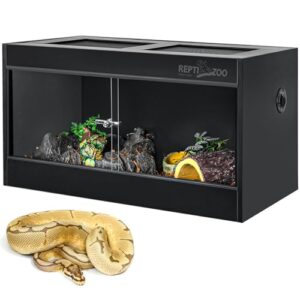
If heat retention is your priority, the REPTI ZOO PVC Reptile Terrarium deserves a serious look. At 36 × 18 × 18 inches with a 50-gallon capacity, it gives small-to-mid-sized snakes real room to settle.
The PVC build makes a real difference in day-to-day maintenance—if you want to dial everything in properly, this snake enclosure heating setup guide walks you through getting a stable gradient from the start.
The opaque black PVC walls reduce visual stress, while the front sliding glass doors let you feed without fully exposing the enclosure.
One heads-up: the door lock can loosen over time, so check it regularly if you’re keeping escape-prone species.
| Best For | Reptile keepers who need solid heat retention for species like ball pythons or bearded dragons and want a clean, low-stress setup that’s easy to stack. |
|---|---|
| Material | PVC panels |
| Ventilation | Detachable mesh screen |
| Price Range | Mid-range |
| Ease of Cleaning | Easy – removable door |
| Escape Prevention | Safety lock mechanism |
| Suitable Species | Snakes, lizards, geckos |
| Additional Features |
|
- PVC walls hold heat and humidity way better than glass, so your temps stay consistent without working your heating equipment as hard.
- The opaque black walls keep snakes and shy reptiles calm by cutting out visual stress from the outside world.
- Stackable design is a lifesaver if you’re keeping multiple animals — saves a ton of floor space.
- The door lock can loosen over time, which is a real concern if you’re housing escape artists like ball pythons.
- Overtightening screws during assembly can crack the screw holes, so you have to take it slow and careful putting it together.
- Wiring only runs through the right side — if you need left-side access, you’re drilling it yourself.
6. Happy Habitat Ventilated Breeder Box
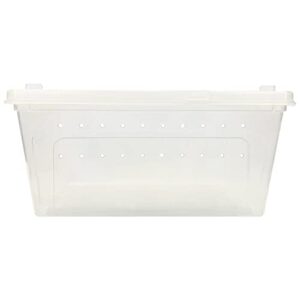
The Happy Habitat Ventilated Breeder Box punches above its weight for new snake owners watching their budget.
At just under a pound and roughly 12.75 × 6.5 × 8.5 inches, it’s compact but surprisingly functional.
The lid‑only ventilation slots cut escape risk while still keeping air moving, and the built-in feeding window means less disturbance during meals.
It won’t replace a full enclosure long‑term, but for hatchlings or temporary housing, it’s a smart, low‑cost starting point.
| Best For | New snake owners on a budget who need a compact, low-fuss solution for housing hatchlings or storing feeder insects short-term. |
|---|---|
| Material | Rigid plastic |
| Ventilation | Lid slots only |
| Price Range | Budget |
| Ease of Cleaning | Easy – smooth plastic |
| Escape Prevention | Self-locking lid |
| Suitable Species | Feeder insects, small reptiles |
| Additional Features |
|
- Lid-only ventilation slots keep escape risk low without sacrificing airflow
- Built-in feeding window and airline tubing holes mean less lid-off time during feeding or misting
- Lightweight and stackable — easy to store multiples without eating up shelf space
- Lid and bottom seals can feel loose, which makes it a bit sketchy for bumpy transport
- Fixed 8.5-inch height fills up fast if your feeder insects are growing quickly
- No built-in shelter or substrate sections — you’ll need to add hides or bedding yourself, and they can shift around
7. Exo Terra Medium Plastic Terrarium
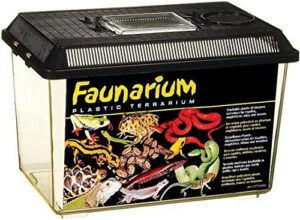
The Exo Terra Medium Plastic Terrarium is a solid pick when you’re housing a hatchling or juvenile snake on a tight budget. At roughly 12 × 7.5 × 8 inches, it’s compact but functional — clear panels let you check on your snake without lifting the lid, and the ventilated top keeps air circulating to reduce condensation.
Front access and a secure latch make feeding less stressful for both of you.
Just know it’s a short-term solution, not a forever home.
| Best For | Budget-conscious beginners or hobbyists who need a short-term enclosure for hatchlings, juveniles, or small critters like insects and amphibians. |
|---|---|
| Material | Rigid plastic |
| Ventilation | Multiple slits |
| Price Range | Budget |
| Ease of Cleaning | Easy – smooth interior |
| Escape Prevention | Hinged top window |
| Suitable Species | Small reptiles, insects |
| Additional Features |
|
- Crystal-clear sides make it easy to check on your animal without disturbing it
- Lightweight and portable — great for travel, field trips, or quick quarantine setups
- Hinged top window makes feeding and access simple and low-stress
- Not built for the long haul — no easy way to add heat lamps or standard terrarium gear
- Plastic scratches and cracks more easily than glass or thick acrylic
- Lid fit can be hit or miss, and that bottom label is a pain to remove cleanly
8. REPTIZOO Black Glass Snake Terrarium
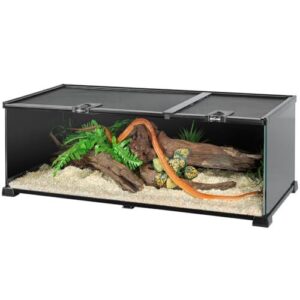
The REPTIZOO Black Glass Snake Terrarium is built for snakes that want to feel hidden. Three sides use black-tinted glass to keep things dim and stress‑free, while the clear front lets you watch without disturbing your animal.
At 30 × 12 × 10 inches and 23 lb, it’s sturdy but not easy to move.
The sliding top screen opens for feeding, and the raised bottom frame fits a heat mat underneath.
Worth noting: reinforce those corners with silicone before adding substrate.
| Best For | Reptile owners who keep snakes, lizards, or other shy species that thrive in low-light, low-stress environments. |
|---|---|
| Material | Glass with black tint |
| Ventilation | Sliding mesh top |
| Price Range | Mid-range |
| Ease of Cleaning | Easy – PVC tray |
| Escape Prevention | Feeding ports with screen |
| Suitable Species | Snakes, lizards, spiders |
| Additional Features |
|
- Three black-tinted glass sides cut down light and stress, making it a genuinely calming space for your reptile
- The sliding top screen and feeding ports let you feed without making a big production out of it
- Mesh top lets UVB and IR lighting through without any interference, which matters a lot for reptile health
- Corners can arrive cracked or poorly sealed — plan on adding silicone before you put any substrate in
- At 23 lb, it’s not something you’ll want to reposition often once it’s set up
- The sliding top screen isn’t strong enough to hold up against a curious cat sitting on it
9. JIHAQUA Natural Rock Reptile Hide
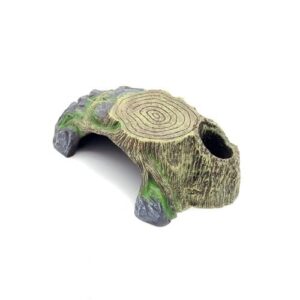
At just $13.99, the JIHAQUA Natural Rock Reptile Hide punches well above its price.
Your small snake gets a dark, stable retreat that mimics the kind of rocky crevice it’d naturally seek out. The resin construction looks realistic, resists mold, and won’t tip when your animal settles in. Smooth edges mean no injury risk.
Keep in mind — it’s sized for smaller species, so if your corn snake is growing fast, you may need to size up soon.
| Best For | Small reptile and amphibian owners who want an affordable, natural-looking hide that keeps their animal calm and stress-free. |
|---|---|
| Material | Resin rock composite |
| Ventilation | N/A – solid hide |
| Price Range | Budget |
| Ease of Cleaning | Easy – non-porous surface |
| Escape Prevention | N/A – open hide |
| Suitable Species | Small reptiles, amphibians |
| Additional Features |
|
- Looks like real rock — blends naturally into both land and water-based setups
- Heavy enough to stay put even when your reptile climbs or burrows around it
- Easy to clean, non-porous surface means less scrubbing and no mold buildup
- Too small for medium or large snakes and turtles, so you may outgrow it fast
- The wide opening gives away some privacy, which shyer species might not love
- Heavier build can be annoying to move around in a compact or lightweight tank
Choose The Right Enclosure Size
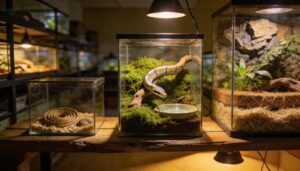
Getting the size right from the start saves you money and keeps your snake stress‑free. Too small, and your snake feels trapped; too big, and a hatchling can struggle to find food or feel secure.
Here’s a breakdown of what works at every stage of growth.
Best Starter Sizes for Hatchlings
Start small — but not too small. Hatchlings need a 20–40 gallon setup with smart Temperature Gradient Planning built in.
Length-to-Volume Ratio matters here: allow 1.5–2x the snake’s body length in Linear Space Requirement.
33 Gallon enclosure (sale price $179) accommodates most hatchlings well, giving room for Humidity Management Tips to work and supporting your Hatchling Growth Forecast without overwhelming a tiny snake.
small lockable glass tank provides a clear view for monitoring while keeping hatchlings secure.
Affordable Options for Juvenile Snakes
Once your juvenile outgrows that starter setup, a 60 Gallon enclosure (sale price $249) hits the sweet spot. Heat Retention Strategies work better in PVC at this size, and Humidity Management Tips stay simpler too.
Online pet supply shopping often reveals size variations of snake tanks with solid Low-Cost Lighting bundles — real value without compromise.
Adult Corn Snake Housing Needs
Adult corn snakes need at least a 40-gallon setup, but the 60 Gallon Snake Enclosure V2 at sale price $249 gives you real room for Microhabitat Zones — warm side, cool side, Feeding Area Design, even a humidity hide.
Lighting Requirements stay minimal with low-watt LEDs.
Solid panels help with Noise Reduction, and Cleaning Routine stays simple.
Smart Snake habitat selection now saves headaches later.
Adult Ball Python Housing Needs
Ball pythons are calmer than corn snakes, but they need serious floor space — think the 120‑gallon enclosure at $299 sale price or the 150‑gallon at $349 sale price for a full‑grown adult.
Your setup priorities:
- Microhabitat Zones — warm, cool, and a humidity hide
- Heat Source Regulation — always paired with a thermostat
- Enclosure Security — front-locking doors only
Boa Constrictor Space on a Budget
Boas are big snakes — adults need at least 6×2×2 feet.
The $349 sale price for the 150‑gallon enclosure hits that mark.
Heat retention strategies matter here: PVC beats glass for keeping warmth stable without driving up your electric bill.
Modular expansion options let your setup grow with your snake.
| Boa Size | Minimum Enclosure |
|---|---|
| Hatchling | 20–40 gallon |
| Juvenile | 4×2×2 ft |
| Sub-adult | 5×2×2 ft |
| Adult | 6×2×2 ft |
| Large Adult | 150-gallon+ |
Floor Space Versus Climbing Height
Floor area importance shifts depending on your snake’s habits.
Ground-dwellers need wide, shallow tanks — the 120-gallon or 150-gallon options work well here.
Climbers benefit from vertical climbing benefits that a 240-gallon’s extra height provides.
Getting your height-to-floor ratio right is the real space allocation balance.
Species zoning tradeoffs are real — know your snake before you buy.
When to Upgrade Enclosure Size
Once snake’s length hits two-thirds of the enclosure’s interior, it’s time to move up. Watch for wall-pressing and failed natural coils — those are your Shedding Stress Indicators.
Follow a simple Upgrade Timing Checklist: check Length Milestones monthly, confirm Clearance Buffer Zones, and plan Heat Gradient Planning across 120 Gallon, 150 Gallon, or 240 Gallon options to future-proof your Snake housing options.
Compare Budget Enclosure Materials
The material your snake’s enclosure is made from affects everything — heat retention, humidity, cost, and how easy it is to maintain.
Glass, PVC, wood, and plastic tubs each have real tradeoffs worth knowing before you spend a dollar. Here’s how they stack up.
Glass Enclosures for Low Upfront Cost
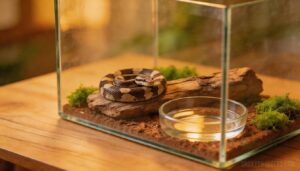
Glass reptile cages are your lowest upfront option — and that clear view benefit is real. You can watch your snake’s behavior without opening the enclosure at all.
Lightweight glass design keeps shipping costs down, and simple assembly glass setups don’t require tools.
Budget-friendly models often come in at a sale price well under $150, making cost-effective glass sourcing an easy first win.
PVC Enclosures for Heat Efficiency
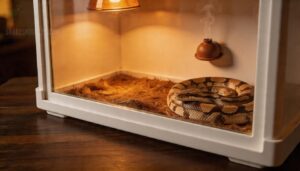
PVC enclosures hold heat like a thermos — that’s their whole advantage. Thick walls with thermal barrier inserts and air gap insulation slow heat loss considerably.
heat retention seals prevent drafts from undermining your temperature gradient control. heat shield barriers on the warm side, and you’ve got a stable setup.
Sale prices starting around $249 make a quality PVC enclosure genuinely affordable.
Wood Enclosures for Insulated Housing
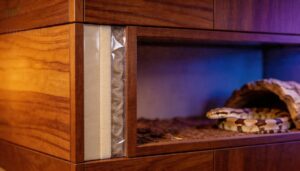
Wood enclosures bring serious insulation layer design to your snake’s home — mineral wool or polyurethane between the walls cuts heat transfer by 40 percent. Add air-tight sealing at every joint and a moisture barrier system behind the lining, and your temperature gradient stays rock solid.
Thermal mass benefits smooth overnight drops naturally.
Reptile-safe finishes protect the interior.
Snake Enclosure V2 and V3 models are available on sale.
Plastic Tubs for Ultra-budget Setups
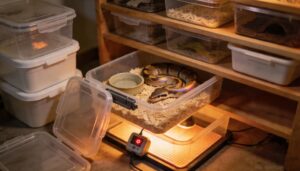
Plastic tubs are the unsung heroes of budget snake keeping — available from 6 quarts up to 60 gallons, they’re cheap, stackable, and surprisingly functional. Snap-lock lids prevent escapes, and the easy cleaning surface makes maintenance a breeze.
- Clear vs opaque options let you balance visibility with your snake’s sense of security
- Heat mat compatibility works well with thermostat control underneath
- Compact storage shape saves serious space compared to a full PVC Enclosure
Front-opening Versus Top-opening Designs
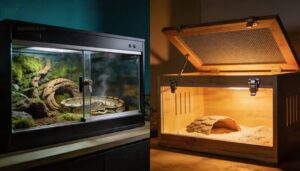
Front-opening designs win on access convenience — you’re not lifting a heavy lid or disturbing your snake from above, which naturally reduces stress. Top-opening setups offer slightly better heat retention since warm air rises, but front doors with solid interchangeable panels keep humidity control surprisingly competitive.
Your biggest call? Escape risk. Front latches must be solid — weak closures are a gamble you don’t want to take.
Ventilation, Humidity, and Security Tradeoffs
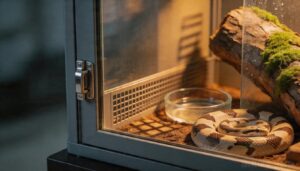
Getting airflow management right means accepting a tradeoff: more vents help humidity regulation, but create more escape points. A solid humidity buffer comes from tight seal integrity — snakes push gaps constantly.
Smart vent placement low on sides, combined with secure enclosure locks, gives you habitat ventilation without sacrificing escape-proof design. That balance matters more than any product pricing or discount ever will.
Proper vent placement and secure locks keep snakes safe without sacrificing the airflow they need
Budget Setup Essentials That Matter

Getting the enclosure right is only half the battle — what you put inside it matters just as much. The right essentials don’t have to drain your wallet to keep your snake safe, comfortable, and stress-free.
Here’s what actually matters on a budget.
Affordable Substrate Options
Substrate doesn’t have to break the bank. Here are five affordable options worth knowing:
- Dirt capped with sand — nutrient-rich, budget-friendly, great for live plants
- Coconut coir — lightweight, moisture-retaining, easy to find at low cost
- Wood fiber blends — slow to compact, humidity-friendly, dust-controlled
- Paper mulch — biodegradable, cheap, ideal for temporary setups
- Sand gravel mixes — drainage-focused, inexpensive at hardware stores
Low-cost Hides and Cover
Simple hide shapes — low, snug, and dark — work best. Your snake needs to feel the walls, not rattle around inside a roomy cave.
A damp plastic container packed with sphagnum moss makes a moisture retaining hide. Stable hide bases keep things from tipping when your snake pushes.
Easy-to-clean materials like smooth plastic beat cardboard every time.
Fake plants and branches add visual barriers without big costs.
Budget Heating Sources for Snakes
Heat is where budgets often break — but it doesn’t have to. Three solid options keep costs low:
- Budget Overhead Bulbs warm ambient air fast and cost little upfront.
- Ceramic Heat Emitters skip reptile lighting entirely, running heat-only overnight.
- Heat Tape Rack systems heat multiple tubs cheaply at once.
Always pair any source with thermostat safety tips — temperature control without one is just guesswork.
Thermometers and Hygrometers Worth Buying
Accurate readings are the backbone of solid reptile husbandry. Aim for ±2–3% RH humidity accuracy and ±1°F temperature control — the ThermoPro TP55 hits both at a budget price.
Smart connectivity options like the Govee H5075 send phone alerts and store trend data. Look for fast refresh rates, clear display readability, and mounting flexibility to keep your reptile habitat dialed in.
Escape-proof Lids, Locks, and Doors
Don’t underestimate a snake’s ability to push through a weak lid. Secure closures are non-negotiable.
Three options worth knowing:
- Cable Lock Systems thread through Pre‑Drilled Catches with a keyed body
- Wrap‑Around Glass Locks grip the pane edge without drilling
- Mesh Lid Clips clamp tops shut better than Rubber Wedge Security alone
A Reptile Enclosure Door Lock Set costs around $21.99 — cheap peace of mind.
Stands, Spacers, and Stackable Add-ons
A good stand changes everything.
Modular Stand Systems raise your enclosure to a comfortable height and add hidden storage underneath.
Adjustable Spacer Heights keep airflow moving between stacked cages, while Universal Stackable Wheels let you reposition the whole setup easily.
Custom Extension Kits join enclosures into one larger habitat.
Always run Compatibility Checks before buying — not every spacer or Deluxe Spacer Hood fits every brand.
Save Money Without Sacrificing Safety
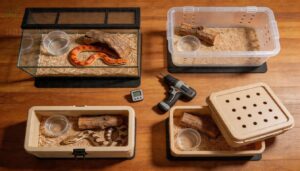
Spending less doesn’t mean cutting corners on your snake’s safety. There are smarter ways to set up a solid enclosure without draining your wallet — you just need to know where to look.
Here’s what actually works.
DIY Plastic Tote Enclosure Ideas
A plastic tote might be the smartest snake housing option you’re not using yet. With simple DIY assembly, you can build a functional home for under $30.
- Custom Ventilation Cuts — Drill screened holes for airflow control
- Silicone Lid Sealing — Block escape gaps completely
- Modular Divider Inserts — Create thermal zones cheaply
Add a portable rack tray underneath and a low-cost substrate mix inside — done.
Repurposing Furniture Into Snake Housing
Old wardrobes and bookcases make surprisingly capable customizable enclosures. Start with wood sealing — polyurethane locks out moisture before anything else.
Then make custom door cuts for front access and thermostat integration to control heat zones. DIY assembly lets you boost vertical space utilization for climbing.
Solid panels naturally handle noise reduction too. It’s budget-smart housing built exactly how your snake needs it.
Buying Used Enclosures Safely
Used enclosures can stretch your budget further than any sale price.
Run a condition inspection checklist before committing — check seals, hinges, and panels for cracks or rust. A quick seal integrity test and hardware corrosion check catch hidden problems fast.
Always ask about provenance verification: what species, how long, any leaks? Smart reptile enclosure purchasing means knowing exactly what you’re getting before money changes hands.
Bundle Deals and Habitat Kits
Bundle deals beat buying piece by piece every time. Starter Kit Savings add up fast — essentials bundles pair your enclosure with a Zen mat, cave, and optional cabinet stand, saving you 5% instantly.
Species-Specific Kits match size to your snake’s actual needs.
Complete Heating Bundles, Accessory Pairing Deals, and Modular enclosure accessories like the Deluxe Spacer Hood, Expansion Kit, and Warranty and Support coverage make every dollar work harder.
Upgrades That Extend Enclosure Life
Smart upgrades make your enclosure last years longer. Swap in stainless steel hinges and IP rated seals to fight humidity damage. UV stabilized coatings protect exteriors from light degradation.
Passive heat sinks stabilize temps without stressing materials. Modular corner connectors and interchangeable panel materials keep repairs simple.
Stackable, expandable designs with easy assembly mean your setup grows with your snake — no full replacement needed.
Common Cheap Enclosure Mistakes to Avoid
Even with upgrades in place, small setup errors can undo your progress fast. Watch out for these common cheap enclosure mistakes:
- Improper Vent Size — too large dries humidity; too small traps stale air
- Inadequate Heat Gradient — one warm spot isn’t enough; snakes need a cool zone too
- Loose Door Latches — a head-sized gap means the whole body follows
- Insufficient Hides — one snug hide per thermal side, minimum
- Wrong Substrate Choice — dusty or overly wet bedding causes respiratory and skin issues
Skipping these basics costs more to fix later.
Frequently Asked Questions (FAQs)
What can I use as a snake enclosure?
You can use a glass terrarium, PVC reptile enclosure, wooden vivarium, or even a plastic tub.
Each option provides proper temperature gradient zones and security — what matters most is size, ventilation, and a snug lid.
Where do snakes go in October?
In October, snakes follow temperature‑triggered movement toward hibernacula — dens below the frost line. Garter snakes often den first, while rattlesnakes linger into late month.
Most travel in warm afternoons, heading for rock crevices or deep burrows.
What type of housing does a snake need?
Your snake needs a secure, ventilated reptile vivarium with a proper heat gradient, hiding spots, and fresh water. A secure locking lid keeps escapes impossible. Non-reflective panels reduce stress considerably.
Is a 50 gallon tank enough for a corn snake?
A 50-gallon tank can work for most adult corn snakes, but floor length matters more than volume.
Aim for at least 4 feet to support a proper temperature gradient and safe humidity management.
What is the best habitat for snakes?
A house divided against itself can’t stand" — and neither can a snake without proper zones.
Your best habitat balances a warm basking spot, a cool retreat, and steady humidity matched to your species.
What to put in the bottom of a snake tank?
Use aspen shavings, coconut fiber, or cypress mulch as your substrate options.
Match your Species‑Specific Bedding to your snake’s humidity needs, keep Substrate Depth Guidelines at one to three inches, and prioritize Safety Cleaning Practices.
Should you upgrade your snake’s enclosure?
Yes — if your snake’s cramped, stressed, or can’t thermoregulate properly, an upgrade pays off in health benefits, stress reduction, and longevity impact.
Better space means real growth potential and a calmer, healthier animal.
Do snakes need a vertical enclosure?
Not always. It depends on your snake’s species.
Climbers like carpet pythons thrive with vertical space and secure perch installation, while ground-dwellers need floor area the most.
Match the enclosure shape to natural behavior first.
How do I keep snakes out of my enclosure?
Lock it down with locking lids, gasket installation along door edges, and vent cover tightening monthly. Test lid seal integrity by pressing corners gently.
Snakes exploit any gap, so don’t skip regular escape testing.
How do I choose a substrate for a snake?
Pick based on your snake’s species.
Corn snakes thrive with cypress mulch. Ball pythons need soft, deep substrate.
Always choose non-toxic materials. Skip cedar — it’s harmful.
Match species-specific moisture needs to keep shedding smooth.
Conclusion
It’s no coincidence that the keepers who stress the least about their snakes also spent the least on their setups. They figured out early that a snake thriving in a $30 tub isn’t settling—it’s simply getting what it needs.
Exploring affordable snake housing options puts you in that same position: informed, in control, and never overpaying for something your snake won’t notice anyway. Spend smart, and the setup practically takes care of itself.