
This site is supported by our readers. We may earn a commission, at no cost to you, if you purchase through links.

Most new snake owners handle their baby too soon, too long, or at the wrong time—and wonder why it won’t eat. Baby snakes arrive stressed from shipping, new smells, and unfamiliar surroundings. Their instinct is to hide, not to trust you. Rushing that process almost always backfires.
A consistent baby snake handling schedule fixes this by building trust in small, predictable steps. Get the timing right, read your snake’s signals, and handling becomes something it tolerates—then accepts.
The difference between a defensive hatchling and a calm, handleable snake usually comes down to one thing: patience backed by a clear plan.
Table Of Contents
- Key Takeaways
- Creating a Safe Handling Environment
- Establishing a Baby Snake Handling Schedule
- Recognizing Stress and Comfort Signals
- Step-by-Step Guide to Handling Baby Snakes
- Top 3 Products for Safe Baby Snake Handling
- Frequently Asked Questions (FAQs)
- When to start handling a new snake?
- How long can a baby snake go without food?
- How much handling is too much for a snake?
- How do I choose the right snake species?
- Can baby snakes be handled by children safely?
- What should I do if my snake bites?
- How do I bond with a shy baby snake?
- When should I consult a reptile veterinarian?
- Conclusion
Key Takeaways
- Wait 7 to 14 days before handling your new baby snake — it needs time to settle, eat, and feel safe before you ever reach in.
- Keep early sessions short (3 to 5 minutes, two to three times a week) and build slowly, because brief and consistent beats long and random every time.
- Learn your snake’s stress signals — tight coiling, hissing, and frantic movement are its way of saying “put me back” — and always listen.
- Never handle within 24 to 48 hours of feeding or during a shed, since pushing through those windows risks regurgitation and unnecessary stress.
Creating a Safe Handling Environment
Before you ever pick up your baby snake, the space around you matters just as much as your technique. A few simple adjustments can make the difference between a calm snake and a stressed one.
Learning to read your corn snake’s stress signals helps you catch problems early and adjust the environment before things escalate.
Here’s what to get in place before your first handling session.
Preparing The Enclosure and Area
Before your hands ever touch that snake, the space around you does half the work. A solid enclosure setup removes surprises before they happen. Clear the area of other pets, loud noises, and clutter. Good enclosure design means your snake already feels secure — so when you open that lid, you’re not starting from zero.
- A calm room is your first handling tool
- Remove other pets — they’re invisible stress triggers
- Clean hands signal safety before the first lift
- A familiar, well-maintained snake enclosure builds trust over time
- Space preparation isn’t a bonus step — it’s snake safety basics
Setting The Right Temperature and Humidity
Once your space is set, the next thing your snake notices — before you even lift it — is the temperature around its body. Cold air makes snakes sluggish and defensive. Proper temperature control means matching your species’ climate zones — warm side, cool side, done right.
Keep humidity levels steady too. Dry air stresses skin during shedding. Good ventilation systems and reliable heat sources make the whole enclosure feel like home.
Ensuring Calm and Quiet Conditions
Your snake’s senses don’t switch off just because the temperature is dialed in — noise and chaos can undo all that careful setup in seconds. A calm environment directly shapes snake temperament.
Turn off loud music, keep other pets out, and move with slow and deliberate, gentle movements. Calm confidence is what your snake reads first.
Spot stress signals early, and your handling techniques stay on track.
Pre-Handling Hygiene and Safety Checks
Before you reach into that enclosure, a quick hygiene check is the last line of defense between you and a stressed — or sick — snake.
Follow these safety protocols every time:
- Wash your hands thoroughly — no food smells, no lotions
- Do a quick snake inspection through the glass first
- Check that enclosure cleaning is current, no waste visible
- Skip handling gloves unless medically necessary — bare hands read better
Small steps, big difference.
Establishing a Baby Snake Handling Schedule

Getting the schedule right from the start makes a real difference in how your baby snake grows and trusts you. It’s not complicated, but there are a few key things you’ll want to follow closely.
A solid routine also means fewer stressful surprises, so check out these snake feeding dos and don’ts to keep meals safe and predictable from day one.
Here’s what you need to know to build a routine that works for both of you.
When to Begin Handling After Arrival
Think of your new baby snake like a traveler who just landed after a long, exhausting flight — the last thing it needs right now is a crowd. Give it a full 7 to 14 days for proper snake settlement before any initial interaction.
A new baby snake needs 7 to 14 days of quiet solitude before handling — just like a traveler fresh off a long flight
Post arrival care means food, warmth, and quiet. Once it’s eating reliably, your acclimation period is over and safe handling begins.
Recommended Frequency and Duration
Start with two to three short handling sessions per week, each lasting just 3 to 5 minutes. These frequency guidelines keep stress signals low while building trust.
Session timing matters too — consistent, brief contact beats long, random sessions every time.
Following a steady duration progression, add a couple of minutes weekly as your snake stays calm, working up toward 10 to 15 minutes over time.
Adjusting The Schedule for Feeding and Shedding
Two key events reshape your handling windows every single week: meals and sheds. After feeding, skip handling for at least 24 to 48 hours — digestion times vary by species, but rushing it risks regurgitation.
During shedding phases, cloudy eyes signal “hands off” until the shed is fully complete.
Sync your feeding intervals with handling frequency on a simple calendar, and your baby snake stays comfortable throughout.
Monitoring Growth and Behavior Changes
Your baby snake is quietly keeping score — and every week, its body and behavior tell you exactly how well your care routine is working.
Track these three markers consistently:
- Size Tracking: Steady weight gain signals healthy snake development and confirms your feeding routine is solid.
- Behavioral Shifts: Calmer responses to handling techniques mean trust is building.
- Stress Signals: Increased defensiveness often points to environmental or schedule issues worth adjusting.
Growth patterns don’t lie — pay attention.
Recognizing Stress and Comfort Signals
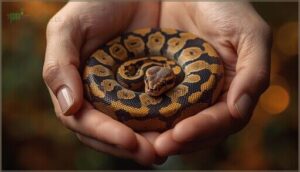
Your baby snake can’t tell you when it’s had enough — but its body language will. Learning to read those signals early makes all the difference between a snake that tolerates handling and one that actually settles into it.
Here’s what to watch for.
Common Signs of Stress in Baby Snakes
Stress signals in a baby snake aren’t subtle once you know what to look for. Rapid breathing, constant glass surfing, and frantic escape behavior during handling techniques all point to one thing — your snake is overwhelmed.
Baby behavior like stiffening, tight coiling, or hissing tells you to slow down. These signs matter for snake health, because chronic stress often leads to feeding refusals and weight loss.
To better understand what’s normal and what’s not, check out the detailed guide on recognizing ball python behavior.
Understanding Defensive Vs. Relaxed Behaviors
Once you can tell the difference between a snake that’s bracing for a fight and one that’s just along for the ride, handling gets a whole lot easier. Recognizing snake behavior comes down to reading three key defensive postures and relaxed behaviors:
- Tight S-coil, raised head — defensive posture, ready to strike
- Slow, loose movement — relaxed body language, comfortable
- Hissing or tail vibrating — clear stress signals, back off
How to Respond to Stress Indicators
Spotting stress signals is only half the job — knowing what to do next is what keeps your snake calm and builds real trust over time. When you notice stress indicators like hissing or tight coiling, lower your snake immediately and give it space.
Stress reduction is simple: shorten sessions, move slower, and try again tomorrow. Consistent handling technique adjustment based on recognizing snake behavior is how trust actually grows.
Step-by-Step Guide to Handling Baby Snakes
Knowing the right steps makes all the difference when you’re holding a baby snake for the first time. Each part of the process — from the moment you open the enclosure to the second you put the snake back — matters more than most new keepers realize.
Here’s exactly what to do, step by step.
Approaching and Lifting Your Snake Safely

The way you reach into that enclosure matters more than most new keepers realize. Move slow and deliberate — think calm, not cautious. Come from the side, never from above, since an overhead approach triggers a threat response.
Safe lifting starts mid-body, using gentle movements to scoop rather than grab. Good handling techniques begin before you even touch the snake.
Supporting The Body During Handling

Now that you’ve got your snake in your hands, how you hold it makes all the difference. A secure midbody grip with full body support keeps your snake calm and confident — not dangling and stressed.
Follow these handling techniques for snake safety:
- Use both hands to support its entire body
- Keep gentle movements steady and smooth
- Never let the tail hang free
- Shift hands as it moves to maintain full body contact
- Let it glide — don’t grip
Ending The Session Calmly and Safely

Knowing when and how to wrap up a session is just as important as how you started it. Watch for stress signals — if your snake tenses up or starts pushing away, that’s your cue. Lower it slowly for a safe release, letting it slither off your hands naturally into a calm environment.
| Signal | What It Means | Your Response |
|---|---|---|
| Tense body | Overstimulated | End session now |
| Relaxed movement | Comfortable | Finish gently |
| Pushing away | Done with handling | Lower slowly |
Short handling sessions always end better than long ones.
Post-Handling Care and Observation

What happens after you set your snake down matters just as much as the handling itself. Wash your hands right away — post-handling hygiene cuts bacteria transfer both ways.
Then quietly observe your snake for a few minutes. Watch for stress signals like hiding or tense coiling. Good snake behavior monitoring after handling sessions tells you everything about how your animal welfare practices are landing.
Top 3 Products for Safe Baby Snake Handling
Having the right tools makes a real difference when you’re working with a baby snake. A few key products can help you handle, house, and feed your snake safely and with less stress for both of you.
Here are three worth keeping in your setup.
1. Zoo Med Collapsible Snake Hook

A good snake hook acts like a bridge between you and a nervous hatchling, giving you control without crowding the snake.
The Zoo Med Deluxe Collapsible Snake Hook is a solid pick for baby snake keepers. It adjusts from 7.25 to 26 inches, so you can match the reach to your enclosure size.
The smooth, rounded hook tip won’t scrape your snake, and the easy-grip handle keeps things steady. It’s compact enough to pocket between sessions too.
| Best For | Beginner snake keepers who work with small, non-venomous snakes and want a compact, easy-to-store hook for everyday handling. |
|---|---|
| Primary Use | Snake handling |
| Material | Metal alloy |
| Safety Focus | Safe snake handling |
| Size Options | Adjustable length |
| Ease of Use | Easy grip handle |
| Suitable Animals | Small snakes |
| Additional Features |
|
- Collapses down small enough to slip in your pocket, so it’s always handy when you need it
- Adjustable length means it works in different enclosure sizes without much fuss
- Smooth, rounded tip is gentle on hatchlings and won’t stress them out during handling
- Feels a little flimsy and can bend or break if you’re not careful with it
- Not built for bigger or heavier snakes, so you’ll outgrow it fast if your collection grows
- Definitely not safe for venomous species, so keep that in mind before buying
2. Repti Zoo Glass Terrarium

Your snake’s enclosure does more for safety than any handling technique alone. The Repti Zoo Glass Terrarium gives you front-opening doors, so you’re never reaching down from above — a move that startles most hatchlings instantly.
It’s built with tempered glass, a waterproof bottom, and durable locks that keep curious kids and pets out. At $152.99, you also get a removable screen top for proper airflow and UVB access, keeping your baby snake healthy between sessions.
| Best For | Snake owners — especially those with hatchlings — who want a secure, escape-proof enclosure that’s easy to access and maintain. |
|---|---|
| Primary Use | Snake housing |
| Material | Tempered glass |
| Safety Focus | Escape-proof locks |
| Size Options | Single size |
| Ease of Use | Front-opening doors |
| Suitable Animals | Reptiles and amphibians |
| Additional Features |
|
- Front-opening doors mean no reaching down from above, which keeps skittish snakes calm during feeding and handling
- Tempered glass and durable locks make it tough for kids or pets to accidentally (or intentionally) get in
- Removable screen top lets in UVB and fresh air, which your snake actually needs to stay healthy
- Assembly can be frustrating — instructions aren’t the clearest, and the screws strip easily if you’re not careful
- A few buyers noticed small chips or scratches on the glass right out of the box
- There’s no feeder door, and if you prefer top-access enclosures, this one won’t be your style
3. Symton Reptile Food Tongs

Feeding your baby snake with bare fingers is a habit worth breaking early. Symton’s stainless steel tongs give you 15 inches of reach, so your hand stays well outside the strike zone.
The firm grip lets you wiggle a thawed pinky naturally, which triggers a better feeding response. Stainless steel wipes clean fast and manages disinfectant without breaking down.
Over time, tongs feeding also stops your snake from connecting bare hands with food — which means calmer handling sessions all around.
| Best For | Snake owners — especially beginners who want to build safe, consistent feeding habits without risking a bite. |
|---|---|
| Primary Use | Snake feeding |
| Material | Stainless steel |
| Safety Focus | Finger protection |
| Size Options | Various sizes |
| Ease of Use | Easy to wash |
| Suitable Animals | Reptiles and lizards |
| Additional Features |
|
- Stainless steel is easy to clean and holds up well to disinfectants
- 15 inches of reach keeps your hand safely out of strike range
- Wiggling prey with tongs triggers a more natural feeding response
- May be too large for very small reptiles like baby bearded dragons
- Picking up tiny feeders like crickets can be tricky
- Some users received tongs smaller than expected, so sizing isn’t always consistent
Frequently Asked Questions (FAQs)
When to start handling a new snake?
Wait at least 7 to 14 days before touching your new snake. Let it settle, eat a meal or two without stress, then slowly introduce handling once it feels at home.
How long can a baby snake go without food?
Most baby snakes can go 2 to 4 weeks without food before it becomes a real concern. Miss more than two meals in a row, and it’s time to troubleshoot.
How much handling is too much for a snake?
Too much handling looks different for every snake, but a solid rule is no more than 1 to 3 times per week, keeping each session under 15 minutes.
How do I choose the right snake species?
Start with a calm, beginner-friendly species. Corn snakes and ball pythons stay 3–5 feet, eat frozen prey reliably, and handle stress well — making them ideal first snakes for new keepers.
Can baby snakes be handled by children safely?
Yes, but with real limits. Children under 5 shouldn’t handle snakes at all. Older kids can, with a calm adult supervising every second and strict hygiene rules in place.
What should I do if my snake bites?
Stay calm and gently support the snake’s body, then return it to its enclosure.
Rinse the bite with warm water, wash with antibacterial soap, and apply antiseptic.
Seek medical care if redness spreads or you develop a fever.
How do I bond with a shy baby snake?
Consistency is everything. Keep sessions short, approach from the side, and let your shy snake move at its own pace. Over time, calm, predictable handling builds trust naturally.
When should I consult a reptile veterinarian?
Book your first vet visit within a week of bringing your snake home. After that, go yearly — or sooner if you spot breathing trouble, weight loss, or anything that just seems off.
Conclusion
You don’t need a perfectly tame snake to start—you just need a consistent baby snake handling schedule and the willingness to follow it. Trust isn’t something you demand from a hatchling; it’s something you earn, session by session.
Keep handling short, respect the signals, and never skip the post-feed waiting period. Do that repeatedly, and one day you’ll pick up your snake and realize it stopped tensing up. That shift is worth every patient step.
- https://www.onepethouse.co.uk/post/essential-snake-handling-tips-for-new-pet-owners
- https://www.snakebitefoundation.org/blog/are-baby-snakes-really-more-dangerous-than-adults
- https://d0ct0rjaysrept0l0gy.com/pages/beginner-s-guide-to-understanding-ball-python-behavior
- https://www.wilbanksreptiles.com/blogs/ball-python/ball-python-body-language-and-mood-guide
- https://hardypaw.com/products/zoo-med-deluxe-collapsible-snake-hook