
This site is supported by our readers. We may earn a commission, at no cost to you, if you purchase through links.
A ball python crammed into a hide that’s too big doesn’t feel hidden—it feels exposed. That one detail trips up more new keepers than almost anything else, and it shows up fast: a stressed snake that won’t eat, stays visible all day, or sits coiled in the open corner of its tank.
Small enclosures already limit your options, so every hide you pick has to pull double duty—security and space efficiency. The good news? A handful of compact hides genuinely nail both, and knowing which ones fit your setup makes all the difference.
Table Of Contents
- Key Takeaways
- Top 8 Hides for Small Tanks
- Choosing Hide Size for Ball Pythons
- Warm and Cool Hide Placement
- Best Materials for Tight Spaces
- Small Tank Hide Buying Tips
- Frequently Asked Questions (FAQs)
- What hides are best for ball pythons?
- What do ball pythons like to hide in?
- Can ball pythons share a hide with tankmates?
- How often should ball python hides be cleaned?
- Do ball pythons outgrow hides as they age?
- Should hides be secured to prevent tipping over?
- Can hides affect ball python shedding success?
- Conclusion
Key Takeaways
- hide that’s too big is just as bad as no hide at all — your ball python needs to feel the walls to feel safe.
- Always run two hides, one on the warm side and one on the cool side, so your snake can thermoregulate without ever feeling exposed.
- In a small tank, hide footprint matters — keep it under 25% of the floor space so your python still has room to move and regulate its temperature freely.
- When shed time rolls around, a humid hide packed with damp sphagnum moss is the single easiest way to make the whole process smoother and stress‑free.
Top 8 Hides for Small Tanks
right hide for a small tank doesn’t have to be complicated. These eight options cover everything from natural resin caves to clean plastic boxes — all sized with compact enclosures in mind. Here’s what made the cut.
Whether you’re just starting out or rethinking your setup, this beginner’s guide to snake hides breaks down exactly what to look for before you buy.
1. IBWell Resin Leopard Gecko Rock Hide
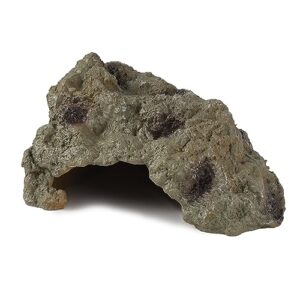
IBWell Resin Rock Hide is a solid pick if you want function and good looks in one shot.
It’s made from non-toxic resin, so it’s sturdy, easy to wipe down, and built to last.
The cave-like shape traps humidity nicely — great for shedding support.
At 5.91 x 8.46 x 12 inches, it fits snugly in compact setups without eating up floor space.
That rocky exterior blends right into a naturalistic terrarium, too.
Your ball python gets security. You get style.
| Best For | Reptile owners who want a hide that looks natural and works well for small to medium species like leopard geckos, ball pythons, and bearded dragons. |
|---|---|
| Material | Resin |
| Color | Rock |
| Easy to Clean | Yes |
| Reptile Compatible | Yes |
| Stress Reduction | Yes |
| Weight | 1.17 lbs |
| Additional Features |
|
- Non-toxic resin makes it safe, durable, and super easy to clean
- The cave shape holds humidity well, which really helps during shedding
- Fits neatly in smaller tanks without taking over the whole floor
- Might be too cramped for larger reptiles as they grow
- Some owners might find it doesn’t look quite realistic enough up close
- Sizing can be a little inconsistent, so double-check dimensions before buying
2. JIHAQUA Medium Reptile Hide Rock
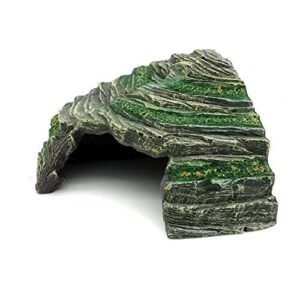
JIHAQUA Medium Reptile Hide Rock — and it brings that natural look to the table, but with a twist.
At 6.7 x 6.7 x 4 inches, it fits neatly into compact tanks without crowding the floor space your ball python needs to roam.
The realistic rock finish blends seamlessly into any terrarium setup.
It’s sturdy, easy to clean, and the single entry tunnel gives your snake that snug, secure feeling it craves.
Stress down, confidence up.
| Best For | Small to medium reptile and amphibian owners who want a natural-looking hide that blends into their terrarium setup. |
|---|---|
| Material | Natural Rock |
| Color | Natural |
| Easy to Clean | Yes |
| Reptile Compatible | Yes |
| Stress Reduction | Yes |
| Weight | 1.01 lbs |
| Additional Features |
|
- Looks like real rock, so it fits naturally into almost any terrarium without looking out of place
- Sturdy and stable — bigger reptiles won’t knock it over easily
- Easy to clean and helps create a humid microclimate that supports healthy shedding
- The opening is pretty wide, so snakes or reptiles that prefer a tight, snug hide might not feel fully secure
- At 6.7 x 6.7 x 4 inches, it runs on the smaller side — worth measuring your tank before buying
- Some buyers feel the price is a bit steep for the size you get
3. BubbleBliss Corner Reptile Rock Hide
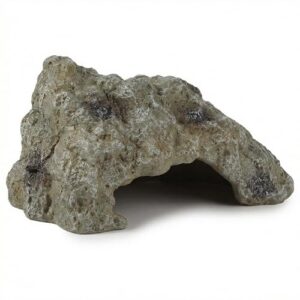
Corner hides are a smart move in small tanks — they tuck away neatly and free up precious floor space.
The BubbleBliss Corner Reptile Rock Hide does exactly that.
At 3.7 x 5.3 x 2.9 inches, it slips right into a corner without eating up the room your ball python needs to explore.
The resin build is moisture‑resistant and easy to wipe down.
That natural rock texture looks great in any setup too.
Just check the interior edges before use — smooth any tiny resin points for safety.
| Best For | Small reptile owners — especially those with leopard geckos, ball pythons, or bearded dragons — who want a space-saving hide that looks natural in the tank. |
|---|---|
| Material | Resin |
| Color | Rock |
| Easy to Clean | Yes |
| Reptile Compatible | Yes |
| Stress Reduction | Yes |
| Weight | 5.29 oz |
| Additional Features |
|
- Fits snugly in corners, so it keeps floor space open for your reptile to roam
- Moisture-resistant resin makes cleaning a breeze — just wipe it down and you’re done
- Works in both dry and humid setups, so it’s flexible across different species and enclosures
- Floats in water, which makes it tricky if your setup has a lot of moisture or a water feature
- The color reads as less realistic in person than it looks in photos
- Tiny resin points can show up on the edges, so you’ll want to give it a quick once-over before putting your reptile in
4. Humid Hideout Cave Rock Textured
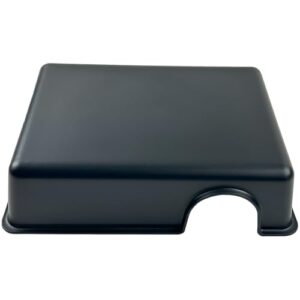
Shedding season is where this hide earns its keep. The Humid Hideout Cave Rock Textured is built for moisture — its enclosed shape traps humidity right where your ball python needs it most.
That makes shedding smoother and stress is way lower.
The hand-carved granite construction means no two look alike, and the sandblasted interior gives your snake something to grip during a shed.
It’s compact enough for small tanks and tough enough to last.
Clean-up is easy too — just wipe and go.
| Best For | Reptile owners who want a reliable humid hide for shedding season, especially those keeping ball pythons, leopard geckos, or juvenile snakes. |
|---|---|
| Material | Resin |
| Color | Black |
| Easy to Clean | Yes |
| Reptile Compatible | Yes |
| Stress Reduction | Yes |
| Weight | 0.2–0.4 lbs |
| Additional Features |
|
- Traps moisture well, making it great for shedding
- Tough resin build holds up against bites and scratches
- Easy to clean — just wipe it down and you’re done
- The "Large" size runs smaller than most people expect, so adult ball pythons may not fit comfortably
- Only comes in black, so no options if you want a different look
- The entrance opening is fixed, which might not work for every reptile or setup
5. Vivarium Medium Snake Hide Box
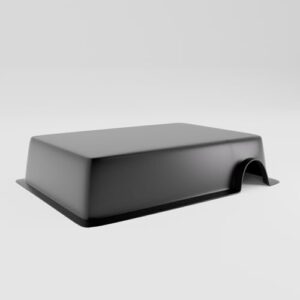
No-frills doesn’t mean no good. The Vivarium Medium Snake Hide Box is a keeper for small tank setups — and your ball python will agree.
It measures 9.5 by 7 by 2.375 inches, fitting neatly across 28 to 32 quart tubs without eating up the whole floor.
The offset door keeps your snake feeling tucked away and safe.
Smooth polypropylene walls wipe clean in seconds.
Simple, sturdy, and stress-reducing — it just works.
| Best For | Snake keepers with medium-sized snakes — ball pythons, corn snakes, kingsnakes — who want a clean, no-fuss hide that fits standard rack systems or 28–32 quart tubs. |
|---|---|
| Material | Polypropylene |
| Color | Black |
| Easy to Clean | Yes |
| Reptile Compatible | Yes |
| Stress Reduction | Yes |
| Weight | 5.8 oz |
| Additional Features |
|
- Polypropylene build is tough and wipes down fast — no scrubbing, no staining
- Offset door gives snakes a real sense of cover, which cuts down on stress
- Slides right into rack systems and standard tubs without any fuss
- Too small for larger snakes or big boas — they’ll outgrow it fast
- Not a good fit for high-humidity or aquatic setups
- Pretty plain-looking, so if you care about terrarium aesthetics, it won’t win any awards
6. Humid Hideout Cave Reptile Terrarium
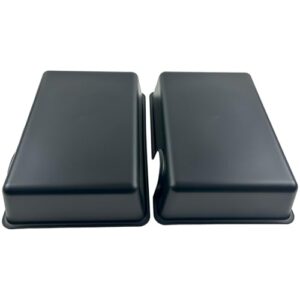
Shedding season just got easier. The Humid Hideout Cave Reptile Terrarium creates a moist microclimate your ball python will actually use when it’s time to shed.
Pack it with damp sphagnum moss, and it holds moisture long enough to soften stubborn skin without waterlogging your enclosure.
The rock-textured resin looks natural, cleans up fast, and won’t fall apart.
At 9.5 by 6.7 inches, it fits small tanks without dominating the floor.
Compact, functional, and genuinely helpful during sheds.
| Best For | Small reptile owners—especially ball python, leopard gecko, and juvenile snake keepers—who want a reliable humid hide for shedding season. |
|---|---|
| Material | Resin |
| Color | Rock |
| Easy to Clean | Yes |
| Reptile Compatible | Yes |
| Stress Reduction | Yes |
| Weight | 0.2–0.4 lbs |
| Additional Features |
|
- Holds moisture well when packed with damp sphagnum moss, making sheds noticeably smoother
- Durable resin construction with a natural rock look that’s easy to wipe clean
- Compact size fits smaller tanks without eating up too much floor space
- The "Large" size runs smaller than expected, so bigger reptiles may not fit comfortably
- The entrance placement doesn’t work for everyone, depending on how your enclosure is set up
- Not a great fit for larger or more active species that need more room to move around
7. FCALIVV Small Reptile Hide Box
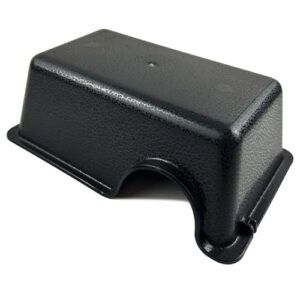
Sometimes simple wins. The FCALIVV Small Reptile Hide Box does exactly what a hide should — it gives your ball python a snug, dark place to decompress without eating up precious tank space.
At 7.48 by 4.72 inches, it slots neatly into compact enclosures on either the warm or cool side. The smooth black plastic wipes clean in seconds, which is a genuine bonus on cleaning day.
Just check that entrance size before ordering — fit matters more than looks.
| Best For | Small reptile owners who want a simple, affordable hide for ball pythons, leopard geckos, or tarantulas in compact tanks. |
|---|---|
| Material | Plastic |
| Color | Black |
| Easy to Clean | Yes |
| Reptile Compatible | Yes |
| Stress Reduction | Yes |
| Weight | 2.4 oz |
| Additional Features |
|
- Smooth plastic wipes clean in seconds — no scrubbing, no fuss
- Compact size fits neatly on either side of smaller enclosures
- Works great as a humid hide or a secure retreat for shy reptiles
- Too small for full-grown ball pythons, so you may outgrow it fast
- Plastic look won’t blend in if you’re going for a natural terrarium vibe
- Entrance size is fixed, so you need to measure before you buy
8. TkoYuHm Resin Skull Hideout for Terrarium
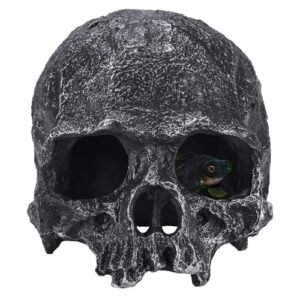
Want a hide that pulls double duty? The TkoYuHm Resin Skull Hideout gives your ball python a secure retreat while making your tank look seriously cool.
At 4.53 × 3.35 × 3.62 inches, it’s best suited for hatchlings or small juveniles — adults won’t fit comfortably. The premium resin is smooth, non‑porous, and easy to wipe down. Just check that skull entrance opening carefully before buying. A tight squeeze in is fine; a blocked entry isn’t.
| Best For | Hatchlings and small juvenile ball pythons (or other small reptiles) who need a secure hide that also looks great in the tank. |
|---|---|
| Material | Resin |
| Color | Black |
| Easy to Clean | Yes |
| Reptile Compatible | Yes |
| Stress Reduction | Yes |
| Weight | Not Listed |
| Additional Features |
|
- Skull design looks genuinely cool — adds character to any terrarium setup
- Smooth resin surface is easy to clean and won’t scratch your pet
- Stable and durable — not going anywhere once placed
- Too small for adult ball pythons, so your pet will outgrow it fast
- Hard resin can’t be modified if the entrance opening doesn’t work for your animal
- Comes as a single unit, so decorating a larger enclosure means buying multiples
Choosing Hide Size for Ball Pythons
Getting hide size right is honestly one of the easiest ways to keep your ball python calm and comfortable.
A hide that fits just right makes your snake feel safe — too big, and it’s basically useless.
Here’s what you need to know before picking one for your small tank.
Why Snug Hides Reduce Stress
Think of a snug hide as a built‑in stress reliever. Ball pythons thrive on thigmotaxis comfort — that full‑body contact with hide walls sends constant pressure feedback that tells their nervous system “you’re safe.” Light blockage keeps things dark and cave‑like, which is exactly what reptile care experts recommend for snake habitats.
A snug hide isn’t a luxury — it’s the pressure feedback that tells a ball python it’s safe
A roomy hide? It just leaves your ball python unsettled.
Providing a warm side hide placement(https://www.talis-us.com/es/blogs/news/ball-python-hides-a-guide-to-providing-the-perfect-hideouts) facilitates proper thermoregulation.
Measuring Your Ball Python Correctly
Getting your ball python’s measurements right is the foundation of smart reptile care. Skip the guesswork — here’s how to nail it every time:
- Tape Technique – Use a soft tape measure, from nose to tail tip.
- Scale Taring – Zero out your container first for accurate weight.
- Growth Logging – Track length, weight, and feeding together monthly.
Measurement errors like using shed skin or an un‑tared container silently distort your data. Consistent body proportions checks keep your snake habitat decisions sharp. Remember that a horizontal tank recommendation helps accommodate their terrestrial nature.
Hatchling and Juvenile Hide Sizing
Now that you’ve got your measurements, size the hide to match the growth stage. Hatchlings need tight, snug fits — vertical wall preference is key here, since curved or open shapes leave young ball pythons feeling exposed.
Watch for Hide Shape change needs as they grow fast. Entrance Width Ratio matters too: just wide enough to enter, nothing more.
How Much Tank Space a Hide Should Use
Size matters — and so does proportion.
Your hide footprint ratio should stay within one-third of your tank’s total length.
In a 30-inch enclosure, that’s roughly 8 to 10 inches per hide.
Keep open floor percentage above 50 percent so ball pythons can thermoregulate freely.
Clearance guidelines suggest 3 inches between hides and walls.
Volume displacement creeps up fast in small reptile enclosures!
Signs a Hide is Too Large
A hide that’s too roomy undermines the whole point. Ball pythons want to feel wrapped, not parked. Watch for these red flags in your reptile enclosures:
- Exposed Body Parts — sides and tail visible from outside
- Loose Entrance — no gentle squeeze required to enter
- Insufficient Body Contact — snake can’t brace against walls
- Visible Light Intrusion — interior stays too bright
- Partial Hide Use — snake lounges at the doorway instead of settling in
Warm and Cool Hide Placement
Where you place your hides matters just as much as which ones you pick.
Ball pythons need one hide on the warm side and one on the cool side — no exceptions.
Here’s what to know before you set them up.
Why Ball Pythons Need Two Hides
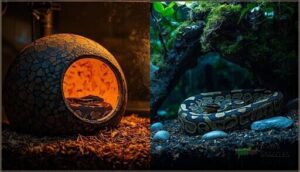
Ball pythons spend about 80% of their day tucked away in burrows — so one hide just doesn’t cut it.
You need two: one on the warm side (around 90°F) and one on the cool side (78–80°F). This thermoregulation choice keeps stress low and improves feeding response.
Thigmotaxis benefits kick in when your snake feels snug, supported on all sides, in a properly designed reptile enclosure.
Using Matching Hides on Both Sides
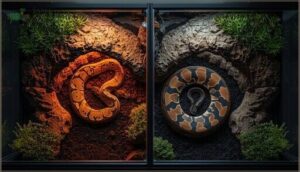
Matching your hides on both sides is one of the smartest moves in reptile enclosure design. When ball pythons see identical layouts — same shape, same uniform hide entry, same dark interior — thermal bias elimination happens naturally.
Your snake picks a side based on temperature alone, not comfort preference. That’s side preference prevention in action. Stress reduction consistency follows, and in modular or expandable enclosures, equal heat retention stays predictable too.
Placing Hides Directly on Substrate
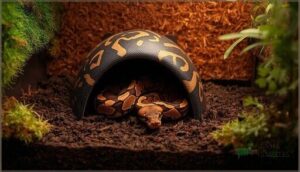
Always set your reptile hide boxes directly on the substrate — no exceptions. Ball pythons are wired for thigmotaxis benefits, meaning they crave surface contact on every side.
A substrate-flush design gives them a stable base placement while naturally supporting moisture retention inside humid hides. That low-profile entrance sits right at floor level, so your snake slides in effortlessly.
In reptile enclosures, that small detail makes a big difference.
Leaving Open Floor Space in Small Tanks
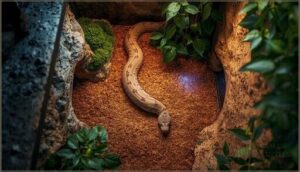
Even in small tanks, open floor space isn’t wasted — it’s essential. Your ball python needs clear Snake Mobility Zones to travel its Thermal Gradient Path freely. Pack too many reptile hide boxes in, and you’ve killed that movement. Aim for a 48"x24" footprint when possible.
- Keep hides along edges, not the center
- Leave a central lane open for travel
- Use low-profile modular or expandable enclosures to increase Substrate Clearance
Avoiding Cramped Hide Layouts
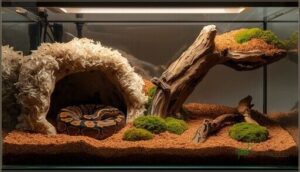
Cramped layouts stress your snake out fast. Think of it like furniture stuffing — too much, and no one can breathe.
For smart Snake Habitat Creation, keep a Tank Edge Buffer of 1–2 inches around each hide. Use Vertical Space Utilization with Multi‑level Hides to reclaim floor space. Substrate Clearance and proper Hide Orientation make all the difference in modular enclosures.
| Reptile Keeping Tips | Why It Matters |
|---|---|
| Maintain Tank Edge Buffer | Prevents entrapment near walls |
| Use Multi‑level Hides | Frees floor space in small tanks |
| Check Hide Orientation | Ensures smooth snake entry and exit |
| Prioritize Substrate Clearance | Allows natural digging behavior |
| Rotate hides regularly | Reduces territory bias in ball pythons |
Best Materials for Tight Spaces
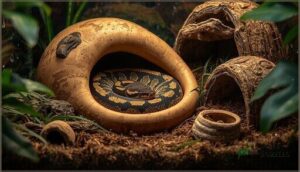
Material matters more than you’d think in a small tank. The right hide keeps your ball python secure without eating up precious floor space.
Here’s what actually works when square inches are at a premium.
ABS Plastic Hide Box Benefits
ABS plastic hides are a quiet win for reptile keeping. They’re tough — built with serious impact resistance — and the nonporous cleaning process takes seconds. No scrubbing, no soaking.
That compact footprint fits neatly into terrariums without eating up floor space.
The offset entrance security keeps ball pythons calm and covered.
For snake habitat creation in tight setups, ABS delivers real thermal insulation with zero hassle.
Resin Cave Hides in Compact Enclosures
Resin cave hides punch above their weight in compact enclosures. Their low‑profile design fits snugly into small terrariums without crowding the floor.
That rigid shell provides real microclimate retention — keeping moisture close during sheds. The secure entrance size keeps ball pythons confident inside.
Stable placement means no tipping during feeding. For tight reptile care and housing setups, resin just works.
Easy-clean, Non-porous Hide Surfaces
Clean hides make ball python care so much easier. Non-porous surfaces don’t trap moisture, waste, or odors — just wipe and you’re done. That’s a win for microbe defense in humid terrariums where bacteria love damp corners.
Surface durability holds up through repeated scrubbing without breaking down. For reptile care and housing, cleaning efficiency isn’t a bonus — it’s the whole point.
Low-profile Hides for Shorter Tanks
Short tanks don’t have much vertical room — so low-profile design matters. A hide with minimal footprint and compact entrance fits right into substrate integration without eating up precious floor space. That is smart height optimization for ball python care.
In snake and lizard enclosures, flat hides let your python slip in naturally, keeping habitat design clean, functional, and stress‑free for reptile care and housing.
Dark Interiors and Offset Door Security
Dark interiors make a real difference. Light‑blocking interiors with a matte‑black finish help your ball python feel invisible — and that calm translates directly to better feeding and less stress.
Offset hinge design and magnetic seal security keep the entrance snug without trapping your snake. For small enclosures and terrariums, that tight seal promotes animal welfare without cramping habitat design.
Small Tank Hide Buying Tips
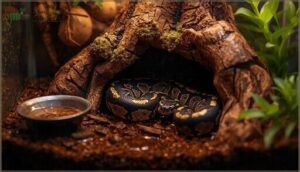
Buying a hide for a small tank isn’t just about picking something that fits — it’s about getting it right for your snake’s health and comfort.
A few key factors make all the difference between a hide your ball python actually uses and one that just takes up space.
Here’s what to keep in mind before you buy.
Matching Hide Dimensions to Tank Footprint
Your hide’s footprint should never swallow the floor. Here’s how to match dimensions to your tank footprint like a pro:
- Keep floor coverage under 25% of total tank space
- Use corner hides for better tank edge utilization
- Leave clear paths between hides and water dishes
- Match hide size to your python’s body, not empty space
- Balance space allocation for both warm and cool sides
Picking Secure Entrance Sizes
The entrance size makes or breaks a hide. Follow Entrance Width Guidelines: match the opening to your ball python’s widest body point.
Shape Impact matters too — offset or curved openings keep interiors darker and more secure.
Always check Post‑Meal Clearance so your snake isn’t trapped after feeding.
Material Rigidity in plastic enclosures preserves shape longer.
Snug Fit Testing is simple — if it wiggles freely inside, size down.
When to Add a Humid Hide
Once your ball python starts going blue or looking milky, that’s your cue — add a humid hide fast. Shedding signs, low humidity spells, and dehydration‑help situations all call for one. Think of it as temporary first aid for your snake’s skin, not a permanent fixture.
- Add during pre‑shed when skin turns opaque
- Use moist sphagnum moss for longer‑lasting humidity
- Remove once shedding completes cleanly
- Check and re‑moisten regularly to avoid sour bedding
- Keep one on standby for poor shed support cycles
Balancing Security With Thermoregulation
Getting both security and heat right in one hide is totally doable — you just need to think smart.
Choose Low-Profile Heat Zones with Draft-Free Entrances and Secure Door Offsets to lock in stable heat levels.
Temperature Gradient Monitoring across your terrariums or enclosures keeps things dialed in.
Heat Retention Design matters too — your pythons need consistent warmth and humidity without sacrificing that snug, safe feeling.
Avoiding Bulky Decorative Hides
Big, bold cave hides look impressive — but in a small enclosure, they’re space thieves.
- Rock-style hides eat up floor space fast, leaving your snake nowhere to roam.
- Heavy décor is a pain to move during cleaning.
- Oversized hides waste humidity and heat distribution.
- Space-efficient hides keep your efficient enclosure layout intact.
- Simple space-saving hide options beat flashy every time in tight terrariums.
Frequently Asked Questions (FAQs)
What hides are best for ball pythons?
The best hides are snug, dark, and easy to clean.
Opaque plastic or resin options win for material durability, mold prevention, and simple maintenance — keeping your snake feeling safe and your enclosure staying fresh.
What do ball pythons like to hide in?
Pythons crave burrow-like hides — dark cave retreats they can curl into snugly. A humid moss hide, low-profile rock, or box with offset door security keeps them calm and stress-free.
Can ball pythons share a hide with tankmates?
No — ball pythons are solitary by nature.
Sharing a hide creates stress competition and thermoregulation conflict.
Territorial behavior, feeding interference, and serious health risks follow.
In any enclosure, each snake needs its own space.
How often should ball python hides be cleaned?
Spot cleaning is a daily must — remove waste the moment you see it. Weekly deep cleans tackle buildup. Monthly disinfection keeps things truly safe.
Post‑mess protocol? Clean immediately, no exceptions.
Do ball pythons outgrow hides as they age?
Shedding snakes surprise many keepers — yes, they do outgrow hides! Growth Phase Timing matters. As adults, their Adult Hide Preference stays snug. Upgrade when they can’t coil comfortably inside.
Should hides be secured to prevent tipping over?
Use slip‑resistant mats under hides and anchoring techniques on enclosure walls. A base lip design stops tipping.
Do maintenance checks monthly.
Entrance shape impact matters too — snug openings keep hides steady.
Can hides affect ball python shedding success?
Absolutely — hides play a huge role in shed success.
A humid hide with moist moss and smart Hide Positioning Effects keeps humidity and moisture levels steady, giving your python the skin-loosening microclimate it needs.
Conclusion
cramped tank doesn’t have to mean a stressed snake. The right ball python hide for small tanks flips the whole energy—suddenly, tight spaces become secure, snug retreats your python actually wants to use.
One well-sized hide beats a dozen flashy decorations every time. Get the fit right, place it with purpose, and your snake does the rest.
Less guesswork, more confidence—for both of you.
- https://bluszoo.com/reptile-hides-caves/medium-cave-reptile-rock-hide-light-tones/
- https://www.futter-und-tierbedarf.de/Terraristik/Terrarien-Zubehoer/Terrarium-Rueckwand/Reptile-Cave,-Terrarium-Resin-Rock-Hide-Out,-6.3x3.94x3.15-Inch,-Multi-Functional-Basking-Shelter,-Fish-Tank-Setup,-Landscape-Accessory-for-Gecko,-Bearded-Dragon,-Amphibians-98677653
- https://exo-terra.com/products/decoration/hides/
- https://reptifiles.com/ball-python-care-guide/ball-python-humidity-temperatures/
- https://www.pangeareptile.com/collections/reptile-caves-hides