This site is supported by our readers. We may earn a commission, at no cost to you, if you purchase through links.

Your ball python hissing at you doesn’t mean you’ve done something terribly wrong—it means your snake is doing exactly what ball pythons have done for millions of years. That sharp burst of air is their version of "back off," a hard-wired warning signal produced by forcing air through a small opening in the throat called the glottis.
Most new owners hear it and panic. Experienced keepers hear it and adjust. The difference between those two reactions comes down to understanding what’s actually happening—whether it’s fear, a bad environment, the wrong timing, or something that needs a vet’s attention.
Table Of Contents
- Key Takeaways
- Why is My Ball Python Hissing?
- Normal Hissing Vs Warning Signs
- Common Triggers Around People
- Shedding, Feeding, and Timing
- Enclosure Stress That Causes Hissing
- Body Language to Watch
- How to Handle a Hissing Ball Python
- How to Reduce Future Hissing
- When to See a Reptile Vet
- Frequently Asked Questions (FAQs)
- Conclusion
Key Takeaways
- A ball python’s hiss is a hard-wired defensive warning, not aggression — it’s simply telling you something feels wrong, so your job is to slow down and figure out what.
- Most hissing trace back to avoidable triggers: reaching in too fast, handling during a shed, disturbing a resting snake, or an enclosure that’s too bright, too loud, or missing a snug hide.
- Not all snake sounds are equal — a short, sharp hiss is normal stress communication, but wet, rattling, or non-stop breathing points to a possible respiratory infection that needs a vet.
- Trust is built through short, calm, consistent handling sessions over weeks — patience and predictability do more to stop hissing than any quick fix ever will.
Why is My Ball Python Hissing?
That hiss can feel alarming, especially if you weren’t expecting it. Ball pythons hiss for several reasons, and most of them come down to how they’re feeling in that moment.
Think of it as their version of a warning shout—if you want to understand exactly what triggers it, this breakdown of why ball pythons hiss walks through the most common causes.
Here’s what’s actually going on.
Hissing as a Defensive Warning
When your ball python hisses, it’s not throwing a tantrum — it’s communicating. By forcing air through a small throat opening called the glottis, your snake produces a sharp burst of sound designed as a predator deterrent.
A ball python’s hiss isn’t attitude — it’s a glottis-powered warning shot telling you to back off
This defensive mechanism works through acoustic deterrence, startling potential threats before a strike becomes necessary. Think of it as a firm "back off" with no aggression attached.
Fear, Stress, and Feeling Threatened
Fear sits at the root of most hissing. When your python senses danger — whether from a sudden hand, an unfamiliar scent, or a predator, angle perception like approaching from above — its body triggers a cortisol surge that ramps up alertness quickly.
Common fear and stress triggers include:
- Sudden movements near the enclosure
- Approaching from overhead
- Unfamiliar scents causing scent aversion
- Inconsistent handling routines
- Environmental cortisol rise from improper temperatures
Why Hissing Does Not Always Mean Aggression
A hiss isn’t a threat — it’s bluff communication. Your python forces air through its glottis as a non‑aggressive alert, not a promise to bite.
Temperament variation means some snakes hiss at every airflow change or ground vibration, while others barely react.
Think of it as a stress response in reptiles: defensive behavior without genuine aggression behind it.
What Your Snake is Trying to Tell You
Your python is communicating clearly — you just need to learn the language. Every hiss pairs with body language that reveals exactly what’s wrong:
- Tail vibration communication signals a heightened stress response before a strike
- Defensive behavior, like neck flattening, shows that light sensitivity cues are active
- Tight coiling with hissing behavior reflects vibration reaction signals from nearby movement
Providing tight hides needed helps reduce stress and hissing.
Read those cues together, and your snake’s message becomes obvious.
Normal Hissing Vs Warning Signs

Not every hiss means your ball python is miserable or sick — but some do. Knowing the difference can save you a lot of guesswork and catch a real problem before it gets worse.
Here’s what to look for.
Brief Defensive Hiss After a Disturbance
A single sharp burst of air — that’s a defensive hiss.
Your snake detects vibrations through the glass.
The glottis releases a quick air pressure spike.
The startle sound duration lasts under a second.
Once the disturbance passes, post‑disturbance calm usually follows within a minute.
| Trigger | Typical Response |
|---|---|
| Sudden movements | Quick glottis air burst |
| Loud vibrations | Brief tension, then calm |
Repeated Hissing Without an Obvious Trigger
When hissing keeps happening without anything obvious setting it off, it’s worth paying attention to. It often points to something quietly building — substrate irritation, hormonal fluctuations, or even a rising parasite load. These are easy to miss because there’s no single dramatic moment. respiratory infection risk can also manifest as increased hissing in snakes.
| Possible Cause | What to Check | Next Step |
|---|---|---|
| Substrate Irritation | Dusty or damp bedding | Switch to cypress mulch |
| Hormonal Fluctuations | Breeding season timing | Log behavior patterns |
| Parasite Load or Illness | Lethargy, weight loss | Schedule a vet exam |
Environmental factors affecting snake behavior — like poor airflow issues or scent marking stress — also quietly drive up hissing frequency in ways that handling techniques alone won’t fix.
Hissing Versus Wheezing or Noisy Breathing
Not every sound your ball python makes is the same. A defensive hiss is a sharp breathing sound — brief, dry, and intentional. Wheezing or noisy breathing is different: it’s continuous, often wet, and happens even at rest. That distinction matters.
| Respiratory Sound Types | What You Hear | What It Means |
|---|---|---|
| Normal Hissing Behavior | Sharp, short exhale | Defensive response |
| Wheezing vs Hissing | Wet, continuous rattling | Possible respiratory infection |
| Mouth Open Breathing | Labored, visible effort | Upper respiratory infections |
When Hissing May Point to Illness
Sometimes a hiss isn’t just attitude — it’s a symptom. Mouth rot, respiratory infection, or internal pain can all make your ball python more defensive.
Watch for increased hissing alongside swollen gums, nasal discharge, or weight loss.
| Warning Sign | What It May Indicate |
|---|---|
| Swollen gums or drooling | Mouth rot (stomatitis) |
| Nasal discharge or wheezing | Upper respiratory infections |
| Weight loss + refusing food | Advancing illness or pain |
| Random hissing, no trigger | Health issues causing increased hissing |
Don’t delay veterinary care.
Common Triggers Around People
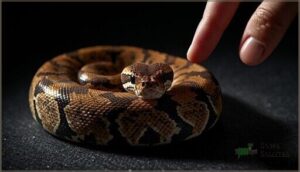
Most of the time, your ball python isn’t hissing for no reason — you’re just too close, too fast, or catching it off guard. The good news is that these triggers are completely avoidable once you know what to look for.
If you notice wheezing or mucus alongside the hissing, those are red flags worth taking seriously — brush up on signs of a healthy ball python so you know the difference between stress and something that needs a vet.
Here are the most common ways people accidentally set off a hiss.
Sudden Movements Near The Enclosure
Your ball python can detect sudden movement from up to two body lengths away — and its nervous system reacts defensively before it even investigates. A fast hand swipe, footstep shockwaves traveling through the floor, or even camera motion effects near the glass can all trigger a hiss instantly.
- Lateral hand swipes across the front glass look like predator strikes
- Air current gusts from quick movements signal approaching danger
- Hand approach speed matters — slower means safer
- Feeling threatened by sudden movements causes a genuine stress response in reptiles
Reaching in Too Quickly
Reaching into the enclosure too fast is one of the most common triggers for a startle response. Your python’s scent recognition delay means it needs a few seconds to process who you are. Fast hands equal territorial intrusion in its mind, causing an immediate adrenaline spike.
Slow gentle handling — pausing before entry — builds trust with pet snakes far better than rushing ever will.
Grabbing Near The Head
Your snake’s head is its most vulnerable spot — and it knows it. Coming in from above or straight at the face triggers instant defensive behavior, because that angle mimics a predator strike. The Head Approach Technique matters here: Side Approach Handling gives your python a moment to register your presence before Gentle Neck Contact happens.
Watch for these stress and defensive behavior signals:
- Pulling back the neck sharply
- Mouth held slightly open
- Rapid coiling around itself
- Loud, sustained hiss
- Stiff, tense body posture
Trust Building Touch starts with patience — Neck Support Timing means waiting until the mid-body feels secure before moving closer to the head. Slow gentle handling, never handling too roughly, teaches your python that your hands mean safety.
Disturbing a Resting Snake
Your python isn’t just sleeping — it’s actively managing its body temperature and stress hormones. Waking it abruptly causes a Corticosterone Spike that triggers a Startle Reflex, fast hissing, and tight coiling.
Vibration Sensitivity means even footsteps nearby count.
Hide Entry Alert: tap the enclosure wall gently before opening. That small warning prevents sudden movements from turning rest into defensive behavior.
Lack of Trust With a New Owner
Trust takes time. A new owner means an unfamiliar scent, unpredictable movements, and no shared history — so hissing is expected.
Scent Association builds gradually through Hand Scent Transfer and a Predictable Schedule.
Offer your hand quietly, use Gentle Touch, and keep a Quiet Environment.
Most ball pythons need two to three weeks of calm handling techniques before defensive hissing fades.
Shedding, Feeding, and Timing
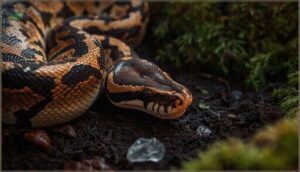
Timing matters more than most new owners realize regarding hissing. Your ball python isn’t being difficult — it’s responding to what’s happening in its body and its environment.
Here are the key moments when hissing is most likely to happen and what you should do about each one.
Why Snakes Hiss More During Shedding
Shedding puts ball python’s whole body under pressure. The combination of a Corticosterone Spike, Hormonal Surge, and increased Metabolic Demands from Keratin Regeneration makes your snake genuinely uncomfortable—not dramatic.
- Skin Sensitivity spikes as the old layer loosens over fresh tissue.
- Shedding cycles temporarily distort heat and touch perception.
- Stress and defensive behavior in snakes peak when resources shift inward.
- Shedding and temperature effects on behavior intensify under low humidity.
- The shedding process in snakes demands proper temperature and humidity to stay calm.
Impaired Vision and Feeling Vulnerable
During the blue phase, visual impairment effects are real — your ball python can detect light and movement, but depth and detail drop markedly for 3–7 days. That’s why tongue flicking frequency increases and hide‑seeking behavior spikes.
With heat‑sensing reliance taking over, sudden hand movements or glare reflection stress near the glass triggers stress‑induced vulnerability, making your snake feel threatened even in familiar surroundings.
Hissing After Eating or Before Feeding
Feeding Schedule Consistency matters more than most owners realize. A ball python can hiss right before a meal out of alertness or anticipation — that’s normal.
But disturbing it post-meal risks Post-Meal Digestion Stress and even regurgitation.
Watch for these feeding issues:
- Hissing before meals due to prey presentation technique or sudden movement
- Defensive response if handled within 48–72 hours after eating
- Overfeeding causing discomfort and increased hissing frequency
- Hide Placement Strategy triggers from poor anxiety anxiety during digestion
Health Monitoring Indicators.
When to Avoid Handling Altogether
Some moments simply aren’t right for handling. During a Post-Transport Quarantine period, give your snake 5–7 days to settle before any contact.
Skip handling during the Eye Cap Vulnerability stage of shedding, after meals, and through the Breeding Hormone Phase.
Medical Recovery Isolation applies when respiratory infection or injury is present — veterinary care for reptiles should come first.
Handling stress during illness only delays healing.
Giving Your Ball Python Recovery Time
recovery time as your snake’s reset button.
after a shed, wait a day or two before resuming handling — your ball python can still feel jumpy even once the skin is off.
post-feeding pause of 24 to 48 hours prevents dangerous regurgitation.
new arrival acclimation takes at least two weeks.
Gradual handling reintroduction, paired with a stress-free environment and adequate hiding spots, makes all the difference.
Enclosure Stress That Causes Hissing
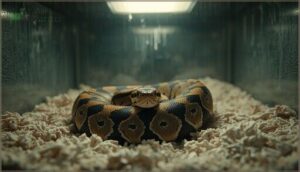
Sometimes problem isn’t you — it’s the setup. A ball python that feels unsafe in its own enclosure will hiss just as readily as one that’s been startled during handling.
Here are the most common enclosure conditions that can push your snake into defensive mode.
Incorrect Temperature or Humidity
Your enclosure’s temperature and humidity affect your ball python more than you might expect. A Temperature Gradient Mismatch, Low humidity drying out skin tissue, Uneven Heat Distribution, or Ventilation Stagnation can all make your snake feel trapped and stressed.
Watch for these environmental factors:
- Warm side should stay 88–92°F; cool side 75–80°F
- Humidity needs 60–75% to prevent stuck shed
- Poor ventilation traps excessive moisture or stale air
- Improper temperature causes restless, defensive behavior
Not Enough Secure Hiding Spots
Without enough hiding spots, your ball python has nowhere to feel safe — and that stress shows up as hissing. Hide Size Fit matters: a snug hide reduces anxiety far better than one that’s too roomy.
Hide Quantity Placement, provide at least two hides, warm and cool sides.
Visual Barriers and Territorial Cover from inadequate hiding spots in your enclosure setup fuel stress-induced hissing fast.
Bright Lights, Noise, and Vibrations
Hides give your ball python a sense of control — but the world outside that hide matters just as much. Environmental triggers of snake hissing often come from what your snake hears and feels, not just sees.
- Light Intensity Limits — Keep enclosure lighting under 500 lux using Red Spectrum Lighting to avoid stress-induced hissing.
- Noise Decibel Thresholds — Sounds above 70 decibels, like vacuums or loud music, trigger defensive behavior in snakes.
- Vibration Dampening Pads — Place these under the enclosure to absorb footsteps and door-slam shockwaves.
- Acoustic Isolation Techniques — Move the enclosure away from speakers, TVs, and washing machines.
- Environmental Changes — Inconsistent lighting schedules disrupt your snake’s internal clock, raising baseline stress and hissing frequency.
Environmental factors stack quietly — but your snake feels every one.
Reflections, Shadows, and Glass Stress
Your snake doesn’t just feel stress — it sees it. Mirror confusion happens when glass walls reflect your ball python’s own movement, making it look like another snake.
Add shadow alarm from people walking past, and transparent wall anxiety from constant open sightlines, and you’ve got serious light reflection stress.
Cover three sides and add visual barrier solutions like cork bark to reduce stress-induced hissing fast.
Frequent Enclosure Changes and Relocation
Moving your ball python too often is one of the most overlooked environmental triggers of snake hissing. Ball pythons rely on scent marking disruption; disruption and territory memory loss hit hard when familiar cues vanish.
Expect an acclimation period of one to two weeks, plus a stress hormone spike that suppresses feeding. Prioritize enclosure layout consistency to keep territorial and defensive behavior in ball pythons to a minimum.
Body Language to Watch
A hiss is just part of the picture — your ball python’s body is always saying more than you might realize. Before a hiss even happens, the snake’s posture often gives you a heads-up that it’s uncomfortable.
Learning to read these physical cues puts you one step ahead.
Coiling Tightly Before a Hiss
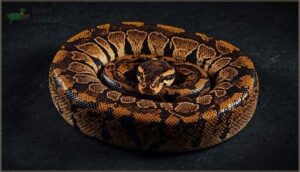
Before your ball python hisses, its body is already sending signals. Watch for that sudden spiral formation speed—when a python coils up fast and tight, midbody muscle contraction becomes visible along its midsection.
The tail tucking position follows almost immediately, reducing exposed surface area.
That pre-hiss breath pattern—short, rapid expansions of the ribs—tells you stress is peaking and handling should pause.
Head Retraction and Defensive Posture
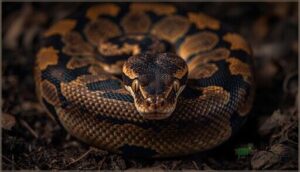
When your python pulls its head sharply backward, that’s chin tucking dynamics in action — neck muscle tension drawing the head close to its coils for protection. This defensive posture, often paired with glottis air release and hissing, signals peak stress.
Visual threat alignment keeps both eyes locked on you.
Even vibration‑induced retraction from nearby footsteps can trigger this response instantly.
Flattening The Neck or Body
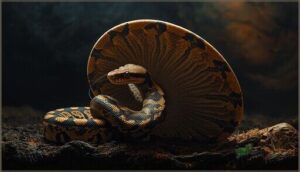
Flattening the neck or body is one of the clearest stress indicators your ball python has. Through neck expansion mechanics, the ribs spread outward, creating a size illusion that makes your snake look wider and more intimidating. Vibration induced flattening can happen within seconds — even footsteps nearby trigger it.
defensive posture, often paired with hissing, signals your snake needs space immediately.
Hissing From Inside The Hide
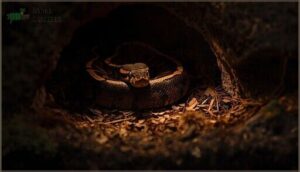
When your snake hisses without even leaving its hide, that’s a clear communication signal — it’s saying it doesn’t feel safe yet. Hide Entrance Timing matters here: approaching too fast triggers a defensive response before you’ve even made contact.
Watch for these hide-related stress cues:
- Ventilation Noise from air movement near the hide can startle a resting snake
- Hide Material Texture affects comfort — rough surfaces increase restlessness
- Hide Temperature Gradient imbalance makes the snake feel unsettled inside
- Hide Light Exposure from overhead lighting removes the sense of security
- Providing adequate hiding spots for pet snakes reduces territorial and defensive behavior in ball pythons
Signs a Strike May Follow
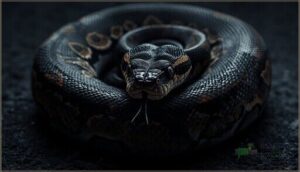
A hissing snake doesn’t always mean a strike is coming — but certain body language shifts that warning into something more serious.
| Signal | What It Means |
|---|---|
| Tight S Coil | Strike position, body compressed like a spring |
| Locked Focus | Fixed attention on one target |
| Fast Tongue Flicks | High alert, actively evaluating threat |
| Defensive Tension | Muscles rigid, neck lifted |
| Quick Warning | Repeated hiss before escalation |
How to Handle a Hissing Ball Python

A hissing ball python isn’t trying to ruin your day — it’s just telling you something feels off. The good news is that how you respond in that moment matters more than the hiss itself.
These simple handling habits can make a real difference.
Move Slowly and Stay Calm
When a ball python hisses, your first instinct might be to freeze or pull back fast — resist that urge.
Controlled hand motions and steady breathing signal safety far better than speed.
Relax your posture, move deliberately, and keep your environment predictable.
Emotional regulation matters more than you’d think — your calm becomes theirs, making it one of the most effective handling techniques to reduce hissing.
Let The Snake See Your Approach
Your hand moving toward the enclosure is the first message your snake receives — make it a calm one.
Ball pons rely on slow hand visibility and eye contact timing to tell a moving object from a threat. In dim lighting**, their pupils dilate fully, which actually sharpens motion detection.
Use these handling techniques to approach right:
- Pause outside the enclosure first (pre-approach pause) before opening the door
- Use a paper towel cue — a gentle tap — to signal handling time
- Keep your hand low and move toward the body, never the head
- Let dim lighting approach work for you; avoid harsh overhead light
Slow movements aren’t just polite snake communication — they’re survival language your python understands.
Support The Whole Body Evenly
Once your approach is steady, how you actually hold your python matters just as much.
Two-Hand Support is the goal — slide one hand under the midsection lift point first, then let the other cradle the rear half. This keeps Spine Alignment intact and distributes Weight Distribution evenly across both hands.
Secure Handling feels loose, never tight, giving your snake something solid to rest on.
Stop The Session if Stress Escalates
Even with proper support, stress can build fast. Knowing the Escalation Warning Signs keeps you ahead of it.
- Rapid, repeated hissing signals a rising Stress Threshold.
- Tight balling with head jerking signals Immediate Disengagement is needed.
- Continuous attempts to flee your hands show the snake’s tolerance is gone.
- False strikes following ignored hisses demand Safe Return Protocol immediately.
Lower your snake slowly toward its hide and let it walk off your hands on its own.
Why Punishment Makes Hissing Worse
Punishing a hiss doesn’t teach your snake to relax — it teaches Fear Association between your hands and something unpleasant. That’s Punishment Conditioning in action, and it triggers Stress Amplification every time you reach in. Instead of Negative Reinforcement, try patience.
| What You Do | What Your Snake Learns |
|---|---|
| Tap or flick after hissing | Hands predict pain |
| Force continued handling | Escape attempts increase |
| React with fast movements | Escalated Defensiveness follows |
| Ignore the hiss warning | Strike risk rises |
| Use positive reinforcement | Calm tolerance builds |
How to Reduce Future Hissing

Reducing hissing long-term comes down to consistent habits and a setup that makes your ball python feel safe. Most snakes calm down noticeably once their environment and handling routine stop feeling unpredictable.
Here’s what actually matters.
Build Trust With Short Handling Sessions
Trust isn’t built in one session — it’s earned minute by minute. Start with just 5 minutes of handling, then gradually increase session length by a few minutes each week. A consistent handling schedule, combined with a quiet handling environment and gentle grip technique, signals safety over time.
- Move slowly to calm your snake’s nerves
- Keep early sessions under 10 minutes
- Handle 2–3 times weekly, not daily
- Always lift from mid-body with a gentle grip
- End each session while your snake is still calm
Positive reinforcement isn’t treats — it’s predictability.
Keep a Consistent Care Routine
Ball pythons thrive on predictability. Scheduled Feeding Times every 10–14 days, a Stable Temperature Gradient, and a Routine Cleaning Schedule all reduce stress-related hissing.
Predictable Light Cycle — 12 hours on, 12 off — reinforces their natural rhythm.
Pair that with Consistent Handling Frequency and proper temperature and humidity, and your snake learns the world isn’t a threat.
Provide Warm and Cool Side Hides
Your snake needs more than just warmth — it needs choices. Two secure hides give it control over its own comfort, which cuts down on defensive hissing substantially.
- Warm Hide Placement — Position it over the heat source for digestion support
- Cool Hide Placement — Place it on the opposite end for temperature regulation
- Hide Size Matching — Snug fits feel safer than oversized shelters
- Identical Hide Design — Matching hides encourage temperature choice, not hide preference
Stable substrate anchoring keeps both hides from shifting, reinforcing that sense of security on which your snake depends.
Leave The Snake Alone During Sheds
When your ball python goes into shed, the kindest thing you can do is step back and leave it alone.
During this period, impaired vision triggers heightened stress and defensive behavior — hormone level decline doesn’t happen until the shed completes. Skin elasticity restoration depends on stable humidity and energy conservation focus, not handling.
| Shed Phase | What’s Happening | Your Move |
|---|---|---|
| Eyes go blue/milky | Vision is blocked, reactivity spikes | No handling |
| Opaque stage (days 3–5) | Snake mistakes movement for threats | Minimal enclosure disturbance |
| Eyes clear up | Defensive behavior starts decreasing | Still wait |
| Shed complete | Skin elasticity restoration begins | Hydration boost strategies — fresh water available |
| 24–48 hrs post-shed | New scales stabilize | gentle handling |
Shedding and temperature effects on behavior are real — even small humidity drops delay the process and increase seasonal and shedding-related hissing patterns. Keep the tank steady, resist rearranging hides, and let the process finish naturally.
Create Positive Handling Experiences
Every calm session teaches your python that hands aren’t a threat. Start with gradual exposure techniques — short, quiet holds two or three times a week. Use hand scent familiarity by letting it explore your palm before lifting.
A quiet low-noise environment keeps stress low. End each session before tension builds, so the last impression is always a good one.
When to See a Reptile Vet

Most hissing is behavioral, but some signals tell you it’s time to stop guessing and call a reptile vet. Your snake can’t tell you when something is seriously wrong, so you have to know what to watch for.
These are the signs that deserve a professional look.
Persistent Hissing With Lethargy
Lethargy paired with hissing isn’t just a mood — it’s your snake’s version of a red flag. Respiratory infection signs like wheezing, labored breathing, or mucus near the nostrils often accompany this combination, pointing to health issues causing increased hissing rather than simple stress or defensive behavior in snakes.
Watch for these warning signs:
- Noisy or labored breathing alongside reduced movement
- Pain-Induced Lethargy making your snake sensitive to touch
- Energy Deficiency Indicators like prolonged hiding or limpness
- Dehydration-related hissing from humidity imbalances affecting temperature regulation for snakes
- Hormonal Cycle Effects occasionally mimicking illness symptoms
Prompt veterinary care for reptiles matters here.
Loss of Appetite and Unusual Behavior
A missed meal here is normal — but when Appetite Decline Signals stack up with Activity Level Changes, pay attention.
| Warning Sign | What It May Indicate |
|---|---|
| Skipping multiple meals | Illness Behavioral Signs or stress |
| Constant hiding | Behavioral signs of distress |
| Sluggish movement | Temperature Stress Effects or infection |
| Weight Loss Indicators | Parasites or internal illness |
| Hissing without being touched | Health issues causing increased hissing |
See a vet soon.
Wheezing, Mucus, or Open-mouth Breathing
Wheezing sounds very different from a defensive hiss. A hiss is short and sharp — wheezing is wet, whistling, or rattly, and it doesn’t stop.
Mucus Build-up, Open Mouth Breathing, and other Respiratory Distress Indicators point to Airway Inflammation Effects from a respiratory infection.
Upper respiratory infection symptoms in snakes can escalate fast.
If you’re hearing unusual Breathing Noise Types, see a reptile vet now.
Pain, Injury, or Sensitivity to Touch
handling into a threat. If your ball python hisses the moment you touch it, that’s a red flag.
Swelling tenderness signs, visible wounds, or inflammation pain cues all suggest discomfort beyond mood.
A sick or injured snake may show hyperalgesia triggers — reacting sharply to even gentle contact.
Health issues leading to hissing, including nerve damage indicators, need prompt veterinary attention.
Random Hissing That Keeps Happening
Sometimes random hissing has no obvious cause — no sudden movements, no handling, nothing. Yet your ball python keeps doing it. That’s worth a vet visit.
Watch for these patterns:
- Hissing linked to poor Airflow Quality or wrong Enclosure Location
- Disrupted Hormonal Cycle or irregular Feeding Interval, increasing stress and defensive behavior in snakes
- Environmental triggers of snake hissing tied to Substrate Choice
Frequently Asked Questions (FAQs)
How do I get my snake to stop hissing at me?
The best way to stop the hissing is to stop rushing.
Consistent handling schedule, gradual desensitization, and proper environmental enrichment give your snake time to trust you on its own terms.
Can ball pythons hiss at other snakes nearby?
Yes, ball pythons can hiss at other snakes nearby. Through scent detection and chemical communication, they pick up conspecific interaction cues, triggering a territorial response — even without direct contact.
Do juvenile ball pythons hiss more than adults?
Generally, yes. Young ball pythons hiss more due to developmental stress responses and juvenile handling sensitivity. As maturity and temperament develop, most calm down considerably with routine, gentle contact.
How long does new enclosure hissing typically last?
Most ball pythons calm down within 5 to 7 days. Some need a full week of privacy.
A few take up to a month, depending on acclimation timeline, hiding spot count, and temperature consistency.
Does hunger make a ball python hiss more?
Hunger itself doesn’t cause hissing.
What you’re seeing is feeding time arousal — a prey detection hiss triggered by sudden movement or enclosure access, not hunger cue amplification or starvation stress response.
Conclusion
ball python’s hiss like a guard dog’s bark—not an attack, but a plea for space. When you hear that sharp exhale, it’s your snake’s ancient language speaking: “Something feels wrong.”
Your role? Decode the message. Whether adjusting their habitat, slowing your movements, or honoring their shedding solitude, every calm response builds trust.
Over time, that defensive hiss softens as they learn your hands mean safety, not threat. Understanding transforms fear into partnership—turning ball python hissing at me into a conversation you both navigate with patience.
- https://vetmed.tamu.edu/news/pet-talk/reptile-emotions/
- https://animals.mom.com/long-wait-after-feed-snake-move-him-11570.html
- https://www.furrycritter.com/pages/articles/snakes/ball_python_ball_position.htm
- https://www.terrariumquest.com/ball-python/health/
- https://www.lizards101.com/ball-python-behavior-types-and-meanings/