This site is supported by our readers. We may earn a commission, at no cost to you, if you purchase through links.

full-grown boa constrictor costs less than a decent smartphone—yet most keepers spend more on the enclosure than the snake itself. That budget gap stops a lot of people before they even get started.
The truth is, a well-built setup doesn’t have to drain your account. Boas are forgiving animals in the right conditions, and those conditions are achievable without premium price tags.
Knowing which materials hold humidity, which heating tools pull real weight, and how to size an enclosure correctly saves you from expensive do-overs down the road.
The picks and tips ahead give you a clear starting point.
Table Of Contents
- Key Takeaways
- Top 10 Budget Boa Constrictor Enclosures Worth Buying
- 1. New Age Pet Ecoflex Reptile Lounge
- 2. Amypet Large Reptile Hide Cave
- 3. ToxiRium Extra Tall Reptile Tank
- 4. Phailozoo 85 Gallon Reptile Tank
- 5. Reptile Habitats 120 Gallon Enclosure
- 6. Unipaws Black Stackable Reptile Terrarium
- 7. Royxen 82 Gallon Reptile Terrarium
- 8. Phailozoo 120 Gallon Reptile Tank
- 9. Annzoe 80 Gallon Reptile Habitat
- 10. ToxiRium Stackable PVC Reptile Terrarium
- Choosing The Right Enclosure Size on a Budget
- Best Budget-Friendly Enclosure Materials for Boas
- Setting Up Temperature and Humidity Affordably
- Low-Cost Substrates and Decor for Boa Enclosures
- Keeping Your Boa Healthy in a Budget Setup
- Planning Enclosure Upgrades as Your Boa Grows
- Frequently Asked Questions (FAQs)
- Is it cheaper to build or buy a reptile enclosure?
- How cold is too cold for a boa?
- Can a boa live in a 20 gallon tank?
- How big of an enclosure do you need for a boa constrictor?
- What is the easiest boas to care for?
- What is the best terrarium for a boa?
- Can a boa constrictor live in a 4x2x2?
- Can boas share enclosures with other snakes?
- How often should boa enclosures be replaced?
- What decor items are unsafe for boas?
- Conclusion
Key Takeaways
- PVC and ECOFLEX enclosures hold heat and humidity far better than glass, making them the smarter long-term buy for your boa’s health and your wallet.
- Match the enclosure size to where your snake is now — adults need at least a 4×2×2 footprint, but a 6×3×3 setup is where they truly thrive.
- A $15 digital thermometer-hygrometer combo, a heat mat, and a ceramic emitter are all you really need to nail temperature and humidity without overspending.
- Coconut fiber and cypress mulch mixed 50/50 give you the best budget substrate — solid moisture retention, easy cleaning, and natural burrowing enrichment in one.
Top 10 Budget Boa Constrictor Enclosures Worth Buying
Finding a solid boa enclosure without draining your wallet is more doable than you might think. These ten options cover a range of sizes, materials, and budgets — so there’s something here whether you’re housing a hatchling or a full-grown adult.
Getting the setup right goes beyond the enclosure itself — a proper water dish guide for snakes can help you nail one of the most overlooked parts of boa husbandry.
Take a look at what made the cut.
1. New Age Pet Ecoflex Reptile Lounge
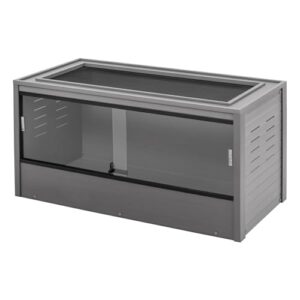
The New Age Pet Ecoflex Reptile Lounge earns its spot on this list for good reason. Built from ECOFLEX — a moisture-resistant blend of recycled polymers and reclaimed wood fiber — it holds up better than most budget enclosures over time.
The 48-inch model runs $249.99 and gives your boa real room to move.
Front sliding glass doors with a lock make feeding and cleaning easy, and the mesh top accommodates heat and UV lamps without hassle.
| Best For | Reptile keepers who want a roomy, easy-to-clean enclosure for snakes, lizards, or tortoises without breaking the bank. |
|---|---|
| Dimensions | 48x24x22.8 in |
| Capacity | ~110 gal est. |
| Primary Material | ECOFLEX composite |
| Weight | 50.71 lb |
| Door Style | Front sliding glass |
| Color | Grey |
| Additional Features |
|
- ECOFLEX material resists moisture and odors, making cleanup way easier than wood alternatives
- Sliding glass doors with a lock make feeding and handling smooth and stress-free
- Modular design means you can stack or expand as your collection grows
- Not sealed for high-humidity species — you’ll need to silicone the seams if you’re keeping a rainforest setup
- No built-in cord ports, so running wires for lights and heaters takes a little extra work
- At 51 lbs, it’s a two-person job to move — plan your spot carefully before assembly
2. Amypet Large Reptile Hide Cave
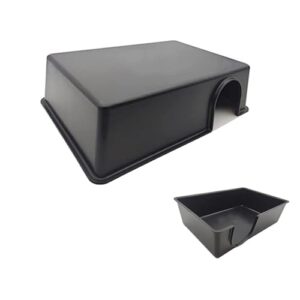
At just $12.99, the Amypet Large Reptile Hide Cave punches well above its price tag. It measures roughly 13.5 × 8.8 × 3.5 inches — enough room for juvenile and smaller adult boas to feel genuinely secure.
The non-porous resin resists mold, wipes clean easily, and holds up in humid setups without warping. Place it on the warm side and it quietly aids digestion and shedding.
One heads-up: keep it away from direct heat lamps to avoid discoloration.
| Best For | Juvenile snakes and small reptiles like ball pythons, corn snakes, and geckos that need a secure, stress-reducing hide at a budget-friendly price. |
|---|---|
| Dimensions | 10.2×7.48×2.75 in |
| Capacity | N/A |
| Primary Material | Hard plastic |
| Weight | N/A |
| Door Style | N/A (hide accessory) |
| Color | Black |
| Additional Features |
|
- At $12.99, it’s hard to beat the value — solid, durable plastic that holds up well over time.
- Non-porous surface is a breeze to clean and won’t harbor bacteria or mold.
- Fits sideways in a 10-gallon tank and works great on the warm side to help with digestion and shedding.
- Quality control can be hit or miss — some buyers have received units that arrived warped or scratched.
- Keep it away from direct heat lamps; the plastic can discolor or deform under intense heat.
- Those factory stickers are a pain to remove — the adhesive is strong and usually needs some serious scrubbing.
3. ToxiRium Extra Tall Reptile Tank
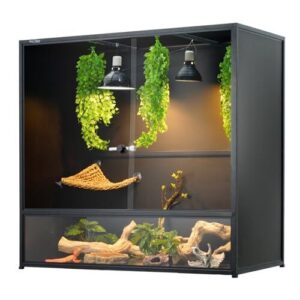
If your boa needs room to actually move — not just exist — the ToxiRium Extra Tall Reptile Tank delivers.
At 48" × 24" × 46" with a 230-gallon capacity, it gives climbing boas genuine vertical space without wasting your floor plan.
Front-opening tempered glass doors make feeding easy, and the PVC panels hold heat and humidity well.
One honest note: assembly instructions can be unclear, so take your time.
Built for long-term use, it’s a serious enclosure at a budget-friendly price point.
| Best For | Reptile owners who want a spacious, vertical enclosure for climbing species like boas, bearded dragons, or ball pythons. |
|---|---|
| Dimensions | 48x24x46 in |
| Capacity | 230 gal |
| Primary Material | Tempered glass/PVC |
| Weight | 75 lb |
| Door Style | Front-opening tempered glass |
| Color | Black |
| Additional Features |
|
- Massive 230-gallon capacity gives large reptiles real room to climb and explore
- Front-opening doors make feeding and cleaning genuinely easy
- PVC panels do a solid job holding heat and humidity
- Assembly instructions are confusing and the lock comes with zero guidance
- Some users have had concerns about watertightness and overall sturdiness
- The size and weight make it tricky to move or reposition once it’s set up
4. Phailozoo 85 Gallon Reptile Tank
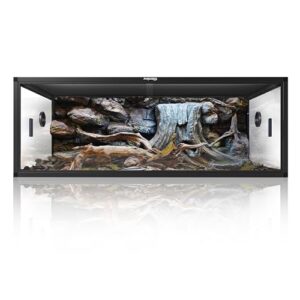
If vertical space wowed you in the ToxiRium, the Phailozoo 85 Gallon shifts the focus back to floor space — and that’s where boas actually thrive.
At 48" × 24" × 18", it gives your snake a solid stretch zone without towering over your room. The tempered glass doors open from the front, making feeding stress‑free. It’s aluminum‑framed, lightweight at 33 pounds, and stackable.
One heads‑up: the plexiglass side panels scratch easily, so handle them with care.
| Best For | Boa owners and larger terrestrial reptiles who need serious floor space for a naturalistic, bioactive setup. |
|---|---|
| Dimensions | 48x24x18 in |
| Capacity | 85 gal |
| Primary Material | Aluminum/tempered glass |
| Weight | 33.51 lb |
| Door Style | Front-opening tempered glass |
| Color | Ultimate Black |
| Additional Features |
|
- Huge 48" footprint gives snakes and lizards room to actually move around
- Front-opening tempered glass doors make feeding and cleaning a breeze
- Lightweight aluminum frame makes it easy to move, reposition, or stack
- Not leakproof out of the box — bioactive setups need extra sealing
- Plexiglass side panels scratch easily if you’re not careful
- Assembly instructions could use some work, so expect a bit of trial and error
5. Reptile Habitats 120 Gallon Enclosure
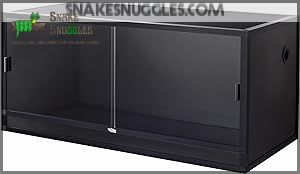
Step up to 120 gallons, and the Reptile Habitats enclosure starts making a lot of sense for growing boas. At 48" × 24" × 24", you’ve got real room for a proper thermal gradient — warm side pushing 88–92°F, cool side dropping to 78–82°F.
The PVC panels handle humidity like a champ, and front-access doors keep feeding calm and simple. Cord management ports are a quiet but genuinely useful touch.
Lightweight, sturdy, and ready to outfit on a budget.
| Best For | Reptile owners with growing boas or larger lizards who need serious space without breaking the bank. |
|---|---|
| Dimensions | 48x24x24 in |
| Capacity | 120 gal |
| Primary Material | PVC/aluminum/glass |
| Weight | 36 lb |
| Door Style | Front sliding glass |
| Color | Black |
| Additional Features |
|
- 120 gallons gives you plenty of room to build a real thermal gradient — warm and cool sides that actually work
- PVC panels hold humidity well, and the front-access doors make feeding way less stressful for you and your snake
- Cord management ports are a small thing that makes a big difference when you’re running heat mats, thermostats, and lighting
- Bottom isn’t waterproof out of the box — you’ll need to silicone seal it before adding any substrate with moisture
- Don’t try to assemble this on carpet; you need a hard, flat surface or things won’t line up right
- The all-black interior is clean but pretty plain — if you like a naturalistic look, you’ll want to do some decorating
6. Unipaws Black Stackable Reptile Terrarium

The Unipaws Black Stackable Reptile Terrarium brings 110 gallons of solid, engineered-wood housing to your setup — and it looks good doing it. At roughly 47" × 24" × 23", there’s enough floor space for a young adult boa to thermoregulate comfortably.
Stack a second unit on top when your boa grows, and pair it with the right boa constrictor habitat accessories to make every inch of that space work harder.
Sliding tempered glass doors lock securely, and four cable ports keep your heating and monitoring gear routed cleanly. The stackable design is a real plus if you’re housing multiple animals.
Just skip this one for high-humidity builds — the wood frame won’t thank you.
| Best For | Hobbyists keeping adult bearded dragons, large lizards, or other medium-to-large terrestrial reptiles who want a clean, stackable setup that fits in nicely with home décor. |
|---|---|
| Dimensions | 47.24×23.62×22.83 in |
| Capacity | 110 gal |
| Primary Material | Engineered wood/glass |
| Weight | 57.32 lb |
| Door Style | Front sliding glass |
| Color | Black |
| Additional Features |
|
- Roomy 110-gallon floor space gives bigger reptiles real room to move and thermoregulate
- Locking sliding glass doors and four built-in cable ports keep things secure and tidy
- Stackable design lets you expand your collection without eating up more floor space
- Wood frame absorbs moisture, so it’s a hard pass for humid or aquatic setups
- Bottom wood construction makes heating pad placement tricky — you’ll need workarounds
- At ~57 lbs fully assembled, moving it without taking it apart is a two-person job at minimum
7. Royxen 82 Gallon Reptile Terrarium
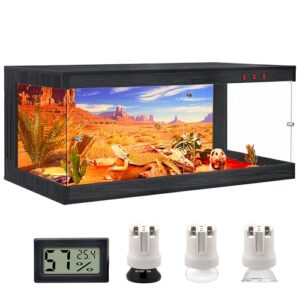
The Royxen 82 Gallon Reptile Terrarium gives you a solid 48" × 20" × 20" footprint — enough room for a juvenile or mid-size boa to move, thermoregulate, and actually feel at home. Tempered glass on three sides means clear sightlines without sacrificing durability.
The built-in lighting system with independent switches keeps your setup clean and tangle-free.
Front sliding doors lock securely, and the raised base holds a heat mat underneath.
Just watch the sliding door grooves — they trap substrate faster than you’d expect.
| Best For | Reptile keepers — beginner or experienced — who want a roomy, clean-looking enclosure for a bearded dragon, gecko, or similarly sized reptile. |
|---|---|
| Dimensions | 48x20x20 in |
| Capacity | 82 gal |
| Primary Material | Tempered glass/wood |
| Weight | 44.65 lb |
| Door Style | Front sliding glass |
| Color | Black |
| Additional Features |
|
- Tempered glass on three sides gives you clear visibility from almost any angle without worrying about scratches
- The built-in lighting system with independent switches keeps things tidy — no messy wire tangles
- 82 gallons of space gives your reptile real room to move, explore, and thermoregulate properly
- Sliding door grooves are a pain to clean and trap substrate quickly
- Some units have shown up with cracked wood or shattered glass right out of the box
- The top panel requires unscrewing to remove, which gets old fast during routine maintenance
8. Phailozoo 120 Gallon Reptile Tank
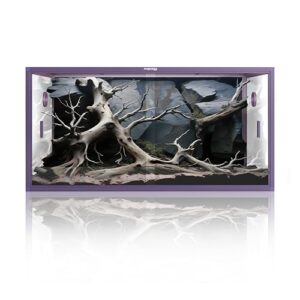
The 120 Gallon Reptile Tank gives your boa real room to breathe — 48" × 24" × 24" of well-built space at a price that won’t wreck your budget. The rust-resistant aluminum frame holds up in humid setups, and the front sliding tempered glass doors make feeding and cleaning genuinely low-stress.
Cable holes and a substrate barrier are thoughtful touches.
One heads-up: the doors don’t lock, and it’s not leakproof out of the box for bioactive builds.
| Best For | Reptile owners who want a spacious, well-ventilated enclosure for bearded dragons, snakes, or lizards in desert or bioactive setups. |
|---|---|
| Dimensions | 48x24x24 in |
| Capacity | 120 gal |
| Primary Material | Acrylic/aluminum/glass |
| Weight | 44 lb |
| Door Style | Front sliding glass |
| Color | Royal Purple |
| Additional Features |
|
- Roomy 120-gallon space gives reptiles plenty of room to move and thrive
- Front-opening sliding glass doors make feeding and daily maintenance easy
- Thoughtful extras like cable holes, substrate barrier, and stackable design add real value
- Doors don’t lock, which can be a safety concern depending on your reptile
- Not leakproof out of the box — bioactive setups will need extra sealing
- On the pricier side, and assembly instructions are pretty bare-bones
9. Annzoe 80 Gallon Reptile Habitat
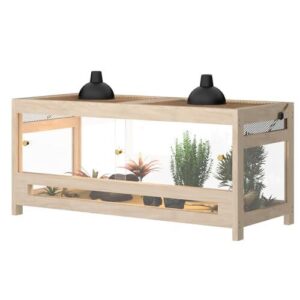
The Annzoe 80 Gallon Reptile Habitat punches above its weight for budget shoppers.
At 47.2" × 21.2" × 20", it gives juveniles and smaller adult boas a workable horizontal space without draining your wallet.
Four transparent acrylic panels keep visibility sharp, and the ventilated mesh flip-top lid accommodates heat lamps and UVB fixtures without modification.
Assembly is straightforward with included hardware.
Just know: some buyers report quality control inconsistencies, so inspect your panels carefully on arrival.
| Best For | Budget-conscious reptile owners housing juveniles or smaller adult boas who want good visibility and lighting compatibility without spending a fortune. |
|---|---|
| Dimensions | 47.2×21.25×20 in |
| Capacity | 80 gal |
| Primary Material | Acrylic/wood |
| Weight | 27.7 lb |
| Door Style | Ventilated flip-top lid |
| Color | Natural Wood |
| Additional Features |
|
- Spacious 80-gallon layout gives reptiles plenty of room to bask, climb, and hide
- Four clear acrylic panels make it easy to monitor your pet without disturbing them
- Mesh flip-top lid works right out of the box with heat lamps and UVB lights
- Quality control can be hit or miss — some buyers get broken or misaligned pieces
- Wood may need extra sealing to hold up against moisture long-term
- Reported discrepancies between listed specs and what actually shows up at your door
10. ToxiRium Stackable PVC Reptile Terrarium
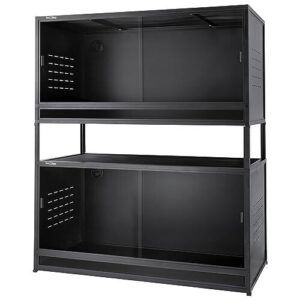
ToxiRium Stackable PVC Terrarium rounds out this list with a smart design that grows with your collection. At 44"×20"×20" and 76 gallons, it’s a solid fit for juveniles and smaller adults.
PVC walls hold heat and humidity better than glass, keeping your energy costs down.
The sliding glass doors lock securely, and the stackable build saves serious floor space if you keep multiple boas.
Just double-check your parts on arrival — some buyers report mismatched components.
| Best For | Reptile keepers who want a heat-efficient, space-saving enclosure for desert species like bearded dragons, ball pythons, or leopard geckos. |
|---|---|
| Dimensions | 44x20x20 in |
| Capacity | 76 gal |
| Primary Material | PVC |
| Weight | N/A |
| Door Style | Front sliding glass |
| Color | Black |
| Additional Features |
|
- PVC walls hold heat and humidity well, which cuts down on energy use and keeps your reptile comfortable
- Stackable design is a real space-saver if you’re running multiple enclosures
- Sliding glass doors lock securely and the whole unit is easy to move around
- The bottom panel feels flimsy and may struggle under heavy substrate or decorations
- Some buyers received mismatched or missing parts, so inspect everything right out of the box
- It’s on the pricier side, and not everyone feels the cost is fully justified
Choosing The Right Enclosure Size on a Budget
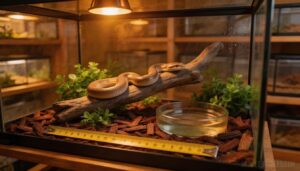
Getting the size right is honestly one of the most important things you’ll do for your boa — and it doesn’t have to cost a fortune. A few key factors, like your snake’s age and how fast it’s growing, will guide every sizing decision you make.
Here’s what you need to know before you spend a single dollar.
Minimum Size Guidelines by Snake Age
Sizing your boa’s home comes down to one simple rule: match the enclosure to where your snake is right now, not where it’ll be in two years. Remember that the minimum enclosure length rule helps keep your boa healthy as it grows.
Hatchling size guidelines start small — babies shorter than 2 feet do fine in a 24–36" enclosure. Follow growth stage sizing as your juvenile reaches 3–5 feet, then scale up minimum dimensions accordingly.
Calculating Enclosure Dimensions for Adult Boas
Once your boa hits adulthood, the math gets real. A solid Floor Space Ratio starts with Snake Length Matching — your Length Width Ratio should follow this Coil Space Planning formula: snake length x half snake length x half snake length.
Here’s your Habitat Footprint guide by size:
- Adult 6 to 8 ft — 6L x 3W x 3H ft minimum
- Large adult longer than 8 ft — 8L x 4W x 4H ft
- Length x Width x Height matters most horizontally
- Size requirements based on snake length — never go shorter than the snake
- Floor space first — prioritize ground movement over height
Can a Baby Boa Live in a Larger Enclosure?
Yes — but only if you set it up right.
A baby boa (under 2 feet) can live in a larger enclosure, as long as Habitat Complexity is dialed in. Pack it with hides, cork bark, and branches. That stress reduction matters more than you’d think.
| Setup Factor | What to Watch |
|---|---|
| Water Safety | Shallow dish only — no drowning risk |
| Feeding Logistics | Smaller prey, quieter space during feeding |
| Growth Monitoring | Measure monthly; Size requirements based on snake length |
| Humidity Zones | 50–60% in each section |
| Escape Prevention | Seal all gaps — hatchlings are escape artists |
Track growth progression and enclosure scaling carefully. Expandable snake habitats make this easier long-term.
Importance of Vertical Space for Enrichment
Height variation matters more than most budget keepers realize. Vertical climbing enrichment gives your boa real options — elevated basking zones, multi-tier hideouts, and climbing branches that encourage natural exploration.
Environmental enrichment for snakes doesn’t have to be expensive. A few well-placed cork branches handle it.
Stackable and expandable enclosure designs make adding vertical space easier over time, keeping your boa constrictor enclosure design guidelines met without a full rebuild.
Best Budget-Friendly Enclosure Materials for Boas
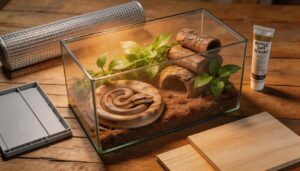
The material your boa lives in affects everything — heat retention, humidity, cost, and how long the setup actually lasts. Each option below comes with real trade-offs worth knowing before you spend a dime.
Here’s a straightforward look at the most budget-friendly choices and how they stack up.
Pros and Cons of Glass Tanks
Glass tanks are a go-to starting point for many keepers — and for good reason. A glass aquarium gives you unbeatable Visibility Clarity, so you can monitor your boa’s behavior and spot health issues fast.
But there are real trade-offs to weigh before committing.
- Visibility Clarity — Near-perfect sightlines; no warping or distortion over time
- Heat Retention — Poor compared to PVC; harder to maintain a stable temperature gradient
- Condensation Issues — Humidity regulation becomes visible on glass walls, signaling moisture swings
- Weight & Portability — Heavy and fragile; moving a glass or plastic enclosure mid-setup is a two-person job
- Durability vs. Scratches — Glass resists warping but scratches dull visibility and demand regular cleaning
Cost-Effective PVC Enclosures
PVC reptile enclosures solve most of glass’s biggest problems without draining your wallet. PVC gasketed doors lock in humidity, while UV-resistant coating keeps panels from going brittle under bright lights.
Lightweight relocation means you can reposition your setup solo. Custom drill cutouts simplify cable routing, and stackable and expandable enclosure designs grow with your boa.
Just stay on top of budget latch maintenance — plastic hardware wears faster than you’d expect.
DIY Plywood and Melamine Options
Building your own enclosure puts you in full control of cost and design. Plywood cores handle the load, while melamine surfaces resist stains and wipe clean easily — no painting needed.
- Use edge banding techniques to seal exposed plywood edges against moisture
- Speed up assembly with cam lock joinery — no special tools required
- Apply moisture-resistant sealants on interior walls before adding substrate
- Follow subframe reinforcement practices for taller builds to prevent racking
Modified Plastic Storage Tubs
Plastic storage tubs are one of the smartest budget moves for boa keepers. Made from HDPE, they handle humidity without cracking or warping.
Their stackable design saves space, and the smooth interior walls make hygiene benefits real — quick wipe-downs, no mold hiding in corners.
Add ventilation cutouts, a removable plastic liner, and basic customizable accessories, and you’ve got a functional boa constrictor cage for a fraction of the cost.
Is It Cheaper to Build or Buy a Reptile Enclosure?
The honest answer? It depends on your skill set and timeline. DIY building tips for boa enclosures show real savings — melamine plywood cuts costs by 20–40% versus retail. But factor in your tool investment and time savings lost due to a weekend build.
- Premade stackable reptile enclosures often include warranty value and modular reptile enclosure solutions
- Customizable snake enclosure builds skip shipping expenses entirely
- Expandable reptile cages offer long-term resale potential
Setting Up Temperature and Humidity Affordably
Getting the climate right inside your boa’s enclosure doesn’t have to drain your wallet. A few smart, affordable choices can keep temperatures and humidity exactly where they need to be.
Here’s how to make it work without overspending.
Creating a Warm and Cool Temperature Gradient
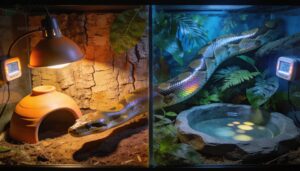
Think of your enclosure like a studio apartment with a sunny corner and a shady couch — your boa needs both. Proper heat source placement means keeping all warmth on one side, letting the cool side breathe freely.
A boa’s enclosure needs one warm side and one cool side — give it both
Solid gradient monitoring and ventilation design keep temperatures honest.
Always run a backup heater and confirm thermostat calibration before your snake moves in.
Affordable Heating Solutions (Heat Mats, Ceramic Emitters)
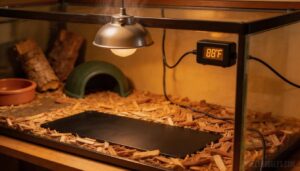
Once your gradient is mapped out, heating tools make or break your budget setup. Two solid options cover most boa keepers well:
- Use an adjustable thermostat-controlled heat mat for mat placement under one end
- Mount a ceramic heat emitter above for CHE mounting and ambient warmth
- Prioritize thermostat pairing to prevent overheating
- Choose energy-efficient heating units (4–18W mats work great)
- Add DIY heat barriers using ceramic tiles to distribute heat safely
How Cold is Too Cold for a Boa?
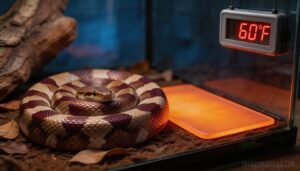
Your heat mat is doing its job — but what happens when temperatures slip too low? Below 72°F, boas show clear Cold Stress Indicators: tight curling, sluggishness, and skipped meals.
Nighttime Temperature Limits sit around 68–72°F minimum. Watch Behavioral Cold Responses closely — a snake hunting the warm end constantly is telling you something.
Thermostat Calibration Tips matter here; even a few degrees off disrupt your temperature gradient.
Humidity Control Tips for Less
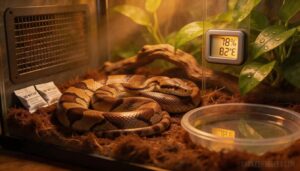
Keeping humidity steady doesn’t mean spending big. DIY hygrometer setup using a basic digital gauge under $15 gives you real-time readings without the guesswork.
For moisture absorbing substrate, coconut fiber manages substrate moisture retention naturally. Silica gel packs tucked near vents work as solid dehumidifier alternatives. Passive ventilation — just a small lid gap — moves stale air out surprisingly well.
Budget Thermostats and Hygrometers Worth Using
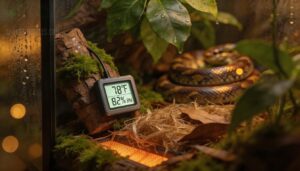
Once your humidity is dialed in, you’ll want gear that actually confirms it. A digital thermometer/hygrometer under $15 manages temperature and humidity management in snake habitats without fuss.
Go for Dual Sensor Units with Alarm Indicators — they’ll flag when conditions drift. Battery Operated Probes keep Probe Placement flexible, and Simple Calibration means you’re not guessing.
Pair one with an adjustable thermostat-controlled heat mat and you’re set.
Low-Cost Substrates and Decor for Boa Enclosures
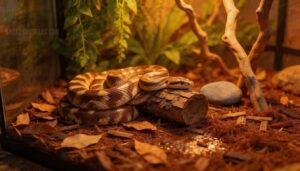
Once you’ve nailed your temperature setup, the inside of the enclosure deserves just as much thought — without draining your wallet. The right substrate and decor can keep your boa comfortable, reduce stress, and make cleaning a whole lot easier.
Here’s what actually works on a budget.
Budget Substrate Mixes (Coconut Fiber, Cypress Mulch)
Coconut fiber and cypress mulch make a solid budget-friendly team for boa constrictor cages. Coconut fiber manages moisture retention beautifully, keeping humidity around 60–70%, while cypress adds weight reduction benefits and coarser texture for burrowing enrichment.
Mix them roughly 50/50 for balanced substrate ratio guidance. This blend also helps with dust management better than either alone — a small but worthwhile win for your snake’s respiratory health.
DIY Hides and Climbing Branches
Building your own hides and climbing structures costs a fraction of store prices.
Natural Log Hides hollowed and baked offer smooth-edged hiding spots that boas actually use. Cork Bark Shelters resist mold and hold humidity well.
PVC Climbing Arches and Branch Tree Assemblies create customizable reptile habitats at low cost.
Even Fabric Covered Hides work well near heat zones for modular snake enclosure design.
Using Live Plants for Enrichment
Adding live plants transforms your boa’s space into a genuinely lively habitat. Start with Plant Toxicity Screening — pothos and spider plants are safe bets.
Climbing Plant Density matters too; layered greenery gives your boa real enrichment pathways. Pair plants with proper Lighting Plant Balance around 5000K, and consider Fresh Sheet Moss or Bioactive substrate options for reptiles to support Microbiome Benefits naturally.
Affordable Water Dishes and Soaking Spots
Your water dish does double duty — hydration and humidity control in one spot. For Boa Constrictor Cages, sizing matters more than most keepers realize.
- Clear Dishes and Non-Skid Bases keep things stable and readable
- Textured Surfaces discourage pushing; shallow designs prevent head entrapment
- DIY Bowls from thrift ceramics or silicone molds cost under a dollar
Proper Water Dish Sizing and Hydration for Large Snakes means wide, soakable access always.
Keeping Your Boa Healthy in a Budget Setup
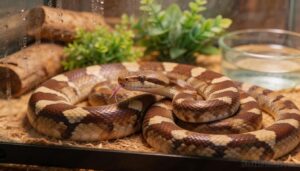
A tight budget doesn’t have to mean cutting corners on your boa’s health. The right habits and a little attention go a long way toward keeping your snake thriving without draining your wallet.
Here’s what actually matters when you’re working with less.
Monitoring Temperature and Humidity Without Overspending
You don’t need expensive gear to keep tabs on your boa’s climate. A digital thermometer-hygrometer combo covers both temperature gradient and humidity control in one affordable device.
Smart sensor placement strategies matter — position one low, one high. Use DIY calibration techniques against a known thermometer.
Battery life management is simple: swap every 6–12 months. Smartphone alert integration keeps you informed hands‑free.
Preventing Escapes With Secure Locking Mechanisms
A boa that escapes isn’t just a headache — it’s a safety risk. Your lockable enclosure is only as good as its locking system.
- Choose multipoint locking that engages three or more latches simultaneously
- Look for auto-locking mechanisms that click shut the moment the door closes
- Prioritize magnetic door seals and dual interlocking doors for a secondary barrier
- Confirm tamper-resistant screws secure all hinges
Solid secure locking mechanisms on Boa Constrictor Cages prevent costly escapes.
Safe Substrates and Cleaning Routines
Once your locks are solid, the next layer of protection is cleanliness. Substrate selection shapes everything — from odor control to your boa’s respiratory health.
Paper Towel Substrate works great for beginners: cheap, disposable, and zero guesswork. Nonporous Substrates like ceramic tile simplify reptile enclosure maintenance by resisting bacteria.
Follow a consistent Spot Cleaning Protocol daily, and schedule a Full Substrate Change every one to three months.
Can You House More Than One Boa Together?
Keeping two boas in one enclosure is risky, even with the best intentions. Aggression management becomes a full-time job. Territorial partitioning helps — scatter hides and basking spots throughout — but dominant snakes often bully weaker ones.
Feeding strategies must stay separate to prevent injury.
Watch for behavioral indicators like hissing or weight loss.
Quarantine protocols before any introduction aren’t optional.
Planning Enclosure Upgrades as Your Boa Grows
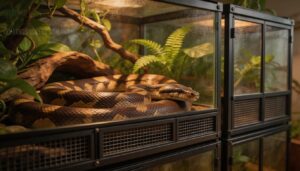
Boas don’t stay small forever, and your enclosure strategy needs to grow with them. The good news is that smart planning now can save you real money down the road.
Here’s what to keep in mind as you map out each upgrade: prioritize scalability, research long-term habitat requirements, and invest in modular designs that adapt to your boa’s changing needs.
Scaling Enclosure Size Through Each Life Stage
From hatchling to full-grown, your boa’s home should evolve with its size. Start with Stage-specific Dimensions—like 18-inch floors for babies—then use Growth Ratio Scaling as your snake matures.
Footprint Evolution means upgrading to larger Boa Constrictor Cages, adding Height Growth for climbing.
Modular Upgrade Steps let you adjust your customizable snake enclosure, ensuring expanding reptile cage space matches snake growth accommodation.
Stackable and Expandable Enclosure Systems
Once your snake outgrows one setup, a modular enclosure system saves you from starting over. STACKABLE AND EXPANDABLE Boa Constrictor Cages use Interlocking Module Design to grow with your snake:
- Quick-Release Connectors for fast upgrades
- Adjustable Width Panels to expand floor space
- Standardized Rail System across compatible units
- Load-Bearing Stack Limits that keep multi-unit builds safe
Expandable stackable reptile enclosures just make long-term sense.
Reusing and Repurposing Enclosure Materials
Repurposing what you already have stretches your budget further than you’d think.
Salvaged Wood Shelves make solid interior platforms, while Repurposed PVC Dividers create clean hide zones. Reclaimed Glass Braces add structural support, and Recycled Metal Hinges hold DIY doors securely. Even Upcycled Fabric Liners work as moisture buffers.
These DIY building tips for boa enclosures turn old materials into customizable reptile habitats without starting from scratch.
Planning for Long-Term Affordability
Planning ahead saves you more than just money — it protects your boa’s welfare long-term. 5 YEAR WARRANTY on enclosures like Zen Habitat’s lineup means fewer surprise replacement costs.
Think in phases:
- Phased Investment: start small, upgrade modularly as your boa grows
- Replacement Cycle: budget 2–5 years per setup based on wear
- Energy-efficient heating in reptile cages cuts monthly utility bills noticeably
- Bulk Purchasing substrates and decor reduces per-cycle costs substantially
Stackable terrarium systems and modular and transportable, customizable reptile habitats make warranty planning and long-term budgeting genuinely manageable.
Frequently Asked Questions (FAQs)
Is it cheaper to build or buy a reptile enclosure?
Buying is usually cheaper upfront, but building saves money long-term.
Hidden Labor Costs, Tool Investment, and Shipping Expenses add up fast either way — so weigh your time, skills, and budget before deciding.
How cold is too cold for a boa?
Once your boa’s cool end drops below 75°F, cold stress signs appear fast.
Below 68°F at night, you need a lightless heat source — a ceramic emitter works well — to maintain a safe thermal gradient.
Can a boa live in a 20 gallon tank?
A 20-gallon tank works briefly for a hatchling, but given the juvenile growth rate, you’ll need to upgrade within months.
Stress indicators like refusal to eat signal it’s already too small.
How big of an enclosure do you need for a boa constrictor?
For most adult boas, you’ll need at least a 4×2×2-foot enclosure — but a 6×3×3-foot setup is the true sweet spot for comfortable movement, proper enclosure floor area, and healthy thermoregulation.
What is the easiest boas to care for?
The Rosy Boa, Kenyan Sand Boa, Dumeril’s Boa, and Common Boa top the beginner list.
All manageable in size, tolerate minimal handling, and thrive with straightforward humidity and heat gradient care.
What is the best terrarium for a boa?
The best terrarium for a boa prioritizes a solid temperature gradient, reliable ventilation design, and reptile enclosure safety. A 4×2×2 setup gives most boas the space they genuinely need.
Can a boa constrictor live in a 4x2x2?
A 4x2x2 works like a starter apartment — fine short-term, tight long-term. It suits juveniles but falls short of minimum dimensions most adult boas need to coil and thermoregulate properly.
Can boas share enclosures with other snakes?
No, boas shouldn’t share enclosures. Cohabitation risks include disease transmission concerns, feeding zone separation failures, and behavioral aggression indicators. Keep each boa in its own setup.
How often should boa enclosures be replaced?
Think of your enclosure like a car — it runs fine with regular upkeep, but eventually needs replacing. Most last 5 to 20 years depending on material, maintenance, and structural wear.
What decor items are unsafe for boas?
Skip cedar, pine, and painted pieces — toxic paints and splintering wood are serious hazards. Sharp edges, small cavities, and tipping decor can injure or trap your boa fast.
Conclusion
Great finds await you in the domain of budget boa constrictor enclosures. By balancing affordability with animal welfare, you’ve taken the first step to creating a thriving habitat for your snake.
Remember, a well-built setup doesn’t have to break the bank. With these top picks and expert tips, you’ll be well on your way to providing a happy, healthy home for your boa constrictor, all while staying within your means with affordable boa constrictor enclosures for snake enthusiasts on a budget.
- https://reptifiles.com/boa-constrictor-care/boa-constrictor-enclosure-size/
- https://dubiaroaches.com/blogs/how-to-guides/how-to-set-up-a-boa-constrictor-terrarium
- https://www.thebiodude.com/blogs/snake-caresheets/boa-constrictor-care-guide-and-bioactive-terrarium-maintenance
- http://www.exoticpetvet.com/boa-constrictor-care.html
- https://www.pangeareptile.com/products/new-age-pet-mojave-stacker