This site is supported by our readers. We may earn a commission, at no cost to you, if you purchase through links.
You’ve scrolled through dozens of breeder websites, captivated by glittering Albino scales and hypnotic Motley patterns, when a nagging question surfaces: will that stunning morph come with a temperament to match? The myth persists across reptile forums and Facebook groups that certain color mutations breed calmer snakes, while others produce defensive biters.
Here’s what genetics actually tells us: boa constrictor morph temperament differences don’t exist in the way most keepers believe. The genes controlling pigmentation operate independently from those governing behavior, meaning your snake’s willingness to tolerate handling stems from factors far removed from whether it sports wild-type saddles or pastel hues.
Understanding this distinction protects you from costly mistakes and helps you focus on what genuinely shapes a boa’s disposition.
Table Of Contents
Key Takeaways
- Boa constrictor morphs alter color and pattern through specific genetic mutations, but the genes controlling pigmentation operate independently from those governing behavior and temperament.
- A snake’s willingness to tolerate handling stems from consistent socialization, proper husbandry conditions (thermal gradients, humidity, enclosure design), and individual personality rather than morph genetics.
- Some morphs carry documented health risks—Super Motley homozygotes, Scoria morphs with head wobbles, and Super Aztec boas with ataxia—that create neurological issues affecting behavior, but these are medical complications rather than temperament traits.
- Locality bloodlines (geographic origin affecting size and wild-type behavioral profiles) influence disposition more reliably than morphs, though captive-bred lines across multiple generations show general docility regardless of color variation.
What Are Boa Constrictor Morphs?
You’ve probably heard breeders toss around terms like “albino” or “hypo” when talking about boa constrictors, but what do these labels actually mean? Morphs are genetic variations that change how a boa looks—its color, pattern, or physical traits—without changing the species itself.
Let’s break down the genetic foundation behind these stunning variations, explore the common morph types you’ll encounter, and clarify why visual differences don’t make one boa a different animal from another.
Definition and Genetic Basis
Boa constrictor morphs are heritable color and pattern variants produced through selective breeding, driven by genetic mutations that alter pigment expression. These color mutations follow Mendelian inheritance types—recessive, dominant, or co-dominant—allowing you to predict offspring outcomes.
Morph classification depends on consistent, predictable phenotypes that breed true, distinguishing snake morphs from natural locality differences.
Understanding reptile genetics informs your breed selection decisions and reveals how genetic variation creates stunning visual diversity. The study of boa morph genetics is essential for comprehending the intricacies of these mutations.
Common Morph Types and Traits
You’ll encounter dozens of named boa constrictor morphs, each defined by precise morph classification rules. Color morphs like Albino eliminate melanin entirely, producing white-and-yellow bodies with red eyes. Hypomelanistic (Hypo) boas reduce dark pigment through color genetics, brightening overall tone. Anerythristic (Anery) morphs remove red, yielding silver-gray animals. Pattern variations include Motley and Jungle, which disrupt saddle shapes.
Understanding snake morphology and breed characteristics supports informed boa constrictor care decisions across all snake morphs. To provide superior care, it’s crucial to research boa constrictor genetics and their impact on morph development.
Visual Differences Vs. Species Differences
Genetic variation drives color morphs, but species classification depends on skull shape, scale counts, and origin—not pattern morph appearance. Visual traits like Albino or Jungle don’t alter snake morphology at the taxonomic level.
Boa constrictor morphs remain fertile with wild-type boas, confirming they’re intraspecific variants.
Meanwhile, actual species variation between B. c. constrictor and B. imperator involves size, saddle counts, and geographic range—differences morph expression can’t touch.
Genetics and Appearance of Boa Morphs
If you’re serious about understanding morphs, you need to start with the genetics behind them. Boa constrictor morphs aren’t random—they’re the result of specific gene interactions that determine whether a snake displays albino traits, reduced pigmentation, or bold pattern changes.
Let’s break down how dominant and recessive genes work, why morphs only change appearance, and what selective breeding actually does.
Dominant and Recessive Genes in Morphs
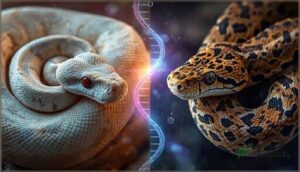
Understanding allele interaction determines which boa constrictor morphs you’ll see in your breeding projects. Gene dominance splits into two camps: recessive traits like Albino and Leopard demand two copies for visual expression, while co-dominant genes such as Hypo and Aztec show intermediate forms in single-copy animals.
Inheritance patterns following Mendelian ratios let you predict offspring phenotypes before pairing your boas, turning genetic mutation into calculated morphs through strategic reptile breeding and genetics.
How Morphs Affect Color and Pattern Only
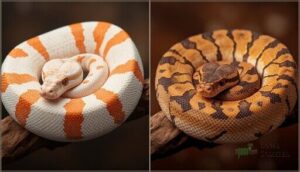
Pigment genetics in boa constrictor morphs alter melanophore and chromatophore cell function, producing color variation and pattern expression without documented effects on neural pathways. These color and pattern mutations reorganize visual traits through conserved pigmentation genes.
Melanin-based morphs like Albino eliminate dark pigment entirely, while Hypo reduces it for brighter saddles. Morph classification reflects cosmetic changes, not distinct behavioral syndromes within these snake morphs and color variations.
Selective Breeding Practices
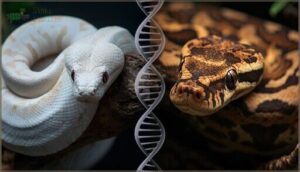
Breeders control color morphs through pairing carriers of recessive genes like Albino and Leopard or co-dominant traits like Hypo. Line selection within boa constrictor morphs often traces back to a handful of wild-caught founders, and repeated use of closely related animals accelerates morph development but increases inbreeding risks.
Over 20–30 years, these breeding techniques can inadvertently reduce genetic diversity and concentrate health defects alongside stunning color morphs.
Factors Influencing Boa Constrictor Temperament
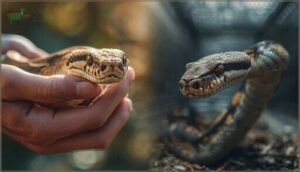
You might assume your boa’s personality comes written in its genes, but the truth breaks that myth wide open. Temperament doesn’t ride on color patterns or morph genetics—it’s shaped by how you handle your snake, the environment you create, and even the locality bloodline you choose.
Your boa’s temperament isn’t written in its color genes—it’s shaped by how you handle it, the environment you create, and its locality bloodline
Let’s examine the real factors that determine whether your boa becomes a calm companion or a defensive handful.
Role of Handling and Socialization
You shape your boa’s behavioral habits through consistent gentle interaction from day one, not by choosing a specific morph.
Research on Boa imperator shows that individual snake temperament traits remain stable across repeated handling—meaning routine socialization methods and stress reduction strategies help juveniles habituate, but won’t override each animal’s baseline personality.
Effective boa constrictor care demands patience, not genetic shortcuts.
Environmental and Husbandry Impacts
Your snake’s daily environment drives behavior far more powerfully than its pattern genes. Thermal stress, inadequate humidity control, and cramped enclosure design measurably increase corticosterone—your boa’s stress hormone—leading to defensive strikes and feeding refusals.
Proper boa constrictor care demands:
- Stable thermal gradients between 24–32 °C
- Humidity control at 60–80% to prevent shedding issues
- Enclosure design allowing full-body extension
- Environmental enrichment with hides and climbing structures
Lighting systems supporting UVB synthesis strengthen immune function and appetite, while poor reptile husbandry triggers chronic physiological stress regardless of morph.
Differences Between Locality and Morph
You need to understand that locality traits and morph classification describe fundamentally different aspects of boa constrictor biology. Locality defines geographic origin—dwarf island Boa imperator populations reach 1.2–1.8 m versus 2.1–3 m mainland forms—while morphs represent heritable color mutations within populations.
Captive breeding has produced quasi-domesticated morph lines across multiple generations, whereas pure locality boas retain behavioral profiles closer to wild conspecifics, affecting temperament independently of snake genetics.
Do Morphs Affect Boa Temperament?
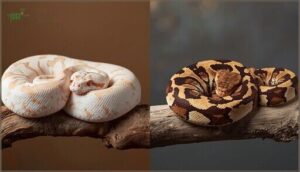
You’ve probably heard someone claim their albino boa is calmer than their normal morph, or that hypos come with attitude. The truth isn’t that simple, and we need to separate what genetics actually control from what keepers observe in practice.
Let’s break down what science shows, what experienced keepers report, and where health problems blur the line between morph traits and behavior.
Scientific Findings on Morph and Behavior
When you dig into the research on boa constrictor morphs, you hit a wall: no controlled studies link genetic correlations between color trait impacts and snake personality. A 2017 behavioral analysis documented boldness and aggression axes in Boa imperator, yet didn’t test morph behavior studies at all.
While spider ball pythons show neurological effects from pattern genes, parallel evidence connecting boa constrictor morphs to temperament simply doesn’t exist in animal behavior and psychology literature yet.
Keeper Experiences and Anecdotal Reports
Without controlled studies, you’re left with keeper experiences and breeder insights to guide your choices. Over 80% of respondents in a 2022 poll described captive-bred boa constrictors—morphs included—as generally docile when handled routinely.
Owner stories from 2024–2025 consistently recommend morph boas for beginners, citing calm temperaments. Most pet experiences link defensive snake behavior to poor boa handling or husbandry, not morph genetics affecting animal behavior or boa constrictor care outcomes.
Health Issues and Associated Behaviors in Morphs
While morph genetics shape appearance, some mutations carry hidden health risks that directly impact behavior. Super Motley homozygotes rarely survive past two years, and Scoria morphs display chronic head wobbles—neurological disorders that compromise coordination.
Super Aztec boas struggle with ataxia and impaired righting reflexes, welfare concerns that alter how these boa constrictors interact with their environment.
Even popular lines like Hypo combinations warrant careful screening for behavioral impacts tied to reptile health complications.
Choosing a Boa Morph for Temperament
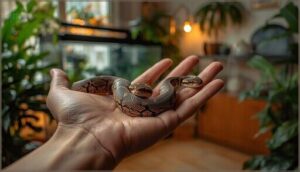
You’ve already learned that morphs don’t determine temperament, so choosing a boa shouldn’t come down to color alone. Your decision needs to balance what catches your eye with the animal’s long-term health and your capacity for decades of care.
Let’s break down the key considerations that matter when you’re ready to commit.
Temperament Vs. Appearance Considerations
Your priority should always be hands-on temperament testing—observe feeding responses, handling reactivity, and stress behaviors in individual snakes rather than relying on morph labels like Albino Boa or Anerythristic Boa.
Color genetics determine appearance, not snake behavior. Environmental factors and handling techniques shape calm temperament far more than pattern.
Don’t let visual appeal overshadow the boa constrictor’s actual disposition when choosing your companion.
Health, Welfare, and Ethical Breeding
Temperament is only one piece—ethical breeding demands you consider health risks tied to certain morphs. Super Motley and Super Aztec boas face documented developmental defects and neurological wobble, while some Albino pairings show higher ocular malformations.
Reptile ethics and animal welfare push responsible breeders to prioritize genetic management over novelty. Choose breeders who value boa constrictor health and wellness above visual appeal.
Long-Term Care Implications for Owners
You’re signing up for thirty years of daily snake care—every morph demands the same owner commitment and reptile health vigilance.
Lifetime budgeting for your boa constrictor stacks up fast:
- Annual veterinary costs for exotic reptile health checks
- Weekly habitat maintenance and substrate replacement
- Consistent feeding strategies with appropriately sized prey
- Upgraded enclosures as your snake reaches adult size
- Emergency fund for respiratory infections or other illnesses
Temperament won’t reduce those decades of responsibility.
Frequently Asked Questions (FAQs)
Can diet changes improve defensive boa behavior?
You can’t put the cart before the horse—dietary optimization and hunger management help reduce stress-related defensiveness in boa constrictors, but consistent handling and proper snake care remain the cornerstone of temperament improvement across all morphs.
Do hatchling boas require different socialization techniques?
Yes—young boas show heightened stress reactivity and stable personality traits from hatching. You’ll need shorter, predictable handling sessions paired with enriched enclosures to support temperament development without triggering chronic fear responses.
What handling frequency prevents stress in boas?
Your boa constrictor thrives with 1–3 brief handling sessions weekly, each lasting 10–15 minutes. This stress prevention approach balances habituation with welfare, supporting calm boa behavior through consistent yet gentle snake handling techniques and proper reptile care maintenance.
Are wild-caught boas harder to socialize?
Straight from the field: wild-caught boas carry capture stress and defensive behavior, with zero habituation to humans.
You’ll invest months in socialization techniques before these animals tolerate handling like their captive-bred counterparts.
How do seasonal changes affect boa temperament?
Winter brumation slows your boa’s metabolism and reduces activity, while spring emergence triggers heightened responsiveness and defensive behaviors.
Summer heat stress and photoperiod shifts further alter temperament expression through environmental adaptation and seasonal behavior patterns.
Conclusion
Spend hours chasing unicorns if you want—morphs that magically transform aggressive snakes into lap pets—but you’ll find genetics doesn’t work that way. Boa constrictor morph temperament differences remain fiction, not fact.
Your snake’s disposition hinges on handling consistency, enclosure quality, and individual personality shaped through proper socialization. Choose morphs for their visual appeal, then invest effort where it actually matters: building trust through patient interaction and meeting husbandry standards that foster calm, confident animals.
- https://community.morphmarket.com/t/what-are-some-of-the-best-boa-constrictor-morphs-to-invest-in/49560
- https://www.veterinary-practice.com/article/how-selective-breeding-can-change-behaviour-patterns
- https://exoticpetvetblog.wordpress.com/2015/07/06/inbreeding-in-captive-reptile-populations/
- https://www.sciencedirect.com/science/article/pii/S0003347222001804
- https://www.beyondthetreat.com/ball-python-morphs/