This site is supported by our readers. We may earn a commission, at no cost to you, if you purchase through links.

Most snakes don’t wrap around you out of aggression—they wrap because they’re trying not to fall. That single shift in perspective changes everything about how you handle them.
A snake searching for something solid to grip isn’t attacking; it’s balancing, the same way you’d grab a railing on a shaky bridge.
The problem starts when a loop finds a belt, a sleeve, or a fold of clothing and locks in with surprising force.
Knowing how to position your body, read your snake’s muscle tension, and support its weight properly turns that instinct into something you can work with, not against.
Table Of Contents
- Key Takeaways
- Avoid Torso Constriction
- Support Your Snake’s Full Body
- Prevent Tight Constriction
- Unwrap Your Snake Safely
- Frequently Asked Questions (FAQs)
- Can wrapping affect a snake’s digestion process?
- How does humidity impact snake wrapping behavior?
- Are there risks with wrapping during shedding periods?
- What age is safe to start wrapping training?
- Does wrapping increase the risk of scale injuries?
- Where should I drape a large snake safely?
- Why do snakes wrap around handlers during handling?
- How does a snake calm down on your shoulder?
- Should I approach my snake from above or sideways?
- What triggers a snake to constrict more tightly?
- Conclusion
Key Takeaways
- Snakes wrap around you to stay balanced, not to attack — once you understand that, handling becomes a lot less stressful for both of you.
- Supporting your snake’s full body weight with both hands is the single most effective way to keep it calm and prevent tight constriction.
- Watch for early stress signals like freezing, stiff muscles, or rapid tongue flicking — catching these early lets you adjust before a wrap becomes a problem.
- When a snake does coil too tightly, start at the tail tip, work slowly toward the base, and always stay calm — rushing only makes it grip harder.
Avoid Torso Constriction

Snakes don’t constrict out of aggression — they grip because they’re trying to stay balanced. Still, that natural reflex can become dangerous fast if you’re not paying attention to where your snake’s body settles.
Understanding this reflex can genuinely change how you handle your snake — safe snake wrapping and handling techniques break down exactly what to watch for before a grip becomes a problem.
Midbody pressure is the real risk. When a snake loops around your torso and finds anchor points against your clothing, it starts bracing — and that loop tightens gradually, almost without you noticing. Spine alignment matters here: keep your snake’s body running along your arm or forearm, not gathered across your waist. That prevents the classic belt loop formation.
Practice continuous contact with your palm and forearm. The moment tightening begins, act. Immediate release means redirecting calmly onto a broader surface — never jerking away, which only makes it worse.
Support Your Snake’s Full Body

Good snake handling starts with one simple principle: your snake should never feel like it’s about to fall. When a snake feels unsupported, it grips tighter — and that’s when things get uncomfortable for both of you. Here are the key support techniques that keep your snake relaxed and your sessions stress-free.
Two-Hand Support Method
Place one hand just behind your snake’s head and the other beneath its mid-to-rear body — this is palm placement done right. Keep both palms open and aligned with your snake’s natural body curve, so nothing bends awkwardly. Here’s why this matters:
- Even weight distribution prevents painful pressure points
- Continuous contact keeps your snake feeling secure
- Proper alignment reduces struggling
- Coordinated hands move together smoothly
Loose Grip Technique
Once both hands are in place, it’s time to think about how firmly you’re holding on. The goal is loose, even contact — not a grip, but a gentle cradle.
Rest your fingers lightly against the body so your snake can flex and shift without hitting a pressure point. That small release of tension makes a surprisingly big difference.
Moving Hand Support
Think of your hands as a moving track — always shifting to meet the snake where it is. Palm and finger contact should stay spread across several points along the body, never concentrated in one spot. Keep your wrist slightly bent, not locked, so you can glide smoothly without jarring the snake mid-movement.
Pairing this technique with a solid understanding of corn snake behavior and temperament helps you read your snake’s body language and adjust your hold before tension builds.
Move in small, synchronized steps, pausing briefly after each adjustment. Consider using patient handling aids for extra support when repositioning larger snakes.
Small Snake Handling
Small snakes need a lighter touch than you might expect. Use the gentle scoop approach — slide your palm slowly under the midsection, keeping your hand parallel to the ground, then lift calmly with the head slightly higher than the tail.
Wash your hands first to remove any scents that could trigger a defensive reaction. Keep sessions to five to ten minutes max.
Large Snake Support
Big snakes demand a completely different approach.
Spread the weight using forearm weight distribution — let the midbody rest across both forearms rather than dangling from one hand. Use balanced hand placement by positioning one hand a third of the body length behind the head and the other two‑thirds back.
Ask a second person to handle the tail end for full tail support assistance.
Prevent Tight Constriction
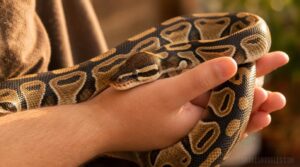
Tight constriction usually means your snake is telling you something’s off. A few small adjustments during handling can make a big difference in how relaxed your snake stays. Here’s what to watch for and do.
Watch Stress Signals
Your snake’s body never lies. Before a tight wrap happens, the warning signs are already there — you just need to know what to look for.
Identify freezing behavior first. A snake that suddenly goes rigid isn’t resting; it’s stressed. Watch for frequent tongue flicking paired with stiff muscles — that’s your early alert. Monitor body tension by feel: relaxed snakes are loose and flowing, not locked up. If breathing becomes faster and more forceful, don’t wait. Watch breathing patterns closely, especially when repositioning. In extreme cases, cloacal release signals your snake is overwhelmed — ease off immediately.
Avoid Fast Movements
Fast movements are a snake’s worst enemy during handling. When you jerk or reposition quickly, their instinct is to grip tighter — not let go. Slow Motion Handling is the foundation here.
Keep these principles in mind:
- Use Steady Tempo Movements so your snake can anticipate each shift
- Practice Smooth Weight Transfer to avoid sudden pressure changes
- Make Controlled Adjustments one small step at a time
- Signal intent before moving — pause, then proceed
- Approach from the side, never from above
Use Calm Breathing
Your breathing is your snake’s emotional weather report. Snakes feel your chest rise and fall through direct body contact, so calm, steady breathing signals safety to them.
Your breathing is your snake’s emotional weather report — calm and steady signals safety
Inhale slowly, then let your exhale stretch out longer than your inhale. Let your belly expand gently — not your chest.
Think of it as a quiet reset button you carry everywhere.
Maintain Secure Support
Secure support isn’t passive — it’s something you actively maintain from the moment your snake starts moving. Keep your wrists relaxed and your posture steady, letting your hands shift naturally along the body.
- Align the snake with its natural curves
- Distribute weight evenly across both hands
- Watch for tension in the mid-body
- Reposition hands calmly when pressure builds
Follow Handler Ratios
One rule experienced handlers swear by: one handler per four feet of snake. That’s the One Handler Rule, and it exists for good reason. A six-foot ball python genuinely needs two people nearby. More length means more unpredictable movement — and more chances for tight looping.
Balanced handling teams keep everyone safer and your snake calmer throughout the session.
Unwrap Your Snake Safely
Even with the best handling habits, there are moments when your snake wraps a little tighter than you’d like — and that’s completely normal. The key is knowing how to uncoil them without panicking or making things worse. Here’s what to do.
Stay Calm

When your snake starts to tighten, your first instinct might be to pull free fast — resist that urge. Move slowly and deliberately. Fast uncoiling triggers more defensive thrashing, making the situation harder to control.
- Breathe deeply and keep your muscles relaxed
- Steady movements signal safety to your snake
- Avoid tensing up, since snakes feel your body’s tension directly
Support Before Uncoiling

Once you’re calm and steady, don’t rush to uncoil. Before anything moves, support the coil area first. Place one hand under the shoulder region and the other near the midbody — this is your initial hand placement, spreading the snake’s weight evenly so it feels secure, not threatened.
| Step | Action | Why It Matters |
|---|---|---|
| Hand Placement | Cup neck region, support midbody | Prevents stress and sudden movement |
| Weight Distribution | Spread fingers along the coil | Reduces pressure on any single point |
| Body Alignment Check | Confirm no kinks or loops | Keeps the snake comfortable and still |
That pre-uncoil pause — just a few seconds of stillness — lets your snake settle before anything changes. Gentle grip pressure, never squeezing, tells it you’re safe. Only once the body feels relaxed should you think about the next move.
Loosen Tail First
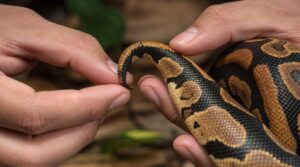
With your hands already supporting the body, start the Tail Release Technique at the very tip. Gently separate the tail using Gentle Tail Separation — work slowly from tip toward the base.
- Begin at the tail tip
- Apply Gradual Pressure Reduction
- Use light, even strokes
- Follow Tail Loosening Steps toward the base
- Confirm the tail feels loose before moving further
Tail Handling Safety matters here — rushing triggers tight coiling.
Redirect Tight Loops

When a snake loops too tightly, don’t panic — place your hand between the loop and your body immediately. This breaks the grip before it tightens further.
| Situation | Action |
|---|---|
| Loop forming at neck | Insert hand as barrier |
| Tight coil mid-body | Gently guide head away |
| Snake feels threatened | Lower movement, breathe slowly |
Redirect the snake’s head using your free hand, steering it sideways — not upward.
Get Help When Needed

Even experienced keepers hit a moment when the snake simply won’t cooperate — and that’s when asking for help becomes the smartest move you can make. Ask for help immediately if constriction feels unmanageable.
Contact an experienced reptile keeper for technique issues, or a vet promptly if injury is suspected.
Share the snake’s species, length, and behavior before help arrives.
Frequently Asked Questions (FAQs)
Can wrapping affect a snake’s digestion process?
Yes, it can. Tight constriction after a meal puts real pressure on your snake’s digestive organs. That added stress risks regurgitation and slows normal digestion — so timing and support matter more than most owners realize.
How does humidity impact snake wrapping behavior?
Humidity influence is real. Skin moisture keeps wraps flexible and loose. Good shedding ease comes from environmental humidity — snakes adjust wrap flexibility naturally, avoiding tight coils when conditions stay consistently moist.
Are there risks with wrapping during shedding periods?
Yes, shedding brings real risks. Shedding skin sensitivity means extra pressure can cause irritation or tears.
Tight loops also create restricted breathing risk and pressure‑induced stress, making calm, minimal handling essential during this vulnerable period.
What age is safe to start wrapping training?
Wait until your snake is several months old and has completed at least one normal feeding cycle. Skip training during shedding. Start only when it stays consistently calm during regular handling.
Does wrapping increase the risk of scale injuries?
Yes — improper wrapping creates real scale injury risks. Tight loops compress scale pressure points, friction builds during movement, and releasing by pulling shears scales. Proper support and calm unwrapping keep your snake safe.
Where should I drape a large snake safely?
Drape a large snake across one shoulder only — not both. Let the body rest along your forearms for even weight distribution. This keeps the snake secure, balanced, and away from your neck.
Why do snakes wrap around handlers during handling?
Snakes wrap around you for simple reasons: no hands or feet. They coil for grip, balance, and warmth. A tight wrap often just means your snake feels uncertain and needs more support.
How does a snake calm down on your shoulder?
Your shoulder becomes a safe harbor. A snake calms through body warmth, breathing sync, and gentle pressure — sensing your steady heartbeat and slow movements. That relaxed posture signals safety.
Should I approach my snake from above or sideways?
Always approach from the side. Overhead movement mimics a predator, which triggers stress or a defensive strike. Coming in sideways lets you read your snake’s body language before you even make contact.
What triggers a snake to constrict more tightly?
A frightened snake grips harder — that’s just instinct. Inadequate support, threat perception, and even your heartbeat can all trigger tighter constriction. Stay calm, move slowly, and always give your snake something solid to rest on.
Conclusion
Picture a river moving over smooth stones—no resistance, just constant, flowing contact. That’s what confident pet snake wrapping techniques feel like once they become second nature.
Your hands know where to be. Your snake settles because it feels held, not trapped.
Every session you practice correct support, calm breathing, and steady positioning; you’re building a language between you and your animal.
Trust gets built one loop at a time.