This site is supported by our readers. We may earn a commission, at no cost to you, if you purchase through links.
A bearded dragon that stops eating, sits motionless under its basking lamp, and hasn’t passed a stool in two weeks isn’t being dramatic—it’s telling you something is wrong inside.
Reptile digestive problems develop silently, often reaching a critical stage before the outward signs become impossible to ignore. Unlike mammals, reptiles rely almost entirely on environmental heat to drive digestion, meaning a single husbandry lapse can cascade into constipation, impaction, or worse. Understanding what’s happening in your reptile’s gut—and why—puts you in a far better position to act before a manageable problem becomes a veterinary emergency.
Table Of Contents
- Key Takeaways
- Common Reptile Digestive Problems
- Digestive Warning Signs to Watch
- Causes of Reptile Gut Issues
- Preventing Reptile Digestive Trouble
- When Reptiles Need Veterinary Care
- Frequently Asked Questions (FAQs)
- Do reptiles have digestive problems?
- Do reptiles have health issues?
- What diseases do reptiles suffer from?
- Why do reptiles have egg-binding problems?
- Are respiratory infections common in reptiles?
- How do you know if a reptile is sick?
- Can reptiles eat frozen or live prey?
- How often should I feed my reptile?
- What foods are toxic to reptiles?
- Do reptiles need digestive enzyme supplements?
- Conclusion
Key Takeaways
- Reptile digestion runs on heat — without a proper thermal gradient, gut motility slows, food stalls, and constipation or impaction can follow from something as simple as a cool night.
- Loose substrates like calcium sand and crushed walnut shells are a leading cause of mechanical impaction, and swapping them out for reptile carpet or solid matting is one of the easiest preventive steps you can take.
- Symptoms like appetite loss, a swollen belly, or no bowel movements for 7–14+ days aren’t quirks to wait out — they’re signals of a problem that’s likely been building quietly for a while.
- Parasitic infections such as cryptosporidiosis and coccidiosis can mimic basic husbandry issues, so persistent symptoms warrant fecal testing and a vet visit rather than another round of warm soaks.
Common Reptile Digestive Problems
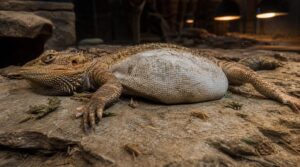
Reptiles can develop several digestive problems that, left unaddressed, can seriously affect their health. Some are relatively easy to manage at home, while others require a vet’s attention. Here are the most common ones you’ll want to recognize.
Knowing when to act fast matters, so it helps to understand what irregular bowel movements in snakes actually mean before assuming it’s something minor.
Constipation
Constipation in reptiles commonly develops when colonic motility slows, causing the colon to absorb excess water from stool and produce hard, dry fecal matter that’s difficult to pass. You may notice infrequent or absent bowel movements, visible straining, and abdominal discomfort.
Daily lukewarm water soaks lasting 30 minutes restore hydration, stimulate peristalsis, and support natural urate plug management effectively. Ensuring adequate fluid consumption can further support regular bowel movements.
Impaction
When constipation goes untreated, it can escalate into full gastrointestinal blockage — what veterinarians call impaction. This happens when hardened feces, a solid urate mass, or ingested substrate accumulates in the lower intestinal tract and physically stops movement through the colon.
- Visible abdominal fullness or swelling
- Complete absence of bowel movements
- Straining without producing stool
- Reduced colon motility despite normal feeding
- Progressive lethargy as retention worsens
Substrate ingestion risks are a leading cause — sand, gravel, and walnut shells compact into immovable masses. Radiographic detection methods confirm the blockage’s location and severity. Treatment commonly follows a structured approach: urate plug management through warm-water soaks, manual dislodgement technique using a lubricated catheter, and enema therapy protocol delivered via red rubber catheter to flush retained material. Urinary impaction and colon hydration deficits frequently occur together, compounding the obstruction when dehydration drives urate solidification alongside fecal hardening.
Bloating
Bloating in reptiles often follows directly where impaction leaves off. When gastrointestinal motility slows, gas accumulates in the intestinal tract, stretching the colon and creating noticeable abdominal distension.
Dietary triggers — particularly fermentable foods or an imbalanced calcium-to-phosphorus ratio — accelerate gas production.
Poor hydration balance thickens gut contents further, and diagnostic tests like radiographs confirm whether a urate plug or gas buildup is the underlying cause.
Regurgitation
Unlike bloating, regurgitation is a passive backflow — undigested food drifting back up the esophageal pathway without the forceful contractions you’d see in true vomiting. It most often strikes within minutes of feeding.
Handling immediately post-meal, stress, or prey that’s too large all trigger it.
Repeated episodes risk aspiration into the airway, making breathing labored and urgent veterinary evaluation necessary.
Diarrhea
Diarrhea in reptiles shows up as watery, foul-smelling stool rather than the firm, distinct feces and urates you’d normally expect.
Parasitic infections — particularly coccidiosis and cryptosporidiosis — are frequent culprits, though low enclosure temperatures and intestinal parasites can also disrupt gut absorption.
Persistent episodes risk rapid dehydration, so diagnostic fecal testing and appropriate clinical treatment are essential early steps.
Digestive Warning Signs to Watch
Catching a digestive problem early can make a real difference for your reptile. Your animal can’t tell you something’s wrong, so you’ll need to know what to look for. These are the key warning signs that something’s off in the gut.
Choosing the right substrate matters too, since the wrong bedding can quietly contribute to gut issues—impacted snake home remedies and prevention tips are worth knowing before problems start.
Loss of Appetite
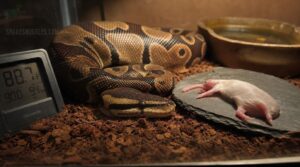
When your reptile turns away from its favorite prey, that’s your first signal that something may be wrong. Reduced tongue-flicking and disinterest during feeding time are early behavioral cues worth tracking.
Digestive discomfort from conditions like cryptosporidiosis or coccidiosis can suppress appetite before other signs appear, while temperature mismatches and dehydration quietly reduce feeding drive too.
No Bowel Movements
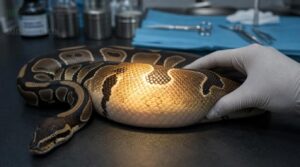
How long has it been since your reptile last passed stool? Tracking bowel movements matters more than most keepers realize. Watch for these key signs of cloacal obstruction or impaction:
- No fecal output for 7–14+ days
- Visible urate plug accumulation at the cloaca
- Straining or repeated cloacal gaping without output
- Hard, distended colon felt on gentle palpation
- Masses blocking the colon confirmed via diagnostic imaging
Hydration strategies like 30-minute lukewarm soaks stimulate peristalsis, while severe cases may require fluid therapy or a warm-water enema delivered by catheter.
Swollen Belly
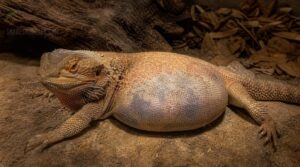
A visibly swollen belly is one of the most telling signs that something’s gone wrong in your reptile’s gut.
The distension can stem from gas accumulation, ascites (fluid buildup), urate impaction, or intestinal blockage from substrate ingestion.
In tortoises and monitors, cloacal obstruction from solid urate plugs or constipation frequently produces pronounced abdominal swelling that won’t resolve without intervention.
Lethargy
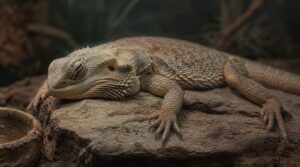
Lethargy is often the first sign that something’s quietly wrong under the surface.
When gut motility slows, your reptile becomes less inclined to explore, bask properly, or respond to handling.
Dehydration compounds this by reducing circulation, while infections or parasites drain systemic energy entirely.
If your reptile isn’t moving normally despite correct temperatures, don’t wait — that stillness is telling you something.
Weight Loss
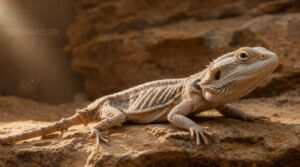
Weight loss is often the quiet accumulation of damage already done. When malabsorption issues take hold — whether driven by parasitic infestation, gastrointestinal pathology, or chronic dehydration — your reptile’s body starts consuming its own reserves.
By the time weight loss shows, the damage has already been quietly accumulating for far too long
You’ll notice the torso narrowing, ribs surfacing, and the tail base thinning. At that stage, appetite decline and metabolic deficit are already compounding each other.
Causes of Reptile Gut Issues
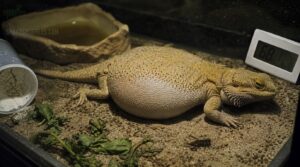
Most digestive problems in reptiles don’t appear out of nowhere — something in the environment or diet is usually driving them. Knowing the root cause makes it much easier to fix the problem and stop it from coming back. Here are the most common culprits to look at first.
Low Temperatures
Because reptiles are ectothermic, they rely entirely on environmental heat to power digestion. Without a proper thermal gradient, digestive enzymes slow, gut motility weakens, and food sits in the tract far longer than it should.
Even seasonal room drafts can drop enclosure temperatures enough to trigger metabolic slowdown, turning a single cool night into a constipation problem.
Poor Hydration
Temperature isn’t the only factor quietly undermining your reptile’s digestion — poor hydration plays an equally disruptive role. Without adequate water, the colon can’t absorb enough moisture to keep waste moving, leading to dry, compacted stools and, eventually, urate plug formation.
Daily lukewarm soaks of 30 minutes help restore gut moisture and stimulate peristalsis before problems escalate.
Unsafe Substrate
What you put on the floor of the enclosure matters more than most keepers realize. Loose calcium sand, crushed walnut shells, and fine particulate substrates can be swallowed during routine feeding, gradually accumulating into a firm, gut-blocking mass. Three substrate types carry the highest risk:
- Loose Calci-Sand — clumps with gut moisture, forming dense obstructions
- Crushed walnut shells — sharp edges risk intestinal perforation
- Fiber bedding like coconut coir — compacts when wet, slowing motility
Substrate contaminants — mold, bacteria, chemical residues — add a secondary threat, quietly disrupting gut health even without visible blockage.
Unbalanced Diet
Substrate hazards aside, what goes into your reptile matters just as much as what goes beneath it.
An unbalanced diet disrupts gut motility, weakens bones, and contributes to chronic constipation. When the calcium-to-phosphorus ratio drops below 2:1, the body compensates by leaching calcium from bone, reducing muscle tone—including the smooth muscle lining the gut.
Parasites and Infections
Even when husbandry looks perfect, invisible threats can quietly wreak havoc on your reptile’s digestive tract. Parasites and infections are among the most underestimated causes of chronic gut disease in captive reptiles.
Common culprits include:
- Cryptosporidiosis, caused by Cryptosporidium spp., thickens the gastric lining and drives persistent weight loss
- Protozoal diseases like Entamoeba invadens trigger severe hemorrhagic enteritis, especially in snakes
- Coccidian parasites cause watery diarrhea and rapid wasting, detectable through fecal flotation techniques
- Adenovirus and Mycobacterium spp. produce lesions that mimic parasitic disease, complicating diagnosis
Because symptoms overlap across pathogen types, infection diagnosis methods — including PCR assays, fecal concentration, and histopathology — are essential before starting antiparasitic treatment protocols. Don’t guess; targeted treatment depends entirely on identifying the cause. Some parasites also carry zoonotic parasite risks, meaning they can transfer to you during routine handling, which makes prompt diagnosis a priority for everyone in the household.
Preventing Reptile Digestive Trouble
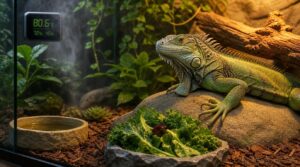
Most digestive problems in reptiles don’t come out of nowhere — they develop slowly from small, fixable gaps in daily care. The good news is that once you know what to watch for, prevention is mostly a matter of consistency.
These five husbandry habits go a long way toward keeping your reptile’s gut healthy.
Correct Basking Temperatures
Your basking zone isn’t just a warm spot — it’s your reptile’s digestive engine. Without adequate surface heat, gut motility slows and food stalls.
Bearded dragons need a basking surface of 38–42°C, while leopard geckos do best around 32–35°C.
Always measure surface temperature directly, not just ambient air, and maintain a cooler side so your reptile can thermoregulate freely.
Clean Water Access
Dehydration moves fast in reptiles — and without consistent water access, the colon reabsorbs moisture from waste, turning normal feces into hard, impaction-causing masses.
Use dechlorinated water in a nonporous ceramic or stainless steel bowl, placed away from heat lamps. Refresh it daily, scrub the bowl thoroughly, and dry it fully before refilling to prevent bacterial buildup.
Species-Appropriate Feeding
What you feed your reptile matters just as much as how often you feed it. Dietary specialization runs deep — a bearded dragon needs insects and leafy greens, while a tortoise thrives on high-fiber plant matter alone. Matching food to species isn’t optional; it’s the foundation of a functioning digestive system.
Here’s what species-appropriate feeding actually looks like in practice:
- Prey Size Selection — offer insects or prey no wider than your reptile’s head; oversized food risks impaction and mouth injury
- Calcium Ratio Diet — prioritize dark leafy greens with a calcium-to-phosphorus ratio of at least 2:1 to support gut motility
- Feeding Frequency Guidelines — juveniles need more frequent meals; adults digest slower, so overfeeding causes bloating and stool buildup
- Gut Loading Insects — feeders should be nutritionally prepared before offering, giving your insectivore a far richer nutritional payoff
- Live Prey Considerations — live insects stimulate natural food ingestion behavior, but monitor closely to prevent bite injuries during feeding
Don’t feed close to your reptile’s coolest hours — low-temperature digestion stalls gut motility and leaves food fermenting rather than processing. Time meals to coincide with peak basking activity for best results.
Safe Enclosure Substrates
The floor of your reptile’s enclosure is the last place most keepers think about — until something goes wrong. Substrate ingestion is a leading cause of mechanical impaction, where indigestible particles accumulate in the colon and block normal passage of feces and urates. Sand, walnut shells, and fine gravel are the primary culprits.
Choose non-ingestible, particle-free substrates — reptile carpet, rubber shelf liner, or solid drawer matting — that won’t shed loose fragments during feeding or movement. These surfaces resist breakdown, simplify waste removal, and eliminate the diagnostic headache of distinguishing substrate impaction from parasitic or infectious digestive disorders through costly radiographs or biopsies.
Regular Habitat Cleaning
A dirty enclosure is a slow-acting threat to your reptile’s gut health.
Spot clean daily — remove feces, shed skin, and soiled substrate before microbial colonies take hold.
Scrub water dishes weekly, rinse thoroughly, and dry completely before refilling. Clean hide boxes and decorations on the same schedule, since trapped moisture and waste residue in textured surfaces feed the exact pathogens that trigger infectious enteritis.
When Reptiles Need Veterinary Care
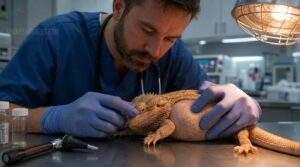
Home care goes a long way, but some situations call for a reptile-savvy vet rather than another warm soak. Knowing when to make that call can mean the difference between a quick fix and a serious complication. Watch for these four signs that your reptile needs professional attention.
Persistent Constipation
When constipation persists beyond several days, it’s time to call your vet — not wait it out. Chronic dehydration causes urate plugs to harden in the colon, blocking normal bowel movements entirely.
Warm water soaks stimulate motility, while urate softening and probiotic supplementation support recovery. Enzyme therapy may also help. Without intervention, impaction worsens fast.
Repeated Regurgitation
Regurgitation that happens repeatedly — especially 30 to 60 minutes after feeding — is a red flag that warrants veterinary evaluation.
Unlike a single episode, a pattern points to underlying dysfunction in the reptilian gastrointestinal tract, whether from Cryptosporidium infection, gastric ulceration, or improper thermal gradients impairing stomach acid regulation and motility.
Severe Abdominal Swelling
A visibly swollen abdomen — round, taut, and firm to the touch — signals something the gastrointestinal tract can’t resolve on its own.
Abdominal distension evaluation should happen promptly, as swelling may stem from:
- Urate plug buildup blocking fecal passage
- Substrate impaction from ingested material
- Fluid accumulation from organ dysfunction
- Gas trapped behind an obstruction
- Infection-driven inflammation
Don’t wait.
X-Rays and Treatment
Once swelling is confirmed, your vet will likely recommend abdominal radiographic imaging to map what’s happening inside. X-rays reveal gas patterns, retained material, and obstruction location — guiding whether conservative therapy like rehydration and warm soaks is enough, or whether surgical intervention is needed to remove a hard impaction or mass.
| Finding | Likely Cause | Treatment Path |
|---|---|---|
| Retained fecal mass | Dehydration or low temps | Soaks, fluids, enema |
| Foreign material | Substrate ingestion | Surgery often required |
| Gas distension | Obstruction or infection | Urgent veterinary care |
Frequently Asked Questions (FAQs)
Do reptiles have digestive problems?
Yes — reptiles can and do suffer from digestive disorders, ranging from mild constipation to life-threatening impaction. Their reptilian gastrointestinal tract is uniquely sensitive to temperature, hydration, diet, and substrate, making gut health a constant management priority.
Do reptiles have health issues?
Reptiles face a wide range of health issues, from Metabolic Bone Disease and parasite control challenges to lead toxicity and disorders affecting the reptilian gastrointestinal tract — all requiring attentive care and regular veterinary diagnostics.
What diseases do reptiles suffer from?
From Metabolic Bone Disease and respiratory infections to adenovirus, mycobacterial disease, fungal dermatitis, coccidial parasites, gastrointestinal ulcers, and even gastrointestinal cancers — reptiles face a surprisingly wide range of serious health conditions.
Why do reptiles have egg-binding problems?
Egg binding, or dystocia, occurs when calcium deficiency, malformed eggs, weak oviduct contractions, or an inadequate nesting site prevent normal passage through the cloaca — hormonal imbalance and low humidity compound the risk greatly.
Are respiratory infections common in reptiles?
Respiratory infections are indeed common in captive reptiles. Bacterial pathogens like Pseudomonas and Aeromonas, combined with poor husbandry and viral co-infections, drive most cases — making prompt veterinary diagnosis and targeted antibiotic treatment essential.
How do you know if a reptile is sick?
Spotting illness early in a reptile often comes down to behavioral and physical changes — reduced activity, appetite loss, or abnormal stool are the clearest first signals that something’s wrong.
Can reptiles eat frozen or live prey?
Yes, reptiles can eat both. Frozen-thawed prey is generally safer, removing injury risk from live animals. Thaw to around 100°F before offering, and use feeding tongs for safe, stress-free presentation.
How often should I feed my reptile?
Feeding frequency depends on age and species. Juveniles need daily meals, while adults do well with feedings every 7–10 days. Always match your schedule to enclosure temperatures — cold reptiles can’t digest properly.
What foods are toxic to reptiles?
Some foods are outright dangerous for reptiles. Avocado, rhubarb, and onion are strictly off the menu — as are fruit pits, yew, wisteria, and water hemlock.
Do reptiles need digestive enzyme supplements?
Most reptiles don’t need enzyme supplements. Their pancreas and digestive tissues already produce proteases, lipases, and amylases naturally. When digestion falters, the real fix is usually temperature, hydration, or diet — not a powder.
Conclusion
Long before thermometers existed, keepers read their animals the way sailors once read stars—by instinct sharpened through observation. Today, you have better tools, but the principle hasn’t changed: watch closely, act early.
Reptile digestive problems rarely announce themselves loudly; they whisper first through skipped meals, stillness, and a belly that looks subtly wrong. Nail your temperatures, hydration, and substrate choices, and you give your animal’s gut the conditions it needs to simply work.