This site is supported by our readers. We may earn a commission, at no cost to you, if you purchase through links.

A boa constrictor can live 30 years and stretch past 10 feet, and people still buy them on impulse from a pet store shelf.
That tiny hatchling in a 20-gallon tank becomes a snake that needs a six-foot enclosure and a feeding log.
Choosing the right boa constrictor means matching the snake to your space, budget, and patience, not the other way around.
A Kenyan sand boa fits an apartment; a Colombian red-tail demands a spare room.
Get the match right, and you’ll share decades with a calm, handleable giant.
Here’s how to pick smart from day one.
Table Of Contents
- Key Takeaways
- Boa Constrictor Subspecies: Which Type is Right for You
- How Big Do Boa Constrictors Get
- Boa Constrictor Enclosure Setup for Beginners
- Boa Constrictor Feeding Schedule and Diet
- How to Choose and Source a Healthy Boa Constrictor
- Frequently Asked Questions (FAQs)
- Which boa is best for a beginner?
- What is the friendliest boa?
- Can a male and female boa live together?
- Are boa constrictors good for beginners?
- What is the best boa constrictor for a pet?
- What is the best boa for a beginner?
- How to pick up a boa constrictor?
- What is the easiest boa to take care of?
- How do boa constrictors adapt to captivity?
- What are good enrichment ideas for boas?
- Conclusion
Key Takeaways
- Boa constrictors live 20–30 years and grow 6–13 feet depending on subspecies and sex, so plan for the ten-foot adult you’ll own, not the hatchling you see.
- Pick a subspecies that fits your space and experience: Colombian red-tails (Boa imperator) are the beginner-friendly default, Dumeril’s boas are smaller and docile, and Kenyan sand boas suit tight apartments at just 2–3 feet.
- A proper setup means an adult enclosure at least six feet long, a basking spot of 88–92°F with a 76–80°F cool end, 50–70% humidity, and two hides—one in each temperature zone.
- Buy captive-bred from a breeder with documented lineage and health records, then inspect for clear eyes, clean vent, and closed-mouth breathing, and keep a feeding log (prey sized to ~1.1× midbody girth, every 5–7 days for juveniles, 10–14 for adults) as your early warning system.
Boa Constrictor Subspecies: Which Type is Right for You
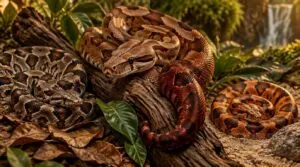
Everyone wants a boa, but not every boa suits every keeper. Picking the right subspecies upfront saves you real frustration later.
If you’re weighing your options, this guide to boa constrictors for sale breaks down what each subspecies actually needs from a keeper.
Colombian RedTailed boas are the classic entry point. They’re widely available, captive-bred lines are easy to find, and their calm, predictable temperament makes them a genuinely beginner-friendly species. Confident handlers? This is your match.
Dumerils boas are worth serious consideration too. Slightly smaller, really docile, and tolerant of regular handling. That combination matters when you’re still building skill and confidence.
Kenyan Sand Boas bring something different: compact size and bold personalities. They’re perfect if space or budget is tight.
Subspecific traits also shape enclosure humidity and heat needs, so match your care style to your species before you commit.
How Big Do Boa Constrictors Get
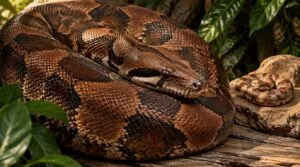
Subspecies choice directly shapes final adult size, and that matters more than most keepers expect.
Adult boa constrictors reach 6 to 13 feet depending on species, sex, and care quality. Females consistently run larger. A Colombian red-tail can hit 10 feet; a Kenyan sand boa tops out around 3. That’s a massive range.
Here’s a quick size breakdown:
- Colombian red-tails: 8-10 ft females, 6-8 ft males
- Dumeril’s boas: 5-7 ft, very manageable
- Kenyan sand boas: 2-3 ft, genuinely compact
- Argentine boas: 7-9 ft, regionally smaller
- True boa constrictors: up to 12 ft in standout individuals
Any good Boa Constrictor Care Guide ties snake habitat planning to adult length. Boas lifespan stretches 20-30 years, so size planning is a long commitment.
Before committing, it’s worth reading up on whether a boa constrictor is right for you, since their decades-long lifespan demands serious planning.
Boa Constrictor Enclosure Setup for Beginners
Getting your boa’s home right from day one makes everything else easier. The right setup covers a few key areas you’ll want to nail before your snake even arrives. Here’s what to focus on.
Cage Size and Layout Tips
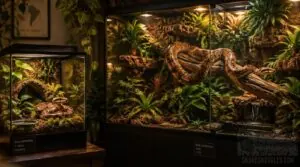
Think of the snake habitat like a studio apartment: every inch should earn its keep.
Hatchlings start fine in a 20-24 inch enclosure, but upgrade before they hit four feet. Adults need at least 6 feet long, 2-3 feet deep, with good vertical climbing space. Add branches and shelves. Rotate decor every few weeks to keep your boa actively exploring.
Temperature, Humidity, and Hides
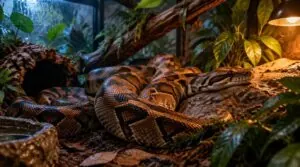
Once the layout is set, get your boa constrictor enclosure climate dialed in. The basking spot should hit 88-92°F; the cool end stays around 76-80°F. That temperature gradient keeps your boa self-regulating. A reptile thermostat controller takes the guesswork out of maintaining those precise temperature zones around the clock.
Keep humidity levels at 60-70% for juveniles, 50-60% for adults. Mist once or twice daily. Two snug hides, one in each zone, give your snake real thermal options.
Boa Constrictor Feeding Schedule and Diet
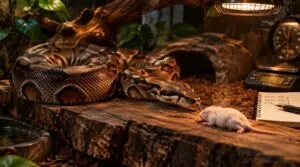
Consistently nailing your feeding schedule keeps your boa healthy and stress-free. Adults eat every 10-14 days; younger snakes need rodent feeding every 5-7 days. Always use frozen thawed prey, it’s safer than live and removes injury risk entirely.
Prey size matters more than people expect. Match it to roughly 1.1 times your boa’s midbody girth. Too large causes regurgitation; too small leaves them restless.
Here’s what to track every single feeding:
- Date and prey type offered
- Prey size relative to midbody girth
- Whether the snake accepted or refused
- Any regurgitation within 24-72 hours
- Weight changes over the month
Your diet records become your early warning system. Seasonal appetite dips are normal, especially in winter, so don’t panic over occasional refusals.
A dedicated reptile feeding log journal makes spotting those seasonal patterns much easier than relying on memory alone.
How to Choose and Source a Healthy Boa Constrictor
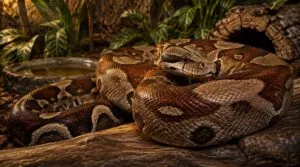
Getting the right boa starts long before you walk into a reptile expo. There are six key things to check before you commit to any animal or breeder. Work through each one and you’ll avoid the most common rookie mistakes.
Match Adult Care Needs
Before you fall for a pretty pattern, picture the adult first. Adult boa size can hit 10 feet or more, and your boa constrictor care needs scale right with it.
We’re talking proper enclosure setup, a solid temperature gradient, and steady humidity levels to keep things stable.
Plan around the adult you’ll have, not the hatchling in front of you.
Choose your boa for the ten-foot adult it will become, not the tiny hatchling you see today
Choose Species And Sex
Picture choosing between a female common boa reaching 12 ft versus a lean 7-ft male.
- A male boa constrictor coiled neatly in a corner
- A female filling every inch of her enclosure
- Rainbow Boas glowing under dim, warm light
- Kenyan Sand Boas buried in substrate
- A longterm commitment spanning two decades
Sex and species define your setup as a beginner.
Prefer Captive-Bred Boas
Think of a captive-bred boa like a car with a full service history. You know exactly what you’re getting.
Captive-bred boas handle stress better, adapt faster to temps, and don’t carry the parasite baggage wild-type boas often bring. For serious exotic pet ownership, that matters.
A boa constrictor with documented lineage also signals solid breeder reputation before you even ask.
Evaluate Breeder Practices
Breeder reputation matters more than price. Ask for documented lineage, health histories, and veterinary records before committing. Ethical breeders track mating dates, rotate pairs to avoid inbreeding, and flag congenital anomalies openly.
Captive-bred boas from selective breeding programs should have clean paper trails. Written health guarantees and transparent genetic defect disclosures signal a breeder who actually cares about their animals.
Inspect Physical Health
A healthy boa tells you everything upfront. Before committing, check these three things:
- Clear eyes and skin – no retained shed, mites, or open wounds
- Clean vent area – watery or discolored feces signal health issues
- Closed-mouth breathing – open-mouth breathing hints at respiratory infections
Snake health maintenance starts before you bring one home. If anything looks off, loop in a reptile vet.
Verify Records And Permits
The physical check is done, now paper-trail time. For captive-bred boas, request a dated bill of sale listing the scientific name, sex, and hatch date.
Confirm local ownership rules before the snake arrives, since a state permit doesn’t override city bans.
This boa constrictor is a longterm pet commitment, so verifying ethics practices and records now saves real headaches later.
Frequently Asked Questions (FAQs)
Which boa is best for a beginner?
Female boa constrictors can easily reach 10 feet, so species selection matters more than you think.
The Colombian BCI is your best bet: it’s the most beginner-friendly pick, with the highest tolerance for husbandry mistakes.
In captivity, boas thrive for decades, with captive lifespan reaching 20–30 years and some individuals documented living beyond
What is the friendliest boa?
Adults in captivity often acclimate to handling within just a few weeks. For the friendliest boa constrictor, B. c. imperator wins, with calmer temperament and care needs that stay manageable when your enclosure is stable.
Can a male and female boa live together?
Technically yes, but cohabiting boa constrictors is a hundred times harder than it looks. Match their sizes, feed them separately, and never introduce during a shed cycle. Always have a plan to separate them quickly.
Are boa constrictors good for beginners?
Think of a boa constrictor like a slow-burn friendship. With the right enclosure setup and steady handling, this beginner-friendly species rewards your patience. Their care needs are manageable, making boas a solid first large snake.
What is the best boa constrictor for a pet?
For a first snake, the Colombian red-tailed boa (Boa constrictor imperator) wins. It’s a beginner-friendly species with a calm temperament, manageable 6–8 foot size, and simple care needs. Just plan your enclosure setup for adult size.
What is the best boa for a beginner?
Here’s a fun fact: Kenyan sand boas top out around two feet, so they’re great, but if you want a true boa constrictor, Boa imperator is your beginnerfriendly species. Calm temperament, manageable care needs, forgiving enclosure and feeding demands.
How to pick up a boa constrictor?
Approach slowly, no sudden moves. Slide both hands under its midsection, supporting the full body. Keep the head near your elbow, never grab it. Watch for stress signals like hissing. Skip handling within 24 hours of feeding.
What is the easiest boa to take care of?
For boa constrictors, the B.c. imperator is your easiest bet. It’s hardy, calm, and forgiving. You’ll manage its enclosure and feeding without stress. Kenyan sand boas are simpler still, but they’re a different species entirely.
How do boa constrictors adapt to captivity?
Take my friend’s red-tail boa, Ruby: captive-born, she settled within weeks.
Captive-born boas adapt fastest when you nail heating, humidity, and hides. Add gentle routine handling, and good reptile husbandry turns them into calm, easy companions.
What are good enrichment ideas for boas?
Ever wonder why your boa seems bored? Build a layered vivarium setup: climbing branches, cork bark hides, and textured substrates. Rotate décor for novelty, vary prey placement, and mist for humidity gradients. Watch snake behavior analysis guide your boa constrictor enclosure tweaks.
Conclusion
Picture that hatchling ten years from now: thick as your arm, draped over your shoulders, completely at ease. That future starts with choosing the right boa constrictor today.
Match the subspecies to your space, budget the enclosure before the snake, and buy from a breeder who keeps honest records.
Do that homework, and you’re not just buying a pet. You’re welcoming a decades-long companion who’ll greet every feeding with calm confidence.