This site is supported by our readers. We may earn a commission, at no cost to you, if you purchase through links.
Your snake’s enclosure deserves better than yesterday’s dusty, wasteful bedding options. Coconut husk snake bedding transforms reptile care with renewable fibers that lock in moisture, prevent bacterial growth, and support natural burrowing behaviors.
This sustainable substrate comes from processing coconut shells into chips, fiber, or mulch—each form offering distinct advantages for different species and humidity needs. Unlike traditional substrates that drain your wallet and harm the environment, coconut husk bedding provides chemical-free comfort while reducing your carbon footprint.
We’ve tested seven top-rated products to help you find the perfect match for your scaly companion’s health and happiness.
Table Of Contents
- Key Takeaways
- What is Coconut Husk Snake Bedding?
- Key Benefits of Coconut Husk Bedding
- Top Coconut Husk Snake Bedding Products
- Choosing The Right Coconut Husk Bedding
- Proper Use and Maintenance Tips
- Frequently Asked Questions (FAQs)
- Is coconut husk bedding good for snakes?
- What not to use for snake bedding?
- How often should I change my coco husk substrate?
- Can coconut husk bedding cause impaction in snakes?
- Does coconut husk substrate attract or carry mites?
- How do you dispose of used coconut bedding?
- Is coconut husk safe for baby or juvenile snakes?
- Can you reuse or sterilize coconut husk substrate?
- Conclusion
Key Takeaways
- Coconut husk bedding is a sustainable substrate made from coconut shells that excels at moisture retention, humidity control, and supporting natural burrowing behaviors for tropical snake species like ball pythons and boas.
- The three main types—chips, fiber, and mulch—each offer distinct advantages, with chips providing drainage and structure, fiber delivering fluffy moisture retention, and mulch combining both for optimal humidity control and decorative appeal.
- Top products like ReptiChip and Fluker’s deliver compressed blocks that expand significantly when hydrated, offering excellent value while maintaining stable humidity levels between 40-60% and naturally controlling odors without harmful chemicals.
- Proper maintenance requires daily spot cleaning, full substrate replacement every 2-3 months, careful hydration to prevent mold growth, and feeding precautions like using smooth dishes to prevent accidental ingestion of substrate particles.
What is Coconut Husk Snake Bedding?
Coconut husk bedding is a natural substrate made from the fibrous outer shell of coconuts, and it’s becoming one of the most popular choices for snake keepers everywhere. This eco-friendly material comes in different forms—chips, fiber, and mulch—each offering unique benefits for your reptile’s habitat.
You can even use coconut husk bedding to create a DIY snake habitat that’s both budget-friendly and perfectly tailored to your pet’s needs.
Understanding what coconut husk bedding is and how it’s produced will help you make the best choice for your scaly friend’s needs.
Material Composition and Sourcing

Coconut husk bedding comes from the fibrous shell material of coconuts, harvested primarily from Southeast Asia and South Pacific islands. This renewable resource offers wonderful material safety for your snake.
The substrate contains:
- Cellulose, hemicellulose, and lignin from natural husk fibers
- Trace minerals without synthetic additives
- Minimal moisture content (10-15%) after processing
Reputable suppliers emphasize sustainable harvesting and farm-to-product traceability, ensuring you get chemical-free, eco-friendly coconut fiber substrate that’s safe for your reptile.
How Coconut Husk Bedding is Made
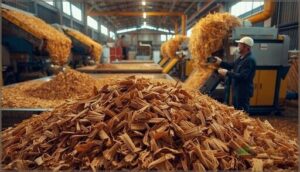
Understanding the manufacturing process helps you appreciate what makes quality coconut husk bedding safe for your snake!
Fiber extraction begins when workers dehusk coconuts and soak the material to loosen fibers.
Industrial shredders then chop coconut husks into chips while husk cleaning removes dust and debris.
Quality assurance teams test moisture levels and microbial content, ensuring your coconut substrate arrives clean and ready for your reptile’s enclosure.
For further details, you can learn about superior humidity retention benefits that these substrates offer reptile owners.
Types of Coconut Husk Substrate (Chips, Fiber, Mulch)
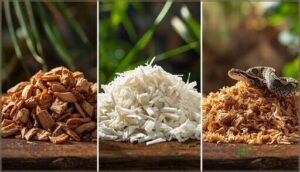
You’ll find three main options when shopping for coconut substrate: chips, fiber, and mulch.
Coconut chips offer chunky pieces with excellent drainage and lasting structure for your reptile bedding. Coconut fiber delivers fluffy, moisture-retaining material perfect for burrowing snakes.
Coconut husk mulch combines both forms, giving you wonderful humidity control and a decorative top layer that protects your enclosure floor! For more details on proper returns and support for coconut bedding, consult the return policy and support details.
Eco-Friendliness and Sustainability

Beyond its practical advantages, coconut husk stands out as an eco-friendly substrate made from renewable materials sourced during coconut processing, diverting waste from landfills.
The biodegradability of this sustainable bedding reduces your carbon footprint compared to peat-based alternatives, and transparent eco labels help you verify responsible sourcing practices that support naturalistic enclosures while promoting waste reduction throughout the product’s life cycle.
Key Benefits of Coconut Husk Bedding

Coconut husk bedding offers outstanding advantages that make it a wonderful choice for your snake’s habitat. From maintaining proper humidity levels to supporting natural behaviors, this substrate checks all the boxes for reptile health and comfort.
Let’s explore the key benefits that make coconut husk one of the best bedding options available.
Moisture Retention and Humidity Control
Humidity management becomes straightforward when you choose coconut husk as your reptile substrate. This wonderful material absorbs and holds moisture without turning soggy, maintaining daytime relative humidity around 40 to 60 percent in your enclosure.
The water absorption properties release stored moisture slowly, preventing rapid humidity swings that stress your snake. You’ll achieve outstanding environmental stability and substrate hydration by misting lightly when needed.
Support for Shedding and Burrowing
Your snake’s shedding process becomes much easier when coconut fiber bedding provides gentle abrasion and stable humidity around its body.
This burrowing substrate facilitates natural tunneling behavior, allowing your reptile to create secure hideouts while maintaining skin health.
The fibrous layers form stable burrows that won’t collapse, encouraging natural burrowing behavior so your snake can shed completely without stress or stuck skin patches.
Low Dust and Chemical-Free Properties
Respiratory health improves dramatically when you switch to coconut fiber substrate, which produces minimal airborne particles during handling and upkeep. Your snake won’t inhale harsh chemicals or volatile compounds found in treated wood bedding.
This chemical-free, low dust, dust-free bedding is safe for animals and hypoallergenic for both you and your reptile, reducing irritation during maintenance while supporting proper sanitation methods.
Odor Control and Sanitation
Odor management works hand-in-hand with coconut husk‘s natural moisture retention and chemical-free composition. Regular spot cleaning combined with proper ventilation systems keeps your enclosure fresh while maintaining humidity control between 40 and 60 percent.
The substrate’s airflow promotes microbial balance that naturally suppresses ammonia buildup, so sanitation protocols become simpler and your snake enjoys a clean, dust-free environment every single day.
Top Coconut Husk Snake Bedding Products
You’ve learned why coconut husk bedding works so well for your snake. Now it’s time to look at the best products available!
We’ve reviewed seven top coconut husk bedding options that deliver excellent moisture retention, natural burrowing support, and safe environments for your reptile.
1. Fluker’s Coconut Fiber Bedding
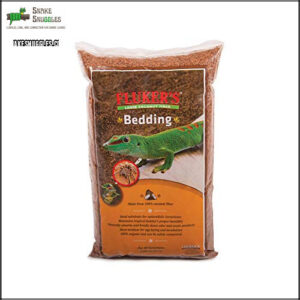
You deserve bedding that works as hard as you do to keep your snake healthy. Fluker’s Coconut Fiber Bedding delivers wonderful moisture absorption without the rapid decay that plagues cheaper alternatives.
This all-natural substrate from coconut husk waste maintains humidity beautifully while staying clean on the surface. Your burrowing snakes will love the soft, loose fibers that support natural digging behaviors and smooth shedding.
The 5-quart package expands generously when moistened, and it’s completely free from harmful dyes or fragrances that could irritate your pet.
| Best For | Snake owners who need reliable humidity control and want a natural substrate that supports burrowing and healthy shedding. |
|---|---|
| Material | Coconut husk fiber |
| Organic | Yes |
| Humidity Retention | Yes |
| Odor Control | Yes |
| Biodegradable | Yes (compostable) |
| Suitable For | Reptiles & invertebrates |
| Additional Features |
|
- Excellent moisture absorption keeps humidity stable without breaking down quickly
- Made from natural coconut husks with no harmful dyes or chemicals
- Encourages natural burrowing behavior and expands well when moistened
- May contain coconut “hairs” that need manual removal before use
- Crickets can hide deep in the loose fibers, making feeding supervision necessary
- The 5-quart measurement can be confusing since it’s lighter than expected compared to weight-based products
2. ReptiChip Coconut Reptile Substrate Bedding
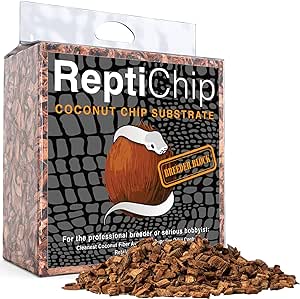
Premium substrates make a difference when you’re committed to giving your reptile the best! ReptiChip Coconut Reptile Substrate Bedding is made from 100% organic coconut husk chips processed into a dust-free substrate that retains humidity beautifully without creating waterlogged conditions.
The 72-quart compressed block expands to 10 pounds of clean, earth-friendly bedding when you add water. It absorbs odor naturally and fosters burrowing behaviors, making it perfect for ball pythons, boas, and other tropical species that thrive in stable humid environments!
| Best For | Reptile owners who need a reliable, humidity-retaining substrate for tropical species like ball pythons, boas, and other reptiles that thrive in stable, moist environments. |
|---|---|
| Material | Coconut husk chips |
| Organic | Yes |
| Humidity Retention | Yes |
| Odor Control | Yes |
| Biodegradable | Yes (sustainable) |
| Suitable For | Reptiles & amphibians |
| Additional Features |
|
- Expands from a compact 72-quart brick to 10 lbs of bedding, making storage easy and providing great value
- Retains humidity exceptionally well while staying breathable, preventing waterlogged conditions that can lead to health issues
- Made from 100% organic coconut husk with natural odor control, creating a clean and sustainable habitat
- Higher price point compared to basic substrate options like paper or aspen
- Can be dusty when first breaking apart the compressed block, requiring extra prep work
- May not provide enough depth for reptiles that need serious burrowing space
3. Riare Natural Coconut Fiber Reptile Bedding
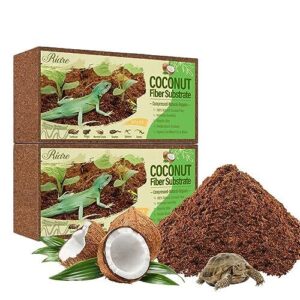
If you’re looking for an affordable alternative that still delivers natural quality, Riare Natural Coconut Fiber Reptile Bedding offers compressed coconut fiber bricks that expand beautifully when you soak them in water. Each 2-pack includes bricks measuring 7.8 by 3.9 by 1.97 inches, creating a fluffy, absorbent substrate that retains moisture and controls odors wonderfully.
It’s biodegradable and compostable, and perfect for burrowing species like snakes and hermit crabs. Just note that some users found the bricks slightly dusty during handling!
| Best For | Budget-conscious reptile owners who need natural, expandable bedding for burrowing species like snakes, turtles, and hermit crabs. |
|---|---|
| Material | Coconut husk compressed |
| Organic | Yes |
| Humidity Retention | Yes |
| Odor Control | Yes |
| Biodegradable | Yes (degradable) |
| Suitable For | Reptiles & amphibians |
| Additional Features |
|
- Expands into fluffy, odor-absorbing substrate that holds moisture well
- Biodegradable and compostable, plus can double as plant fertilizer
- Affordable compressed bricks are easy to store and create lots of bedding
- Can be dusty when handling the dry bricks
- Some users found the bricks tough to break down even after soaking
- May attract flies when used with certain animals like crickets
4. Legigo Coconut Husk Reptile Substrate
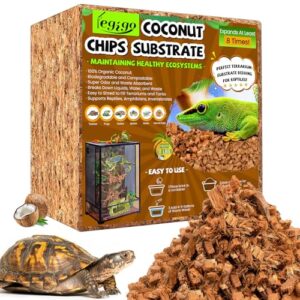
Legigo Coconut Husk Reptile Substrate stands out with its 10-pound compressed block that expands to an impressive 72 quarts, giving you outstanding value for your money! This organic, sustainable bedding combines coconut husk chips and fiber to create a natural rainforest environment that encourages burrowing and digging behavior in your snake.
It absorbs odors effectively while maintaining humidity levels, and you’ll appreciate how easy it’s to spot clean. The biodegradable material also works wonderfully as garden mulch when you’re ready to replace it!
| Best For | Reptile owners seeking an eco-friendly, high-value substrate that maintains humidity and encourages natural behaviors in tropical species like ball pythons, snakes, and tortoises. |
|---|---|
| Material | Coconut husk chips |
| Organic | Yes |
| Humidity Retention | Yes |
| Odor Control | Yes |
| Biodegradable | Yes (sustainable) |
| Suitable For | Reptiles & amphibians |
| Additional Features |
|
- Exceptional value with 10 lbs expanding to 72 quarts of substrate
- Effectively absorbs odors and maintains humidity levels for tropical reptiles
- Biodegradable and versatile—can be repurposed as garden mulch when replaced
- Compressed block can be difficult to break apart before soaking
- May have a fuzzy texture that requires extra maintenance for some users
- Not ideal for all reptile species or personal preferences
5. ZeeDix Coconut Husk Reptile Substrate
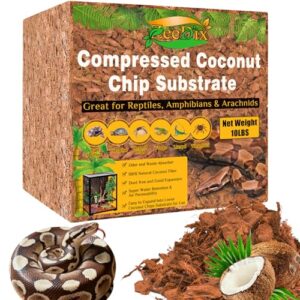
ZeeDix Coconut Husk Reptile Substrate delivers superb moisture control with its compressed brick format that expands into fluffy, absorbent bedding when hydrated. You’ll find it efficiently binds waste while maintaining stable humidity levels, creating a comfortable microclimate for your snake’s natural burrowing behaviors.
The non-toxic, chemical-free composition minimizes dust and irritation, and it’s incredibly easy to prepare—just soak the brick until it fluffs up, drain excess water, and spread evenly. With multi-brick packs available at competitive prices, you’re getting remarkable value for quality substrate!
| Best For | Reptile owners who want an affordable, natural substrate that holds humidity well and supports burrowing behaviors for snakes, lizards, and other tropical species. |
|---|---|
| Material | Coconut husk chips |
| Organic | Yes |
| Humidity Retention | Yes |
| Odor Control | Yes |
| Biodegradable | Yes (organic) |
| Suitable For | Reptiles & amphibians |
| Additional Features |
|
- Expands significantly from compressed brick form, giving you 72 quarts of substrate from a compact package
- Excellent moisture retention helps maintain the stable humidity levels tropical reptiles need
- Natural coconut material is chemical-free and helps control odors while absorbing waste
- Requires soaking and draining time before you can use it, so it’s not ready right out of the box
- Can get too wet if you’re not careful with watering, potentially creating overly damp conditions
- Quality inconsistencies reported across batches, including occasional debris or chemical smells
6. ZeeDix Coconut Fiber Reptile Substrate
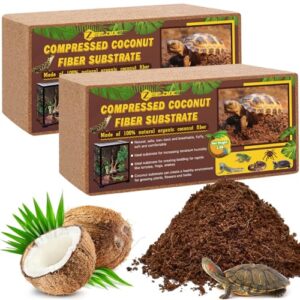
Another wonderful option from ZeeDix is their Coconut Fiber Reptile Substrate, packaged as two compressed bricks that expand to roughly 1.4 pounds each when soaked. You’ll love how it creates fluffy, moisture-absorbing bedding that stabilizes humidity beautifully!
The 100% organic coco coir fiber is biodegradable and low-dust, reducing respiratory concerns for your snake. It excels at neutralizing waste odors while maintaining that vital balance between hydration and surface dryness.
Each brick covers small to medium terrariums perfectly, offering outstanding versatility for snakes, lizards, and amphibians alike!
| Best For | Snake owners who need affordable, natural bedding that holds humidity well and controls odors in small to medium terrariums. |
|---|---|
| Material | Coconut fiber |
| Organic | Yes |
| Humidity Retention | Yes |
| Odor Control | Yes |
| Biodegradable | Yes (biodegradable) |
| Suitable For | Reptiles & invertebrates |
| Additional Features |
|
- 100% natural coconut fiber that’s biodegradable and safe for reptiles
- Excellent moisture absorption and humidity control for tropical species
- Compact bricks expand significantly, making storage and shipping convenient
- Requires soaking and preparation time before you can use it
- Some batches may arrive with quality issues like foul odors or poor expansion
- Can be overly wet after soaking, needing extra squeezing or drying time
7. ReptiChip Coconut Reptile Bedding
ReptiChip Coconut Reptile Bedding stands out as a premium choice with its compressed coconut husk chips that expand to 12 quarts when hydrated. You’ll appreciate the dust-free formulation, perfect for reducing respiratory risks during cleaning!
This biodegradable substrate absorbs waste and odors exceptionally well while maintaining stable humidity levels for tropical species. The natural coconut material fosters burrowing behaviors beautifully, creating a comfortable microclimate near heat sources. It’s chemical-free and safe if your snake ingests small amounts during normal exploration!
| Best For | Reptile owners looking for an eco-friendly, moisture-retaining substrate that supports burrowing behavior and maintains humidity for tropical species like snakes, turtles, and tortoises. |
|---|---|
| Material | Coconut husk chips |
| Organic | Yes |
| Humidity Retention | Yes |
| Odor Control | Yes |
| Biodegradable | Yes (eco-friendly) |
| Suitable For | Various reptiles |
| Additional Features |
|
- Expands to 12 quarts when hydrated and offers excellent odor absorption and moisture retention for tropical enclosures
- Dust-free and chemical-free formulation reduces respiratory risks and is safe if ingested during normal exploration
- Made from 100% organic, biodegradable coconut husk that’s environmentally sustainable and easy to spot clean
- Some users report the product is overpriced for the amount you get compared to other substrate options
- May not hold moisture as consistently as expected and can require frequent changes to control odors
- Loose chips can create dust during handling and may not be ideal for all enclosure types or sizes
Choosing The Right Coconut Husk Bedding
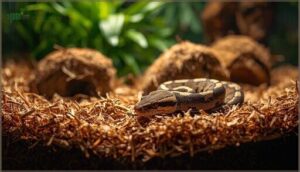
Not all coconut husk bedding is created equal, and choosing the right one for your snake makes all the difference. You’ll want to take into account your specific species’ needs, the particle size that works best for their environment, and what fits your budget.
Let’s break down the key factors that’ll help you find the perfect substrate for your scaly friend.
Compatibility With Snake Species
Not every snake thrives on coconut husk, so you’ll want to match bedding to your species’ natural habitat. Tropical snake species like ball pythons and rainbow boas love this substrate because it holds humidity beautifully and facilitates burrowing habits.
Corn snakes adapt well too. Your snake’s behavior and reptile health depend on proper species alignment—so choose coconut husk when humidity needs and naturalistic habitat requirements call for it!
Particle Size and Absorption Rate
Fine particle distribution in coconut fiber substrate speeds up absorption rates and locks in moisture levels for outstanding humidity control! Larger coconut husk chips promote airflow and create a wonderful substrate texture that prevents compaction.
You’ll want a blend of sizes for balanced moisture control—aim for 2 to 3 mm particles to get dustfree bedding with exceptional substrate quality that manages both retention and evaporation beautifully!
Packaging, Volume, and Price Comparison
Smart shopping starts when you compare packaging options and volume discounts across coconut husk reptile bedding brands. You’ll find outstanding value in these key factors:
- Bags typically range from 5 to 20 liters, with larger volumes delivering better price points per liter
- Bulk orders and economy packs offer wonderful savings for multiple enclosures
- Shipping costs drop when you hit free delivery thresholds
- Ecofriendly pet supplies with dust-free substrate quality command small premiums
Customer Reviews and Satisfaction
You’ll discover satisfaction rates soar when snake keepers switch to coconut fiber bedding reviews. Many hobbyists praise strong moisture retention and natural burrowing support in their customer feedback, saying sheds come off perfectly.
Review analysis shows owners appreciate easy spot cleaning and reliable humidity control. However, some user experience reports mention mold concerns with over-watering, so product comparison across brands matters for your reptile care and husbandry success.
Proper Use and Maintenance Tips
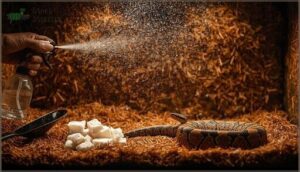
Getting your coconut husk bedding set up correctly makes all the difference in keeping your snake healthy and comfortable. Proper hydration and regular cleaning will help you avoid common problems.
Let’s walk through the essential maintenance steps that’ll keep your snake’s habitat in top shape, including a few smart feeding precautions to avoid issues like mold or accidental ingestion.
Preparing and Hydrating The Bedding
You’ll want to place your coconut husk block in a clean bucket and submerge it in roughly a gallon of warm water—heat speeds expansion and breaks apart compressed bedding more evenly than cold water.
After about an hour, pull off softened sections by hand and squeeze until damp but not dripping, creating that perfect wrung-out sponge texture for humidity retention and natural burrowing.
Cleaning and Replacement Frequency
Once you’ve hydrated and fluffed your bedding, daily spot cleaning becomes your new routine—scoop out fresh waste and damp chunks the same day to stop bacteria from spreading.
Most keepers replace roughly a third of their coco every one to two months, with a full change and deep clean every two to three months depending on your snake’s habits and humidity levels. Watch for foul odor, visible mold, or dark patches that stay soggy—those are red flags that dirty bedding risks scale rot and respiratory trouble, so don’t wait.
Feeding Precautions to Prevent Ingestion
Beyond routine cleaning, smart feeding methods protect your snake from accidentally swallowing coconut chips. Place prey on a smooth feeding dish to keep husk away from food, and gently clear a circle of substrate before meals to reduce ingestion risk.
Dry thawed rodents with paper towels so sticky pieces won’t cling, then watch your snake closely during and after feeding to catch any issues early.
Preventing Mold and Bacterial Growth
Mold prevention starts with smart humidity management and strong ventilation systems. Keep your coconut husk slightly damp, never waterlogged, and add side vents to move stale air away from the substrate.
Spot clean daily, disinfect hides with F10SC for bacterial control, and replace bedding every four to eight weeks. Proper substrate sanitizing stops odor and protects moisture-loving reptiles from hidden health risks!
Frequently Asked Questions (FAQs)
Is coconut husk bedding good for snakes?
Coconut husk stands out as one of the best substrates for tropical and rainforest snakes because it delivers exceptional humidity retention, facilitates natural burrowing behaviors, and promotes healthy shedding cycles.
What not to use for snake bedding?
Never use aromatic woods, loose gravel, corn cob, cat litter, or treated materials as snake terrarium substrates—these respiratory irritants don’t offer dust free bedding or proper moisture and odor control for reptiles, and they’re not easy to clean.
How often should I change my coco husk substrate?
You’ll want to spot clean daily and do a full replacement every two to three months.
Watch for ammonia odors, visible mold, or persistent dampness—these signs mean your bedding needs changing sooner.
Can coconut husk bedding cause impaction in snakes?
Like any trail with hidden roots, loose substrates carry some impaction risk if snakes swallow large pieces—but proper temps and hydration, and feeding away from coconut husk keep your reptile health protected.
Does coconut husk substrate attract or carry mites?
No reptile substrate spontaneously generates mites. However, bagged coconut fiber substrate and coconut husk can carry hitchhiking storage mites from warehouses.
Damp naturalistic reptile habitats let parasites hide between blood meals.
How do you dispose of used coconut bedding?
You can compost used coconut husk bedding after removing waste, spread it as garden mulch around ornamental plants, or bag it securely for trash disposal—biosecurity tips matter when choosing eco-friendly practices.
Is coconut husk safe for baby or juvenile snakes?
Coconut husk can work for baby snakes, but you’ll need to watch particle size carefully.
Fine fibers stick to prey and cause substrate ingestion, while proper humidity control and feeding precautions keep respiratory issues at bay.
Can you reuse or sterilize coconut husk substrate?
You can reuse substrate briefly if spot cleaned regularly, but heavily soiled material should be discarded.
Baking at 200–250°F or boiling water helps sterilize coconut husk, though complete drying prevents mold!
Conclusion
Your snake’s health begins from the ground up, and coconut husk snake bedding delivers the foundation your reptile truly deserves! These seven products offer exceptional moisture control, natural burrowing opportunities, and chemical-free comfort that traditional substrates can’t match.
Choose the right option based on your snake’s species and humidity requirements, then maintain it properly for maximum effectiveness. Your scaly companion will thrive in this sustainable, safe environment—and you’ll enjoy easier maintenance with better results!
- https://exo-terra.com/products/substrates/coconut-substrates/coco-husk-8qt-88l/
- https://onebioactive.com/pages/how-to-use-coconut-husk-substrate
- https://trellishorticulture.com/top-5-reasons-snake-owners-are-switching-to-coconut-fiber/
- https://www.animalsathome.ca/best-substrate-for-ball-pythons/
- https://herpetocultureinc.com/2023/03/09/whats-wrong-with-coconut-husk-substrate/