This site is supported by our readers. We may earn a commission, at no cost to you, if you purchase through links.
You’ve probably heard the whispers in reptile circles: “Avoid that morph—they’re nippy,” or “This one’s a dream to handle.” These claims pop up in forums, at expos, and even from well-meaning breeders, linking specific corn snake morphs’ temperament differences to genetics as if color patterns came packaged with personality traits.
The truth? Decades of breeding records and behavioral observations tell a different story. While morphs determine whether your snake displays vibrant amelanistic reds or striking striped patterns, the genetic mutations responsible for these visual traits don’t rewire temperament.
What actually shapes your corn snake’s behavior—whether it’s confident during handling or defensive at first—comes down to incubation conditions, enrichment, and early socialization. Understanding this distinction saves you from chasing mythical “gentle morphs” and helps you focus on what genuinely matters when bringing home a new snake.
Table Of Contents
Key Takeaways
- Corn snake morphs determine color and pattern through specific genetic mutations, but these visual traits don’t rewire temperament or create morph-specific personality differences.
- Your snake’s behavior stems primarily from incubation temperature, enclosure enrichment, handling consistency, and early socialization rather than genetic color mutations.
- No peer-reviewed studies have found behavioral differences between morphs—what breeders call “morph temperament” actually reflects husbandry quality, individual variation, and captive-bred lineage.
- When choosing a corn snake, skip the myth-chasing and focus on captive-bred specimens from reputable sources with documented handling experience and proper socialization.
What Are Corn Snake Morphs?
If you’ve ever browsed corn snakes online or at a reptile show, you’ve probably noticed they come in a dizzying array of colors and patterns. These variations aren’t just random—they’re called morphs, and they’re the result of specific genetic traits passed down through breeding.
Understanding what morphs are and how they’re created will help you make sense of the amazing diversity you’ll encounter when choosing your snake.
Definition of Morphs in Corn Snakes
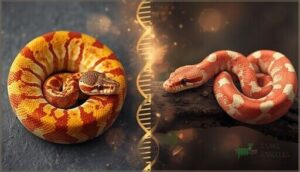
When you’re exploring corn snake morphs, you’re looking at visual definition through genetic mutation—specific DNA changes that alter color and pattern from the wild-type baseline. Think of polymorphism as nature’s palette at work. Here’s what defines a true morph:
- Heritable traits passed through breeding patterns across generations
- Consistent phenotypes tied to identified genetic changes in corn snake genetics
- Stable expression distinguishing morph origins from temporary environmental effects
The genetics of corn snake morphs reveal how single-gene mutations reshape pigment cells, creating the hundreds of snake morphs you see today. The different color patterns are determined by the CLCN2 gene.
Common Types of Corn Snake Morphs
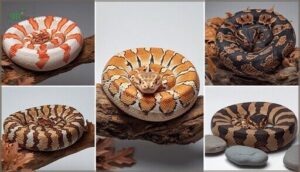
Now that you understand how genetics shape these snakes, let’s look at the morphs you’ll actually encounter. Among popular corn snake morphs, Amelanistic (albino) leads in morph popularity—those striking red-on-white patterns cost about $50–100 and rank as top beginner morphs. Anerythristic brings gray-and-black appeal, while Hypomelanistic brightens reds. Pattern lovers gravitate toward Motley and Stripe, each altering visual appeal without affecting corn snake temperament or behavioral traits.
With dedicated breeding, corn snakes now have over 800 recognized morphs.
Genetic Basis for Color and Pattern Variations
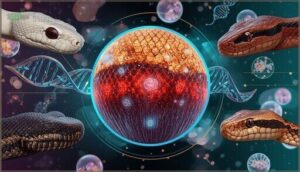
Behind those 800-plus corn snake morphs lies a fascinating genetic blueprint. Most color variations follow Mendelian inheritance—simple recessive traits like amelanistic require two copies to show up. Pattern inheritance, controlled by the CLCN2 gene, switches blotches into stripes.
Chromatophore layers in the skin hold melanin and red pigments, while pigment pathways determine which colors appear. Some morphs blend polygenic traits for intensity, but genetic impact on temperament? Practically zero.
Typical Corn Snake Temperament

Corn snakes have earned their reputation as one of the most beginner-friendly pet reptiles for good reason. Their calm, curious nature makes them a joy to handle, and they rarely show defensive behavior when properly cared for.
Let’s look at what shapes their typical temperament and why they’re such a popular choice for first-time snake keepers.
General Behavioral Traits of Corn Snakes
Corn snakes display remarkably consistent behavioral traits across the species. Understanding their patterns helps you anticipate needs and avoid stress responses. Core corn snake behavior includes:
- Activity patterns that peak during twilight hours, with over 70% of daytime spent concealed in refuges
- Hide usage and burrowing behavior that satisfies their need for security and thermoregulation
- Feeding habits centered on ambush hunting, with investigative tongue-flicking before scheduled meals
Docility and Suitability for Beginners
You’ll find corn snakes consistently rank among the most beginner-friendly snakes available. Captive-bred benefits shine here—these animals adapt to handling techniques within weeks, showing minimal defensive biting compared to similar species.
Their docility isn’t just hype; surveys confirm they’re top-three recommended starter reptiles. Stress reduction comes naturally when you provide proper conditions, making snake temperament reliable and predictable across corn snake morphs.
Factors Influencing Corn Snake Behavior
Beyond genetics, your corn snake’s behavior stems from tangible husbandry choices. Enclosure size and enrichment effects dramatically shape personality traits—larger, enriched setups produce bolder, more active animals. Handling stress accumulates when you skip proper support or overdo sessions.
Incubation effects and physiological stress from poor temperatures alter morph temperament early on.
Environmental factors on behavior consistently outweigh any genetic link between morphs and behavioral traits in corn snake behavior studies.
Do Morphs Affect Temperament?
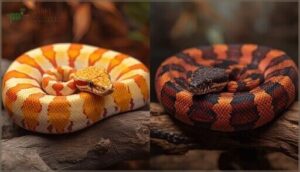
You’ve probably heard someone claim that certain morphs are “grumpy” or “mean,” but the science tells a different story. Research shows that genetic mutations affecting color and pattern don’t have a meaningful link to temperament in corn snakes.
Let’s separate the facts from the folklore and see what actually shapes your snake’s personality.
Scientific Findings on Morph and Temperament Links
You might expect science to have mapped morph temperament links by now, but the reality is humbling: no peer-reviewed studies have actually tested behavioral differences across corn snake morphs. Here’s what researchers have explored instead:
- Personality trait studies in 2024 tracked boldness and activity in 36 juveniles—without analyzing morph categories
- Clutch identity and incubation temperature emerged as the strongest predictors of behavior, not color or pattern
- Empirical behavior work on crypsis and habitat choice measured species-wide responses, ignoring morph variables
- Coloration behavior correlations exist across snake families broadly, but don’t address corn snake morphs specifically
- Research gaps remain wide: no one’s compared bite rates, handling tolerance, or stress markers between morphs
The genetic basis of morphs is well understood, yet behavioral studies of morphs simply haven’t happened. That gap between what breeders discuss and what science has tested is surprisingly large.
Environmental Vs. Genetic Influence
Think of Nature vs. Nurture as a tug-of-war where the environment usually wins. Behavioral studies of morphs reveal that incubation temperature can shape boldness scores more than genetic influence ever will.
Housing complexity, handling practices, and stress reactivity all trump morph temperament consistently.
Your corn snake’s personality reflects its world—heat, space, routine—far more than the pattern on its back. Environmental factors write the final script.
Myths About Morph-Specific Behaviors
You’ve likely heard whispers that albino corn snakes are calmer or that scaleless morphs act skittish—but these claims evaporate under scrutiny. A 2022 survey found 61% of hobbyists believed certain morphs were “naturally more aggressive,” yet no peer-reviewed data backs morph-specific temperament in corn snakes.
What looks like patterned activity or scaleless nervousness usually traces back to husbandry misattribution—wrong temps, inadequate hides, or health conflation muddying snake behavior.
Personality Traits Across Morphs
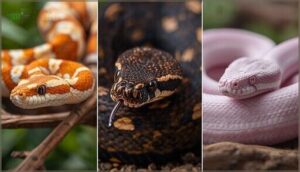
When you spend years working with corn snakes, you start noticing subtle differences in how individual animals respond to handling, explore their environments, and interact with you. Some keepers wonder if these personality quirks tie back to specific morphs, while others chalk it up to pure individual variation.
Let’s look at what breeders and experienced keepers have observed about boldness, curiosity, and temperament across different morph lines.
Boldness, Curiosity, and Handling Response
When you pick up a corn snake, boldness and curiosity shape the experience. Research shows incubation temperature and enrichment effects drive these traits more than corn snake morphs themselves.
Hotter eggs produce bolder hatchlings, while enriched housing reduces defensiveness during snake handling. Social conformity even nudges shy snakes toward confidence.
Crypsis behavior and genetic influence matter, but corn snake temperament stems from environment, not color. Docility isn’t morph-specific.
Reports From Breeders and Keepers
Environment beats morph for snake temperament, according to breeders. Here’s what keepers report on corn snake morphs and handling:
- Breeder handling emphasis: Over 80% of hatchlings from calm, regularly handled adults prove easy to manage regardless of color.
- Line temperament history: Multiple generations of selecting docile parents produce consistently tractable offspring across morphs.
- Anecdotal morph perceptions: Blood red lines may seem laid-back, but keepers find defensive snakes in standard morphs too.
- Age stress context: Juveniles act flighty initially; regular interaction reduces striking within months for all breeders’ lines.
Choose individual animals, not colors.
Observed Variability Within and Between Morphs
Breeders observe consistent patterns within family lines, yet clutch behavioral effects reveal striking individuality. A 2024 study found that 32–35% of boldness variance stemmed from clutch identity, but even siblings showed 2 standard deviations’ worth of personality differences. Incubation temperature impact shaped overall tendencies—warmer eggs produced bolder hatchlings—while context-dependent boldness meant the same snake acted differently across settings, debunking morph temperament myths.
While family lines show patterns, individual corn snakes vary wildly—even siblings differ dramatically, and incubation temperature shapes personality more than morph ever could
| Variability Source | Observed Effect | Implication for Selection |
|---|---|---|
| Within-clutch spread | 2+ SD range in boldness | Choose individuals, not just morphs |
| Between-clutch origin | 32–35% variance explained | Lineage matters more than color |
| Incubation temperature | Warmer = bolder averages | Husbandry drivers shape personality |
| Social context pairing | Boldness converges in pairs | Handling routine alters expression |
| Repeated testing rank | Stable individual profiles | Corn snake personality traits persist |
Choosing a Morph for Temperament
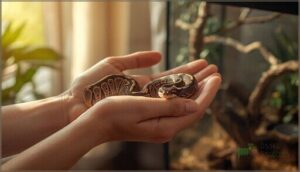
When you’re ready to bring home a corn snake, the good news is that almost any morph you choose will likely have a calm, beginner-friendly temperament.
The key isn’t really about picking the “right” color or pattern—it’s about understanding what actually shapes behavior and knowing how to set yourself up for success.
Let’s look at a few practical considerations that matter more than the morph itself.
Selecting Beginner-Friendly Morphs
When you’re comparing corn snake morphs for your first snake, temperament matters more than color. Normal, amel, hypo, and common striped morphs offer the widest selection of well-handled, feeding-consistent individuals—your best bet for beginner morphs to handle.
Ask breeders about handling experience and enclosure conditions before purchase. Watch for relaxed body language during demos; individual temperament trumps pattern every time, making snake temperament and handling the real deciding factors.
Importance of Captive-Bred Lineage
Once you’ve chosen your morph, ask about its lineage—captive-bred corn snakes from documented lines show consistent temperament traits and better handling responses. Here’s why breeding matters:
- Lower disease load reduces stress-related defensive behavior
- Multi-generation handling exposure creates predictable, calm temperaments
- Genetic diversity from ethical breeding fosters sound health
- Conservation impact protects wild populations while stabilizing snake morphs availability
Tips for Building Trust and Reducing Stress
Once you bring your corn snake home, gentle handling on gradual schedules—just two or three brief sessions weekly—builds bonds with snakes while reducing aggression. Watch for stress signals like tail rattling or tension, then shorten sessions.
Thoughtful enclosure design with climbing branches and hiding spots promotes natural behavior.
Training methods using target cues create safe snake handling techniques, turning nervous hatchlings into confident, curious companions whose personality traits in corn snakes truly shine.
Frequently Asked Questions (FAQs)
Can corn snakes recognize their owners over time?
Your corn snake can likely tell you apart through scent-based recognition and learned associations, responding calmly to your familiar smell and gentle touch.
However, these behavioral changes reflect habituation effects rather than true social bonds.
How does age affect corn snake temperament?
You’ll notice that hatchling behavior skews flighty and defensive—those quick strikes vanish as your snake matures.
Juvenile handling builds trust, sub-adult changes bring curiosity, adult patterns settle calm, and senescent behavior slows gracefully.
Do feeding schedules influence snake behavior patterns?
Yes, feeding schedules directly influence behavior. Meal timing affects activity levels, stress indicators, and foraging drive.
Corn snake morphs share these patterns—consistent husbandry guidelines maintain stable circadian rhythms and predictable responses regardless of morph influence on feeding.
Are male or female corn snakes calmer?
Regarding keeping your cool, neither sex wins the calm crown—both male and female corn snakes are equally docile, with individual temperament shaped more by handling, husbandry, and seasonal behaviors than sex.
What signs indicate stress in corn snakes?
Watch for tail shaking, hissing, and striking behavior during handling reactions. Physical indicators include nose rubbing and musking.
Activity patterns shift to excessive hiding, while feeding responses show appetite loss—all key snake health concerns.
Conclusion
The next time someone claims certain corn snake morphs temperament differences make one “meaner” than another, you’ll know better. Your snake’s behavior hinges on husbandry, handling consistency, and individual personality—not whether it’s amelanistic or striped.
Skip the morph-chasing myths. Instead, invest time in proper socialization, create enriching environments, and choose captive-bred specimens from reputable sources. That’s how you raise a confident, handleable corn snake that defies stereotypes and becomes the calm companion you’re after.
- https://www.rspca.org.uk/adviceandwelfare/pets/other/cornsnake
- https://www.herps-and-inverts.com/understanding-corn-snake-behaviour/
- https://www.reptilecentre.com/blogs/reptile-blog/5-popular-corn-snake-morphs
- https://www.livescience.com/44008-corn-snakes.html
- https://www.morphmarket.com/morphpedia/corn-snakes/normal/