This site is supported by our readers. We may earn a commission, at no cost to you, if you purchase through links.
Your bearded dragon’s digestive blockage didn’t come from bad luck. It came from sand. Substrate choice affects your reptile’s respiratory system, digestion, humidity needs, and lifespan.
Natural materials like coconut fiber mimic native habitats but hold moisture differently than synthetic carpets or sterile paper towels. Desert species need drainage while tropical reptiles require humidity retention.
Some substrates harbor bacteria, others create dust clouds, and a few cause fatal impaction when ingested. Understanding the difference between reptile substrate types protects your animal from preventable illness and creates an environment where natural behaviors flourish instead of survival instincts triggering chronic stress.
Table Of Contents
- Key Takeaways
- Overview of Reptile Substrate Types
- Key Differences in Substrate Materials
- Health and Safety Impacts of Substrate Choices
- Species-Specific Substrate Recommendations
- Maintenance and Replacement Considerations
- Frequently Asked Questions (FAQs)
- What is the best substrate for reptiles?
- What are the different types of substrate materials?
- Is sand or bark better for bearded dragons?
- Can you mix different substrate types together?
- How does substrate choice affect heating equipment?
- What substrate works best for bioactive enclosures?
- Do substrates expire or go bad over time?
- How much does quality substrate typically cost?
- Can I mix different substrate types together?
- How much does quality reptile substrate cost?
- Conclusion
Key Takeaways
- Substrate choice directly impacts your reptile’s respiratory health, digestion, and lifespan through factors like dust exposure, ingestion risks, and moisture retention that either support or undermine natural behaviors.
- Natural substrates like coconut fiber and sand mimic native habitats but require species-specific matching—desert reptiles need drainage while tropical species demand humidity retention, with wrong choices causing fatal impaction or respiratory infections.
- Synthetic carpets and paper-based options eliminate ingestion risks and simplify cleaning, making them safer for hatchlings and quarantine situations despite lacking the behavioral enrichment of natural materials.
- Regular maintenance, including daily spot cleaning and monthly full replacements, prevents ammonia buildup and bacterial growth, with warning signs like persistent odors, visible mold, or compacted areas indicating immediate substrate change needs.
Overview of Reptile Substrate Types
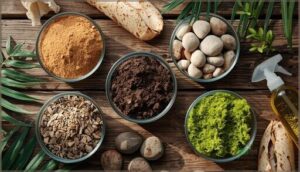
Choosing the right substrate for your reptile starts with understanding what’s available. Each type of bedding material fulfills different purposes and works better for certain species than others.
For reptiles with delicate or irritation-prone skin, exploring substrate options designed for sensitive skin can help prevent reactions and ensure long-term comfort.
Let’s look at the main categories you’ll encounter when shopping for your pet’s enclosure.
Natural Substrates (wood, Soil, Sand)
Natural substrates replicate your reptile’s native habitat with wood bedding, soil-based substrates, and sand.
Wood decay in high moisture setups demands regular inspection, while soil composition influences burrowing success and moisture levels. Sand aeration prevents compaction but requires careful monitoring.
Substrate depth usually ranges from two to six inches, depending on species needs. These materials create a natural environment that fosters instinctive behaviors when properly maintained.
For readers interested in a broader overview, you can explore types of substrates concept for more detailed substrate insights.
Synthetic Substrates (carpet, Mats)
Synthetic substrate alternatives like reptile carpet and mat designs offer you reusable, low-dust flooring. These carpet materials feature nylon or polyester fibers with non-slip backing for substrate safety.
You’ll find synthetic textures provide reptile comfort while simplifying reptile care and maintenance:
- Machine washable at low temperatures
- Anti-microbial treatments reduce odor
- Heat resistant varieties withstand basking lamps
- No ingestion risk compared to loose substrates
- Carpet durability lasts six to twenty-four months
Pile height affects burrowing behaviors and grip for climbing species. For more details about their care and use, see these durable and easy-to-clean materials.
Paper-Based Substrates (newspaper, Towels)
Paper towels and newspaper offer you budget-friendly reptile substrate options with excellent fiber absorbency. These recycled materials provide substrate safety through easy disposal and cleaning.
While towel texture creates soft bedding, ink safety remains minimal in quality newspaper. You won’t get odor control, but paper quality ensures reliable moisture handling.
This reptile bedding suits temporary housing or quarantine setups where recycling benefits and frequent changes matter most.
Commercial and Specialty Substrates (coconut Fiber, Vermiculite, Alfalfa Pellets)
Commercial specialty substrates offer sophisticated moisture control beyond basic paper bedding. Coconut fiber provides high water retention with natural drainage for tropical reptile bedding. Vermiculite mix maintains consistent humidity through lightweight aeration properties. Alfalfa pellets expand when moistened for absorbent reptile substrate options.
Your substrate selection guide should match these specialty substrates to species-specific humidity needs while monitoring for ingestion risks.
Watch for signs of bad substrate for snakes like lethargy or unusual mouth movements that could indicate your pet has swallowed bedding material.
Key Differences in Substrate Materials
Not all substrates are created equal. Each material brings its own strengths and weaknesses to your reptile’s enclosure, from how well it holds moisture to how easy it’s to keep clean.
Let’s break down what separates one substrate from another so you can make the right choice for your pet.
Moisture Retention and Humidity Control
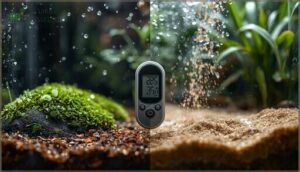
When you maintain consistent humidity levels, your reptile’s shedding and respiratory health improve dramatically.
Moisture retention describes how substrates hold water after dampening, directly affecting evaporation rates and water cycling in the enclosure. Natural fibers like coconut coir excel at substrate saturation, while sand dries quickly.
Use moisture sensors to track humidity management and adjust substrate properties accordingly.
Odor Control and Cleanliness
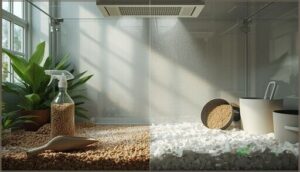
Daily waste disposal and spot cleaning form the backbone of odor management in your reptile’s habitat. Substrates like alfalfa pellets absorb moisture while reducing smell, whereas paper-based bedding requires frequent substrate maintenance despite poor odor control.
Proper ventilation systems and hygiene practices prevent bacterial growth that threatens reptile health. Regular substrate cleaning and maintenance, paired with enzyme cleaners, keeps your reptile bedding fresh and safe.
Texture, Size, and Comfort
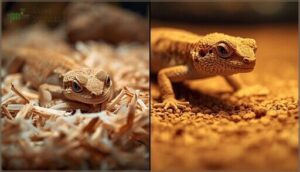
Particle size and surface texture shape how your reptile moves and rests on its bedding. Fine coconut fiber offers cushioning effects that support burrowing species, while coarse substrates provide friction levels that prevent slipping.
Your substrate choice influences ergonomic design—rounded grains reduce toe injuries, and soft substrate options create comfortable resting spots. Selecting reptile substrate based on texture protects delicate skin while encouraging natural behaviors.
Aesthetic and Naturalistic Appeal
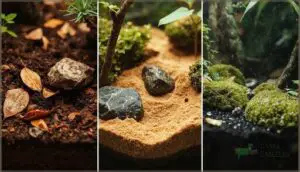
Your enclosure doesn’t just house a reptile—it recreates a slice of the wild. Substrate layering with natural colors like earthy browns and forest floor tones delivers habitat mimicry that elevates terrarium aesthetics. Environmental realism anchors your naturalistic vivarium in authenticity.
Three ways visual texture transforms your reptile substrates:
- Cork bark and leaf litter simulate woodland depth
- Desert sands mirror sunbaked terrain
- Dark soil blends evoke jungle canopy humidity
Natural environment cues matter for both you and your pet.
Health and Safety Impacts of Substrate Choices
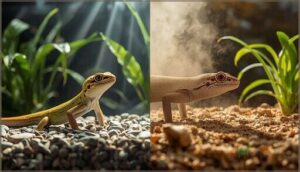
Your substrate choice affects more than just how your enclosure looks. The wrong material can damage your reptile’s respiratory system, cause life-threatening blockages, or create breeding grounds for harmful bacteria.
Let’s look at the main health risks you need to watch for when selecting substrate.
Respiratory and Digestive Health Risks
Your reptile’s substrate selection can silently sabotage respiratory and digestive health. Dusty materials like certain wood shavings irritate nasal passages and lungs, triggering coughing and worsening respiratory infections.
Meanwhile, ingestion hazards from swallowed particles cause gut health problems and digestive issues. Chemical exposure from treated substrates compounds these risks.
Proper substrate safety practices protect against impaction, respiratory issues, and chronic illness in your reptile’s wellness routine.
Impaction and Ingestion Hazards
Swallowed substrate creates digestive blockage that threatens your reptile’s survival. Ingestion hazards from sand, gravel, and wood fragments cause impaction when materials lodge in the intestinal tract.
Burrowing species and hatchlings face the highest substrate risks during exploration. Smart ingestion prevention includes feeding strategies that keep meals separate from bedding.
Your substrate choice directly impacts reptile health, while early impaction treatment prevents serious complications.
Parasite, Fungal, and Bacterial Risks
Beyond impaction, damp or contaminated bedding harbors unseen threats to your reptile’s health. Fungal infections from Penicillium and Aspergillus colonize humid substrates, releasing airborne spores that irritate respiratory tracts. Bacterial contamination flourishes in waste-soaked material, producing skin lesions and mouth infections.
Parasite control requires vigilant substrate selection and safety—soil can carry nematodes and protozoa. Disease prevention starts with sourcing clean materials, maintaining proper moisture levels, and routine replacement to protect animal welfare.
Chemical and Dust Exposure
Substrates don’t just affect what your reptile swallows—airborne exposure matters too. Dusty materials release particles smaller than 10 micrometers that reach deep into lungs, carrying silica, wood fragments, and toxic chemicals. Aromatic woods emit volatile compounds causing respiratory risks and skin irritation.
Invisible threats in your enclosure:
- Cedar and pine release phenols that permanently damage airways
- Substrate dust settles on food and water dishes
- Vermiculite and perlite contain mineral impurities that become airborne
- Carpet backing and dyes off-gas irritating compounds
- Treated materials introduce cleaning agents into the air you both breathe
Reptile health and substrate selection go hand-in-hand with substrate selection and safety. Choose low-dust reptile substrates, ventilate properly, and wear gloves during cleaning to protect against impaction risks and chemical exposure.
Species-Specific Substrate Recommendations
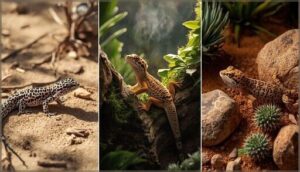
Choosing the right substrate isn’t a one-size-fits-all decision. Your reptile’s natural habitat dictates what works best for their health and behavior.
Let’s look at specific substrate recommendations based on where your pet comes from in the wild.
Desert-Dwelling Reptiles
You’ll want a sand mixture that promotes your desert species while keeping reptile health in focus. Quartz sand blended with calcium carbonate maintains 15–25% humidity, perfect for desert habitat conditions.
Fine reptile substrate paired with cypress mulch prevents mold in your arid species setup. For burrowing reptiles, mix play sand with excavator clay to create stable tunnels.
These sand mixtures mimic natural desert terrarium conditions and foster normal reptile behavior.
Tropical and Arboreal Species
Tropical and arboreal species thrive with substrates that hold moisture around 60–80% humidity. Coconut fiber mixed with sphagnum moss creates the forest floor microclimate your tree-dwelling reptiles need.
Add bark chips and leaf litter to support climbing structures and natural foraging. This combination gives you excellent humidity control and moisture retention without waterlogging your tropical setup.
Burrowing and Ground-Dwelling Reptiles
Your ground-dwelling and burrowing reptiles need substrate depth of 3–6 inches to facilitate stable tunnel design. Mix equal parts play sand with excavator clay or ReptiSoil to prevent collapse while maintaining ground humidity between 30–50%.
- Peat moss adds moisture-holding capacity without excessive compaction during digging behavior
- Fine sand alone increases impaction risk; combine with organic material for balanced texture
- Top layers of coarser material prevent substrate from sticking to limbs during active burrowing
This substrate choice accommodates natural reptile habitat needs and humidity control.
Hatchlings and Juveniles
Your hatchlings and juvenile reptiles demand ultra-clean surfaces for neonate care and early development tracking. Paper towels or fine coconut fiber at 1–2 inches substrate depth minimize respiratory irritants while supporting hatchling safety during vulnerable growth phases.
| Life Stage | Substrate Choice | Humidity Control |
|---|---|---|
| Early hatchlings | Paper towels, blotting paper | 40–60% with light misting |
| Growing juveniles | Soft coconut fiber, dust-free blend | 50–70% species-dependent |
| Development phase | Dampened sphagnum moss | 60–75% prevents desiccation |
Replace substrate every 1–2 weeks for ideal juvenile reptile health.
Maintenance and Replacement Considerations
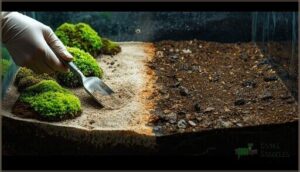
Even the best substrate won’t stay clean forever. Your maintenance routine directly impacts your reptile’s health and the longevity of the enclosure environment.
Here’s what you need to know about keeping substrate fresh and safe.
Cleaning Frequency and Spot Cleaning
You’ll want to spot clean your reptile substrate daily to prevent ammonia buildup and bacterial growth. Remove feces, uneaten food, and urates within 24 hours to protect your pet’s health and maintain proper humidity control.
- Vacuum or wipe surface debris from carpet mats and paper substrates each day
- Check corners and substrate edges weekly for hidden waste that could cause impaction risks
- Schedule deeper spot refreshes every 1–3 days depending on your species’ waste load
- Rotate substrate areas gently to prevent compacted zones during routine cleaning frequency checks
Full Replacement Guidelines
You’ll need to replace all old reptile bedding in one clean cycle when it shows contamination or compaction. Sanitize the enclosure before adding fresh substrate choice to eliminate odors and microbial buildup.
Follow replacement tips that maintain humidity control and temps during swaps—stress reduction depends on keeping conditions stable. Check for debris after completing your substrate maintenance and cleaning protocols to prevent impaction risks.
Sterilization and Hygiene Practices
Proper sterilization methods protect your reptile from fungal and bacterial risks that thrive in damp bedding. You should establish hygiene protocols that include pre-cleaning with soap before applying disinfectant use to eliminate hidden microbes.
- Wash your hands and wear gloves during substrate maintenance to prevent cross-contamination
- Use reptile-safe disinfectants following product instructions and allow surfaces to air dry completely
- Maintain cleaning schedules with weekly spot-cleaning and monthly deep sanitation for biosecurity measures
- Document each session to track patterns and prevent reptile health issues like impaction
Signs It’s Time to Change Substrate
Your reptile’s substrate needs replacement when you notice strong substrate odor or visible mold spreading across the surface. Excessive dust accumulation clinging to enclosure walls signals it’s time for fresh material.
Watch for persistent moisture levels that create waterlogged spots, promoting bacterial growth. Hard, compacted areas prevent drainage and increase impaction risks. These warning signs directly impact reptile safety, so don’t ignore them.
Frequently Asked Questions (FAQs)
What is the best substrate for reptiles?
You can’t pick a single best substrate for all reptiles. Your choice depends on whether your species needs sand, soil, fiber, or mats to match its natural habitat and behavior.
What are the different types of substrate materials?
From loose sand and soil to soft carpets and moisture-holding coconut fiber, substrate materials fall into natural, synthetic, paper-based, and commercial categories—each shaped for specific humidity control and reptile bedding needs.
Is sand or bark better for bearded dragons?
Neither substrate choice is perfect for bearded dragons. Sand allows natural digging but risks impaction during feeding.
Bark alternatives retain moisture and may irritate the respiratory system. Reptile carpet offers the safest substrate depth for dragon behavior in reptile care.
Can you mix different substrate types together?
You can mix substrates, though some keepers treat it like alchemy gone wrong.
Layering techniques with compatible materials let you create moisture gradients and humidity balance. Just make certain texture blending doesn’t create ingestion hazards for your reptile.
How does substrate choice affect heating equipment?
Your substrate choice directly impacts heater efficiency and temperature regulation. High thermal conductivity materials spread heat evenly, while low-density substrates insulate, requiring higher wattage.
Substrate density and moisture affect heat transfer and humidity management.
What substrate works best for bioactive enclosures?
A thriving ecosystem needs the right foundation. Bioactive substrates combining coconut coir, sphagnum moss, and drainage systems create ideal humidity control and microfauna support.
These eco-friendly options sustain cleanup crews while maintaining your reptile environment naturally.
Do substrates expire or go bad over time?
Yes, substrates can degrade over time. Properly stored materials remain usable for months, but opened packages risk mold and contamination.
Watch for musty odors and clumping as spoilage signs indicating replacement time.
How much does quality substrate typically cost?
Quality reptile substrate costs between eight and forty dollars per gallon equivalent. Budget options like paper towels start around one dollar, while bulk savings reduce costs by twenty to forty percent.
Your substrate choice impacts long-term reptile care expenses.
Can I mix different substrate types together?
Mixing different reptile substrate types works well when you pair compatible materials.
Layering techniques and substrate mixing help balance moisture control and drainage.
Always test substrate compatibility first to avoid compaction or respiratory issues from dust.
How much does quality reptile substrate cost?
Budget between 10 and 25 dollars per bag for most reptile substrates. Coconut coir costs 4 to 7 dollars per brick. Specialty bioactive mixes run 25 to 60 dollars initially, though they reduce ongoing expenses.
Conclusion
Your reptile’s next shed, meal, or burrow depends on what lies beneath its feet. The difference between reptile substrate types isn’t cosmetic—it determines whether your animal thrives or survives in quiet distress.
Sand causes impaction. Cypress mulch holds humidity. Paper towels prevent parasites. Match substrate to species biology, not convenience.
Your bearded dragon doesn’t adapt to carpet. You adapt the environment to its desert ancestry. That’s not perfectionism. That’s responsible reptile keeping.
- https://amphibiancare.com/2016/11/28/substrates-part-1/
- https://www.reptiles.swelluk.com/help-guides/what-is-the-best-substrate-for-bearded-dragons/
- https://www.animalsathome.ca/best-substrate-for-ball-pythons/
- https://reptifiles.com/does-loose-substrate-cause-impaction/
- https://www.visionproducts.us/blog/reptile-substrate/