This site is supported by our readers. We may earn a commission, at no cost to you, if you purchase through links.

Your ball python spends most of its life in a box of damp paper towels, and you’ve decided it deserves better. A living rainforest floor, complete with climbing vines, tiny cleanup crews, and soil that actually breathes.
A diy bioactive terrarium build for ball python keepers rewards patience. Done right, the enclosure cleans itself, holds steady humidity, and gives your snake real places to explore. Done wrong, you get soggy substrate, mold, and a stressed animal.
You’ll start with the plan, because every layer, bulb, and plant depends on the decisions you make first.
Table Of Contents
- Key Takeaways
- Plan Your DIY Ball Python Bioactive Terrarium
- Build The Substrate Layers and Add Hides, Plants, and Enrichment
- Set Up Ball Python Heating, Lighting, and Humidity Control
- Add Springtails and Isopods and Establish The Bioactive Ecosystem
- Introduce Your Ball Python and Maintain The Bioactive Terrarium
- Frequently Asked Questions (FAQs)
- How to make a bioactive terrarium for ball python?
- Are bioactive terrariums good for ball pythons?
- What is a good bioactive substrate for a ball python enclosure?
- What bioactive plants are safe for ball pythons?
- How to create a bioactive terrarium for a ball python?
- Do ball pythons need a bioactive enclosure?
- What is a bioactive vivarium for a ball python?
- What is a ball python bioactive kit?
- What is a bioactive setup for a ball python?
- How to set up a ball python terrarium?
- Conclusion
Key Takeaways
- You’ll build the terrarium in layers, starting with 2 to 3 inches of drainage material, then 6 to 8 inches of coir-and-mulch substrate, and plant it two weeks before your snake moves in.
- You’ll keep a true thermal gradient with a thermostat-controlled heat source (basking spot 90-92°F, never above 32°C) and hold humidity at 50-60%, raising it during shedding.
- You’ll add springtails first and isopods a few days later, then keep them thriving with leaf litter, a damp corner, and daily urate removal.
- You’ll give your snake a hands-off first two weeks, and you’ll fix mold by improving ventilation and cutting back misting, since early mold is normal while the terrarium cycles.
Plan Your DIY Ball Python Bioactive Terrarium
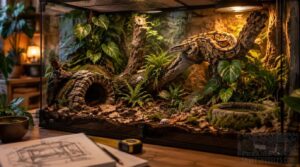
Planning your bioactive terrarium build before you buy anything saves you money and stress. Start with the ball python enclosure itself. It needs to be escape-proof, with secure latches and fine-mesh vents. Give your snake 1 to 1.5 times its body length in vertical climbing space.
A glass terrarium with front-opening doors and secure locks makes feeding and cleaning easier, and this guide to the best snake enclosure for a ball python compares several solid options.
Next, sketch your thermal gradient. You’ll want a warm side with a basking zone that never tops 32°C, and nighttime temperatures between 26 and 30°C. Plan humidity control too. Aim for 50 to 60% most of the year, rising to 60 to 80% during shedding.
Build The Substrate Layers and Add Hides, Plants, and Enrichment
Now you’ll build the layers that make your terrarium work. First, you’ll lay a drainage and substrate base that holds moisture without turning soggy. Then you’ll add safe plants and a secure hardscape so your ball python has cover, climbing spots, and room to explore.
Drainage, Substrate Mix, and Depth
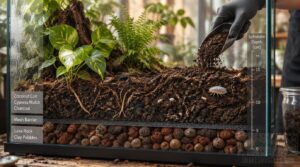
A solid drainage layer keeps your terrarium from turning soggy. You’ll add 2 to 3 inches of inert material, then cap it with a barrier.
Then comes substrate layering. Mix your bioactive substrate mix with coconut coir and cypress mulch, plus a little charcoal. Aim for 6 to 8 inches of substrate depth, so you’ll get stable moisture and roots.
If you’d rather not blend it yourself, this ready-made ball python bioactive substrate mix holds moisture well and keeps humidity steady between mistings.
Safe Plants and Secure Hardscape
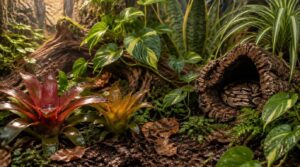
Your deep substrate gives roots plenty of room, so now you’ll plant. Choose pothos, snake plants, and a spider plant for hardy, reptile-safe greenery. Add philodendron brasil and bromeliads for bright color. Bromeliads also thrive in high humidity and form water-storing leaf rosettes that your snake can drink from.
Anchor everything. Hide plastic pots in the background and tuck in sturdy cork bark and driftwood. You’ll want plants fully rooted two weeks before your snake moves in.
Set Up Ball Python Heating, Lighting, and Humidity Control
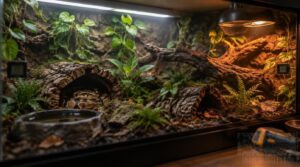
With your layers and plants in place, you’ll add the climate controls that keep your ball python healthy. Start with your heating equipment, a ceramic heat emitter or under-tank heater, and always wire it to a thermostat and timer. Aim for a basking spot of 90–92°F and ambient air of 78–85°F. You’ll want a true temperature gradient, so check several points with a digital or infrared thermometer.
Add low-output UVB lighting on a 12:12 cycle, and keep fixtures and cords out of reach.
Keep humidity levels between 50–60%. Bioactive setups can run a bit higher through moist substrate. Use two hygrometers in opposite corners, and calibrate them weekly. Skip frequent misting, which only creates damp spots and invites mold fast.
Add Springtails and Isopods and Establish The Bioactive Ecosystem
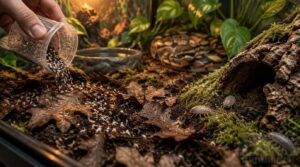
Add Springtails and Isopods once your bioactive substrate mix has settled and the humidity sits around 70 to 80 percent. Start with springtails. You’ll tip the culture onto the leaf litter and let them spread, and they’ll form dense surface colonies within 2 to 4 weeks.
Since both cleanup crews depend on steady moisture and a well-drained base, it helps to plan your layering early using this tropical snake enclosure setup guide.
Add your isopods a few days later. They’re the cleanup crew that eats decaying matter and aerates the soil. Aim for roughly one part isopod to four parts springtails.
To Establish The Bioactive habitat, give them a proper microfauna habitat: leaf litter, moss, and cork bark crevices. Skip high-protein foods, since they cause ammonia spikes. If numbers drop, add fresh leaf litter and a damp corner. Watch for grazing trails, your sign it’s working.
Introduce Your Ball Python and Maintain The Bioactive Terrarium

Your terrarium is built, planted, and stocked with its cleanup crew, so it’s time to bring your snake home. You’ll start with a calm acclimation period and learn the stress signs to watch for. After that, you’ll cover daily upkeep and fixes for the problems that pop up in bioactive setups.
Acclimation and Stress Monitoring
Your python’s first two weeks set the tone. Keep handling off during the acclimation period and watch closely:
- Temperature monitoring with a temp gun, 88-92°F at the basking spot
- Humidity levels of 50-60%, checked in the cool hide
- Substrate ingestion prevention: feed in a separate tub
Hissing, tight coiling, or nonstop hiding means stress. Keep your spot-cleaning routine gentle, too.
Spot-Cleaning and Cleanup Crew Care
Worried daily spotcleaning will wipe out your cleanup crew? It won’t. Your spotcleaning routine just targets the basking and feeding areas, so you’ll leave moist hides alone.
| Task | When | Why |
|---|---|---|
| Remove urates | Once daily | Crews can’t digest them |
| Check activity | Weekly | Catches stress very early |
| Feed extras | As needed | Protects isopod population density |
| Sift substrate | Monthly | Keeps substrate turnover steady |
Troubleshooting Mold, Moisture, and Plant Decline
Think mold means you’ve failed? It doesn’t. Even careful keepers see it during cycling.
Mold doesn’t mean you’ve failed, because even careful keepers see it while their bioactive terrarium is still cycling
For mold prevention, boost ventilation and airflow, and let springtails graze.
- Check substrate moisture weekly.
- Keep moisture balance steady.
- Wipe spots with 1:1 peroxide.
- Trim yellowing leaves.
- Use plant quarantine for newcomers.
You’ll spot trouble early, and you’ll fix it fast. Dial back the misting first.
Frequently Asked Questions (FAQs)
How to make a bioactive terrarium for ball python?
You’ll start your bioactive terrarium build with a roomy ball python enclosure, then layer drainage and substrate. Keep substrate moisture steady, set a thermal gradient, and introduce a cleanup crew before your snake moves in.
Are bioactive terrariums good for ball pythons?
Funny thing: the dirtiest-looking setup is often the healthiest.
Yes, a bioactive terrarium build suits your ball python enclosure, since the bioactive substrate mix holds humidity, and the cleanup crew and naturalistic environment cut stress.
What is a good bioactive substrate for a ball python enclosure?
Your snake can’t read labels, so you will.
Use a bioactive substrate of additive-free topsoil, coconut coir and cypress mulch or sand, 3–4 inches deep.
Add leaf litter for food, a drainage layer for runoff.
What bioactive plants are safe for ball pythons?
Your enclosure can become a lush jungle with reptilesafe plants.
Pothos, snake plants, spider plants, bromeliads, and hoya survive trampling. Anchor them in bioactive substrate, and mount epiphytes on hardscape.
Springtails and isopods love them.
How to create a bioactive terrarium for a ball python?
A tiny ark needs a careful Noah, and you’re it. You’ll layer drainage, bioactive substrate, and sturdy plants in a 40-gallon reptile habitat, then add a cleanup crew, hides, a thermal gradient, and humidity regulation.
Do ball pythons need a bioactive enclosure?
No, the idea that every ball python needs a bioactive enclosure is a myth. Any habitat setup works if you’ll nail heat, humidity, and secure hides.
A selfsustaining environment won’t replace spot-cleaning or waste management.
What is a bioactive vivarium for a ball python?
Ever wished your ball python’s home could clean itself? A bioactive vivarium nearly does. Using natural habitat mimicry, live plants grow and a cleanup crew breaks down waste while you keep substrate moisture balance steady.
What is a ball python bioactive kit?
A bioactive kit gives you the essential pieces for a bioactive ball python enclosure: bioactive substrate, drainage layers, and a live cleanup crew.
You’ll still add heating for your thermal gradient and reliable humidity control.
What is a bioactive setup for a ball python?
What if your ball python enclosure could clean up after itself? That’s a bioactive setup: live plants, soil-like substrate, and a cleanup crew of isopods and springtails break down waste, creating a self-sustaining naturalistic environment.
How to set up a ball python terrarium?
Start with a 4’x2’x2′ front-opening bioactive enclosure, since a 40-gallon is too small for an adult ball python.
Layer drainage and substrate, then build a thermal gradient, humidity control, and hides for a naturalistic terrarium.
Conclusion
Worried a bioactive setup is too much work for a snake that just wants to hide? It’s front-loaded effort. Once the layers settle and the cleanup crew moves in, you’ll spend less time scrubbing and more time watching.
Every diy bioactive terrarium build for ball python keepers attempt comes down to balance: warmth, moisture, and life working together. Get those right, and your ball python gets a real, living home instead of a plastic box.