This site is supported by our readers. We may earn a commission, at no cost to you, if you purchase through links.

Your ball python just refused a perfectly good rat. Now you’re staring at a coiled snake, a dangling mouse, and a nagging worry that you’ve done something wrong.
Feeding looks simple, but small mistakes cause big problems. Handle a snake too soon after a meal and it may regurgitate, a stressful event that can set your pet back for weeks. A cool enclosure, the wrong prey size, or a lukewarm thaw can do the same.
Learning to safely handle ball python feeding gives you control over every step. Here’s how to prep, feed, and monitor with confidence.
Table Of Contents
- Key Takeaways
- Prepare Your Ball Python and Enclosure for Feeding
- Choose The Right Prey Size and Feeding Schedule
- Thaw and Offer Prey Safely With Feeding Tongs
- Handle Your Ball Python Safely Around Feeding Time
- Monitor Digestion and Respond to Feeding Problems
- Frequently Asked Questions (FAQs)
- Can I handle my ball python before I feed it?
- Is it okay to handle a ball python daily?
- Is it okay to feed a ball python in its cage?
- How long can a ball python go without feeding?
- Can you handle ball python on feeding day?
- Can I handle a ball python after it eats?
- Can you hand feed a ball python?
- When can I handle ball python after feeding reddit?
- Why wont my ball python eat?
- Can I feed multiple pythons together?
- Conclusion
Key Takeaways
- Keep your enclosure warm (88 to 92°F on the warm side, low 80s on the cool side) with 50 to 60 percent humidity, because steady heat is what lets your snake digest properly.
- Match prey to the thickest part of your snake’s body, feed every 5 to 7 days for juveniles and every 10 to 14 days for adults, and never upsize prey after a refusal.
- Thaw prey fully in the fridge or warm water (never the microwave), never refreeze it, and offer it with dedicated tongs so your fingers don’t become the target.
- Skip handling for 24 to 48 hours after a meal, never re-feed early, and call your reptile vet right away if your snake regurgitates.
Prepare Your Ball Python and Enclosure for Feeding

Getting your ball python’s enclosure ready before feeding is key to keeping everything calm and safe. Start with temperature gradients. Aim for a warm side around 88 to 92°F and a cooler side in the low 80s, so your snake can regulate itself after a meal. Digestion needs steady heat, and you can’t fake that later.
Once the temperatures are steady, a step-by-step guide to feeding ball pythons frozen-thawed rodents can help you thaw and offer each meal safely.
Check humidity levels next. Keep them near 50 to 60 percent. Too dry, and shedding trouble can make your snake skip meals.
Clear out sharp décor and leave a tidy feeding spot. Keep fresh water in the bowl, and make sure a hide sits nearby for retreat. Dry, grippy substrate helps, too.
Proper enclosure maintenance means spot-cleaning first. Then dim the noise and skip the handling. A quiet room is your best friend here.
Choose The Right Prey Size and Feeding Schedule
With the enclosure ready, prey selection is your next move. Follow one simple rule in your prey size guidelines: the meal should match the thickest part of your snake’s body.
Here’s how to set your feeding schedule:
- Hatchlings and juveniles: offer food every 5 to 7 days.
- Adults: feed every 10 to 14 days to keep weight steady.
- Cooler months: stretch the feeding frequency if your snake slows down.
- After a regurgitation: wait at least two weeks before trying again.
Undersized prey won’t satisfy your snake, and oversized prey invites regurgitation. Good feeding technique can’t fix a bad size.
Since the right meal size shifts as your snake grows, this snake species diet and feeding guide can help you match prey to each stage.
If your snake refuses a meal, adjust the schedule instead of upsizing. Patience beats bigger prey, always.
Thaw and Offer Prey Safely With Feeding Tongs

Once you’ve matched the meal using your prey size guidelines, it’s time to thaw frozen prey the right way. Skip the counter and the microwave. Seal the prey in a bag and let it thaw in the fridge or in a bowl of warm water. Change the water if it cools.
Your goal is simple: keep prey temperature out of the bacterial danger zone for as long as possible. Never refreeze a thawed meal. It spoils fast.
Grab your feeding tongs next. They keep your skin oils and scent off the meal, and they let you control where the prey sits. Dedicate one pair to feeding only, and wash them after each use.
If your snake is hesitant at first, this step-by-step guide to feeding a snake with tongs shows how to present prey calmly and safely.
Hold the prey near your snake’s head and wiggle it gently. If your snake ignores it after a few minutes, remove the prey. Good feeding safety means no lingering meals.
Handle Your Ball Python Safely Around Feeding Time
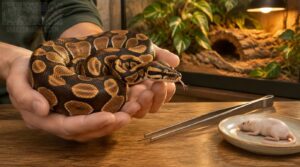
How you handle your ball python around mealtime matters as much as what you feed it. A few simple habits keep you both safe and keep your snake calm, so you’ll want to know what to do before feeding and after feeding. Let’s walk through each one so you stay in control.
Before Feeding
Picture Mia, who cuddled her python for an hour, then watched him refuse dinner. Don’t repeat her mistake.
Before feeding, keep your feeding environment calm:
- Limit handling right before dinner.
- Confirm temperature regulation works across both gradient sides.
- Verify humidity control and fresh water.
- Keep the room quiet, vibration-free.
Proper enclosure maintenance and steady prey presentation keep your snake relaxed.
After Feeding
For the first 24 to 48 hours, keep handling after feeding to a minimum. Stress can trigger regurgitation, and nobody wants that mess.
Put your snake back in the feeding enclosure, keep the room quiet, and leave the usual gradient and fresh water in place. That’s postfeeding rest at its simplest.
Quick feeding observation is key: confirm a settled posture.
Monitor Digestion and Respond to Feeding Problems
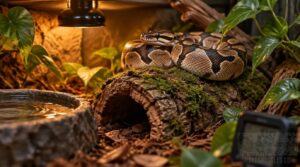
Watch your snake closely after every meal, because digestion time runs for weeks, not hours.
Think of it like a slow cooker. You can’t rush it, and you can’t keep lifting the lid. Give your python proper postfeeding rest and keep these checkpoints in mind:
Digestion is a slow cooker, so give your python quiet rest and resist the urge to keep lifting the lid
- Check temperatures daily, since a cool enclosure slows gut transit.
- Skip handling until the belly bulge fades.
- Look for regurgitation signs, like neck heaving or food coming back up.
- Note stress signals, such as hiding, hissing, or odd posture.
A single feeding refusal isn’t a crisis. Healthy body condition and normal posture usually mean your snake is simply digesting or between meals.
Never re-feed early. If your snake regurgitates, call your reptile vet right away.
Frequently Asked Questions (FAQs)
Can I handle my ball python before I feed it?
Does handling first make your ball python hungrier? Nope. It stresses your snake and risks refusals. For feeding safety, skip it.
If you must, approach slowly, move with the snake, then place your pet back.
Is it okay to handle a ball python daily?
Daily cuddles are a recipe for a grumpy snake. Keep handling frequency modest, wash hands first, approach slowly, and move with the snake.
Place your pet back calmly, and skip sessions close to feeding days.
Is it okay to feed a ball python in its cage?
Absolutely, feeding in the cage beats any circus trick! It matches ball python feeding and skips separate enclosure feeding stress.
Keep your enclosure setup warm and use tongs. That guarantees feeding safety and feeding hygiene.
How long can a ball python go without feeding?
Worried your snake skipped a meal? A healthy adult can handle a few missed feeds, but weight monitoring matters more than days.
Juveniles need steady growth monitoring. Feeding refusal plus weight loss? Call a vet.
Can you handle ball python on feeding day?
Nothing says "I love you" like grabbing a hungry snake before dinner.
Skip handling on feeding day. Use feeding tongs, follow safe handling practices for feeding safety, give postfeeding care 48 hours of peace.
Can I handle a ball python after it eats?
Wait 24 to 48 hours before handling after feeding. Your snake’s digesting, and rushing risks regurgitation. Keep postfeeding care calm, respect your feeding frequency, skip handling if feeding strikes continue, use gentle body support techniques.
Can you hand feed a ball python?
Skip hand feeding a ball python. Your snake’s feeding response fires at whatever’s near its face, so your fingers become the target. Use feeding tongs instead. Match prey size and feeding frequency, and you’ll stay bite-free.
When can I handle ball python after feeding reddit?
Give your snake 24 to 48 hours after feeding before handling. That’s the safe waiting window. Handling too soon risks regurgitation and defensive reactions. A calm, stressfree environment helps digestion, so stick to your feeding schedule.
Why wont my ball python eat?
Your snake has the menu, yet you’re the one losing sleep.
A ball python refusing to feed points to stress signals, cool warm-side temperatures, a shedding period, or wrong prey size. Recheck your feeding schedule.
Can I feed multiple pythons together?
Think co-feeding works if your pythons seem friendly? It doesn’t.
Ball pythons are solitary, so feed them separately in their own enclosure setup. That protects feeding safety, keeps prey size controlled, and cuts stress too.
Conclusion
Most ball pythons need about 48 hours of quiet digestion after a meal, and that simple pause prevents plenty of regurgitation headaches.
When you safely handle ball python feeding, the routine stops feeling like a gamble. Warm the enclosure, size the prey right, thaw it fully, and let the tongs do the work. Then give your snake space to digest.
Stay consistent, and your python will reward you with steady meals and a healthy life.