This site is supported by our readers. We may earn a commission, at no cost to you, if you purchase through links.

You set up the enclosure, add a hide and water bowl, then your new corn snake curls up on the cold side and refuses to eat. Nothing feels worse than wondering if your setup is quietly harming an animal that depends on you for every degree of warmth.
Corn snakes are masters of hiding discomfort, so by the time they look sick, the problem has usually been brewing for a while.
Understanding what corn snakes need under tank heating means learning how their bodies use heat, what a safe temperature gradient looks like, and how to create that reliably in your home.
Table Of Contents
Key Takeaways
- Corn snakes rely completely on external heat, so they need clear temperature gradient with a warm side for basking and a cooler side so they can move to the spot their body needs.
- A thermostat-controlled under tank heater on the warm side is usually the safest, most efficient primary heat source because it provides steady belly warmth that supports digestion, immunity, and normal activity.
- If temperatures are too low, too high, or no gradient, corn snakes quickly develop problems like refusing food, slow digestion, burns, breathing issues, bad sheds, and stressed, withdrawn behavior.
- Safe heating means careful setup and maintenance: correct heater placement, secure thermostat probe, proper substrate depth, multiple thermometers and a hygrometer for checking the gradient, and avoiding hot rocks and risky bulbs that can create dangerous hot spots.
Do Corn Snakes Need Under Tank Heating?
Because corn snakes rely on external heat, the way you warm their enclosure really matters. Too little, too much, or the wrong kind of heat can quietly create serious health problems.
A good thermostat setup, like the options explained in this reptile thermostat guide for corn snake enclosures, keeps temps stable and safe.
Next, you’ll see the main heating options, including under‑tank heaters, so you can choose a setup that keeps your snake safe.
Why Corn Snakes Require External Heat Sources
Unlike warm-blooded pets, corn snakes can’t generate their own body heat — they depend entirely on their environment to fuel metabolic enzyme activation and digestive efficiency. Without a proper basking spot reaching 88–92°F, their gut enzymes simply won’t function well.
Corn snakes rely entirely on external heat to activate the gut enzymes that keep them alive
- Thermoregulatory behavior drives snakes to seek warmer zones after eating
- A temperature gradient facilitates energy conservation between meals
- Heat mats and ceramic heat emitters create reliable thermal zones
- Seasonal activity patterns shift with enclosure temperatures
Maintaining a proper temperature gradient is essential for their health.
Risks of Inadequate Heating for Corn Snakes
When your corn snake can’t reach a proper warm zone, the effects show up fast. A cold heat mat or missing thermostat doesn’t just mean discomfort — it triggers real health consequences.
A proper temperature gradient of 29‑32°C is essential for healthy digestion proper temperature gradient.
| Risk | Cause | Result |
|---|---|---|
| Thermostat Burns | Unregulated heat mat | Skin damage |
| Digestive Slowdown | Low temperature gradient | Feeding refusal |
| Respiratory Stress | Poor thermoregulation | Illness risk |
| Shedding Issues | Inconsistent warmth | Incomplete sheds |
| Behavioral Withdrawal | Cold snake health decline | Hiding, inactivity |
How Under Tank Heating Supports Snake Health
So what does proper warmth actually do for your corn snake?
Proper warmth powers digestion, immune function, and activity levels—and you can set it all up without overspending using affordable corn snake heating and habitat accessories.
A lot.
An under tank heater delivers belly heat that directly boosts digestive enzyme activity, supporting metabolic efficiency and immune function.
With a thermostat keeping the heat mat steady, your snake experiences less stress, sheds cleanly, and regulates temperature on its own terms — all of which adds up to genuinely better snake health.
Ideal Temperature Range for Corn Snakes
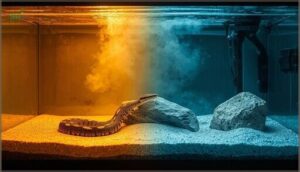
Getting the temperature right in your corn snake’s enclosure isn’t guesswork — it’s the foundation of everything.
These snakes depend on specific heat ranges throughout the day and night to digest food, stay active, and stay healthy. Here’s what you need to know about hitting those numbers consistently.
Daytime and Nighttime Temperature Requirements
- Day warm side: 82–86°F within the Basking Spot Range.
- Subtle temperature gradient provides a safe Thermal Gradient Shift.
- Night Cool Zone: 72–78°F with a mild night drop.
- Heat Source Timing is managed by a thermostat on heat mats or ceramic heat emitters.
- Stable values reduce Temperature Fluctuation Impact.
Importance of a Temperature Gradient
When you create a gentle temperature gradient, you give your corn snake a sliding scale of options instead of one blunt climate.
Moving between the basking spot and cooler zones improves Metabolic Efficiency, Immune Function, and Shedding Support while aiding Energy Conservation and Stress Reduction, especially when heat mats, ceramic heat emitters, and thermostats work together throughout the enclosure daily.
Effects of Improper Temperature on Behavior and Health
When temperatures slip outside the safe range, you start to see Snake Behavior and Physiology change quickly: Digestion slowdown, Lethargy behavior, and gradual Weight loss after missed meals.
For tighter control, this advanced reptile thermostat setup guide for precise snake heating and safety covers probe securement and watt balancing.
Too cold or too hot also invites Respiratory issues and Shedding problems.
A stable Temperature Gradient, managed with careful Environmental Control and an Under Tank Heater, protects Thermoregulation and Health over time.
Comparing Heating Methods for Corn Snake Enclosures

There are several ways to heat your corn snake’s enclosure, and each works a little differently.
Before you buy anything, it helps to see how the main options compare regarding safety, effectiveness, and practicality.
Let’s walk through the most common heating methods so you can choose what fits your setup best.
Under Tank Heaters (UTH) Vs. Heat Lamps
Picture your enclosure as a tiny climate system: an Under Tank Heater warms the ground, while a Heat Lamp heats air and surfaces.
For Corn Snake Care, I favor UTHs for Energy Efficiency, Substrate Compatibility, and stable Temperature Gradient, always paired with a Thermostat.
A Heat Lamp adds Light Emission and basking warmth but complicates Nighttime Heat and Cost Comparison.
Pros and Cons of Ceramic Heat Emitters
Used well, Ceramic Heat Emitters give gentle Infrared warmth and stable ambient Temperature Regulation, acting as a reliable Heat Source without disturbing Nighttime lighting.
They offer Long‑term durability and decent Energy efficiency, but they can dry the air, so Humidity control matters.
Compared with an Under Tank Heater, you must respect Thermostat Importance to avoid overheating and serious dehydration risks.
Why Hot Rocks and Certain Bulbs Should Be Avoided
Hot rocks and certain bulbs seem convenient, but they’re some of the riskiest options you can use. Surface hot spots create serious burn risk, especially with a reptile’s delayed pain response.
Heat lamps and infrared bulbs can cause uneven heat, substrate overheating, and even light fire hazard.
You still need strong thermostat importance and safer UVB lighting in your setup.
Setting Up and Safely Using Under Tank Heaters
Getting your under tank heater set up correctly makes all the difference for your corn snake’s comfort and safety. There are a few key steps you’ll want to follow before your snake ever touches the substrate.
Here’s what you need to know to do it right.
Proper Placement and Installation
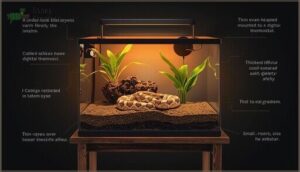
Your corn snake stays safest when the warm side is planned carefully from the ground up and remains stable. Use Under Tank Heaters or a Heat Mat beneath the Basking Zone to create a reliable, gentle Temperature Gradient.
- Prioritize Thermostat probe placement; Thermostat Control follows.
- Confirm Heat mat flatness.
- Maintain Cable routing safety.
- Use Substrate thickness control, Airflow clearance together wisely.
Using Thermostats to Prevent Overheating
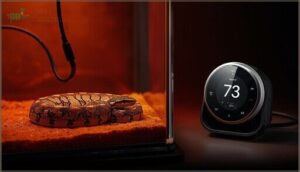
Once your Under Tank Heater and Heat Mat are in place, Thermostat Control manages the dangerous work for you.
Through smart Temperature Control, it uses Cycling Frequency, Power Modulation, and careful Probe Placement, so Cutoff Settings catch trouble early and Fail‑Safe Testing still feels calm.
| Key | Action | Feeling |
|---|---|---|
| Probe | Adjust daily | Safer |
| Cutoff | Limit | Cooler |
| Thermostat | Check | Peace of mind |
Monitoring With Thermometers and Hygrometers
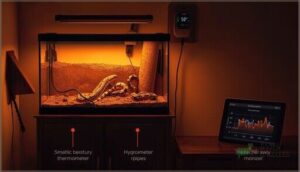
Your thermostat sets the rules; thermometers and hygrometers confirm reality. Good Sensor Placement means digital thermometers with a probe on the warm end at level and another on the cool side to map the temperature gradient. A hygrometer sits away from heaters for humidity control.
Add Data Logging, a simple Calibration Routine, Humidity Alerts, Trend Analysis, and a backup thermometer.
Common Heating Mistakes and How to Avoid Them
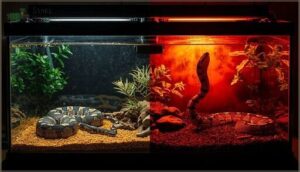
Even with the best intentions, heating mistakes are one of the easiest ways to harm a corn snake. The good news is that most problems come from a few common issues that you can easily prevent once you know what to look for.
Next, you’ll see the most frequent heating errors keepers make and how to avoid them in your own setup.
Dangers of Not Using a Temperature Gradient
Although under tank heating helps, skipping a clear temperature gradient undermines snake health and thermoregulation.
- Digestive Delay and Metabolic Slowdown when no reliably warmer area exists above heat mats.
- Shedding Complications as flat temperatures prevent skin loosening.
- Immune Suppression from long periods in too cool or too warm conditions.
- Behavioral Stress as your snake can’t choose comfort, reducing natural activity.
Recognizing Signs of Overheating or Stress
When your setup drifts, the temperature gradient can shift from helpful to harmful if the heat source isn’t controlled by a thermostat.
Watch for Glassy eye, Reduced tongue‑flick, Sluggish movement, and repeated Cool‑side retreat instead of use of the basking spot.
Over time, these signs pair with Shedding problems, especially when there’s no night drop to let the snake reset.
Routine Maintenance for Safe Heating Systems
Small lapses add up, so build routine Enclosure Maintenance into your week for safer Temperature Management.
- Do Thermostat Calibration Checks so Thermostatic control stays accurate.
- Pair each Heat source with routine Heater Cord Inspection.
- Keep UnderTank Heaters flat; add Surface Contact Cleaning.
- Review substrate depth; Substrate Heat Transfer remains stable.
- Maintain a simple Device Replacement Schedule to retire unreliable heaters.
Frequently Asked Questions (FAQs)
Do corn snakes need Heat mats?
Like choosing heaters, corn snakes don’t need heat mats.
Under tank heating or Heat mat alternatives work if Thermostat placement, thermostats, Warm hide design, Substrate heat retention, Energy efficiency, temperature gradient, and reptile care align.
How do you heat a corn snake?
You heat a corn snake with under tank heating heat mats and Heat Mat Placement, Thermostat Calibration, ceramic heat emitters.
You also provide a temperature gradient respecting Substrate Conductivity, Basking Spot Creation, Nighttime Cooling Strategies, and thermostats.
Do corn snakes need a heat lamp?
Ironically, corn snakes don’t need a heat lamp if under tank heating and a temperature gradient provides thermoregulation.
Basking Spot Placement, Heat Lamp Wattage, Daylight Cycle Impact, Heat Lamp Safety, Alternative Light Sources, controlled heat source.
Do corn snakes need a tank?
Yes, every Corn Snake needs a secure enclosure, not loose housing.
Enclosure Size: focus on Glass vs Plastic, Ventilation Needs, Escape Prevention, Substrate Choice, plus reliable Under Tank heating, Thermostat, and Temperature Control Heat Source.
What backup heating options help during power outages?
When the lights take a nap, Propane Heater, Wood Stove, and Kerosene Heater help, while Generator Backup runs Ceramic Heat Emitters, Under Tank heating, Reptile heat mats through a Battery Thermostat, Thermostat, and Heat source.
Which substrates work best with under tank heaters?
Coconut fiber, cypress mulch, and aspen shavings all transfer warmth well from an under tank heater.
Keep substrate depth at 1–2 inches. Hemp bedding and paper towel work too, while supporting humidity control.
How does room temperature affect under tank heater performance?
Room temperature directly affects how hard your tank heater works. Cold rooms increase ambient heat loss, forcing longer run cycles and higher energy consumption.
Keep your space above 65°F for stable temperature control.
Conclusion
Your corn snake needs both freedom and limits, and heat is where those opposites meet. By answering the quiet question, “Do corn snakes need under tank heating?” you’ve learned how to give your snake choices instead of chances.
A clear gradient, reliable thermostat, and accurate probes turn guesswork into routine care. When the warm side, cool side, and hides feel intentional, you can relax, knowing your setup is working with your snake, not against them.
- https://reptifiles.com/corn-snake-care-guide/corn-snake-temperatures-humidity/
- https://www.thebiodude.com/blogs/snake-caresheets/care-guidelines-for-corn-snakes
- https://www.youtube.com/watch?v=at9jHAwi8gM
- https://www.rspca.org.uk/adviceandwelfare/pets/other/cornsnake
- https://www.herps-and-inverts.com/corn-snake-temperature-and-humidity/