This site is supported by our readers. We may earn a commission, at no cost to you, if you purchase through links.

You can’t rush thawing a frozen mouse—not if you want your snake to eat it. Snakes detect prey through heat signatures, and a cold rodent from the freezer might as well be invisible.
Improper frozen snake food preparation doesn’t just lead to rejected meals; it creates real risks, from bacterial contamination during unsafe thawing to mouth burns when prey gets overheated.
The difference between a successful feeding and a frustrating one often comes down to temperature control and handling technique. Getting these fundamentals right protects both you and your snake while making mealtimes straightforward and stress-free.
Table Of Contents
Key Takeaways
- Frozen rodents eliminate bite injuries and reduce parasite transmission while maintaining full nutritional value, making them safer and more practical than live prey for regular snake feeding.
- Proper thawing temperature between 95-105°F is critical because snakes detect prey through heat signatures, and cold rodents trigger refusal while overheated ones cause mouth burns.
- Cross-contamination prevention requires dedicated preparation areas, leak-proof double-bagging during storage, and immediate surface disinfection with bleach solution after handling frozen prey.
- Feeding success depends on matching prey size to your snake’s body mass (10-15% of body weight), using feeding tongs for safe presentation, and tracking weight changes to detect health issues early.
Why Choose Frozen Snake Food?
Choosing what to feed your snake is one of the most important decisions you’ll make as a keeper. While live prey might seem like the “natural” choice, frozen rodents offer significant advantages that benefit both you and your snake.
Let’s look at why more keepers are making the switch to frozen food.
Benefits Over Live Prey
Switching to frozen rodents protects your snake from the injuries live prey can inflict. You’ll also reduce parasite exposure and disease transmission, since freezing eliminates many pathogens that live rodents carry. The nutritional value remains intact—frozen prey delivers the same proteins, fats, and minerals your snake needs. Frozen rodents also offer consistent food availability.
- Injury Prevention: Live rodents bite and scratch, causing serious wounds
- Parasite Reduction: Freezing kills many parasites that live prey harbor
- Disease Control: Fewer zoonotic diseases like salmonella with prekilled prey
- Nutritional Value: Frozen rodents retain essential nutrients after proper storage
Ethical and Safety Considerations
Beyond protecting your snake, frozen prey takes into account welfare concerns for the rodents themselves. Reputable suppliers follow humane rodent euthanasia standards that minimize suffering.
You’ll also reduce zoonotic diseases like salmonella risks—frozen feeders from ethical sources lower contamination compared to live prey. A key advantage is the reduced risk of injury to your snake.
Safe handling practices when thawing frozen reptile food protect your household, especially if children or immunocompromised family members share your space.
Convenience and Cost-effectiveness
Beyond safety, your wallet and schedule will thank you. Bulk purchasing frozen rodents—say, 100 mice at around $1.50 each—cuts costs dramatically. You’ll skip the expense of maintaining live colonies, plus save hours on trips to the store. Storage capacity in a single freezer replaces entire breeding racks. Long-term affordability improves when you order large shipments every few months, locking in prices and simplifying your routine.
- Order frozen rodents in bulk to reduce per-unit costs
- Eliminate recurring expenses like bedding and daily live-prey care
- Store months of food in minimal freezer space
- Save time with ready-when-needed thawing instead of frequent shopping trips
- Stabilize your feeding budget with predictable, periodic purchases
Selecting Quality Frozen Rodents
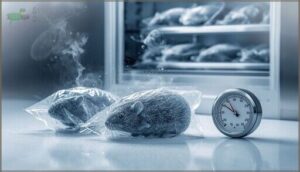
Not all frozen rodents are created equal, and the quality of what you feed your snake directly impacts its health and willingness to eat. Finding a reliable supplier and understanding what to look for takes some of the guesswork out of feeding time.
Let’s walk through the key factors that separate good frozen prey from products you’ll want to avoid.
Choosing Reputable Suppliers
Not all suppliers follow the same standards, so choosing food suppliers who prioritize ethical breeding and biosecurity measures makes a real difference. Look for operations with traceability standards and hygienic breeding practices—reputable suppliers often meet Association of Zoos and Aquariums guidelines or follow industry Best Management Practices.
Check handling practices, confirm consistent delivery time for bulk purchases, and ask about their quarantine protocols before committing.
Assessing Prey Size and Species
How do you match rodent prey to your snake’s actual needs? Selecting the right prey size and species protects your snake from regurgitation, digestive stress, and nutritional gaps. Here’s what matters:
- Prey bodyweight: Aim for 10–15% of your snake’s body mass per meal; smaller colubrids do well at 8–10%, while adult boas thrive around 2–6%.
- Girth vs. gape: Choose prey no wider than your snake’s thickest body section to prevent internal injury.
- Species selection: Corn snakes handle mice or small rats; ball pythons progress from hoppers to adult rats as they grow.
- Nutritional differences: Rats offer higher calcium than mice, supporting bone health in larger pythons and boas.
Oversized meals increase metabolic demands, compress lungs, and increase health risks—conservative sizing keeps digestion smooth and your snake thriving.
Understanding Food Labels and Terminology
Frozen reptile food labels decode what you’re actually feeding your snake. Look for guaranteed analysis figures—minimum protein and fat percentages tell you if rodent prey meets nutritional adequacy standards. Ingredient listing follows weight order, while storage instructions confirm proper freezer handling. Marketing claims like “whole prey” or frozen food terminology such as “fuzzy” describe developmental stages, helping you match size to your snake’s needs.
| Label Component | What to Check | Why It Matters |
|---|---|---|
| Guaranteed Analysis | Minimum protein (≥18%), fat (≥8%); maximum moisture (≤75%) | Ensures rodent prey delivers essential nutrients for growth and metabolism |
| Storage Instructions | “Keep frozen below 0°F”; thawing food guidelines | Prevents bacterial growth and maintains snake food quality |
| Ingredient Listing | Primary ingredient first (e.g., “whole mouse”) | Confirms you’re getting unprocessed rodent prey, not fillers |
| Prey Stage Terms | “Pinky,” “hopper,” “weaned,” “adult” | Matches prey size to your snake’s gape and dietary phase |
Safe Storage of Frozen Snake Food

Once you’ve got your frozen rodents, proper storage becomes your first line of defense against contamination and spoilage. Your freezer setup matters more than you might think—keeping snake food separate from human food isn’t just about the ick factor, it’s a genuine health requirement.
Let’s walk through the storage essentials that’ll keep your snake’s meals safe and your household protected.
Proper Freezer Temperature and Organization
Think of your freezer as the foundation of your feeding program—if temperature consistency isn’t right, everything else falls apart. Frozen food stays safe indefinitely at 0°F (−17.8°C), though proper food storage maintains feeding quality for about 3–6 months, depending on how often you open the door.
A well-organized freezer minimizes temperature fluctuations and preserves quality, ensuring your snake gets nutritious meals every time. Packaging methods matter just as much as temperature—double-bagging protects against moisture loss and keeps odors contained throughout the thawing food cycle.
Here’s how to organize your frozen snake food storage effectively:
- Set your freezer to 0°F or below and verify with an independent thermometer, since built-in gauges aren’t always accurate
- Store rodents in sealed, leak-proof double bags with air removed to prevent freezer burn during storage duration
- Keep animal food storage separate from human food areas to maintain hygiene standards
- Avoid overpacking your freezer—good air circulation prevents warm spots that compromise the thawing process later
- Label packages with dates so you can rotate stock and use older rodents first
Preventing Cross-contamination
Cross-contamination from frozen rodents can introduce bacteria directly into your household if hygiene practices aren’t followed. Food separation is your first line of defense—never store snake food alongside human items, and designate a specific thawing location away from kitchen prep zones.
Safe handling means treating every rodent as if it carries bacteria—because it often does.
| Safety Practice | What to Do | Why It Matters |
|---|---|---|
| Food Separation | Store rodents in double bags within a sealed container | Prevents germs from contacting human food |
| Thawing Location | Use disposable newspaper in a non-kitchen area | Limits bacterial spread during the thawing process |
| PPE Usage | Wear disposable gloves or use tongs | Reduces direct skin contact with bacteria |
| Surface Disinfection | Clean with 10% bleach solution after handling | Eliminates lingering bacteria on counters and tools |
| Hand Hygiene | Wash thoroughly with soap immediately after | Interrupts transmission pathways to prevent infection |
Storage Duration and Spoilage Signs
Even at ideal temperatures, frozen rodents won’t stay fresh forever—quality declines once you cross the six-month mark. You need to watch for warning signs that tell you when food has gone bad, whether it’s still frozen or already thawed.
- Freezer burn or ice crystals on the package signal repeated temperature fluctuations
- Sour odors or slimy texture after thawing confirm bacterial growth
- Discolored, dull eyes indicate the rodent has degraded past safe use
- Soft, mushy flesh suggests prior refreezing or improper storage conditions
Step-by-Step Thawing Methods
Thawing frozen rodents correctly is where safety and feeding success come together. The method you choose affects your snake’s willingness to eat, but also reduces the risk of bacterial growth and contamination.
Let’s walk through the safest approaches and the shortcuts you’ll want to avoid.
Refrigerator Thawing Process

Planning your snake’s meal begins with the refrigerator—the safest option among rodent thawing methods for preparing frozen rodents. Set your thawing temperature between 35–40°F to minimize spoilage risks while thawing duration ranges from two hours for mice to overnight for larger rats.
Seal frozen food in leak-proof packaging methods to prevent cross-contamination. This controlled approach ensures your prey is ready for the final warming integration step before feeding.
Cold Water Thawing Technique
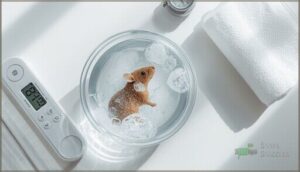
When you need a faster option than the fridge, cold water thawing gets your frozen rodents ready in about one to three hours. Submerge the sealed prey in water below 70°F, changing it every thirty minutes to keep contamination risks low.
This method balances speed with hygiene practices—just remember to dry the rodent with paper towels before feeding.
What to Avoid: Microwaves and Hot Water

While cold water works well, you’ll want to steer clear of microwaves and hot water altogether. Microwaves create uneven heating that can cause internal burns to your snake and spread Salmonella across your kitchen.
Hot water pushes rodent tissues into the bacterial growth danger zone—between 40°F and 140°F—where pathogens multiply rapidly. These shortcuts risk cross-contamination and quality degradation while compromising both your safety and your snake’s health.
Preparing Thawed Rodents for Feeding

Once your rodent is fully thawed, you’re not quite ready to toss it into your snake’s enclosure just yet. There are a few important steps that can make the difference between a successful feeding and a hungry, frustrated snake.
Let’s walk through how to get that thawed prey ready so your snake recognizes it as food and strikes confidently.
Ensuring Correct Prey Temperature
After you thaw your snake’s meal, getting the prey temperature right becomes essential for both feeding success and your pet’s safety. Snakes with heat-sensing pits respond best when rodents reach a suitable temperature near mammalian body heat—around 95–105°F—mimicking what they’d detect in the wild.
Key temperature considerations:
- Use warm water or heating pads to raise thawed rodents from room temperature to the target range, then verify multiple measurement points (head, body, hindquarters) with a digital thermometer
- Avoid overheating risks by keeping prey below painful-to-touch levels; excessively hot rodents can cause mouth burns and tissue damage
- Support healthy digestion impact by offering appropriately warmed food—cold prey slows gastric transit and increases regurgitation risk, especially when combined with low enclosure temperatures
Warming methods matter as much as the final reading, so skip microwaves that create dangerous hot spots.
Scenting and Braining Techniques
When your snake refuses a properly warmed rodent, scenting frozen prey can make all the difference. Rubbing the thawed mouse or rat with chicken, quail, or even soiled rodent bedding for one to two minutes adds olfactory cues that trigger strikes in reluctant feeders—especially hatchlings and wild-caught individuals. If scenting doesn’t work, you can brain the rodent by making a small puncture in the skull to expose brain tissue, intensifying the scent profile. This technique shows high success rates in young colubrids and pythons that initially refuse intact prey.
While scenting and braining help convert problem feeders, they’re temporary strategies. Most captive-bred snakes accept unscented frozen food once started early, so you won’t need these methods forever. Use dedicated tools and clean surfaces during preparation to prevent bacterial contamination, and offer brained prey promptly—exposed tissues spoil faster at room temperature.
Always prioritize underlying husbandry first; if your snake still refuses food despite proper temperatures and hiding spots, consider a veterinary check-up rather than repeated feeding attempts.
Using Tongs and Safe Handling Practices
By holding thawed rodents with feeding tongs—gripping the tail at 20–40 cm from your hand—you prevent snake bites and avoid zoonotic disease control issues linked to frozen prey.
Tong material safety matters: choose stainless steel or food-grade plastic, then wash in hot soapy water plus bleach solution after every use.
Proper bite prevention methods and post-feeding sanitation stop cross-contamination between reptile and human spaces, protecting everyone in your household.
Feeding Techniques for Snakes
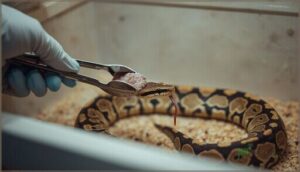
Getting the thawed rodent ready is only half the equation—how you present it to your snake makes all the difference. The feeding environment, your technique, and your timing can mean the difference between a successful meal and a frustrated reptile.
Let’s walk through the practical steps that’ll help your snake feed confidently and safely.
Setting Up a Feeding Enclosure
You can feed your snake inside its main habitat or in a dedicated feeding enclosure, which helps avoid substrate ingestion and reduces cleanup. If you choose a separate space, set it up carefully:
- Enclosure Size – Use a tub sized for secure striking without excess open space that might stress your snake.
- Hides Provided – Include at least one tight, secure hide so your snake feels protected.
- Thermal Gradient – Match the warm-side temperature (around 88–90°F) of your primary setup to support digestion.
- Substrate Choice – Line with paper towels or leave bare plastic to prevent bedding ingestion during swallowing.
Regardless of where you feed, have feeding tongs or feeding forceps ready for safe prey presentation, and establish cleaning protocols to disinfect surfaces after each meal.
Presenting Prey to Encourage Feeding
Once your rodent is warmed to about 30–37°C—matching typical mammalian body temperature—you’ll boost thermal cues that pit-bearing snakes use to detect prey. Gentle weaving motion mimics natural prey movement and often triggers an aggressive feeding response.
Grasp the thawed rodent firmly by its tail with feeding tongs or forceps, then lower it slowly into your snake’s space. The table below summarizes key feeding techniques:
| Cue Type | Method | Effect on Snake Feeding Behavior |
|---|---|---|
| Thermal | Warm prey to 30–37°C | Increases strike accuracy and frequency |
| Chemical | Scenting techniques (prey extract) | Elevates tongue-flick rate and investigation |
| Visual/Motion | Movement matters—slow weaving | Enhances strike probability when combined with heat |
After presenting prey, allow your snake time to inspect and strike. Biting position and handling time vary by individual, so be patient. Some snakes grab immediately, while others tongue-flick extensively before committing. Avoid sudden movements or disturbances that increase stress and reduce feeding likelihood.
Troubleshooting Common Feeding Issues
When your snake refuses thawed prey despite proper preparation, you’re facing one of several fixable issues. Environmental stressors—wrong temperatures, handling too soon after meals—rank among the top regurgitation causes and refusal reasons.
Changing prey types demands patience; scenting techniques combined with gentle weaving boost feeding response.
Persistent refusal signals health risks requiring veterinary attention, because aggressive feeding behavior shouldn’t disappear without cause.
Health and Safety Best Practices

Handling frozen rodents safely protects both you and your snake from potential health risks. Even though freezing reduces some hazards, frozen prey can still carry bacteria like Salmonella, so proper hygiene matters at every step.
Let’s walk through the essential practices that keep feeding time safe and your snake healthy.
Preventing Disease Transmission
Zoonotic risks aren’t something to shrug off—research shows snakes carry Salmonella at a 63.1% prevalence rate, making disease prevention a top priority.
Snakes carry Salmonella at a 63% rate, making disease prevention essential when handling frozen prey
Hygiene practices like thorough handwashing after handling frozen rodents and your snake dramatically cut cross-contamination risks. Keep vulnerable family members—young children, pregnant individuals, or immunocompromised people—away from feeding tasks entirely.
Safe handling practices protect both you and your reptile from bacteria-related health outcomes.
Cleaning and Disinfecting Preparation Areas
Your preparation area can harbor bacteria for days if not cleaned properly—Salmonella lingers on dry counters for up to several days. Follow this cleaning sequence for disease prevention:
- Remove visible debris from surfaces
- Wash with hot, soapy water to eliminate fats
- Apply diluted bleach solution (1 tablespoon per gallon)
- Allow 1-minute contact time for surface disinfection
- Practice hand hygiene immediately after frozen food preparation
This safe handling practices routine prevents cross-contamination effectively.
Monitoring Snake Health and Appetite
Beyond clean surfaces, your snake’s ongoing health depends on careful observation. Track Feeding Records weekly for juveniles, monthly for adults—Weight Loss beyond 10% signals trouble. Watch for Behavioral Changes like excessive Postprandial Lethargy or reduced tongue flicking.
Normal snake behavior includes weeks between meals, but prolonged refusal with sunken eyes or wheezing demands Veterinary Intervention. Early detection of identifying snake illness protects your snake’s long-term wellbeing.
Frequently Asked Questions (FAQs)
Can I refreeze thawed rodents for later use?
That sealed freezer bag sits on your counter, and you’re wondering if it’s safe to tuck it back in. Generally, no—once thawed, bacterial growth and spoilage signs make refreezing risky for both feeding quality and rodent safety.
How often should I feed my snake?
Snake feeding frequency depends on your pet’s age, size, and species. Hatchlings usually eat every 5–7 days, juveniles every 7–14 days, and adults every 14–21 days, adjusting for body condition and health impacts.
What if my snake refuses frozen food entirely?
Don’t throw in the towel if your snake won’t eat frozen rodents. Adjustment techniques like scenting prey, adjusting husbandry factors, and monitoring refusal timeframes can help.
Persistent issues warrant veterinary evaluation to rule out illness.
Should I remove uneaten prey from the enclosure?
Yes, always remove uneaten prey within 30 to 60 minutes. Leaving thawed rodents creates injury risks from defensive bites, fuels bacterial growth and odor, and invites Salmonella outbreaks—refreezing isn’t safe either.
Conclusion
Your snake’s feeding response happens to depend on the same fundamentals that protect its health: proper temperature and contamination-free handling. Master frozen snake food preparation by controlling these variables consistently—thaw gradually in cold water, verify warmth before presenting prey, and maintain sterile preparation surfaces.
When you align your technique with your snake’s biological needs, feeding becomes predictable rather than problematic. The methods covered here aren’t complicated; they’re simply deliberate, and that precision makes all the difference.
- https://pubmed.ncbi.nlm.nih.gov/18811909/
- https://polarrodents.com/pages/frozen-rodent-handling
- https://allanspetcenter.com/the-comprehensive-guide-to-transitioning-your-snake-to-frozen-food/
- http://blogs.thatpetplace.com/thatreptileblog/2014/07/11/thawing-frozen-mice-and-rats-for-snakes-and-other-reptiles/
- https://www.youtube.com/watch?v=ov70V8y09Ig