
This site is supported by our readers. We may earn a commission, at no cost to you, if you purchase through links.

Your new ball python hatchling arrives, and you’re staring at a pinkie mouse wondering if it’s too big, too small, or just right. Get it wrong, and you risk regurgitation, choking, or a hatchling that refuses to eat for weeks.
The difference between a healthy feeding and a trip to the exotic vet often comes down to a single measurement: the width of your snake’s body at its thickest point. Most new keepers eyeball it and hope for the best, but hatchling snake food size isn’t guesswork—it’s a science with clear rules that vary by species.
Understanding how to match prey dimensions to your hatchling’s girth protects both your snake’s health and your peace of mind during those nerve-wracking first feedings.
Table Of Contents
- Key Takeaways
- What Determines Hatchling Snake Food Size?
- Measuring Your Hatchling Snake Correctly
- Recommended Food Sizes for Popular Species
- Types of Appropriate Hatchling Prey
- Feeding Frequency and Portion Adjustments
- Safety Tips for Feeding Hatchlings
- Common Feeding Problems and Solutions
- Frequently Asked Questions (FAQs)
- Conclusion
Key Takeaways
- Proper hatchling snake food size means matching prey width to the snake’s widest body point (typically mid-body girth), with prey measuring approximately 1 to 1.5 times that width to prevent choking, regurgitation, and digestive complications.
- Species-specific feeding requirements vary significantly—ball python hatchlings typically start with 1-1.5 gram pinkie mice, corn snakes with 0.6-0.9 gram pinkies, and boa constrictors with 0.8-1.0 gram prey—so always reference guidelines specific to your snake’s species.
- Frozen-thawed prey offers safer feeding than live options by eliminating bite risks to hatchlings while providing consistent sizing and nutritional value, though some snakes may initially require scent cues to accept pre-killed food.
- Monitor your hatchling’s growth every 1-2 weeks and adjust prey size when you notice a 10-20% increase in mid-body width, feeding refusal of current prey size, or visible swallowing difficulty during meals.
What Determines Hatchling Snake Food Size?
Getting the food size right isn’t just about what looks appropriate—it’s about understanding your snake’s body structure and species-specific needs. The general rule is to match prey size to your hatchling’s girth, but several factors influence exactly what that means for your particular snake.
If your snake consistently refuses oversized prey, it’s a clear signal that you’ve misjudged the measurements and need to downsize immediately.
Let’s break down the three main considerations that determine proper food size for your hatchling.
Body size is the foundation—properly matching prey to your snake’s measurements prevents choking risks and ensures healthy digestion as they develop.
Importance of Matching Prey to Girth
Getting prey size right isn’t just about feeding—it’s about keeping your hatchling safe. When prey girth matches the widest part of your snake’s body, digestion flows smoothly and regurgitation risk drops.
A well-planned corn snake diet and nutrition schedule helps you choose appropriately sized meals as your hatchling grows.
Proper prey sizing protects your hatchling by ensuring smooth digestion and preventing dangerous regurgitation
Oversized pinkie mice or rodents can cause your snake to struggle during swallowing, leading to stress, incomplete digestion, or even injury. Proper girth measurement ensures snake nutrition fosters healthy growth from day one.
Species-Specific Size Considerations
Not all hatchlings eat the same. Ball python hatchlings usually handle pinkie mice matching their midbody girth, while corn snake hatchlings thrive on similarly sized prey but with faster prey scaling as snake growth rates accelerate. Boa constrictor babies need proportionally smaller food despite their size.
Species nutrition demands vary, so feeding charts and size guidelines customized to your snake’s species prevent missteps in your feeding schedule.
Risks of Improper Prey Size
Matching prey size isn’t just about comfort—your snake’s health depends on it. Too large, and you risk regurgitation, digestive issues, or feeding complications. Too small, and nutrient deficiencies slow growth. You’ll want to avoid these common problems:
- Regurgitation Causes
- Feeding Complications
- Digestive Issues
- Nutrient Deficiencies
- Stress from improper prey size
Measuring Your Hatchling Snake Correctly
Getting the right measurement is key before you pick out food for your hatchling snake. You’ll want to know exactly where and how to measure so you can make smart choices. Here’s what to focus on as you get started.
Most keepers measure their snake’s widest body point to choose prey that’s about the same thickness—understanding proper snake feeding prey thickness helps you avoid digestive issues during those early weeks.
Identifying The Widest Body Part

Ever wondered why your hatchling’s mid-body is the star player in Body Measurement? That’s where Digestive Capacity peaks, and Circumference Analysis matters most.
For Girth Calculation, focus on Midpoint Identification—just behind the head, before the tail tapers. This ensures your pinkie mice or other snake food matches prey size safely, supporting the feeding schedule without risking regurgitation or choking.
Tools and Techniques for Measurement

With snake feeding, accuracy matters—especially when choosing prey size for your hatchling. For Girth Measurement, use Caliper Tools or a Flexible Tape, wrapping gently at the widest spot. Precision Scales help confirm consistency. Digital Monitoring lets you track changes over time. Forceps are handy for safe handling. These feeding techniques keep your feeding schedule on track and your snake thriving.
- Caliper Tools
- Flexible Tape
- Precision Scales
- Digital Monitoring
- Forceps
Common Mistakes to Avoid

Too often, Feeding Errors start with misjudging prey size or skipping regular measurement. If you pick food that’s too large, you risk regurgitation, Digestive Problems, and Snake Malnutrition. Undersized prey leads to Nutrient Deficiencies and slow growth.
Understanding how long ball pythons can safely go without eating helps you recognize when feeding refusal becomes a genuine health concern versus normal fasting behavior.
Prey Size Issues also crop up when you ignore changes in girth as hatchlings mature—so always weave measurement into your feeding schedule.
Recommended Food Sizes for Popular Species
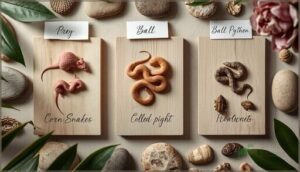
Every snake species has its own ideal food size, especially when they’re just starting out. You’ll want to match prey carefully to keep your hatchling healthy and growing.
Here’s what you should look for with the most common pet snakes.
Ball Python Hatchlings
Did you know Ball Python hatchlings thrive on prey just 1/4 to 1/3 their girth? For solid Snake Nutrition and Hatchling Care, start with neonate mice around 1–1.5 grams.
Stick to one prey per feeding, matching the widest part of your baby snake’s body. This Python Feeding approach keeps digestion smooth and promotes strong Snake Health in young reptiles.
Corn Snake Hatchlings
Curious how Corn Snake hatchlings build strength? Start with pinkie mice weighing just 0.6–0.9 grams. This approach to Hatchling Care and Snake Nutrition keeps digestion gentle and growth rates steady.
Use Feeding Techniques like offering live prey first, then frozen-thawed, and adjust your feeding schedule based on Health Monitoring—watch for consistent meals before increasing snake food size.
Boa Constrictor Hatchlings
Ever wondered how Boa Nutrition sets the stage for healthy Constrictor Behavior? For hatchlings, start with pinkie mice weighing 0.8–1.0 grams. Hatchling Care means matching prey to your baby snake’s widest girth. Use these Feeding Techniques:
- Feed every 5–7 days.
- Offer one prey item per meal.
- Monitor digestion closely.
- Increase size gradually for ideal Snake Health.
Other Common Pet Species
Think of small colubrids and exotic hatchlings as threads in a tapestry—each with unique feeding needs. For Pet Snake Care, start with pinkie mice or feeder mice weighing 0.5–1.0 grams. Reptile Nutrition means matching prey size to the widest girth.
Here’s a quick table for reference:
| Species | Prey Type | Prey Weight (g) |
|---|---|---|
| Small Colubrid | Pinkie mice | 0.5–1.0 |
| Kingsnake | Feeder mice | 1.0–1.5 |
| Milk Snake | Pinkie mice | 0.6–1.2 |
Types of Appropriate Hatchling Prey

Choosing the right prey for your hatchling is key to healthy growth. You’ll find several safe options that match their nutritional needs and size.
Let’s look at the most suitable choices for young snakes.
Pinkie Mice and Rodents
Pinkie mice are your go-to feeder for most hatchlings. These newborn rodents, usually 3–6 cm long and weighing 16–25 grams, offer balanced protein and fat for reptile hatchling nutrition.
Source them from reputable rodent breeding operations with documented health checks to guarantee proper prey nutrition.
Frozen-thawed pinkies reduce bite risks compared to live snake food, supporting digestion health when you match size to your hatchling’s girth using proper feeding techniques.
Earthworms and Insects
Earthworms offer noteworthy earthworm benefits through high moisture content and easily digestible protein that aids reptile hatchling nutrition. Insects provide feeding variety with diverse size ranges matching small hatchling girths perfectly.
These invertebrates deliver hatchling enrichment while meeting your snake nutrition guide requirements.
Guarantee invertebrate safety by choosing appropriately sized prey—insect nutrition varies by species, so confirm your hatchling’s tolerance before introducing new feeders.
Small Lizards and Alternatives
Some hatchlings accept small lizards as alternative diets, expanding prey variety beyond pinkie mice and earthworms. This feeding enrichment boosts your snake nutrition guide options when traditional snake food isn’t available. Consider these lizard nutrition factors:
- Choose captive-bred lizards sized to your hatchling’s girth for reptile hatchling nutrition safety.
- Monitor live feedings closely to prevent injury.
- Rotate insect options alongside lizards to maintain balanced hatchlings’ diets.
Live Vs. Frozen-Thawed Options
Beyond prey variety, you’ll face a key decision: live prey or frozen-thawed options. Both have trade-offs affecting snake nutrition and feeder safety.
| Factor | Live Prey | Frozen-Thawed |
|---|---|---|
| Safety | Bite risk to hatchlings | No injury risk |
| Convenience | Requires immediate feeding | Store long-term |
| Acceptance | Triggers hunting instinct | May need scent cues |
Frozen prey reduces digestion issues and simplifies your feeding schedule through consistent sizing.
Feeding Frequency and Portion Adjustments

Getting the feeding schedule right is just as important as choosing the correct prey size. Your hatchling’s age and growth rate will determine how often you feed and when to move up in prey size.
Let’s break down the timing and adjustments you’ll need to make as your snake matures.
Initial Feeding Schedules
You’ll start your baby snake on weekly feeding trials with live prey matching its girth—usually one pinkie mouse per session.
Most hatchlings thrive on a feeding schedule of every 5–7 days, but watch your snake’s growth rates and appetite closely.
Keep each feeding window between 10–15 minutes to prevent stress, and if regurgitation occurs, reassess prey size before continuing.
Adjusting Size as Hatchlings Grow
Growth monitoring drives your prey selection as your baby snake develops. Measure your hatchling’s girth every 1–2 weeks, then adjust pinkie mice size to match that widest point—aim for prey about 1.5 times the snake’s width.
Faster early growth means more frequent size adjustments on your feeding schedule. This feeding technique ensures digestion optimization without overwhelming your snake’s swallowing capacity.
Signs Your Snake Needs a Size Change
Your baby snake shows clear feeding cues when it’s ready for bigger prey. Watch for these growth indicators that signal a prey selection adjustment:
- Hesitation or refusal of smaller rodents after several successful meals
- A 10–20 percent increase in mid-body width over a few sheds
- Longer intervals between feedings as your hatchlings mature
- Visible swallowing difficulty or misalignment during feeding attempts
These snake behavior changes prevent digestion issues while supporting healthy development.
Safety Tips for Feeding Hatchlings
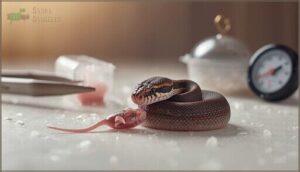
Feeding your hatchling snake isn’t just about choosing the right size—it’s about doing it safely. A few simple precautions can prevent choking, regurgitation, and other health problems that new snake owners often face.
Here’s what you need to watch for to keep your hatchling safe during feeding time.
Avoiding Choking and Regurgitation
The right prey size isn’t just about nutrition—it’s about preventing life-threatening complications. Keep prey width under 1.5 times your hatchling’s girth to minimize airway obstruction and avoid digestive strain that triggers regurgitation.
| Risk Factor | Safe Practice | Warning Sign |
|---|---|---|
| Oversized prey | Measure girth; choose appropriately | Repeated gagging during feeding |
| Hard skeletons | Start with soft pinkies | Partial captures or prey rejection |
| New food types | Introduce gradually | Vomiting within 48 hours |
Pre-killed options reduce gulping accidents in baby snakes. Watch for normal jaw movement—smooth swallowing means you’ve nailed the prey size limits for ideal digestive health.
Selecting Safe, Healthy Prey
Your hatchling’s health hinges on prey quality as much as size. Captive-bred rodents from reputable sources minimize disease risk and parasite exposure that wild prey carries. Here’s how to choose safe snake food for your baby snake:
- Source whole animal prey from established breeders with health certifications
- Avoid recalled or contaminated prey items to protect reptile wellness
- Skip wild-caught options that may harbor environmental toxins
- Verify prey contains no unapproved antibiotics for snake nutrition
- Watch your hatchling after feeding for stress signals indicating feeding safety concerns
Monitoring for Adverse Reactions
Even a perfect meal can trigger problems if your hatchling’s body can’t handle it. Watch for regurgitation, vomiting, or lethargy within 24 hours of feeding—these digestive issues signal feeding stress that demands immediate attention. Reaction timing is crucial for animal health and proper snake nutrition.
Stable temperatures and humidity are key to preventing most adverse reactions before they start.
| Warning Sign | What It Means |
|---|---|
| Regurgitation signs (excessive swallowing, moisture near mouth) | Prey too large or temperature incorrect |
| Sudden weight loss over 1–2 weeks | Metabolic issue needing veterinary care |
| Sunken eyes, tacky skin | Dehydration causes requiring prompt assessment |
| Reduced activity post-feeding | Possible digestive distress |
| Repeated failed feeding attempts | Housing stress or improper enclosure conditions |
Common Feeding Problems and Solutions
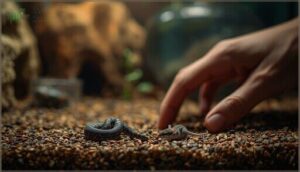
Even experienced keepers run into feeding hiccups with hatchlings from time to time. Most problems trace back to prey size, but sometimes stress or health issues play a role too.
Here’s how to troubleshoot the most common challenges and know when it’s time to get professional help.
Refusal to Eat Due to Prey Size
One of the most frustrating feeding refusal scenarios happens when prey size doesn’t match your snake’s girth. Hatchlings often refuse prey that’s too large, instinctively recognizing they can’t safely swallow it.
This feeding refusal can spiral into appetite stimulation challenges if you don’t correct prey size issues quickly. Measure your snake’s widest body part and choose rodents no larger than that dimension to prevent ongoing snake nutrition problems.
Digestive Issues From Oversized Prey
When you feed prey that’s too large, your hatchling faces serious regurgitation risks and digestive blockage. Oversized meals impair stomach emptying, forcing the snake to bring food back up—a stressful event that weakens young reptiles.
Digestive issues from feeding complications include bloating, lethargy, and impaired growth over time. Proper snake care and feeding means matching prey to girth, protecting your hatchling’s reptile nutrition and health from preventable stomach problems.
When to Consult a Veterinarian
Sometimes feeding problems point to deeper animal health concerns that require veterinary medicine and care. If your hatchling refuses food for a week or more, regurgitates repeatedly, or shows lethargy and weight loss, seek veterinary care immediately.
Emergency signs like severe bloating, abnormal stool, or respiratory symptoms need diagnostic tests and treatment options only a vet can provide for proper snake health.
Frequently Asked Questions (FAQs)
How does temperature affect hatchling appetite and digestion?
Your hatchling may refuse food despite hunger—temperature controls everything.
Warmer conditions within the thermal optimum accelerate digestion rates and trigger appetite shifts, while cold temperatures slow gut transit and suppress feeding interest in hatchlings.
Can hatchlings eat different prey types simultaneously?
Yes, your hatchling can handle different prey types in one feeding if each item fits within digestive limits.
This feeding strategy fosters prey variety and nutrition balance, promoting healthy snake development when done cautiously.
Do hatchlings need vitamin or mineral supplements?
Most hatchling snakes don’t need vitamin supplements when you’re offering varied, appropriately sized prey. Over-supplementation risks vitamin toxicity and mineral balance problems. Add calcium or multivitamin products only with veterinary guidance for diagnosed nutrient deficiencies.
How does shedding cycle impact feeding schedule?
Your snake’s shed cycle dramatically shifts feeding patterns. During pre-shed, skip large meals to minimize regurgitation risk. Post-shed, digestion rates improve, so you can resume your normal schedule confidently.
Should water availability change around feeding time?
Keep fresh water available at all times, even during feeding schedules. Your snake’s hydration needs increase after meals to support the digestion process, so continuous water access guarantees proper snake hygiene and healthy hatchling snake development.
It’s essential to follow proper reptile care guidelines to guarantee the overall health of your snake.
Conclusion
Getting hatchling snake food size wrong isn’t just a mistake—it’s a health crisis waiting to happen. But armed with the girth measurement rule and species-specific guidelines, you’ve eliminated the guesswork.
Your hatchling’s first meals set the foundation for lifelong feeding success. Measure carefully, start conservatively, and watch your snake’s body language after each feeding.
Those nervous first feedings transform into routine care once you master the fundamentals. Your confidence grows with every successful meal.
- https://www.virginiaherpetologicalsociety.com/reptiles/snakes/corn-snake/
- https://www.facebook.com/groups/208947797604322
- https://www.reptifiles.com/best-reptile-food/
- https://www.sciencedirect.com/science/article/pii/S0749208123000268
- https://pmc.ncbi.nlm.nih.gov/articles/instance/9553038/bin/pone.0275964.s005.docx