This site is supported by our readers. We may earn a commission, at no cost to you, if you purchase through links.

A hatchling corn snake is thinner than a pencil, yet it can swallow a pinky mouse nearly as wide as its own body. That’s the surprise of feeding baby snakes: tiny predators, big appetites, and almost no room for error.
Get the prey size, the schedule, or the enclosure temperature wrong, and your snake may refuse the meal or regurgitate it. Get them right, and you’ll watch a 7-day-old hatchling grow into a confident, sturdy feeder.
This baby snake feeding guide gives you the exact prey sizes, timing, and thawing steps that keep every meal safe.
Table Of Contents
- Key Takeaways
- What to Feed Baby Snakes: Prey Types and Sizes
- Baby Snake Feeding Schedule: First Meals and Age-Based Adjustments
- Before Feeding: Check Temperature, Hydration, and Hides
- How to Feed Baby Snakes Safely: Thawing, Tongs, and Aftercare
- Baby Snake Feeding Problems: Monitor Growth and Adjust Meals
- Frequently Asked Questions (FAQs)
- How much do I feed a baby snake?
- What should baby snakes eat?
- When to feed baby snakes?
- How much should a baby snake eat?
- What can I feed my baby snake for the first time?
- How do I tell if my baby snake is hungry?
- How often should I feed my juvenile milk snake?
- Can baby snakes eat fruit or vegetables?
- How do I know if my snake is sick?
- What temperature should the feeding area be?
- Conclusion
Key Takeaways
- Match your snake’s prey to its widest midbody point, weighing about 10-15% of its body weight, and start with species-appropriate food like pinky mice for corn snakes.
- Wait for the first shed (usually 7-10 days after hatching) before the first meal, then feed every 5-7 days and adjust by weekly weight gain rather than the calendar.
- Keep the warm side at 80-90°F with proper hides and water, since a cold enclosure stalls digestion and is a common reason snakes refuse food or regurgitate.
- Feed thawed prey warmed to about 95-100°F with long tongs, then leave your snake alone for 48 hours, and call a reptile vet if you see wheezing, lasting swelling, or repeated regurgitation.
What to Feed Baby Snakes: Prey Types and Sizes
Feeding a baby snake starts with the right prey, sized the right way. Below, you’ll find two points that cover species-specific diets and whole-prey nutrition. Read them before you thaw your first mouse.
If you’re still choosing a first pet, common snake species for small apartments tend to stay compact and need modest prey, which keeps feeding simple.
Species-Specific Diets and Prey Sizing

Hatchlings thrive on species-specific diets, so choose well. Match prey size proportionality to your snake, using appropriately sized whole prey no wider than the snake’s widest midbody area.
- Corn snakes: pinky mice
- Ball pythons: rat fuzzies or mouse hoppers
- Garter snakes: earthworms
- Hognose snakes: slugs
- Arboreal hatchlings: tiny lizards
Upsize as your snake grows. For extra precision, offer prey weighing about 10-15% of your snake’s body weight and pair that with the widest-point sizing rule.
Whole-Prey Nutrition and Supplement Needs

Once you’ve nailed prey size proportionality, you can relax about extras. Whole prey nutrition covers it all. Muscle, bone, fat, and organs deliver protein, vitamins, and your snake’s calcium requirements in one tidy package.
Since whole prey already balances calcium and phosphorus, most keepers only need to fine-tune feeding frequency by age, which this proper snake nutrition guide walks through step by step.
Skip routine vitamin supplementation. Stick to your feeding schedule, offer quality rodents, and never swap in chicken breast, which lacks calcium. Nature takes care of the rest nicely.
Baby Snake Feeding Schedule: First Meals and Age-Based Adjustments

Now that you’ve matched prey size to your snake, it’s time to build a feeding schedule you can stick to. This baby snake feeding guide keeps it simple.
Wait for the first shed before offering a meal. That’s usually 7 to 10 days after hatching, once the yolk reserves are used up. Feeding earlier wastes prey and stresses your snake.
Hatchlings eat every 5 to 7 days. Juveniles, around 6 to 12 months, usually move to every 7 days, then every 7 to 10 days as growth slows. Sub-adults can stretch to 10 to 14 days.
Treat feeding frequency by age as a starting point. Watch weight gain and body condition, then adjust. Your snake’s body always beats the calendar.
Feeding schedules are only a starting point, so watch your snake’s weight and condition, because its body always outranks the calendar
Before Feeding: Check Temperature, Hydration, and Hides

You’ve got your schedule. Now check the habitat setup before any meal hits the enclosure. A hungry snake in the wrong conditions still can’t digest.
Temperature gradients, humidity, and hiding spots all shape appetite, so fixing common snake husbandry mistakes is often the quickest way to get a reluctant eater back on track.
Start with temperature regulation. Put one thermometer on the warm side and one on the cool side. Aim for 80 to 85°F on the warm end for temperate species, or 75 to 90°F for tropical ones. Make sure the gradient isn’t reversed. Snakes need external heat to digest, so a cold enclosure means a stalled meal.
Next, handle hydration methods. Offer fresh water in a sturdy bowl on the cool side, big enough for a soak. Watch for wrinkled skin.
Count your hides. Give your snake one on each side, snug enough to touch every wall. Add a humid hide with damp moss. Then skip handling, feed only once your snake settles, and keep tong use calm.
How to Feed Baby Snakes Safely: Thawing, Tongs, and Aftercare
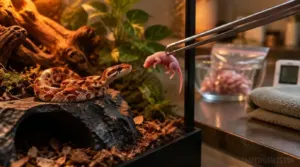
How do you keep a tiny hatchling safe at mealtime? Start with smart thawing frozen prey habits, and the rest gets easy.
Thaw frozenthawed rodents in the fridge overnight. Just before feeding, seal them in a bag and warm them in 38-43°C water for 20-40 minutes. Never microwave them.
Follow these feeding techniques:
- Pat the prey dry and check it feels warm, around 95-100°F.
- Grip it with long feeding tongs.
- Wiggle it gently in your snake’s line of sight.
- Discard leftovers after 15-20 minutes.
Good feeding safety doesn’t stop at the meal. Wash your hands and wipe down surfaces. Then leave your snake alone for 48 hours, since handling is a top cause of regurgitation. Calm routines build confident eaters.
Baby Snake Feeding Problems: Monitor Growth and Adjust Meals

Even healthy baby snakes hit rough patches at mealtime, and you’ll want to spot them early. Below, you’ll find three common problems: food refusal, regurgitation, and slow weight gain. Each one comes with clear steps so you can fix it fast and keep your hatchling thriving.
Food Refusal and Safe Scenting
Feeding refusal doesn’t mean failure. Check temperatures first, then try a gentle scenting technique. A set of long reptile feeding tongs keeps your hands safely back while you wiggle scented prey convincingly.
| Step | Action | Why |
|---|---|---|
| 1 | Dab prey with lizard scent | Familiar smell |
| 2 | Wiggle with feeding tongs | Triggers strike |
| 3 | Match prey size | Easier swallowing |
Wait a few days between offers. Keep growth monitoring weekly. Patience beats panic, just like a quiet tide wearing down stone.
Regurgitation and Veterinary Warning Signs
Your two-month-old corn snake gulps a pinky, then hurls it up that night. Scary, right?
A single regurgitation usually traces back to cold temps or early handling. Fix the heat, then wait.
Watch for these:
- Wheezing after vomiting
- Midbody swelling that won’t shrink
- Redness around the mouth
Call a reptile vet fast, because aspiration pneumonia and Cryptosporidium never wait around.
Weight Tracking and Portion Adjustments
Say your corn snake hatchling weighs 8 grams and eats a 1-gram pinky. Next week she’s 10 grams. That’s steady weight gain, so you’re on track.
Weigh her weekly, log every meal, and use a digital kitchen scale. Keep prey near 13-15% of her body weight. Follow this baby snake feeding guide, and tweak your feeding schedule if she’s lagging.
Frequently Asked Questions (FAQs)
How much do I feed a baby snake?
Picture a 20g hatchling corn snake. Offer a 10-15% prey weight, so a 2-3g pinky works. Match the prey size to your snake’s widest point, feed every 5-7 days, and track weight gain weekly.
What should baby snakes eat?
Think of your baby snake’s first meal as a handshake with its species. Match prey types to your snake. Corn snakes and ball pythons take pinkie mice; garter snakes want worms.
When to feed baby snakes?
A shed skin is a clean slate, and your hatchling’s first meal waits just beyond it. Offer food a few days after that first shed, about a week post-hatch. Stick to a feeding schedule of every 5 to 7 days.
How much should a baby snake eat?
Aim for prey weighing 13-18% of body weight. That prey size matches your snake’s girth and meets its nutritional needs.
Follow a feeding schedule of every five to seven days. Overfeeding risks regurgitation and obesity.
What can I feed my baby snake for the first time?
Think of that first meal as a tiny, cautious handshake. Offer one appropriately sized pinkie mouse, no wider than your snake’s widest midbody area. Frozen-thawed prey is usually safer than live. Warm it, hold it with tongs, and wait until about one month old.
How do I tell if my baby snake is hungry?
Picture a tiny hunter on patrol, gliding along the glass like a night watchman. That’s your hungry baby snake. It flicks its tongue fast, stares at movement, and coils in the open, ready to strike.
How often should I feed my juvenile milk snake?
Feed your juvenile milk snake every 7-10 days. That’s slower than hatchling feeding frequency, which means feeding every 5-7 days. Stick to this snake feeding schedule. Keep your juvenile reptile diet prey sized to girth.
Can baby snakes eat fruit or vegetables?
All 3,900-plus snake species are carnivores, and your hatchling is no exception. Skip fruit and veggies. Baby snakes can’t digest plants, so whole prey like pinkie mice, insects, or fish, matched to species, fuels growth.
How do I know if my snake is sick?
Watch stool quality, breathing, and dehydration signs like stuck shed. Mouth breathing, discharge, or regurgitation means act fast. Regurgitation prevention and vet-recommended diet transitions help, but they won’t cure illness. Call a reptile veterinarian today.
What temperature should the feeding area be?
Picture a corn snake hatchling curled on a 78°F floor, ignoring its pinky. Fix the heat and it eats. Keep the warm side at 85°F, with a basking surface of 88-90°F, so digestion runs smoothly.
Conclusion
Picture a hatchling ball python named Biscuit, coiled in her hide, ignoring three offered mice. Her keeper checked the warm side, bumped it to 88°F, and tried again the next evening. She struck, swallowed, and settled.
That’s the lesson. Use this baby snake feeding guide as your routine: right-sized prey, steady temperatures, patient timing, and a weekly weigh-in. Small habits make sturdy snakes. Feed with care, and your tiny predator grows into a confident eater.