This site is supported by our readers. We may earn a commission, at no cost to you, if you purchase through links.

A boa constrictor’s comfort depends on more than a warm corner and a working heat lamp. In the wild, these snakes spend their days weaving between sun-drenched rocks and cool, shaded hollows, fine-tuning their body temperature with precision. Miss the mark in captivity, and you’ll see the effects—sluggish feeding, stubborn sheds, even dangerous infections.
Heating for boa constrictors isn’t guesswork; it’s a careful balance of gradients, equipment, and routine checks. When you understand how to shape their environment, you create a space where your boa thrives, not just survives. Let’s break down the essentials for safe, effective temperature control.
Table Of Contents
Key Takeaways
- Boa constrictors need a thermal gradient in their enclosure, with basking zones and cool retreats, to regulate body temperature and support digestion, immunity, and shedding.
- Safe heating setups require thermostats, routine equipment checks, and careful placement of heat sources away from water to prevent burns, electrical hazards, and temperature fluctuations.
- Reliable temperature monitoring with infrared thermometers and daily logging helps you spot issues early and maintain stable conditions for your snake’s health.
- Heat lamp guards, quality bulbs, and radiant panels are essential tools, but all heating devices should be paired with a thermostat and replaced every 1–2 years for safety and efficiency.
Essential Temperature Requirements for Boa Constrictors
Getting the temperature right isn’t optional—it’s the foundation of keeping your boa healthy. Without proper heat, your snake can’t digest food, fight off infections, or regulate its own body the way it needs to.
Proper heat is essential for your boa’s health—it powers digestion, immunity, and vital body regulation
Let’s break down the specific temperature ranges your boa requires and why these numbers actually matter for its survival.
Optimal Temperature Ranges for Juveniles and Adults
Juveniles thrive with a basking zone at 32-35°C (90-95°F) and a cooler side at 26-29°C (78-84°F). Adults tolerate slightly cooler conditions—basking zones around 30-32°C (86-90°F) and retreat areas at 24-27°C (75-80°F). Temperature fluctuations beyond 6°C daily can trigger heat stress and digestion issues.
Your boa constrictor relies on these thermal gradients to regulate metabolic efficiency, so consistent temperature control isn’t optional—it’s essential for long-term health. Understanding human emotional responses can help in creating a suitable environment.
Importance of a Temperature Gradient
Temperature control means nothing without a proper thermal gradient. Your boa needs distinct hot and cool zones—not uniform warmth—to thermoregulate effectively.
A well-designed gradient lets your snake:
- Move between basking (30-32°C) and retreat areas (24-26°C) as needed
- Support digestion and shedding through localized warming
- Avoid heat stress from overheating
- Reduce respiratory issues linked to poor temperature mapping
- Display natural boa behavior patterns
Position your heat source strategically to create a 4-8°C differential across the enclosure. Without this gradient design, you’re compromising thermoregulation—and long-term health. Proper temperature monitoring is vital to prevent server error issues that may affect the overall environment.
Effects of Improper Temperatures on Boa Health
When you let thermal stress take hold, your boa constrictor pays the price. Sustained temperatures above 32°C raise respiratory infection rates by 15%, while chronic cold below 24°C increases skin infections by 12%.
Temperature fluctuations beyond 5°C daily cut feeding efficiency by up to 18% and trigger metabolic issues.
Poor temperature control equals real disease susceptibility—not minor setbacks.
Choosing The Right Heating Equipment
You have several heating options available to maintain proper temperatures for your boa constrictor, each with distinct characteristics and applications. The right choice depends on your enclosure design, budget, and how you want to create that essential temperature gradient.
Let’s examine the most effective heating equipment used by reptile keepers and veterinarians today.
Heat Lamps (incandescent, Halogen, Infrared)

Heat lamps remain a reliable choice for creating the thermal gradient your boa needs. When selecting bulbs, you’ll find three main options that balance heat output with safety:
- Incandescent bulbs deliver broad warmth at low cost but lack energy efficiency
- Halogen options produce stronger radiant heat with longer-lasting filaments
- Infrared units provide consistent basking temps (90–110°F surface) with minimal light disruption
- Proper lamp placement and bulb maintenance prevent burns and maintain temperature control
Deep Heat Projectors (DHPs)

Deep Heat Projectors deliver lightless Infrared-B and -C radiation, penetrating substrate surfaces to maintain basking zones at 89.6–100.4°F with variance under ±1.5°C. This ensures thermal depth without visible light disruption, making it ideal for nocturnal thermoregulation.
DHPs warm up in 15–25 minutes and provide stable heat distribution across 60 cm enclosures. This supports digestive efficiency and immune function while reducing bulb replacements by 40% compared to incandescent systems.
Radiant Heat Panels (RHPs)

Precision matters when you choose Radiant Heat Panels (RHPs) for your boa’s enclosure. RHP Installation delivers consistent Panel Performance and RHP Efficiency, supporting a stable Thermal Gradient without overheating the air.
With proper Heat Panel Maintenance and Radiant Heat Safety measures, these Heating Systems offer reliable Reptile Temperature Management and Temperature Control—minimizing fluctuations for ideal health and comfort.
Pros and Cons of Each Heating Method

Every Heating System has its trade-offs, and your choice shapes Thermal Management and Temperature Control. Consider these five points:
- Heat Lamps offer affordability, but Heat Lamp Safety is essential.
- Deep Heat Benefits include long-range warmth and minimal light.
- Radiant Panel provides consistent surface heat.
- Hybrid Systems optimize flexibility.
- All require a reliable Thermostat for safe, effective Heat Bulbs and enclosure gradients.
Setting Up a Safe and Effective Heating System

Getting your boa’s heating system right is essential for its health and safety. There are a few key steps you’ll want to follow to make sure everything works smoothly. Let’s look at what goes into setting up a safe and effective enclosure.
Positioning Heat Sources for a Proper Gradient
Imagine your boa’s enclosure as a landscape with sun and shade—Heat Source Placement is key. Position heat lamps or panels at one end to create a Thermal Gradient, with a Basking Spot covering 10–20% of floor space.
This aids Temperature Stability and Gradient Maintenance, letting your snake regulate its body heat naturally for ideal Temperature Control.
Safe Installation and Electrical Precautions
Did you know proper Electrical Safety can cut enclosure shock risk nearly in half? Your boa’s wellbeing depends on smart Grounding Methods, careful Heat Source Placement, and reliable Cord Management. For peace of mind, always:
- Use GFCI-protected outlets
- Install a calibrated Thermostat
- Raise cords
- Inspect Heat Lamps and panels
- Log Temperature Control checks regularly
Avoiding Hazards With Water and Heat Placement
Water Safety isn’t just a box to check—it’s a lifeline for your boa. If you place a Heat Source too close to the water bowl, you invite Electrical Risks and condensation issues.
Always separate Basking Area and water features, maintain Moisture Control, and secure all cords.
This careful Heat Placement promotes Burn Prevention and a stable Temperature Gradient for healthy thermoregulation.
Using Decor to Support Thermoregulation
Just as careful water placement protects your boa, smart decor placement shapes their thermal comfort. Thermal hides and natural branches create basking sites and cool retreats, mimicking natural environments.
Positioning these elements along the thermal gradient facilitates effective temperature control. In a well-designed reptile enclosure, strategic heat retention and an accessible basking area empower your snake’s instinctive thermoregulation.
Monitoring and Managing Enclosure Temperatures

Getting your boa’s temperatures right isn’t just about setting a dial and walking away. You’ll need a few reliable tools and some smart routines to keep things steady.
Here’s how you can monitor and manage the heat inside your enclosure.
Using an Infrared Laser Temperature Gun
Precision is key in Boa Constrictor Care, and an infrared thermometer offers reliable Laser Accuracy for tracking your enclosure’s Thermal Gradient. Adjust Emissivity Settings to 0.95 for reptile skin, and schedule regular Temperature Calibration for consistent results.
Log readings by zone and time, and keep up with Gun Maintenance to support effective Temperature Control and clear, actionable Thermal Imaging data.
Creating Basking and Cool Zones
After you’ve measured with your infrared thermometer, it’s time to shape your Thermal Gradient. Place your Heat Source and Thermostat so Basking Spots reach 88–96°F, while the Cool Zone stays near 75–82°F.
This careful Heat Distribution lets your boa practice natural Thermoregulation, moving freely between zones for digestion, rest, and balanced Temperature Control Systems.
Routine Temperature Logging and Seasonal Adjustments
Once your Thermal Gradient is set, keeping tabs on Temperature Trends becomes a daily habit. Logging Strategies matter—record minimums and maximums, then watch for Seasonal Shifts. You’ll notice how Thermal Cycles influence digestion and rest. For best Gradient Management, remember:
- Log temperatures at least once daily.
- Adjust for seasonal changes.
- Watch for behavioral cues signaling temperature discomfort.
Troubleshooting Common Heating Issues
How do you spot trouble before it gets out of hand? Heat Source Failures can cause sudden Temperature Fluctuations, risking digestive issues or burns. Check your Heating and Lighting Systems daily—look for signs of wear, condensation, or faulty Thermostat readings.
Humidity Control matters too; excess moisture impacts your Temperature Gradient. Regular Equipment Maintenance and smart Burn Prevention keep your boa safe and thriving.
Top Heating Products for Boa Constrictor Enclosures
Choosing the right heating products makes all the difference for your boa’s health and comfort. You’ll find reliable options designed to keep temperatures steady and safe.
Here are some trusted tools worth considering for your enclosure setup.
1. Reptile Heat Lamp Safety Guard

Did you know Heat Lamp Guards can reduce burn risk for your boa by 97%? That’s real thermal protection. The design keeps surface temperatures below 60°C, preventing accidental burns while preserving your temperature gradient.
With heavy metal construction and a quick-access door, these safety features make guard installation straightforward. By shielding heat bulbs, you also avoid enclosure injuries and fire hazards.
Integrating guards with your heating and lighting systems, plus a reliable thermostat, ensures your boa’s environment remains safe and controlled.
Best For: Boa owners and reptile keepers who want to prevent burns and keep their pets safe around heat lamps.
- Heavy-duty metal guard greatly reduces burn and injury risk
- Quick-access door makes bulb changes easy
- Distributes heat evenly and fits most standard reptile bulbs
- Screws may be too small for some setups
- Only fits bulbs up to a certain size
- Needs careful installation to ensure safety
2. Reptile Heat Lamp Bulbs Pack
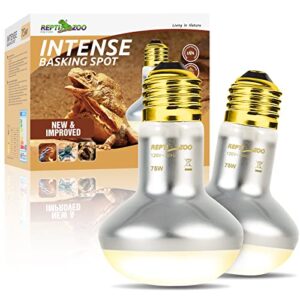
Bulb selection matters when creating a stable temperature gradient for your boa. With 75-watt heat bulbs or halogen bulbs, you get focused heat distribution—ideal for basking spots. Wattage options let you fine-tune your heat source for ideal comfort and healthy metabolism.
Always pair your lamp with a thermostat to keep temperatures in check and avoid overheating.
Lamp safety is vital; some bulbs have a flat bottom for easier installation, but watch for quality issues and plan replacement schedules.
Best For: Boa constrictor owners who want an easy-to-install heat lamp that mimics natural sunlight and supports healthy reptile growth.
- Simulates UVA sunlight to boost appetite and activity in reptiles.
- Fits standard E26 sockets for quick setup.
- Long lifespan means fewer replacements and less hassle.
- Some bulbs may burn out sooner than advertised.
- Occasional quality issues like broken bases or defective units.
- Not as durable as some other reptile heat lamp brands.
3. Infrared Laser Temperature Gun Tool
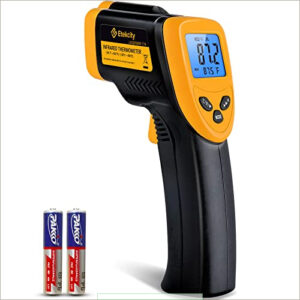
Ever wondered how to check your boa’s basking spot with laser precision? An infrared laser temperature gun delivers quick, non-contact readings for reliable thermal gradient management.
With adjustable emissivity settings and infrared accuracy, you can fine-tune temperature calibration on all surfaces—wood, plastic, or tile. Remember, gun safety matters: never aim the laser near your animal’s eyes.
Routine use helps you verify heat source performance, maintain ideal temperature gradients, and support natural thermoregulation. It’s an essential tool for hands-on reptile care.
Best For: Reptile keepers and hobbyists who need quick, accurate surface temperature checks for boa constrictor enclosures and basking spots.
- Fast, non-contact readings for safe temperature monitoring
- Adjustable emissivity improves accuracy on different surfaces
- Backlit display makes it easy to use in dim lighting
- Only measures surface temperature, not core or air temps
- Accuracy depends on proper distance and positioning
- Batteries need regular replacement for reliable performance
Frequently Asked Questions (FAQs)
How does humidity affect heating needs for boas?
Like a boa sensing subtle shifts in the air, Humidity Control directly affects heating needs. High humidity narrows the ideal Heat Gradient, making precise Temperature Fluctuations essential for effective Boa Thermoregulation and stable Humid Microclimates in Boa Constrictor Care.
Can under-tank heaters be used with boa enclosures?
Under Tank Heating is both safe and effective for Boa Constrictor enclosures when paired with thermostatic control.
It maintains a stable thermal gradient, aids boa thermoregulation, and reduces burn risk—key elements in thoughtful reptile enclosure design.
What nighttime temperature drop is safe for boas?
Think of nocturnal temperature like the gentle dip after sunset—boa constrictors need a nighttime cooling of 5–10°C (9–18°F), but never below 70°F (21°C), to maintain safe thermal gradients and support ideal snake health and wellness.
How often should heating equipment be replaced?
Replacement schedules for heating equipment in boa enclosures hinge on equipment lifespan and safety inspections.
For ideal heat regulation and energy efficiency, most devices require replacement every 1–2 years, ensuring consistent thermal maintenance and supporting reptile health and wellness.
Are thermostats necessary for all heating devices?
Thermostats aren’t optional—they’re essential for precise temperature control and device regulation. Every heat source in boa constrictor reptile care should have thermostat benefits, ensuring climate control, heat regulation, and safety features to protect your snake’s health.
Conclusion
Think of heating for boa constrictors as painting with light and shadow—each choice shapes their comfort and health. When you match equipment to your boa’s needs and monitor temperatures like a careful artist, you build an environment where natural instincts thrive.
Reliable tools, thoughtful placement, and routine checks protect against hidden risks. With these principles guiding your setup, your boa’s enclosure becomes more than shelter—it’s a living canvas for well-being, safety, and the subtle art of reptile care.
- https://files.eric.ed.gov/fulltext/ED536788.pdf
- https://www.reptifiles.com/wp-content/uploads/2020/01/Why-Infrared-Matters-by-Roman-Muryn.pdf
- https://www.aquariumsystems.eu/gold-infrared-lamp-unit-uk-c2x38678213
- https://dubiaroaches.com/search?q=%22exo+terra+intense+basking+spot%22&options%5Bprefix%5D=last
- https://spyderrobotics.com/index.php?main_page=index&cPath=1