This site is supported by our readers. We may earn a commission, at no cost to you, if you purchase through links.

Your ball python hasn’t eaten in two weeks, and when you pick her up, her midsection feels hard as a rock—not the usual supple muscle tone you’re used to. That firmness could signal impaction, a mechanical blockage in the digestive tract that prevents waste from passing normally.
Unlike simple constipation, which may resolve on its own, impaction creates a physical obstruction—often from ingested substrate, compacted fecal matter, or indigestible materials—that compromises your snake’s entire digestive system. Recognizing impaction signs in your pet snake early means the difference between a straightforward fix and a veterinary emergency, and the symptoms are more specific than many owners realize.
Table Of Contents
- Key Takeaways
- What is Impaction in Pet Snakes?
- Early Warning Signs of Impaction
- Physical Symptoms to Watch For
- Digestive and Elimination Red Flags
- When to Seek Veterinary Help
- Frequently Asked Questions (FAQs)
- How do I know if my snake is impacted?
- Can impaction resolve on its own?
- What does impaction poop look like?
- Can substrate type prevent impaction in snakes?
- How often should pet snakes defecate normally?
- Are certain snake species more impaction-prone?
- What humidity levels help prevent digestive issues?
- Can warm soaks treat mild impaction cases?
- Conclusion
Key Takeaways
- Impaction is a complete physical blockage in the digestive tract that requires veterinary intervention, unlike constipation, which may resolve on its own with hydration and warmth.
- Early warning signs include persistent food refusal, lethargy, abdominal firmness behind the ribs, and straining without passing stool for 7+ days.
- Common causes in captivity stem from controllable factors like substrate ingestion, inadequate temperature gradients, oversized prey, and low humidity that hardens feces.
- Prompt veterinary care within 24 hours improves treatment outcomes by 50% and prevents life-threatening complications like kidney damage or gut rupture.
What is Impaction in Pet Snakes?
Impaction in pet snakes is a blockage in the digestive tract that prevents normal waste elimination, often leading to serious health complications if left untreated. Unlike simple constipation, which may resolve on its own, impaction involves a physical obstruction that requires intervention.
Understanding the warning signs early—like visible swelling, lethargy, or abnormal bulges—can help you identify bloated snake stomach issues before impaction becomes life-threatening.
Understanding what causes this condition in captive snakes helps you recognize the warning signs before they become life-threatening.
Definition and Overview
Impaction in snakes is a mechanical blockage in the digestive tract that prevents normal waste passage through the gut. Unlike simple digestive slowdowns, this condition involves physical obstruction—often from ingested substrate, indigestible materials, or compacted fecal matter.
The abdomen feels firm to your touch, and stool production stops entirely. Impaction compromises digestive health and requires prompt veterinary guidance to prevent serious complications.
How Impaction Differs From Constipation
While constipation means sluggish bowel movements your snake can still pass, impaction is a complete intestinal blockage—waste becomes stone-like and fixed in place. Think of it this way:
- Constipation reacts to hydration, warmth, and gentle intervention
- Digestive blockage requires veterinary disimpaction or medical remedies
- Intestinal obstruction causes severe abdominal swelling and zero stool output
Recognizing these differences prevents a manageable issue from becoming life-threatening. For pet owners, understanding the warning signs of can help you spot emergencies early.
Common Causes in Captivity
In captivity, snake impaction stems from controllable husbandry gaps. Substrate ingestion—swallowing sand, walnut shells, or loose bedding—ranks highest, followed by inadequate temperature gradients that stall digestion.
Dietary factors like oversized prey, hydration issues from low humidity, and cramped enclosure size that limits movement all compound risk.
Environmental stress from improper hides or narrow thermal zones further slows gut motility, turning minor digestive issues into full obstruction.
Early Warning Signs of Impaction
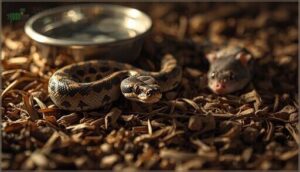
Catching impaction early can make the difference between a simple fix and a life-threatening emergency. Your snake’s body will send out warning signals before the condition becomes severe, and recognizing these subtle changes requires close attention to daily habits.
Early detection of impaction separates a simple fix from a life-threatening emergency in pet snakes
The three early indicators below will help you spot trouble before it escalates into a full blockage.
Watching for decreased activity and reduced tongue flicking helps you distinguish normal post-feeding behavior from early signs of digestive distress.
Reduced Appetite or Food Refusal
When your snake suddenly turns its nose up at prey it once eagerly seized, you’re witnessing one of impaction’s earliest red flags. Digestive issues can trigger this lack of appetite as abdominal discomfort builds, signaling constipation or more serious reptile health concerns.
- Persistent refusal beyond several feedings warrants veterinary review to rule out snake impaction
- Dietary adjustments may help, but don’t force-feed without professional guidance
- Feeding strategies should include appropriately sized, familiar prey at correct temperatures
- Appetite stimulation through environmental stability and routine can reveal refusal patterns
Loss of appetite in reptiles and other animals can be a sign of underlying health conditions that require prompt veterinary attention.
Lethargy and Decreased Activity
When energy dips below baseline, your snake’s sluggish movements and extended rest periods often point to digestive issues like constipation. Monitoring activity levels reveals early reptile health concerns, since environmental factors—temperature, humidity, and hydration—directly affect snake behavior and metabolism.
Health monitoring includes tracking basking patterns and responsiveness, as chronic lethargy alongside abdominal firmness suggests snake impaction requiring veterinary assessment.
| Lethargy Signs | What to Monitor |
|---|---|
| Reduced response to stimuli | Delayed reactions when handled or approached |
| Prolonged rest periods | More than 12 hours of inactivity daily |
| Minimal exploration | Staying coiled, avoiding basking spots |
| Slow, deliberate movement | Shorter locomotion bouts across enclosure |
Changes in Snake Behavior
Often, your snake’s personality shifts before physical impaction symptoms appear. Stress signals and altered activity patterns—like defensive coiling, repeated barrier testing, or abrupt retreat from handling—reveal digestive distress before visible bloating.
Watch for these reptile behavior changes:
- Increased head elevation and frequent repositioning
- Territorial guarding of specific enclosure zones
- Reduced exploration despite adequate environmental enrichment
- Persistent rubbing along edges, signaling escape behavior
- Social withdrawal or heightened strike readiness during interaction
Physical Symptoms to Watch For
When impaction progresses, your snake’s body will show visible, physical changes you can detect during routine handling or observation. These signs often appear in the abdomen and digestive tract, making them easier to spot than behavioral shifts alone.
Here’s what to look for when checking your snake for potential blockages.
Abdominal Bloating or Swelling

When your snake’s midsection appears visibly swollen or enlarged, you’re likely seeing abdominal distension—a hallmark sign of snake impaction.
This digestive issue creates abdominal bloating from gas buildup, fluid accumulation, or intestinal blockage. Unlike the temporary fullness after a meal, impaction-related swelling persists for days or weeks, signaling serious digestive health problems that require your immediate attention.
Firmness in The Midsection
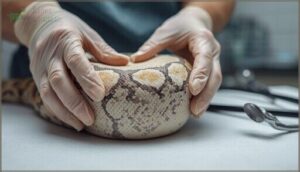
When you gently palpate your snake’s abdomen, a hard, ropey belt along the midline—especially just behind the ribs—signals impaction rather than simple constipation. This abdominal firmness feels immovable, doesn’t yield to gentle pressure, and persists beyond 48 hours.
Unlike digestive issues that soften with time, an impacted snake presents a rigid midsection that warrants immediate veterinary assessment for intestinal blockage.
Straining or Discomfort During Defecation

When your snake braces its body, arches away from the substrate, or lifts its tail repeatedly without passing stool, you’re witnessing defecation strains—a hallmark of impaction in a constipated snake.
Watch for these behavioral indicators:
- Prolonged toilet visits with no discharge
- Stiff posture or frozen positioning mid-attempt
- Head bobbing or gaping mouth after straining
- Abdominal curling during elimination efforts
- Visible defecation pain through tail twitching
Low humidity hardens feces, poor heat slows gut motility, and substrate ingestion all compromise digestive health, requiring immediate stool-softening interventions to restore normal reptile health.
Visible Weight Changes
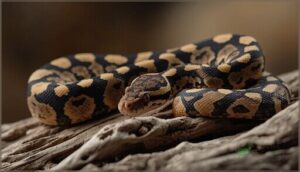
Your snake’s silhouette tells a story. Weight loss patterns reveal gradual thinning—prominent ribs, sunken eyes, angular spine—while muscle atrophy strips away tone. Fat reserve depletion leaves skin tight against bone, especially at the neck and jaw.
A dropping body score signals nutritional impact from snake impaction, where digestive issues and dehydration in snakes block nutrient absorption, turning constipation in snakes into systemic decline that threatens reptile health.
Digestive and Elimination Red Flags
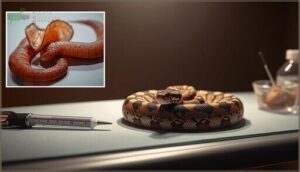
Your snake’s digestive system gives clear warning signs when something’s wrong. Changes in bowel movements, stool consistency, and regurgitation patterns can signal serious blockages before they become life-threatening.
Here’s what to watch for in your snake’s elimination habits.
Absence of Bowel Movements
One of the clearest red flags for snake impaction is when your pet goes days or weeks without producing stool. Bowel movement issues signal digestive health trouble and possible intestinal obstruction.
Watch for these warning signs of stool impaction causes:
- No feces for 7+ days despite normal feeding schedule
- Abdominal swelling paired with gut blockage symptoms
- Progressive lethargy as constipation in snakes worsens
- Dehydration signs worsening reptile digestive issues
- Substrate ingestion history increasing impaction risk
Unusual Stool Appearance
When your snake does pass stool, abnormal texture, stool color changes, or fecal odor variations signal digestive health problems. Black tarry or pale clay-colored droppings, extremely foul smells, or pencil-thin stool shape anomalies indicate gut motility issues.
A constipated snake may produce hard pellet-like waste or oily, undigested material—clear warnings that reptile digestive issues require immediate veterinary assessment.
Regurgitation or Vomiting
Unlike abnormal stool, regurgitation or vomiting signals acute digestive distress. Your snake may eject undigested prey hours or days after feeding—a red flag for esophageal issues, reflux problems, or stomach disorders compounding impaction.
Food sensitivities, temperature fluctuations, or mechanical blockages trigger these episodes. Repeated regurgitation weakens your snake rapidly, demanding urgent reptile veterinary care to restore digestive health before complications escalate.
When to Seek Veterinary Help

Knowing when your snake needs professional care can mean the difference between a quick recovery and a life-threatening crisis. Some symptoms warrant immediate attention, while others give you a narrow window to act before complications set in. Here’s what should send you straight to a reptile veterinarian.
Persistent Symptoms and Complications
When symptoms persist beyond two weeks despite supportive care, complications like secondary infections, organ stress, or permanent digestive damage can develop. Chronic pain and compromised gut motility signal worsening snake impaction that demands specialized reptile veterinary care.
Watch for:
- Continued absence of bowel movements alongside increasing abdominal firmness
- Progressive lethargy with refusal of water and prey items
- Visible distress, unusual postures, or mouth breathing indicating systemic decline
- Unexplained weight loss despite supportive long-term care efforts
Recovery strategies depend on early complication management before digestive health deteriorates further.
Diagnostic Approaches for Impaction
Your veterinarian will use radiography methods and medical imaging to pinpoint the obstruction—abdominal X-rays reveal radiopaque material, while ultrasound detects fluid-filled blockages affecting intestinal motility.
Diagnostic tests like blood panels assess dehydration and electrolyte imbalances linked to snake impaction.
In severe reptile digestive issues, endoscopy visualizes the impaction directly, and imaging techniques guide whether conservative care or surgical options are needed to restore digestive health.
Importance of Prompt Treatment
Often, swift action makes the difference between full recovery and life-threatening complications in snake impaction cases. Prompt veterinary care delivers:
- Treatment Outcomes improve by 50% when started within 24 hours of symptom onset.
- Rehydration Methods restore electrolyte balance, softening impacted material for easier passage.
- Emergency Care prevents kidney damage from prolonged dehydration in reptile digestive issues.
- Surgical Options become necessary only when conservative therapy fails early.
- Recovery Times shorten substantially—your snake returns to normal feeding faster with timely intervention.
Frequently Asked Questions (FAQs)
How do I know if my snake is impacted?
Like diagnosing a blocked pipe, identifying snake impaction requires attention to physical symptoms: check for abdominal swelling, firmness during gentle palpation, prolonged absence of bowel movements, reduced appetite, lethargy, and visible straining during defecation attempts.
Can impaction resolve on its own?
True impaction rarely self-corrects without medical intervention. Mild constipation may resolve with improved hydration and warmth, but complete blockages usually worsen, risking gut rupture or systemic illness if untreated.
What does impaction poop look like?
Many believe impaction completely stops stool production, but that’s misleading. Instead, you’ll notice thin, liquid feces leaking around a dry, rocklike mass—think compact, hard pellets with abnormal color indicating serious digestive blockage.
Can substrate type prevent impaction in snakes?
Substrate choice directly influences impaction prevention. Paper towels and reptile carpet minimize ingestion risks, while aspen shavings and coconut fiber demand proper depth and feeding protocols to prevent substrate ingestion during meals.
How often should pet snakes defecate normally?
Most healthy snakes defecate every 1–2 weeks, depending on feeding schedules and species. Juveniles usually have more frequent bowel movements than adults, and temperature directly affects snake digestion and stool quality.
Are certain snake species more impaction-prone?
Ball pythons, boa constrictors, and other large constrictors face higher impaction risk from oversized prey.
Juveniles across species show increased susceptibility due to smaller digestive capacity, while slow-metabolism snakes accumulate digesta more readily.
What humidity levels help prevent digestive issues?
Keep humidity levels between 40 and 60 percent to support digestive health in your snake.
Proper moisture levels maintain gut comfort, prevent dehydration-related blockages, and guarantee smooth intestinal motility when paired with adequate hydration and ideal heat.
Can warm soaks treat mild impaction cases?
Warm water soaks can ease mild impaction by relaxing your snake’s digestive tract and promoting gentle gut motility.
However, they’re supportive measures—not cures—and never replace veterinary care when blockages are suspected.
Conclusion
Your snake won’t suddenly recover from a blockage by sheer force of will—impaction doesn’t resolve itself through positive thinking or wishful waiting. That firm midsection isn’t muscle definition from your snake’s recent workout routine. It’s a medical urgency demanding your attention, not your patience.
Recognizing impaction signs in your pet snake means acting decisively: temperature corrections, hydration support, veterinary imaging when symptoms persist beyond 48 hours.