This site is supported by our readers. We may earn a commission, at no cost to you, if you purchase through links.
Your snake struck at you this morning—and it barely moved yesterday. Nothing changed in the enclosure, you haven’t altered the feeding schedule, and yet here you are, wondering if your normally docile ball python has developed a personality disorder overnight. It hasn’t.
That sudden defensiveness, the coiled posture, the refusal to eat—these are classic irritable snake shedding signs, and they follow a predictable biological pattern once you know what to look for. Understanding what drives this behavioral shift, and how to distinguish normal pre‑shed irritability from something that warrants concern, makes you a far more confident keeper.
Table Of Contents
- Key Takeaways
- What Snake Shedding Irritability Actually Looks Like
- Physical Signs Your Snake is About to Shed
- Why Snakes Become Irritable During Shedding
- Shedding Signs That Signal a Problem
- How to Support Your Snake Through Shedding
- Frequently Asked Questions (FAQs)
- Are snakes grumpy when they shed?
- How do snakes act before they shed?
- How often do snakes shed throughout their lives?
- Can diet affect how smoothly shedding goes?
- Do different snake species shed at different rates?
- Is shedding more stressful for younger or older snakes?
- What role does lighting play during the shed cycle?
- Conclusion
Key Takeaways
- normal signs your Irritability, defensive strikes, and withdrawal are normal signs that your snake is about to shed, not personality changes or illness.
- Physical cues like dull skin, cloudy eyes, and loose scales around the head signal the start of the shedding process and guide your care timing.
- Boosting humidity, minimizing handling, and providing rough surfaces are crucial for a smooth, complete shed and preventing complications.
- Persistent irritability, retained eye caps, or patchy skin after shedding mean it’s time to consult a reptile vet for proper treatment.
What Snake Shedding Irritability Actually Looks Like
Shedding transforms even the calmest snake into a different animal—and that shift can catch new owners off guard.
Understanding what’s actually happening under the scales makes it easier to recognize when your snake needs help, so it’s worth reading up on safe snake shedding assistance before you find yourself staring at cloudy eyes and wondering what went wrong.
The behavioral changes are predictable, but only if you know what to look for.
Here’s exactly what irritability during a shed actually looks like.
Increased Defensive Behaviors and Striking
Blue phase aggression is one of the clearest preshedding signs you’ll see — and it can catch you off guard if you’re not watching for it. Behavioral changes happen quickly once shedding starts.
Watch for these pre-shed strike patterns:
- Enclosure guarding behavior — rushing the door when you open it
- Vibration-triggered attacks — lunges from footsteps or door slams
- Tail vibration displays — audible rustling before a strike
- Repeated short jabs — quick, defensive bites instead of single lunges
- Misdirected strikes — hitting walls or tools due to cloudy vision
Snake stress and shedding go hand in hand. Increased irritability and stress during this window are normal — not a personality change.
Withdrawal and Reduced Activity Levels
Beyond the striking, your snake’s entire activity level quietly drops. Exploratory decline is one of the clearest preshedding signs — that snake who normally cruises the enclosure every evening simply stops. You’ll notice a basking shift, social isolation from cage mates, and a stimulus response lag where tapping the glass gets almost no reaction.
| Behavior | Pre-Shed Pattern |
|---|---|
| Activity Rhythm Change | Active windows shrink to one short session |
| Decreased activity and hiding | Stays motionless for hours in one spot |
| Increased irritability and stress | Avoids contact, withdraws to sheltered areas |
Refusal to Eat During Pre-Shed Phase
Food refusal is one of the most reliable preshedding symptoms you’ll see. Hormonal appetite suppression redirects metabolic energy allocation toward growing new skin, while visual impairment effects from cloudy eye caps make striking at prey feel genuinely risky.
Most snakes fast three to seven days before the blue phase. This inappetence is normal — pre-shed fasting benefits the snake by reducing physical strain on loosening skin.
Hiding More Than Usual
Appetite changes aren’t the only snake shedding sign worth watching. Increased hiding is just as telling.
During the pre-shed hide preference phase, snakes retreat almost continuously — even species that are normally bold. Blue-eye hide selection drives this further; impaired vision makes open spaces feel unsafe.
You’ll also notice temperature-driven hiding, where your snake picks one hide and stays put. That’s classic snake shedding behavior.
If the hiding persists beyond a normal shed cycle, it could signal stress-related hormonal disruption—worth reviewing common snake shedding problems and what they mean to rule out anything serious.
Physical Signs Your Snake is About to Shed
Before the irritability even starts, your snake’s body is already sending signals. The physical changes that come with shedding are hard to miss once you know what to look for.
Here are the key signs that tell you a shed is coming.
Dull, Faded, or Milky Skin Appearance
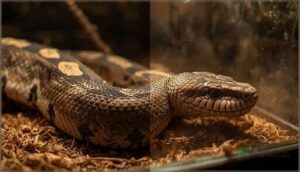
The first snake shedding sign most keepers miss is color dullness — that once‑vivid pattern suddenly looks washed out or dusty. This happens as fluid builds between skin layers during the milky phase, creating a hazy, waxy appearance across the body.
Watch for these key visual cues:
- Color dullness peaks 3–7 days before the shed
- Milky phase lasts 1–3 days, then clears
- Species morph affects intensity — dark morphs look browniest, pastels turn chalky
Humidity impact matters here too: low humidity prolongs this dull coloration, slowing skin renewal. Behavior correlation is reliable — once colors sharpen again, shedding usually follows within 24–72 hours.
Blue or Cloudy Eye Caps Explained
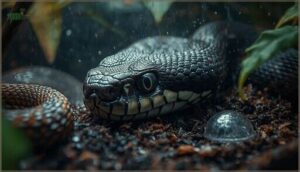
Those cloudy eyes aren’t a health scare — they’re the spectacle blue phase doing exactly what it should.
Fluid accumulation between old and new eye caps causes this temporary vision impairment, lasting roughly 3–7 days. Humidity impact is real here: low humidity slows clearing.
Watch for retained spectacle signs after the shed completes — eyes still looking dull or thickened means those eye caps didn’t release.
Loss of Skin Luster and Texture Changes
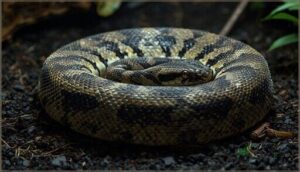
glossy finish is one of the first whole-body signals you’ll notice. Hormonal triggers initiate lymphatic fluid buildup between old and new layers, disrupting the smooth surface and creating a scale matte appearance.
Run a finger along the back — pre-shed skin feels drier, almost papery. That’s impaired pre-shed hydration levels at work, not neglect.
Skin renewal is actively underway.
Skin Loosening Around The Lips and Head

Ever noticed your snake’s lips look oddly puffy before a shed? That’s lip scale puffing—one of the earliest clues.
- Subtle slackness or folds at the snout and mouth corners
- Increased jaw rubbing frequency against rough enclosure textures
- Blue‑eyed opacity just before the old skin peels
These changes signal hormonal trigger timing and help prevent incomplete shed or skin retention.
Why Snakes Become Irritable During Shedding
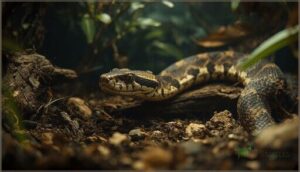
Shedding isn’t just about new skin—it’s a stressful time for your snake.
There are a few key reasons why irritability ramps up during this process.
Let’s look at what’s behind their shifting moods and behaviors.
Impaired Vision Causing Heightened Stress
Picture yourself squinting through fog—your snake’s Blue Phase Vision feels just as disorienting. Eye caps blur movement, triggering a Stress Hormone Spike and rapid defensive reactions. Sensory Compensation kicks in: more tongue flicks, less confidence. Smart Handling Strategies and thoughtful Enclosure Layout matter now, since shedding signs like hiding behavior and missed strikes are your cue to minimize disturbance.
| Blue Phase Vision | Sensory Compensation | Stress Hormone Spike |
|---|---|---|
| Missed strikes | Rapid tongue flicks | Defensive postures |
| Hiding behavior | Slow movement | Sudden retreats |
| Startle easily | Scent mapping | Tense body coils |
| Bumping décor | Head lifted | Irritable responses |
Physical Discomfort From Separating Skin Layers
Shedding isn’t just a visual change—your snake is physically uncomfortable from the inside out. Lymphatic fluid builds between skin layers, creating real pressure that makes every coil feel constricting. Skin tightness, itching sensations, and new skin sensitivity combine into a full-body irritant.
Shedding grips a snake in full-body discomfort, from fluid pressure to raw, hypersensitive new skin
- Fluid pressure causes a tight, squeezed feeling throughout the body
- Adherent skin pain spikes around the chin, nostrils, and vent
- Itching sensations drive repetitive rubbing against rough surfaces
- New skin sensitivity makes normal handling feel sharp and threatening
Hormonal Changes Driving Behavioral Shifts
That tight skin isn’t the only irritant—hormonal triggers shift everything.
A Thyroid Surge ramps up metabolism, driving restless movement and short tempers. Corticosterone Spike makes your snake defensive, quick to strike or hide. Reproductive Overlap stacks on more mood swings. When the Hormonal Rhythm Disruption hits, shedding behavior grows unpredictable, and snake shedding signs can linger past the usual cycle.
Sensitivity to Touch During The Blue Phase
That hormonal surge doesn’t just ramp up mood swings—it sharpens nerve sensitivity in the blue phase. Even gentle contact triggers discomfort, especially around regional touch zones like the head and vent.
Fluid layer pressure makes squeezing risky; handling pressure limits matter more than ever.
Species-specific responses vary, but most snakes flinch or strike.
Respect humidity requirements and avoid handling until shedding completes.
Shedding Signs That Signal a Problem

Sometimes, shedding doesn’t go as planned, and your snake shows signs that need extra attention. It’s important to spot these issues early so you can step in before things get worse.
Here’s what you should watch for during and after the shedding process.
Retained Eye Caps After Shedding Completes
Once your snake has finished shedding, check the shed skin first — two clear spectacle impressions should be visible. Missing those “holes” means retained eye caps are likely still on the eyes.
Do not pick at them. Instead, use soaking techniques with lukewarm water and correct enclosure humidity immediately.
Infection risk climbs fast with retained eye caps, so if they don’t resolve within a few days, schedule a veterinary examination.
A good light source and firm restraint are necessary for a proper retained spectacle diagnosis.
Partial or Patchy Skin Shedding
Unlike retained eye caps, patchy shedding shows up across the body — irregular islands of dull, papery skin clinging to bright new scales. Poor humidity management, inadequate temperature gradient, mite infestation, or nutrient deficiencies are usually behind it.
For stuck shed and dry skin, soaking techniques work well: 15–20 minutes in shallow lukewarm water loosens most abnormal skin shedding and skin retention without force. Ensuring adequate humidity is important because inadequate environmental humidity can cause retained shed.
Prolonged Irritability Beyond The Shed Cycle
Once the shed is complete, most snakes settle down within a few days — so if yours is still defensive a week or two later, that’s your signal that something else is going on. Prolonged irritability points to deeper issues:
- S-curve Persistence from elevated stress hormones lasting 14–21 days
- Parasite Impact driving striking behavior beyond three weeks
- Humidity Influence below 50% extending irritability 10–14 days
- Hormone Imbalances amplifying post-shed defensiveness during breeding season
- Nutritional Deficits like low Vitamin A sustaining skin sensitivity over two weeks
Environmental influences and hormonal triggers rarely fix themselves.
When to Seek Veterinary Advice
Don’t wait until things get serious — certain signs demand a reptile veterinarian sooner rather than later.
Vision Impairment from retained eye caps, Tail Constriction cutting off circulation, Skin Infections with pus or foul odor, and Prolonged Appetite Loss beyond a week all require professional veterinary care for shedding issues.
Persistent Sheds and snake shedding complications only worsen without treating skin retention and managing infections and abscesses directly.
How to Support Your Snake Through Shedding
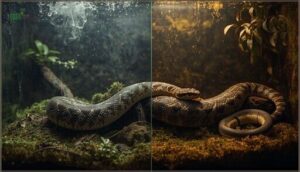
Supporting your snake through a shed isn’t complicated, but the small adjustments you make can be the difference between a clean, complete shed and a frustrating retained skin situation. Most of what your snake needs comes down to environment, restraint, and timing.
Here’s exactly what to focus on during each stage of the process.
Minimizing Handling During Irritable Pre-Shed Phase
The moment you spot cloudy eyes, step back — your snake doesn’t want company right now. During stressed, impaired vision makes even familiar handlers feel like threats, spiking strike risk considerably. Keep handling frequency at zero for 7–10 days.
- Avoid opening the enclosure lid; use glass-front viewing instead
- Dim enclosure lighting to reduce external stimulation
- Improve hide placement so your snake stays concealed naturally
- Glove use is essential for any emergency snake handling only
Humidity and Enclosure Adjustments for Comfort
most powerful tool is your most powerful tool right now. Ideal Humidity Ranges sit at 60–80% for tropical species during pre-shed — bump yours up by 10–15% when eyes cloud over.
| Element | Adjustment | Goal |
|---|---|---|
| Misting Schedule | Twice daily | Steady moisture |
| Humid Hide Placement | Warm side | Ease skin loosening |
| Substrate Moisture Management | Damp, never soggy | Prevent mold |
| Ventilation Control | Partially cover mesh lid | Retain humidity |
| Water Bowl | Enlarge temporarily | Ambient moisture boost |
Maintaining humidity in enclosures — snake shedding environment — directly determines whether that shed comes off clean or in frustrating patches.
Providing Rough Surfaces to Aid Sloughing
Your snake can’t peel old skin without something to grip. Cork bark, textured branches, and rough stones give it the friction needed to catch and strip that first edge.
Commercial shedding logs work well too — even crumpled paper substrates help when décor is minimal. Place these near hide entrances.
Preventing incomplete shedding often comes down to this one simple setup detail.
Post-Shed Handling and Health Checks
Give the shed 24–48 hours before handling—new skin firms up fast, but it’s still vulnerable right after. Here’s what post-shed care actually looks like:
- Skin firmness assessment — check for smooth, glossy scales and no retained patches
- Weight monitoring — a quick weigh-in flags stress or illness early
- Enclosure sanitation — remove shed skin promptly to prevent bacterial buildup
Clear eyes, calm tongue‑flicking, and strong appetite within 48 hours are your best snake shedding health indicators. Persistent refusal to eat or ongoing hiding warrants veterinary follow‑up.
Frequently Asked Questions (FAQs)
Are snakes grumpy when they shed?
Yes — and it’s not an attitude.
Hormonal triggers flip a switch that ramps up snake stress, dims blue‑phase vision, and turns normally calm snakes defensive.
Think of it as a full-body renovation nobody asked for.
How do snakes act before they shed?
Before shedding, you’ll notice hiding behavior, loss of appetite and feeding, changes in posture and movement, and increased vibrational sensitivity.
Many snakes seek moisture, shift substrate preference, and display cloudy eye caps during preshed clearing, sometimes marking territory.
How often do snakes shed throughout their lives?
If snakes held beauty contests, they’d win for wardrobe changes.
Hatchling shed frequency can hit 10–15 times yearly, juveniles shed every few weeks, adults slow to every few months.
Lifelong shedding trends depend on age, species size impact, and care.
Can diet affect how smoothly shedding goes?
Nutrition Balance, Hydration Levels, and Vitamin Deficiencies play a direct role in shedding.
Poor snake nutrition and shedding problems—like patchy skin or retained eye caps—often improve when you improve body condition and feeding schedule for snake shedding health monitoring.
Do different snake species shed at different rates?
juvenile corn snakes shed every 4–6 weeks, while adults slow to every 2–3 months.
Shedding rates depend on age and species, growth rate, habitat humidity, and whether the snake is captive or wild—patterns vary widely.
Is shedding more stressful for younger or older snakes?
Younger snakes experience more stress during shedding due to rapid growth rate impact, frequent hormonal fluctuations, and higher humidity sensitivity.
Their age-based irritability patterns and increased retained skin risks make snake shedding frequency and age key factors in overall stress.
What role does lighting play during the shed cycle?
Lighting shapes shedding by syncing circadian hormones and photoperiod timing, while UVB intensity and light gradient design support skin health.
Dim-hide preference lets your snake regulate stress, and proper enclosure setup aids temperature and humidity control for smooth shedding.
Conclusion
irritable snake shedding signs isn’t just about spotting defensive strikes or cloudy eyes—it’s about reading your snake’s story, chapter by chapter.
When you know discomfort looks like, you won’t mistake it for aggression. Adjust humidity, minimize handling, and check for complications after the shed. Your vigilance transforms stress into safety. With each cycle, you gain skill, your snake gains comfort, and the process becomes less mysterious—just another part of responsible reptile care.
- https://www.rentonvet.com/pet-health/care-of-snakes/shedding-ecdysis/
- https://www.petcovergroup.com/au/shedding-in-snakes-dos-and-donts/
- https://britexotics.co.uk/blog/corn-snake-shedding-problems-uk
- https://reptilesmagazine.com/snake-with-retained-spectacle/
- https://www.pets4homes.co.uk/pet-advice/retained-eye-caps-in-snakes-explained.html