This site is supported by our readers. We may earn a commission, at no cost to you, if you purchase through links.

Picture a black rat snake gliding up a barn wall, hunting eggs instead of trouble, and you’ve got a snapshot of what most snakes in your backyard actually do. Of the roughly 150 snake species found in North America, only a small fraction carry venom, yet fear often paints them all with the same brush. Learning to tell them apart isn’t just for herpetologists in the field.
Knowing your non venomous snake breeds turns a startled backyard encounter into a moment of quiet recognition. From kingsnakes that eat rattlers to corn snakes curling up as beloved pets, these species deserve a second look, and a little know-how goes a long way toward coexisting with them.
Table Of Contents
- Key Takeaways
- Common Non-Venomous Snakes in North America
- Non-Venomous Kingsnake Species to Know
- Popular Non-Venomous Pet Snake Species
- How to Identify Non-Venomous Snakes
- Habitats, Diets, and Safe Coexistence
- Frequently Asked Questions (FAQs)
- What is the most friendly non-venomous snake?
- Which is the most dangerous non-venomous snake?
- Is a python a non-venomous snake?
- Are there any non venomous snakes?
- Are non venomous snakes good pets?
- Are there venomous snakes in North America?
- Are smooth snakes venomous?
- Where do non venomous snakes live?
- Are snakes poisonous?
- What is the most non-venomous snake?
- Conclusion
Key Takeaways
- Most snakes you’ll run into, whether in your backyard or on a trail, are harmless, since only a small fraction of North America’s roughly 150 species carry venom.
- You can identify non-venomous snakes by looking at body shape, scale texture, belly patterns, and movement, though tricks like head-flattening or coral snake mimicry mean no single feature tells the whole story.
- Kingsnakes stand out as natural allies since they’re immune to venom and will actually eat rattlesnakes and other dangerous species.
- Popular pet snakes like corn snakes, ball pythons, and California kingsnakes are prized for calm temperaments, but their care needs and size, especially with boa constrictors, still call for real commitment.
Common Non-Venomous Snakes in North America
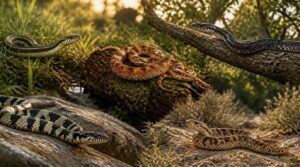
If you’ve ever crossed paths with a snake in your backyard or on a hiking trail, chances are it belonged to one of a handful of common North American species.
From rat snakes in the woodpile to garter snakes near the pond, this guide to snake habitats across North America breaks down where each species tends to turn up.
Each one has its own look, habits, and favorite hangout spots, from shaded forest floors to sunny open fields.
Here are five you’re likely to meet, along with what makes each one distinct.
Worm Snake
Mistake a worm snake for an actual earthworm and you wouldn’t be the first. This tiny, fossorial burrower hides in leaf litter, hunting earthworms nightly. Its defense? Simply vanish underground.
Four traits stand out:
- Rarely seen
- Harmless to humans
- Soil-aerating burrower
- Essential forest ally
That pink belly means healthy soil nearby. As specialist earthworm predators, these snakes use their narrow, pointed heads to extract prey directly from the soil.
Eastern Coachwhip
While the worm snake stays hidden below, the Eastern Coachwhip rules the open sun. Reaching 4-6 feet, this speedster hunts lizards and rodents by sight, not scent. Colors shift regionally, dark fronts fading to tan or pink tails.
Cornered, it strikes fast but usually just outruns danger, vanishing across scrublands before you blink.
Black Racer
Blink and you’ll miss it. The Black Racer, or Eastern Racer (Coluber constrictor), outruns the Coachwhip in sheer hustle.
- Glossy black adults, gray juveniles
- 3-4.5 feet long
- No constricting, just speed
- Eats rodents, frogs, birds
- Thrives in fields, farms, suburbs
Juveniles wear patterned camouflage before darkening. This habitat adaptability keeps racers thriving wherever open ground meets sunshine.
Gray Ratsnake
While the racer’s off in a blur, the Gray Ratsnake (Pantherophis alleghaniensis) takes its time, and honestly, it doesn’t need to hurry. This one grows 42 to 72 inches, with light gray to tan scales, dark blotches, and that giveaway checkerboard belly.
You’ll find them climbing barns, trees, and rock crevices across forests and suburbs alike, hunting mice, chipmunks, and bird eggs with patient ambush skill. Females lay 8 to 20 eggs each spring. Knowing this pattern matters, since habitat loss keeps shrinking the wooded corridors these snakes depend on for both hunting and shelter.
Ribbon Snake
Picture a garter snake’s sleeker cousin, that’s your Ribbon Snake (Thamnophis sauritus). Three yellow stripes, 18-26 inches, always near water.
- Highly aquatic, hunting frogs and tadpoles near ponds
- Swift swimmer, not an ambusher
- Shy temperament, vibrates tail when threatened
- Birth to live young, litters around a dozen
- Found across the Midwest to Atlantic coast
Nonvenomous, harmless, and easy to identify once you know the stripes.
With their crisp black-and-white bands, California Kingsnakes are a favorite among keepers exploring colorful snake breeds for vivariums.
Non-Venomous Kingsnake Species to Know
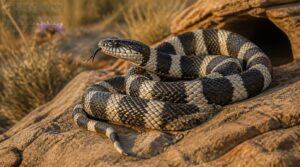
If you’ve ever heard that some snakes eat other snakes, you’re already halfway to understanding what makes kingsnakes so fascinating. These aren’t just one species but a whole group with their own personalities, habitats, and party tricks for staying safe. Here are five kingsnakes worth knowing by name.
Eastern Kingsnake
Snake royalty, plain and simple: the Eastern Kingsnake eats venomous snakes for lunch, immune to their venom entirely.
| Trait | Detail | Why It Matters |
|---|---|---|
| Bands | White chains on black | ID at a glance |
| Habitat | Forests to wetlands | Highly adaptable |
| Prey | Snakes, rodents, eggs | Constriction feeding |
Juveniles show crisper, lighter bands that fade with age, and band width shifts by region.
Black Kingsnake
A glossy, coal-black snake with barely a neck to speak of: that’s your Black Kingsnake, Lampropeltis getula kin found from Kentucky to Florida.
Three quick ID clues:
- Smooth, lacquered scales
- Faint yellow throat flecks
- Single anal plate
It constricts prey, lays 4-12 eggs, and lives 12-20 years, quietly controlling rodents wherever woodlands meet farmland.
Scarlet Kingsnake
Ever spot a tiny snake wearing red, black, and yellow rings like a warning sign? That’s the Scarlet Kingsnake, using Batesian mimicry to bluff coral snakes. Just 14-20 inches, shy, nocturnal, and harmless.
If you want to tell them apart in the field, checking whether red bands touch yellow — plus looking for that tell-tale black snout — are the key tricks covered in this guide to snakes that look like coral snakes.
- Red touches black, not yellow
- Pine flatwoods habitat
- Lizard, frog diet
- 6–12 year lifespan
- Stable populations
Mole Kingsnake
A snake that would rather dig than be seen, the mole kingsnake spends most of its life underground in loose, sandy soil near fields and farms.
| Trait | Detail | Why It Matters |
|---|---|---|
| Habitat | Sandy soil, field edges | Easy burrowing |
| Behavior | Nocturnal, secretive | Avoids predators |
| Diet | Rodents, lizards | Rodent control |
| Defense | Tail vibration | Mimics rattlesnakes |
| Threat | Habitat loss | Fewer burrow sites |
Prairie Kingsnake
Picture a tan ribbon sliding through tallgrass, blotches fading into the ground. That’s your prairie kingsnake, 30 to 48 inches, shy, and quick to flee.
- Diet: rodents, lizards, frogs
- Defense: tail-rattling bluff
- Range: central grasslands, farmlands
- Threat: habitat loss
Eggs, laid in spring, hatch into paler mini-adults after two months.
Popular Non-Venomous Pet Snake Species
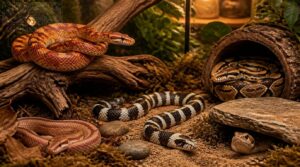
If you’re thinking about bringing a snake into your home, not just spotting one in the yard, a whole different set of species comes into play.
These are the snakes that breeders and keepers have come to know well, prized for calm temperaments and manageable care needs.
Here’s a look at five that consistently top the list for first-time and seasoned owners alike.
Corn Snake
If there’s a gateway drug into reptile keeping, it’s the corn snake, Pantherophis guttatus. Docile, easygoing, and gorgeous in orange, tan, and rust blotches, they tolerate handling well.
Morphs like albino and anery multiply the appeal. They eat pre-killed mice readily, need a warm gradient enclosure, and can live 15 to 20 years, rewarding patient beginners.
Ball Python
While corn snakes win on color, ball pythons win on personality, curling into a tight, tidy ball when startled instead of striking. This defensive balling behavior gives them their name.
They’re nocturnal, stay compact (3-5 feet), and use the classic constriction feeding method.
Sadly, wild populations face real habitat loss impact in West Africa.
California Kingsnake
If ball pythons charm you with personality, California kingsnakes win you over with sheer versatility.
Lampropeltis getula californiae sports bold black-and-white or brown-and-cream bands, patterns that vary by region. They constrict prey confidently, even eating rattlesnakes, and adapt to deserts, grasslands, and suburbs alike.
That toughness, plus manageable 3-4 foot size, makes them pet trade favorites.
Milk Snake
That toughness carries over into milk snakes, Lampropeltis triangulum, known for red, black, and yellow banding (remember: red touches yellow, not a venomous coral snake). They grow 3-4 feet, live 6-12 years, and hunt rodents and eggs by constriction.
Shy and rarely bold, they’re gentle escape artists, perfect for coexisting safely with snakes at home or in the wild.
Boa Constrictor
If you want a snake that actually looks the part, meet the boa constrictor. Females can hit 8 to 13 feet, dwarfing males, with that classic thick, saddle-blotched body built for ambush hunting.
They’re calm by nature, but their sheer size means serious habitat and reptile pet care commitments, not a starter snake by any means.
How to Identify Non-Venomous Snakes
If you’ve ever frozen mid-step because a snake crossed your path, you’re not alone—telling harmless from harmful can feel like guesswork. The good news is your eyes can catch real clues, from build to pattern to how the snake carries itself. Let’s walk through what actually matters when you’re sizing one up.
Body Size and Shape
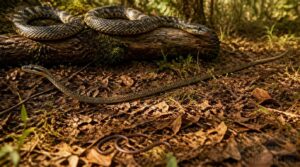
Size tells you a lot before you even spot a pattern. Worm Snakes stay pencil thin, while Coachwhips stretch past 6 feet with a whip-like taper. Ratsnakes carry a sturdier, rounded build.
Watch growth too, hatchlings look all head and no body, filling out with age. That proportion shift is your first honest clue.
Scales and Belly Patterns
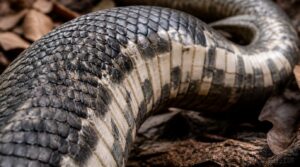
Run a finger down a snake’s back and you’ll feel the truth: keeled scales feel rough and ridged, smooth ones gleam. Dorsal rows align neatly, shaping the body’s width, while wider ventral scales grip surfaces for movement.
Flip to the belly, checkerboard or uniform, symmetrical patterns, contrasting colors. Gray Ratsnakes wear a checkered belly like a signature, distinct from lookalikes.
Color Bands and Mimicry
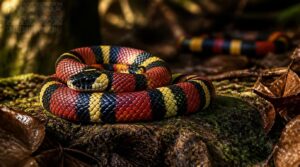
Ever wonder why a harmless kingsnake wears the same red, black, and yellow rings as a venomous coral snake? That’s coral snake mimicry at work.
A harmless kingsnake survives by wearing the same warning colors as a venomous coral snake
Band width and contrast vary by region, so regional subspecies differences matter.
Predators learn to avoid the pattern fast, and even imperfect copies survive better.
Bands also sharpen right after shedding.
Behavior and Movement Clues
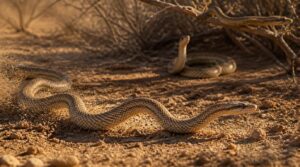
Watch how a snake moves and it’ll tell you almost everything. Lateral undulation powers most slow travel, while sidewinding shows up on hot sand. Notice these five clues:
- Tail flicking (alert warning)
- Coiled ambush posture (ready to strike)
- Head weaving (scanning mode)
- Sudden sprint (startled escape)
- Slow stalking (hunting lizards, rodents)
Arboreal hunters climb; terrestrial ones stay ground level.
Why Head Shape Misleads
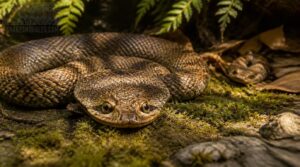
That triangular head you spot could be pure bluff. Many nonvenomous species flatten or widen their heads defensively, mimicking venomous silhouettes.
| Trigger | Effect | Reality |
|---|---|---|
| Defensive flattening | Head looks broad | Harmless bluff |
| Juvenile shape | Resembles adults | Changes with age |
| Poor lighting/angle | Exaggerates width | Camera distortion |
Geographic head variation and habitat range complicate things further, so never judge danger by head shape alone.
Habitats, Diets, and Safe Coexistence

Once you know how to spot a snake, the next question is naturally where it lives and how it makes a living. Every species has its own address, from leaf litter to treetops, and its own way of finding dinner. Here’s a closer look at where these snakes settle in and how that shapes the way you might safely cross paths with them.
Forests, Grasslands, and Wetlands
If you’ve ever wondered why a Coachwhip suns itself in an open field while a Worm Snake hides under forest leaf litter, it’s all about biome-specific snake diets and shelter needs.
- Forests hide rodents and birds among leaf litter
- Grasslands offer sun, prey, and fire-maintained cover
- Wetlands provide amphibians and moisture-loving invertebrates
Habitat loss threatens these forest grassland wetland habitats, making conservation efforts essential.
Burrowing, Climbing, and Ground-Dwelling
Underground versus canopy life shapes everything about a snake’s build.
The Mole Kingsnake burrows through loose soil, leaving small burrow entrance signs behind.
The Gray Ratsnake climbs trees hunting eggs.
A fusiform body and smooth scales cut friction underground, while surface movement patterns and ground-level navigation clues reveal whether you’re near a terrestrial hunter or arboreal visitor passing through.
Prey and Feeding Strategies
So how does a body built for burrowing or climbing actually catch dinner? Most rely on stealth ambush feeding, then either constriction hunting or swallowing prey whole after jaw dislocation.
The Jacobson organ tracks scent trails constantly. Prey habitat selection follows the menu: lizards, rodents, amphibians, fish, whatever the terrain offers.
Natural Pest Control Benefits
That constant hunting for lizards and rodents pays off big for you, since snakes act as free, tireless pest control.
- Rodent population control on farms and hedgerows
- Curbing crop-damaging insects naturally
- Supporting natural balance as an indicator species
- Reducing chemical pesticide dependence in gardens
Safe Encounters and Conservation
Picture yourself on a trail, spotting a ratsnake sunning nearby. Stay 6 feet back, resist the urge to handle it, and let it slip away undisturbed.
| Do | Don’t |
|---|---|
| Wear boots in brush | Approach quickly |
| Report injured snakes | Try to capture |
Habitat protection and ethical observation keep populations thriving, proving coexistence beats conflict every time.
Frequently Asked Questions (FAQs)
What is the most friendly non-venomous snake?
If you’re after a calm demeanor and easy handling, the Corn Snake wins hands down, docile, hardy, and beginner-friendly, though Ball Pythons, Kingsnakes, and Milk Snakes also make gentle, low-stress companions for new keepers.
Which is the most dangerous non-venomous snake?
If you’re ranking real risk over reputation, large constrictors like reticulated pythons and boa constrictors top the list. Their sheer size lets them cause serious injury during constriction, especially in careless pet trade handling situations.
Is a python a non-venomous snake?
Like a python’s coils, gripping but never poisoning, that’s the truth of it. Yes, pythons are completely non-venomous, relying purely on constriction to subdue prey, unlike vipers whose fangs deliver toxin.
Are there any non venomous snakes?
Yes, absolutely. Colubrids, boas, and pythons all include harmless species, dispelling the myth that every snake is dangerous. Of thousands of species worldwide, most rely on speed, camouflage, or constriction rather than venom for survival.
Are non venomous snakes good pets?
They can make surprisingly wonderful, million-year-old-instinct roommates. With proper enclosure setup, steady handling, and species suited to captivity like corn snakes, most thrive for decades, rewarding patient owners who prioritize welfare over impulse purchases.
Are there venomous snakes in North America?
North America harbors four venomous groups: rattlesnakes, copperheads, cottonmouths, and coral snakes.
Rattlesnake habitat ranges span deserts to mountains, while coral snakes flaunt warning bands that Scarlet Kingsnakes mimic, a trick worth knowing before you jump to conclusions outdoors.
Are smooth snakes venomous?
No, Coronella austriaca carries no venom at all. It subdues lizards and small mammals purely through constriction, native to European heathlands, and poses no danger to you beyond a harmless nip if handled carelessly.
Where do non venomous snakes live?
Practically everywhere, from riparian zones and hedgerows to farmland, prairie outcrops, and even your backyard brush pile. Habitat specificity shapes who lives where, but most snakes just want cover, sun, and a steady meal nearby.
Are snakes poisonous?
Technically, snakes aren’t poisonous, since poison must be eaten. They’re venomous, delivering toxins through fangs when they bite. That distinction shapes how you read snake bite symptoms and judge antivenom effectiveness, clearing up a common misconception.
What is the most non-venomous snake?
Truthfully, there’s no single winner, thousands of species worldwide lack venom entirely.
Among familiar Non Venomous Snake Breeds, the Gray Ratsnake and Corn Snake stand out for calm temperaments, easy identification, and minimal bite severity compared to defensive species like the Eastern Hognose Snake.
Conclusion
Don’t judge a book by its cover, that’s the real lesson slithering through every scale and stripe you’ve studied here.
Once you know your non venomous snake breeds, that jolt of fear in the grass turns into curiosity instead. You’ll spot the rounded pupils, the smooth retreat, the harmless hunter just doing its job.
These creatures aren’t villains, they’re quiet allies, keeping rodents in check and ecosystems balanced. Respect them, give them space, and let recognition replace reflexive fear.