This site is supported by our readers. We may earn a commission, at no cost to you, if you purchase through links.
Your snake spent three days pressed against the water dish, refusing food and looking somehow… off. The colors seemed washed out, the eyes a little foggy.
Nothing alarming, but something had clearly shifted. That’s pre‑shed, and once you recognize it, that restless behavior suddenly makes perfect sense.
Shedding isn’t just about outgrowing old skin—it’s a full biological reset, clearing away worn scales, lifting parasites, and restoring sharper color patterns underneath.
Knowing the pre‑shed symptoms in snakes helps you respond with the right care instead of unnecessary worry.
Table Of Contents
Key Takeaways
- Dull skin, cloudy eyes, and food refusal aren’t problems to fix — they’re your snake’s normal pre-shed signals, typically starting 7–14 days before the old skin comes off.
- Shedding does more than swap out old skin — it restores color, clears vision, and even lifts parasites, making it a full biological reset your snake can’t skip.
- Humidity between 60–80% and a warm-side humid hide do most of the heavy lifting; get those right, and roughly 95% of sheds complete without complications.
- If cloudy eyes persist beyond 7–10 days post-shed, or you spot tail swelling or open-mouth breathing, that’s a vet call — not a warm-soak situation.
What Triggers Shedding in Snakes?
Shedding, or ecdysis, is your snake’s way of swapping out old skin for new — its growth, renewal, and a bit of built‑in pest control all in one.
During this vulnerable process, you might also notice your snake soaking more than usual — check out why snakes soak in water bowls during a shed to understand what’s really going on.
How often it happens depends on your snake’s age, species, and how fast it’s growing.
key factors drive the whole process, and understanding them makes everything else easier to recognize.
Purpose of Shedding (Ecdysis)
Shedding — or ecdysis — isn’t just your snake slipping out of old skin. It’s a full biological reset.
Each shed renews the skin barrier, restores camouflage renewal through sharper color patterns, and replaces the eye scale for better eye clarity. It even helps scent reduction, making your snake harder for predators to detect.
Each shed sharpens a snake’s colors, clears its vision, and erases its scent from predators
This life strategy keeps snake health running smoothly from the inside out. Suboptimal temperature and humidity can cause dysecdysis, an abnormal shedding condition.
Growth, Skin Renewal, and Parasite Removal
Beyond skin renewal, each shed performs three core jobs that your snake can’t skip.
- Epidermis Regeneration builds a fresh three-layer skin, with the Lymph Cleavage Zone separating old from new
- Keratin Scale Formation replaces worn scales with flexible, vibrant ones — and the new skin stretches up to 30% longer
- Parasite Detachment Mechanics lifts mites and bacteria right off
That Post-Molt Metabolic Boost follows immediately, fueling rapid cell regrowth. Higher enclosure humidity eases the shedding process, especially when increased humidity levels are maintained.
Shedding Frequency by Age and Species
How often your snake sheds depends on age, species, and growth rate. Hatchling ball pythons shed every 3–4 weeks; adults slow to every 6–8 weeks. Corn snakes follow similar age-related intervals, while boa constrictors stretch adult cycles to 10–12 weeks.
Metabolism correlation is key — faster-growing juveniles shed more often. Species-specific cycles and seasonal variation also play a real role.
Key Physical Signs Before Shedding
Your snake’s body gives clear signals before a shed begins. These changes show up physically, and once you know what to look for, they’re hard to miss.
Watch for a few key warning signs early — hiding more than usual is one of the first clues your snake is about to shed.
Here are the three main signs to watch for.
Dull or Faded Skin Color
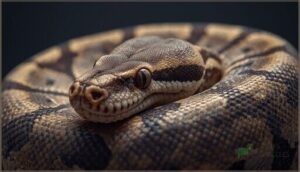
One of the first pre‑shedding symptoms you’ll notice is dull skin coloration — your snake’s usually vivid patterns look faded, almost washed out. This happens because fluid shifts between skin layers disrupt light reflection and scale hydration.
It’s not poor skin health; it’s skin renewal in progress. Dull skin usually appears 7 to 14 days before the shedding cycle timing completes, with full color restoration following shortly after.
Cloudy or Blue Eyes (Opaque Phase)
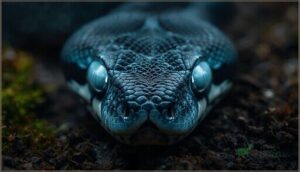
Around day 7 to 10 of the shedding cycle, your snake’s eyes shift from clear to a milky blue-gray.
This opaque phase happens because eye cap fluid builds up between the old and new spectacle layers.
Symmetric cloudiness — both eyes equally clouded — is a normal timeline marker, not illness.
Vision impairment during this phase is temporary, and these snake shedding signs usually clear within 1 to 3 days before the full shed.
Tight or Wrinkled Skin
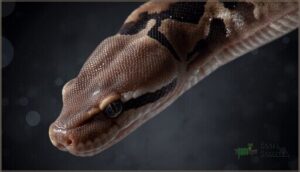
After the cloudy eyes clear, skin tightness usually follows within 2 to 4 days — a clear pre‑shed signal that the new layer is fully formed underneath. Watch for these skin signs:
- Tight fit: Scales look stretched, especially along the mid‑body
- Dull, dry texture: Vibrant colors fade noticeably
- Wrinkles on the tail: Often a humidity‑impact issue — keep enclosure humidity at 60–70%
Species variations matter too. Ball pythons tighten up fast post‑blue phase, while corn snakes wrinkle gradually. Persistent wrinkles between sheds are dehydration indicators, not normal pre‑shed changes.
Common Behavioral Changes Pre-Shed
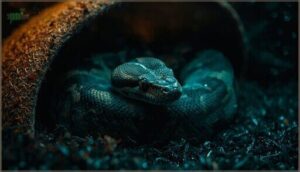
Before your snake sheds, its behavior often shifts in ways that can catch you off guard. These changes are completely normal, but knowing what to expect makes a big difference.
Here are the three most common behavioral signs to watch for.
Increased Hiding and Seclusion
Increased hiding is one of the clearest presented behavior changes you’ll notice. Your snake isn’t being antisocial — impaired vision from cloudy eyes makes everything feel threatening.
Ball pythons, driven by nocturnal instincts, show strong species-specific hiding, staying tucked away for 6 to 8 days.
Seclusion duration peaks mid-blue phase.
A warm, humid hide type preference helps loosen skin and eases stress indicators like defensive behavior and reduced activity.
Reduced Appetite or Food Refusal
Food refusal during the pre-shed phase is your snake’s body is making a smart trade. Metabolic shift redirects energy allocation away from digestion and toward skin regeneration.
Hormonal influence also dulls prey perception, so even a perfect feeder ignores meals.
Decreased activity and appetite loss usually begin 1–2 weeks before the blue-eye stage.
Don’t panic — appetite returns within 24–48 hours post-shed.
Defensive or Irritable Behavior
Your snake isn’t suddenly mean — it just can’t see you clearly. During the opaque phase, vision drops enough that even familiar hands feel like threats.
Irritability peaks around days 3–7, when Eye Clouding Aggression and Touch Sensitivity are highest.
Watch for these pre-shed behavioral red flags:
- Hissing Warning Signals before any contact
- Body Tension Coiling into a tight S-curve
- Strike Frequency Peaks at sudden movements
- Increased hiding and reduced appetite
- Stress-related refusal to eat despite normal conditions
Environmental Factors Affecting Pre-Shed Symptoms

Your snake’s environment plays a bigger role in pre-shed symptoms than most people realize.
Small things — like humidity levels, enclosure cleanliness, and water access — can make or break a smooth shed.
Here’s what to look at inside the enclosure.
Importance of Proper Humidity and Temperature
humidity and temperature as a team — they don’t work well apart.
For most snakes, ideal humidity levels sit around 60–80% during pre-shed, while a proper temperature gradient keeps the warm side near 88–92°F.
This humidity temperature synergy prevents incomplete shed in nearly 95% of cases.
Without that pre-shed moisture balance and correct heat spot placement, retained eye caps become a real risk.
Enclosure Setup and Cleanliness
Beyond proper humidity and temperature, your enclosure setup does a lot of heavy lifting. Keep substrate depth around 2–3 inches, and position a humid hide on the warm side packed with damp sphagnum moss. Add rough surfaces like cork bark for natural friction.
Daily spot cleaning prevents bacterial buildup, and escape-proof lids keep your snake secure during that irritable pre-shed phase.
Hydration and Water Access
Hydration matters more than most keepers realize during pre-shed. A clean water bowl, sized to your snake’s length, placed near the warm side encourages regular drinking. Watch for wrinkled neck skin or chalky urates — both signal dehydration. Keep hydration monitoring simple with these three steps:
- Soak in 80–84°F water for 15–30 minutes daily.
- Dip prey in water to add a moisture-rich diet boost.
- Change bowl water daily to prevent bacteria.
Pre-Shed Care Tips and Troubleshooting
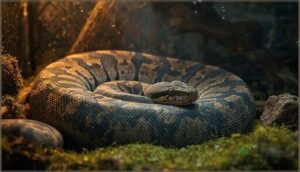
Once you notice the pre-shed signs, a few simple adjustments can make a real difference.
Your snake can’t tell you what it needs, but the right setup does most of the work for you.
Here’s what to focus on to keep things on track.
Creating an Optimal Shedding Environment
Getting the environment right makes shedding smoother for your snake. Substrate Choice matters — coconut fiber or cypress mulch hold ideal humidity between 50–70%. Humid Hide Placement on both warm and cool sides gives your snake options.
Below is a quick setup guide:
| Factor | Recommendation | Why It Matters |
|---|---|---|
| Substrate Choice | Coconut fiber, cypress mulch | Maintains 50–70% humidity |
| Humid Hide Placement | Warm and cool sides | Facilitates full shedding access |
| Airflow Management | Avoid drafts near enclosure | Prevents rapid moisture loss |
A shedding box — an opaque humidity box with damp sphagnum moss — helps prevent retained eye caps. Seasonal Adjustments and a consistent Lighting Cycle reduce stress during pre‑shed. Adequate hydration starts with fresh water always available.
Recognizing and Addressing Shedding Complications
Even a perfect setup doesn’t guarantee a clean shed. eye cap retention shows up as cloudy, wrinkled spectacles left over the eyes after shedding — retained eye caps can permanently damage the cornea if they layer up.
Tail constriction risk and toe shed issues follow the same pattern: stuck skin tightens like a tourniquet.
For safe removal techniques, soak your snake in lukewarm water for 20–30 minutes, then gently loosen with a damp cloth. Infection prevention means acting early — trapped moisture breeds bacteria fast.
When to Seek Veterinary Help
Some snake shedding problems need a vet, not a warm soak.
Retained eye caps that stay cloudy beyond 7–10 days post-shed, tail constriction with swelling or darkening, prolonged appetite loss lasting over two weeks — these aren’t wait-and-see situations.
Respiratory distress, open-mouth breathing, or severe lethargy that doesn’t lift are serious snake health issues impacting shedding.
Don’t hesitate to call.
Frequently Asked Questions (FAQs)
What happens to snakes before they shed?
Before shedding, your snake’s body quietly shifts gears.
Stress hormone fluctuations trigger lymph fluid redistribution beneath the skin, causing dull skin coloration and cloudy or bluish eyes — your first clear signal that the shedding cycle timing has begun.
Do snakes get lethargic before shedding?
Yes, snakes get lethargic before shedding. Hormonal shifts trigger a metabolic slowdown, and vision impairment from cloudy eyes reduces activity.
Energy allocation shifts to skin renewal, causing decreased activity and appetite loss for one to two weeks.
How long does a full shed cycle take?
A full shedding cycle usually runs 7 to 14 days. Juveniles move faster, cycling every 2 to 6 weeks, while adults average 2 to 4 months between sheds. Low humidity stretches the timeline.
Can snakes shed more often when stressed?
broken alarm – it won’t stop triggering.
Elevated stress hormone levels push snakes to shed every 10–14 days.
Parasite irritation, husbandry mistakes, and stress-related refusal to eat all drive an abnormally high snake shedding frequency.
Should you handle your snake before shedding?
It’s best to skip casual handling during the pre-shed phase. Your snake’s vision is impaired, raising bite risk and stress. Keep it hands-off unless there’s a clear health reason.
Do all snake species show pre-shed signs?
Not every snake sends you a clear memo before shedding. Species variability is real — some snakes shed with almost no warning, while others show textbook signs for days.
Can diet affect the quality of shedding?
diet directly affects shedding quality.
Proper Protein Balance, Calcium Ratio, Vitamin A Levels, and Hydration Sources through Prey Variety support smooth ecdysis.
Poor snake shedding and nutrition choices cause retained patches and incomplete sheds.
Conclusion
Shedding season signals something simple: your snake is healthy and growing.
Once you spot those pre shed symptoms in snakes—foggy eyes, dull color, food refusal—you’re already ahead.
Keep humidity steady, leave the skin alone, and resist the urge to intervene too quickly.
Most sheds complete cleanly when the enclosure is right.
Think of it less as a problem to solve and more as a process to support.
Your snake knows exactly what it’s doing.
- https://www.oreateai.com/blog/the-shedding-cycle-understanding-when-snakes-change-their-skin/8a81ca8123e4975333714b94058d82db
- https://onlinelibrary.wiley.com/doi/abs/10.1002/ece3.10364
- https://www.vetlexicon.com/exotis/reptiles/dermatology/articles/ecdysis-dysecdysis/
- https://www.furrycritter.com/pages/health/snakes/retained_eye_caps.htm
- https://pubmed.ncbi.nlm.nih.gov/12200405/