This site is supported by our readers. We may earn a commission, at no cost to you, if you purchase through links.

snake mite infestation can collapse a healthy enclosure in under two weeks. Ophionyssus natricis completes its full life cycle in as few as seven days, which means a handful of mites can become thousands before you notice anything is wrong. By then, your snake is already stressed, immunosuppressed, and fighting secondary infections it shouldn’t have to face.
The good news is that prevention is far simpler than treatment—and most of it doesn’t require a single chemical. Understanding how mites spread, what your snake’s behavior is telling you, and which natural methods actually work will give you real control over your animal’s environment.
Table Of Contents
- Key Takeaways
- What Are Snake Mites and Why Do They Matter?
- How to Identify a Snake Mite Infestation
- How Snake Mites Spread to Pet Snakes
- Quarantine and Enclosure Hygiene Practices
- Natural Remedies to Prevent and Treat Mites
- Using Predatory Mites as Biological Control
- Physical Barriers and Environmental Controls
- Long-Term Prevention and Reinfection Management
- Frequently Asked Questions (FAQs)
- How to 100% know your snake has mites?
- What can I spray on my snake for mites?
- How to get rid of snake mites naturally?
- Why do my snakes keep getting mites?
- How do I keep mites out of my snake enclosure?
- Where do snake mites come from in the house?
- Can snakes develop immunity to mites?
- How often should I inspect for mites?
- Are all snake species prone to mites?
- Can mites infect other pets in household?
- Conclusion
Key Takeaways
- Snake mites can complete their life cycle in as few as seven days, so a small problem becomes a serious infestation fast—weekly inspections are non-negotiable.
- Prevention beats treatment every time: proper quarantine, dedicated cleaning tools, and low-moisture substrates cut off the most common routes that mites use to reach your snake.
- Natural options like neem oil, diatomaceous earth, and predatory mites (such as Taurrus) can effectively control mites without exposing your snake to harsh chemicals.
- If your snake stops eating, shows signs of respiratory distress, or mites return after two full clean cycles, it’s time to call a reptile vet—don’t wait it out.
What Are Snake Mites and Why Do They Matter?

Snake mites are tiny but they can do serious damage to your pet’s health if left unchecked. Before you can stop them, it helps to know exactly what you’re dealing with.
A ball python vet guide can help you catch the early warning signs before mites spiral into a bigger health crisis.
Here’s what you need to understand about these parasites — and why they matter more than most keepers realize.
Physical Characteristics and Biology
Snake mites (Ophionyssus natricis) are obligate hematophagous arachnids — they survive exclusively on blood.
Their Body Morphology is built for stealth: flattened bodies, eight legs with Leg Structure suited for gripping scales, and Mouthpart Adaptations that are sharp enough to pierce skin.
Coloration Variability ranges from pale to reddish-brown after feeding.
The mite life cycle moves through four Life Cycle Stages:
- Egg → larva → nymph → adult
- Cycle completes in as little as 7 days
- Each mite life stage can feed on your snake
Health Risks for Your Pet Snake
Those tiny feeders do real damage. Heavy infestations trigger stress immunosuppression in snakes, leaving the immune system too depleted to fight back.
Skin infections follow quickly when mite feeding breaks the skin barrier. From there, secondary infections can spiral into respiratory disease or even septicemia risk.
Health effects of mite infestations also include a Salmonella risk to you during handling — especially if children or elderly family members are involved.
Which Snake Species Are Most Vulnerable
Not every snake faces the same level of risk. Ball pythons and corn snakes top the vulnerability list due to their thin skin and high stress sensitivity.
Restricted Range Species, Habitat Specialist Snakes, and Climate Sensitive Species face compounding pressure from mite stress on top of existing threats.
Species with Low Reproductive Rates recover slowly after infestations.
Trade Exploited Snakes often arrive already carrying mites, making natural snake mite control your first line of defense.
How to Identify a Snake Mite Infestation
Catching mites early makes all the difference for your snake’s health.
The signs aren’t always obvious at first, but once you know what to look for, they’re hard to miss.
Here’s what to watch for across three key areas.
Physical Symptoms to Look For
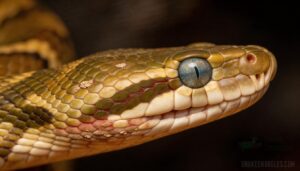
Mites leave a trail you can read if you know what to look for.
Check for skin redness, rough patches, or small scabs along the body. Scale loss around the head and neck is a red flag.
Look closely at the eyes — eye swelling and speckled black or red dots near the face are common.
Abnormal shedding, visible weight loss, and dull skin may signal anemia or early seborrhea.
Behavioral Warning Signs

Your snake’s behavior tells you more than its skin sometimes. When mites are present, subtle shifts appear before the infestation becomes obvious.
Watch for:
- Excessive hiding or staying buried longer than usual
- Restless movement and frequent position changes
- Reduced feeding or outright food refusal
- Altered shedding with patchy or incomplete skin release
- Increased rubbing against hides and enclosure walls
These signs and symptoms deserve immediate attention.
How to Inspect Your Snake for Mites
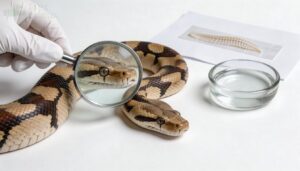
A thorough look takes less than five minutes and catches problems early. Press clear tape against suspect areas — the Tape Lift Method — then lay it on white paper under bright light. Use the Magnifying Glass Technique along scale edges, the vent, and lip grooves. Water Bowl Inspection reveals drowned mites daily. Combine Enclosure Surface Scans and Handling Transfer Checks for complete mite infestation detection.
| Inspection Method | Where to Focus |
|---|---|
| Magnifying Glass Technique | Eyes, vent, labial pits |
| Tape Lift Method | Scale surfaces, shed skin |
| Water Bowl Inspection | Bowl rim, nearby substrate |
For detailed guidance, refer to the safe snake mite treatment options page.
How Snake Mites Spread to Pet Snakes
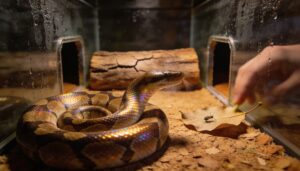
Mites don’t just appear out of nowhere — they always have a way in. Understanding how they reach your snake is the first step to keeping them out for good.
Here are the three most common routes of entry you need to know about.
New Snakes and Equipment From Outside Sources
Most infestations start before you ever open the enclosure. Source verification matters — captive-bred snakes from closed collections carry far less risk than animals cycled through expos or crowded pet stores. Practice seller transparency by asking about quarantine history and cleaning routines.
Watch for these entry points:
- Shipping materials — mites hide in bag folds, deli cup rims, and cardboard seams.
- Packaging inspection — dark specks on white paper signal live mites.
- Tool segregation — used hides or décor from unknown sources can harbor eggs.
Cross-Contamination Between Enclosures
One enclosure becomes five fast — that’s how outbreaks spread in multi-snake collections. Shared cleaning tools carry mites between setups without you noticing.
Separate transport carts, dedicated cleaning tools per enclosure, and hardware disinfection protocols are your frontline biosecurity protocols.
No splash zones between racks prevent water droplets from moving hitchhikers. Airflow management reduces drift.
Solid enclosure sanitation habits and preventive mite management protect every animal you own.
Human Carriers and Handling Risks
You’re the biggest mite vector in your own collection. Without a Glove Rotation Protocol and Tool Sanitization Routine, your hands and clothing transfer mites between enclosures silently.
- Swap Personal Protective Equipment between each snake
- Follow Hand Hygiene Practices before touching clean enclosures
- Apply Clothing Decontamination after visiting other collections
- Maintain biosecurity protocols during quarantine periods
Protective gear and hand hygiene keep you safe for humans and snakes alike.
Quarantine and Enclosure Hygiene Practices
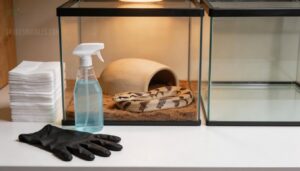
Good hygiene and smart quarantine habits are your first real line of defense against mites. Before mites ever get a foothold, your routine either stops them or gives them room to spread.
Here’s what that looks like in practice.
Setting Up a Proper Quarantine for New Snakes
Every new snake is an unknown variable until proven otherwise. A proper Isolation Enclosure Design uses paper towel substrate, one hide, and a water bowl — nothing more.
Follow strict Quarantine Duration Guidelines: minimum 30 days, ideally 60 to 90. Use Dedicated Tools Equipment that never touch your main collection.
Apply a Biosecure Handling Protocol, and track health changes with Environmental Monitoring Devices throughout your quarantine procedures for new reptiles.
Daily and Weekly Cleaning Routines
Quarantine only works if your cleaning keeps pace with it. A solid Spot Cleaning Protocol means wiping surfaces, pulling shed skin, and checking the water bowl area daily.
Moisture Control matters too — remove wet substrate before mites find it.
Keep Tool Hygiene tight, rotate Enclosure contact consistently, and run a Deep Clean Schedule weekly.
These routine husbandry practices, to prevent mite infestations, are your real first defense.
Sterilizing Décor, Substrate, and Accessories
Clean décor and substrate go hand in hand with your daily routines. Heat Treatment works well for wood and stone — boil small pieces for up to five minutes or bake at around 95°C for an hour. Bleach Disinfection with a 5% solution and full rinsing treats hard surfaces. Hydrogen Peroxide is a gentler option that breaks down safely.
Always allow full Cooling Drying before returning items. Tool Sterilization closes the loop.
Natural Remedies to Prevent and Treat Mites
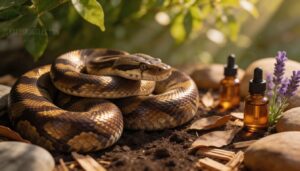
When mites show up, you don’t always need to reach for a chemical spray. Several natural options can help prevent and treat infestations while keeping your snake safe.
Here are three worth knowing.
Neem Oil, Clove Oil, and Tea Tree Oil Use
Neem oil, clove oil, and tea tree oil each target snake mites effectively — but only when you respect their limits.
Carrier oil choice matters: always dilute before applying.
Neem disrupts mite growth cycles, clove kills on contact, and tea tree works best as a spot application on stubborn areas.
Synergistic blends combining all three boost results, but keep concentrations low.
Irritation safety isn’t optional — your snake’s skin is sensitive.
Food-Grade Diatomaceous Earth Application
Food-grade diatomaceous earth works where oils can’t reach — along seams, under hides, and in corners where snake mites crawl.
This nonchemical treatment kills through mechanical desiccation, not toxins. Its dry application damages mites’ waxy coating, dehydrating them on contact.
- Move your snake out before dusting
- Apply a thin layer using a careful Coverage Strategy along enclosure edges
- Follow a Reapplication Schedule after any cleaning or dampening
- Use only food-grade diatomaceous earth — purity matters for safety
- Keep the Dusting Technique light; heavy piles reduce its effectiveness against mite infestation
Safe Natural Soaks to Remove Mites
warm soak is one of the simplest forms of natural snake mite control you can use today. A brief Warm Water Rinse loosens mites without chemicals. A Mild Soap Bath targets the head and underside.
Always practice Essential Oil Avoidance — oils like tea tree can irritate skin. Skip Salt Vinegar Risks entirely.
Finish with Post-Soak Sanitizing of the container.
| Method | Benefit | Caution |
|---|---|---|
| Warm Water Rinse | Dislodges surface mites | Keep it short |
| Mild Soap Bath | Cleans hard-to-reach areas | Rinse thoroughly |
| Post-Soak Sanitizing | Prevents mite reattachment | Clean container immediately |
Using Predatory Mites as Biological Control
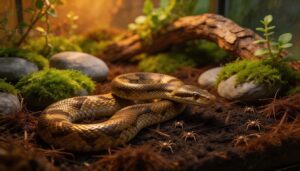
Sometimes the best solution to a pest problem isn’t a chemical — it’s another creature.
Predatory mites are small, harmless hunters that seek out and eliminate snake mites naturally, without putting your reptile at risk.
Here’s what you need to know to use them effectively.
What Predatory Mites Are and How They Work
Think of predatory mites as a living security system for your snake’s enclosure. These tiny natural predators hunt pest mites across all life cycle stages — eggs, nymphs, and adults — using a simple but effective feeding strategy: they pierce prey and extract fluids, killing on contact.
Predatory mites are a living security system, hunting pest mites through every life stage and killing on contact
Their population growth tracks prey availability, so they scale up when needed.
Taurrus live predatory mites are a trusted predatory mite biological control option with a broad prey spectrum and minimal environmental requirements.
Best Predatory Mite Species for Snake Enclosures
Not all predatory mite species perform equally in every enclosure.
For species efficacy comparison, habitat suitability and temperature tolerance matter.
Taurrus live predatory mites — consisting of Cheyletus eruditus — target Ophionyssus natricis directly, consuming both adults and eggs.
Taurrus predatory mites suit most setups, while a combined predatory mite species release offers broader, more reliable coverage.
Hypoaspis miles works deeper, hunting mites through the substrate layer.
Step-by-Step Application in Your Enclosure
Start by removing all substrate and décor, then sanitize every surface before introducing the predatory mites.
Layered application matters — sprinkle the live bottle evenly into corners, crevices, and under hides. Ventilation setup keeps conditions stable without drying mites out too fast.
Maintain timing intervals of two to four weeks for post-treatment monitoring. Biological control and enclosure sanitation work together, not separately.
Using Predatory Mites in Bioactive Setups
Bioactive setups are actually where predatory mites shine most.
Because the substrate stays moist and layered, pest eggs and early-stage mites have plenty of places to hide — and that’s exactly where species like Taurrus predatory mites hunt.
- Clean-up Crew Compatibility: They coexist with springtails and isopods without disrupting your existing system
- Predatory Mite Dosage: Apply 100–500 mites per square foot based on pest pressure
- Substrate Moisture Management: Stable humidity keeps predators active longer
Physical Barriers and Environmental Controls

Sometimes the best defense is just making your snake’s home a harder place for mites to survive. A few simple adjustments to the enclosure can cut off the routes mites use to get in, spread, and thrive.
Here are three areas worth focusing on.
Sealing Enclosure Gaps to Block Mite Entry
Mites don’t knock — they squeeze through gaps you’ve never noticed. Check where the lid meets the walls, around cable entry points, and along the floor edge.
Apply foam weatherstripping or aquarium-safe silicone for Lid Gasket Maintenance and Seam Caulking Techniques. Cover vents with Hardware Cloth Venting, handle Cable Entry Sealing with steel wool first, and pack Floor Gap Stuffing tight before sealing over it.
Managing Humidity and Ventilation Levels
Once the gaps are sealed, your next job is the air inside.
Humidity above 75% is a mite’s comfort zone. Keep it below that threshold by pairing smart Humidity Sensor Placement — mid‑enclosure, not near the heat source — with Airflow Direction Strategies that exhaust moist air from the top.
Here’s what Temp Humidity Balance actually protects:
- Stable readings prevent Condensation Hotspot Prevention failures under hides
- Ventilation Fan Types that pull air upward reduce dead zones where mites persist
- Consistent ventilation efficiency stops moisture from pooling in corners
- Environmental sealing works only when humidity stays controlled behind it
Substrate Choices That Reduce Mite Hiding Spots
What you put on the floor matters more than you’d think. low moisture bedding like paper towel substrate or tile flooring gives mites nowhere to burrow or hide eggs.
paper towel liners are easy to swap out completely, making substrate cleaning a full reset rather than a partial fix. replaceable liners beat any deep clean.
fibrous, porous options — particle size control and dry surfaces are your simplest long-term defense.
Long-Term Prevention and Reinfection Management
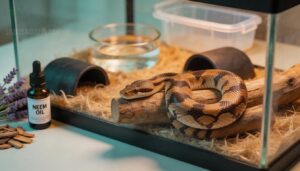
Getting rid of mites is a win, but keeping them gone takes a little more intention. The good news is that a few simple habits go a long way toward making reinfestations rare.
Here’s what consistent, long-term prevention actually looks like in practice.
Building a Consistent Mite-Prevention Routine
Consistency is your strongest defense against mites. A structured routine removes guesswork and keeps small problems from becoming serious ones.
- Inspection Schedule – Check your snake and enclosure surfaces weekly using bright, direct light.
- Logbook Tracking – Record dates, findings, and any behavioral changes after handling.
- Hand Hygiene – Wash hands before and after every interaction.
- Tool Segregation – Store dedicated enclosure tools in a closed bin between uses.
- Temperature Cycling – Raise local temperatures during routine cleaning to reduce mite survival.
Monitoring for Reinfestation After Treatment
Treatment clears the adults, but eggs hatch days later. That’s why inspection frequency matters more after treatment than before it.
Check hotspot sampling areas — hides, heat zones, water bowl edges — every three to four days. Log what you find. Even "none seen" is useful data.
If mites reappear, your data logging pinpoints exactly when the cycle restarted, giving you a clear threshold trigger to act again.
When to Consult a Reptile Veterinarian
Some signs go beyond what home care can fix. Call a reptile vet when you notice:
- Appetite loss lasting more than one or two weeks
- Respiratory distress — wheezing, open-mouth breathing, or mucus discharge
- Eye lesions — swelling, cloudiness, or inability to close the eyelid
- Persistent infestation after two full clean cycles
- Systemic illness signs like pale gums or rapid weight loss
Frequently Asked Questions (FAQs)
How to 100% know your snake has mites?
Tiny uninvited hitchhikers are easier to confirm than you’d think.
Check the eye creases, chin fold, and vent using a magnifying glass — those are your hotspot zones for identifying snake mite infestations fast.
What can I spray on my snake for mites?
You can spray a diluted neem oil or tea tree oil solution directly on your snake’s scales. Clove oil works too. Always dilute essential oils first — concentrated oils irritate skin.
How to get rid of snake mites naturally?
When mites dig in, tackle them from every angle. Use warm soapy soaks, neem oil, or predatory mites like Taurrus for safe, natural snake mite control without harsh chemicals.
Why do my snakes keep getting mites?
Recurring snake mites usually point to hidden egg reservoirs surviving in your clean, microclimate hotspots with ideal humidity, handling protocol gaps or enclosure design flaws, letting mites persist through treatment cycles undetected.
How do I keep mites out of my snake enclosure?
Ironically, the cleanest-looking enclosure can still harbor mites. Dedicated tool sets, lidded storage containers, and separate cleaning brushes per enclosure are your first line of defense.
Where do snake mites come from in the house?
Snake mites almost always hitch a ride inside your home.
most common culprits are new snakes, pet store packaging, shared cleaning tools, and even visitor footwear after contact with other reptile collections.
Can snakes develop immunity to mites?
No, your snake won’t build reliable immunity to mites. Their immune system can recognize the threat, but repeated exposure keeps it reactive rather than protective.
How often should I inspect for mites?
Weekly baseline checks are your foundation. Add post handling inspections, quarantine entry checks, and post cleaning scans. During warm seasons, tighten your seasonal schedule — mites move faster when it’s humid.
Are all snake species prone to mites?
Not every species sits equally in the crosshairs.
Captive snakes face universal snake mite risk, but species susceptibility variance is real — ball pythons and corn snakes tend to draw heavier infestations than others.
Can mites infect other pets in household?
Cross-species transmission is real, but limited. Most snake mites won’t infest your dog or cat, but shared bedding risk and grooming tool contamination can move other mite species between pets.
Keep handling routines separate.
Conclusion
Investigate the truth of a proactive approach to snake care, and you’ll find that preventing mites is both achievable and essential for your pet’s well-being. By understanding how mites spread and using natural methods to control them, you can create a safe environment for your snake.
Preventing mites in pet snakes naturally requires attention to detail and consistency, but the payoff is a healthy, thriving pet. Stay vigilant and proactive for a mite-free home.