This site is supported by our readers. We may earn a commission, at no cost to you, if you purchase through links.
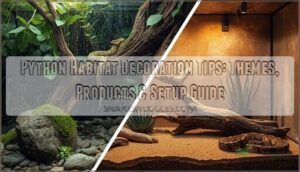
Your python’s enclosure isn’t just a box with a heat lamp—it’s a living ecosystem that shapes every aspect of your snake’s physical health, mental stimulation, and natural behavior patterns. A bland, sterile setup might keep your python alive, but a thoughtfully decorated habitat with strategic substrate choices, enrichment features, and climate control transforms survival into thriving.
Whether you’re drawn to the stark beauty of a desert oasis theme or the lush complexity of a tropical rainforest build, mastering python habitat decoration tips means understanding how each element—from the texture of your substrate to the placement of climbing branches—works together to create a microhabitat that mirrors your species’ wild environment and unlocks their most fascinating behaviors.
Table Of Contents
- Key Takeaways
- Creative Python Enclosure Theme Ideas
- Choosing Safe Substrates and Hides
- Decor and Climbing Features for Enrichment
- Heating, Lighting, and Humidity Essentials
- Top 10 Python Habitat Decoration Products
- 1. Zoo Med Reptile Day and Night Bulbs
- 2. Zoo Med Clay Burrow Substrate
- 3. Zilla Reptile Rock Lair Hideout
- 4. Artificial Succulent Plant Set
- 5. Reptile Heat Lamp Bulbs Set
- 6. Fluker’s Reptile Corner Bowl
- 7. Exo Terra Reptile Water Dish
- 8. Coconut Fiber Reptile Bedding Substrate
- 9. Natural Reptile Hide Log
- 10. Reptile Terrarium Plant Decor Set
- Frequently Asked Questions (FAQs)
- Can ball pythons swim in water features?
- Do ball pythons recognize their owners over time?
- How often should substrate depth be adjusted?
- What sounds or vibrations disturb ball pythons most?
- Are there benefits to housing multiple ball pythons together?
- How often should I rotate decorations?
- Can pythons recognize their own enclosure setup?
- What materials should I avoid for python safety?
- Do pythons prefer darker or brighter enclosures?
- How do I clean climbing structures effectively?
- Conclusion
Key Takeaways
- Effective python habitats require strategic substrate selection, proper temperature gradients (88-92°F warm side, 76-80°F cool side), and 50-60% humidity levels maintained through substrate choice and misting systems rather than just basic containment.
- Enrichment features like climbing branches at varied heights, textured surfaces, hide placements, and themed decor (desert oasis, tropical rainforest, rocky canyon, jungle canopy, or cave dweller) unlock natural behaviors and reduce stress beyond what sterile setups provide.
- Safety demands avoiding toxic materials like cedar, pine, pressure-treated wood, and uncured silicone while prioritizing non-porous, organic substrates such as coconut fiber and using products with proper thermostat controls to prevent burns or respiratory issues.
- Habitat decoration should balance aesthetics with function by rotating decor every 6-8 weeks for mental stimulation, maintaining at least one familiar element for security, and selecting products that serve multiple purposes like hides with basking platforms or corner bowls that maximize floor space.
Creative Python Enclosure Theme Ideas
Choosing a theme for your ball python’s enclosure transforms a functional habitat into an engaging, enriching environment that benefits both you and your snake. The right theme doesn’t just look impressive—it caters to your python’s natural behaviors, humidity needs, and comfort while making daily maintenance easier.
Before selecting a theme, confirm your setup meets the baseline requirements using a ball python enclosure size calculator to ensure adequate space for your snake’s adult size.
Below, you’ll find five proven enclosure themes that combine aesthetics with proper husbandry practices.
Desert Oasis Enclosure Tips
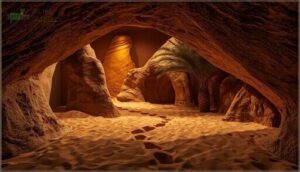
Desert Oasis enclosures transform your python’s home into a mesmerizing arid landscape. You’ll create a central sandstone plateau that reaches 90-110°F under a spot heat lamp, paired with compact rock formations and a dry riverbed.
Use a desert substrate mix of sand and coconut fiber for excellent drainage, then add sandy hides beneath artificial palm fronds and textured foam rocks for exploration.
Tropical Rainforest Enclosure Tips
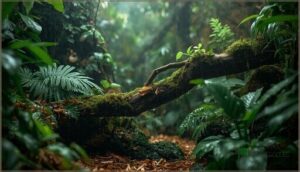
Tropical Rainforest themes shift from arid landscapes to lush, humid environments that mimic canopy conditions.
You’ll want high humidity plants and moisture control systems, maintaining 60-70% humidity through naturalistic vivarium setups with layered plant arrangements and faux mist.
Your tropical terrarium setup should feature broad-leafed vegetation, coconut fiber substrate for humidity management, and tropical lighting that creates dappled shade across your reptile enclosure decor.
To better understand the importance of proper humidity levels, specialized setups for rainforest terrariums are recommended.
Rocky Canyon Enclosure Tips
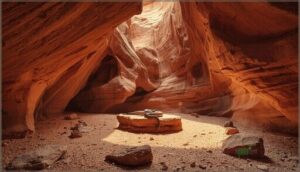
Moving from moisture-rich setups, rocky canyon enclosures recreate arid terrain design with dramatic vertical appeal. Your naturalistic vivarium needs angled rock formation elements reaching 40-60 cm to establish basking zones and rocky cliff face aesthetics, paired with desert landscaping using crushed granite substrate.
Canyon lighting with basking temps of 32-38°C highlights the rocky decor, transforming your reptile enclosure decor into a stunning southwest landscape.
Jungle Canopy Enclosure Tips
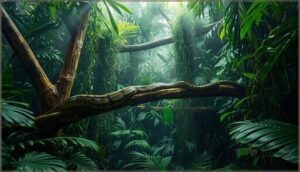
Vertical drama reaches new heights in jungle canopy setups, where naturalistic snake vivariums blend climbing structures with dense tropical rainforest aesthetics.
Your canopy design demands strategic branch placement at multiple heights (15-45 cm intervals), creating a vine paradise through careful vines management that fosters natural behaviors.
Plant selection and misting systems working in tandem maintain 60-80% humidity—the jungle explorer environment your python craves for ideal health and enrichment. Another important consideration is using a bioactive substrate with drainage to help manage moisture and create a naturalistic base for plant and animal life.
Cave Dweller Enclosure Tips
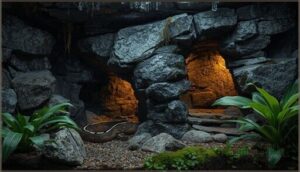
For species craving deep seclusion, cave dweller builds deliver darkness and security through strategic hide placement within authentic rock formation tunnels. Your cave lighting setup requires low-wattage ambient temperature controls (70-78°F) paired with moisture control substrates like cork bark and moss—creating underground refuge aesthetics reminiscent of rocky canyon hides.
These decorations transform standard terrariums into subterranean sanctuaries where pythons thrive in dimly-lit comfort.
Choosing Safe Substrates and Hides
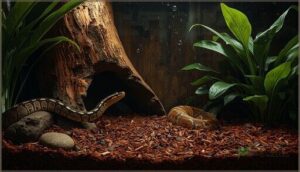
Your python’s health depends on the foundation you build—literally. The substrate you choose affects everything from humidity retention to respiratory health, while proper hides give your snake the security it needs to thrive.
Let’s break down how to select materials that match your enclosure theme while keeping your python safe and comfortable.
Selecting The Right Substrate for Your Theme
Your substrate choice shapes the entire environment, so you’ll want to match it to your theme while prioritizing your python’s health. Desert Oasis setups thrive with sand-colored substrates and fine-grade options that minimize dust, while Tropical Rainforest enclosures demand coconut fiber or hardwood mulch for exceptional moisture control.
Rocky Canyon themes work best with coarse sand and pea gravel combinations that allow burrowing options, and Jungle Canopy designs benefit from organic topsoil blends with sphagnum moss.
Maintaining Proper Humidity Levels
Humidity control starts with a reliable hygrometer placed mid-enclosure to track moisture between 50-60 percent, preventing respiratory issues and poor sheds. Your substrate choice directly impacts humidity retention, so monitor readings after misting or refilling your water dish.
- Check your hygrometer daily to catch dangerous humidity swings before they stress your python
- Use misting systems or ventilation control to adjust moisture levels based on your theme’s requirements
- Calibrate humidity sensors monthly to guarantee accurate readings and ideal habitat conditions
Proper humidity management transforms your enclosure from basic to thriving.
Best Hide Options for Comfort and Security
Your python’s sense of security hinges on hide material that blocks sight lines and provides snug comfort zones—aim for ceramic cave hides with 1.5-inch openings or cork bark tunnels that create effective visual barriers while maintaining stable thermal hides.
Layering substrate around hollow logs and adding decorations like a cork bark castle or climbing rope challenge transforms basic hides into multi-functional security features your snake will actually use.
Organic and Non-Toxic Material Choices
Natural fibers like organic cotton, hemp, and bamboo deliver non-toxic coatings that protect your python from synthetic pesticides while supporting sustainable materials in bioactive enclosure setups. You’ll want to prioritize these eco-friendly pet products for naturalistic vivarium builds.
Organic cotton, hemp, and bamboo offer non-toxic, sustainable alternatives that protect your python from harmful pesticides in bioactive enclosures
- FSC-certified cork and bamboo for climbing platforms without chemical treatments
- Water-based sealants reducing VOC exposure in naturalistic reptile habitats
- Coconut fiber substrates offering biodegradable organic substrates for sustainable design
Decor and Climbing Features for Enrichment
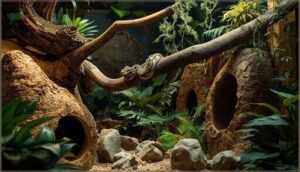
Your python’s enclosure shouldn’t just meet basic needs—it should spark natural behaviors and keep your snake mentally engaged.
Thoughtfully chosen decor transforms a simple tank into an environment that encourages climbing, exploring, and thriving.
Let’s break down the essential enrichment features that’ll turn your python’s habitat into a vibrant, stimulating space.
Incorporating Artificial and Live Plants
You can build a stunning botanical mix by combining fake plants with hardy live species like pothos, sansevieria, and bromeliad to create a live plant oasis that balances visual appeal with practical care.
Strategic plant placement transforms empty corners into a lush green wall, while varying leaf texture and subtle floral arrangements add depth and naturalism that’ll keep your python engaged and comfortable.
Adding Climbing Branches and Vines
Beyond creating that botanical foundation, climbing structures and vine placement offer real enrichment activities your python will actually use. Position branches starting at mid height—secured with zip ties rated for outdoor use—then vary thickness from 1 to 4 inches to simulate natural textures.
Here’s your setup plan:
- Secure cork bark or driftwood with stable railing fasteners
- Add braided vines for grip and climbing challenge
- Inspect weekly for loosened fasteners
- Rotate branches every 6 to 8 weeks
Using Rocks, Logs, and Moss for Stimulation
Rocks, logs, and moss enrichment bring your terrarium design to life with natural enrichment that keeps your python exploring. Strategic rock placement forms mini hides and varied ledges for basking or balance exercises, while logs covered in moss create cooler, textured surfaces that hold humidity and encourage tactile interaction.
Keep moss evenly moist—not waterlogged—and choose rough-textured, pesticide-free materials to build a truly naturalistic habitat your snake will thrive in.
Creating Textured Surfaces and Exploration Zones
Surface Variation and Zone Transitions transform basic Terrarium Design into rich Microhabitat Creation that sparks exploration. Layered Texture Design using rough slate, bark, and cork encourages your Ball Python to survey different zones, while asymmetrical paths around Climbing Structures and Hides promote natural foraging behaviors.
Exploration Layout essentials include:
- Distinct height levels combining dry Substrate patches with shallow moisture zones
- Textured surfaces offering grip and visual depth for active navigation
- Clear transitions between warm and cool areas reducing stress
- Modular elements you can reconfigure as your snake grows
Heating, Lighting, and Humidity Essentials
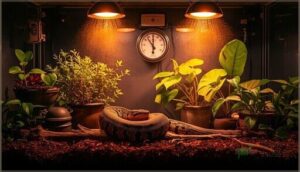
Getting your python’s environment dialed in isn’t just about decoration—you need to nail the basics of heat, light, and moisture before anything else matters.
Temperature gradients, proper lighting cycles, and consistent humidity levels form the foundation that keeps your snake healthy, active, and thriving in whatever theme you’ve created. Let’s break down the essential equipment and techniques you’ll need to maintain these critical environmental conditions.
Setting Up Heat Lamps and Pads
Temperature control starts with choosing the right heat sources—use a ceramic heat emitter or low-wattage heat lamp for overhead heating, and pair it with an under-tank pad for belly warmth. Position your lamp 10 to 12 inches above the basking zone, always install a thermostat to monitor temperature fluctuations, and make certain proper heat distribution across your gradient.
Lamp safety means securing fixtures away from humidity zones.
Choosing The Right Lighting for Ambiance
Lighting choices shape your python’s sense of security and natural rhythm, so layered lighting with low-intensity LEDs works best for ambient illumination without stress. You can adjust color temperatures between 2700K and 3000K for warm, natural tones.
Install dimmer controls to shift intensity throughout the day, and choose LED options that deliver energy efficiency while maintaining proper temperature and humidity levels—skip UVB lighting since ball pythons don’t require it for calcium synthesis.
Managing Temperature Gradients
Thermal balance drives every aspect of your python’s health, so you’ll create distinct climate zones by positioning heat sources to establish a warm side at 88–92°F and a cool side around 76–80°F.
Master this gradient through:
- Digital thermometers with probes on both zones for gradient monitoring
- Under-tank heating pads placed on one side only
- Adjustable heat lamps for precise temperature control
- Daily temperature readings to verify thermoregulation zones
- Strategic substrate layering for improved heating distribution
Ensuring Proper Humidity and Water Sources
Humidity thrives between 50–60 percent through strategic moisture management—you’ll monitor levels with digital hygrometers while using misting systems on timers to prevent oversaturation.
Place a water dish large enough for soaking, changing it daily to maintain water quality, and select moisture-retaining substrate like coconut fiber to stabilize evaporation rates while supporting your python’s hydration systems and humidity control needs.
Top 10 Python Habitat Decoration Products
You’ve nailed down your python’s heating, lighting, and humidity needs—now it’s time to bring the habitat to life with the right decor.
The products you choose don’t just add visual appeal, they directly impact your snake’s comfort, security, and overall enrichment. Here are ten essential habitat decoration products that strike the perfect balance between functionality and creating a naturalistic environment your python will thrive in.
1. Zoo Med Reptile Day and Night Bulbs
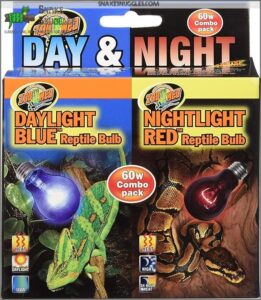
Zoo Med’s day and night bulb combo gives you round-the-clock climate control without constantly swapping fixtures, which makes habitat management far more efficient. The Daylight Blue bulb delivers 60 watts of heat with UVA rays that stimulate natural feeding behaviors and activity levels, while the true red glass nighttime bulb maintains consistent temperatures for nocturnal observation without disrupting your python’s sleep cycle.
You’ll appreciate the European quality construction designed for extended burn life, and both bulbs fit standard terrarium fixtures perfectly.
| Best For | Reptile owners who need a simple two-bulb system to maintain proper daytime heat and UVA exposure while also providing nighttime warmth without disturbing their pet’s natural sleep patterns. |
|---|---|
| Material | Glass |
| Brand | Zoo Med |
| Color | Red and Blue |
| Primary Use | Heating/Lighting |
| Weight | 3.2 oz |
| Maintenance Level | Replace bulbs |
| Additional Features |
|
- Convenient combo pack covers both day and night heating needs in one purchase
- Blue bulb provides beneficial UVA rays that encourage natural behaviors like feeding and activity
- Red nighttime bulb lets you observe nocturnal reptiles without disrupting their rest cycle
- Multiple users report bulbs burning out in under 30 days, raising durability concerns
- Blue daylight bulb may be too bright for smaller enclosures or light-sensitive species
- Some bulbs arrive defective or fail quickly, suggesting inconsistent quality control
2. Zoo Med Clay Burrow Substrate
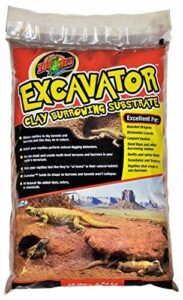
If you’re working with burrowing species like sand boas or leopard geckos, this natural clay substrate transforms your enclosure into a customizable underground kingdom. The Excavator formula holds its shape after molding, letting you sculpt terraces, tunnels, and elevated platforms that won’t collapse under your python’s weight.
You can mix it with other substrates for ideal texture, and it retains moisture pockets around burrows to support local humidity without breaking down quickly. Made in the USA without synthetic dyes or chemical binders, it’s safe even if ingested during normal activity.
| Best For | Reptile owners with burrowing species like leopard geckos, sand boas, or bearded dragons who want to create stable tunnels and naturalistic terrain features. |
|---|---|
| Material | Clay/Substrate |
| Brand | Zoo Med |
| Color | Beige |
| Primary Use | Substrate/Burrowing |
| Weight | 10 lbs |
| Maintenance Level | Minimal |
| Additional Features |
|
- Holds its shape after molding so you can build custom tunnels, caves, and terraces that won’t collapse
- Can be mixed with other substrates and reconstituted with water for easy adjustments
- Made in the USA without synthetic dyes or harmful chemical binders
- More expensive than basic substrate options like sand or coconut fiber
- You’ll likely need multiple 10-pound bags to adequately cover larger enclosures
- Heavy and bulky to store or transport compared to lighter alternatives
3. Zilla Reptile Rock Lair Hideout
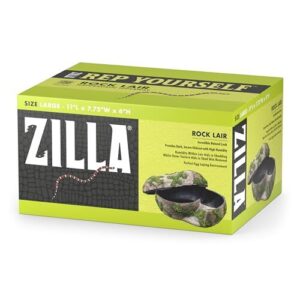
This realistic rock hide delivers a dual-function fortress that works across desert, canyon, and tropical setups without looking out of place. The Zilla Rock Lair’s non-porous exterior resists bacterial growth and cleans fast with warm soapy water, while its solid top and side entrance trap humidity around your python during shed cycles.
Available in sizes from small geckos to large snakes, the integrated basking platform lets you stack heat and UV exposure in one footprint, and the textured surface doubles as a rubbing post for skin renewal.
| Best For | Reptile owners seeking a naturalistic hide that maintains humidity for healthy shedding while blending into desert, canyon, or tropical enclosures. |
|---|---|
| Material | Plastic |
| Brand | Zilla |
| Color | Grey |
| Primary Use | Hide/Shelter |
| Weight | Not specified |
| Maintenance Level | Easy to clean |
| Additional Features |
|
- Dual-purpose design with integrated basking platform maximizes cage space
- Non-porous surface resists bacteria and cleans easily with soap and water
- Textured exterior helps reptiles rub off shed skin naturally
- Heavy construction requires careful handling to avoid drops and breaks
- May need sizing up as your reptile grows larger
- Some units arrive damaged during shipping, though replacements ship quickly
4. Artificial Succulent Plant Set
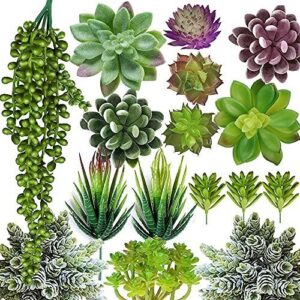
Desert themes demand low-maintenance accents that won’t wilt under ceramic heat, and Anoak’s 16-piece plastic succulent set delivers exactly that versatility. You’ll get varied sizes from 1.57″ to 5.9″ wide in realistic multi-color greens with flocking coating that mimics real texture without the watering schedules.
The odorless, pet-safe construction installs instantly in sandy substrate or atop rock hides, creating that authentic arid aesthetic for $17.99—and when stems detach during rearranging, you can press them right back into position.
| Best For | Reptile owners who want realistic desert aesthetics without the hassle of keeping live succulents alive in varying humidity conditions. |
|---|---|
| Material | Plastic |
| Brand | Anoak |
| Color | Green/Multi |
| Primary Use | Decoration |
| Weight | Lightweight |
| Maintenance Level | None required |
| Additional Features |
|
- 16 varied pieces let you create custom arrangements that fit any tank size or layout
- Pet-safe and odorless materials won’t harm curious reptiles who investigate decorations
- Flocked coating adds texture that looks surprisingly realistic compared to standard plastic plants
- Stems can detach when repositioning, though they’re easy to reattach
- Material quality may show wear over time despite being durable
- Plastic appearance might be noticeable up close for those wanting ultra-realistic plants
5. Reptile Heat Lamp Bulbs Set
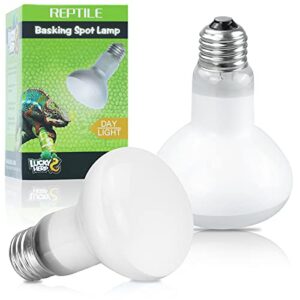
Beyond static decor, your python’s thermal needs demand focused attention—and LUCKY HERP’s 100-watt heat lamps deliver that precision with R25 incandescent bulbs that emit UVA rays alongside consistent warmth.
You’ll mount these in standard E26 bases 6 to 12 inches above basking zones, creating that critical 88–92°F gradient while the 2,000-hour service life ensures months of reliable operation. At under $20, they’re budget-friendly insurance against temperature drops, though you’ll need ceramic holders and thermostats since dimmer compatibility isn’t supported.
| Best For | Ball python owners who need a straightforward, budget-friendly heating solution to maintain proper basking temperatures without overcomplicating their setup. |
|---|---|
| Material | Glass |
| Brand | LUCKY HERP |
| Color | Standard |
| Primary Use | Heating/Lighting |
| Weight | Not specified |
| Maintenance Level | Replace bulbs |
| Additional Features |
|
- Creates the precise 88–92°F basking gradient pythons need, with UVA output that supports natural behaviors
- Works with standard E26 bases and lasts up to 2,000 hours, giving you months of consistent warmth
- Costs under $20, making it one of the most affordable reliable heat sources on the market
- Won’t work with dimmers or thermostats, so you’ll need to buy a separate ceramic holder and temperature controller
- Some users report bulbs burning out earlier than the advertised 2,000-hour lifespan
- Requires careful placement at least 12 inches away from your snake to prevent burns or overheating
6. Fluker’s Reptile Corner Bowl
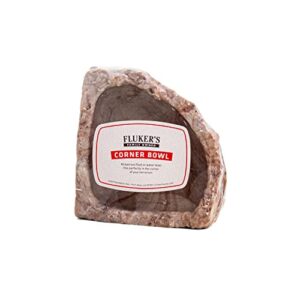
Once you’ve dialed in your thermal setup, Fluker’s corner bowl reclaims wasted terrarium real estate with a flush-fit design that tucks into 90-degree angles, freeing center space for climbing zones.
The 6-inch medium model holds 8 ounces—enough for daily soaking sessions—while its rock-textured exterior blends into Desert Oasis or Rocky Canyon themes without disrupting sightlines. You’ll appreciate the non-porous plastic during weekly cleanings, though heavier pythons occasionally tip smaller sizes, so anchor it with substrate wedges or upgrade to the 16-ounce large if your morph exceeds four feet.
| Best For | Reptile owners working with compact terrariums who need a space-efficient bowl that handles both feeding and soaking without crowding basking spots. |
|---|---|
| Material | Plastic |
| Brand | Generic |
| Color | Gray |
| Primary Use | Food/Water Dish |
| Weight | 14.4 oz |
| Maintenance Level | Easy to clean |
| Additional Features |
|
- Corner design maximizes usable floor space in smaller enclosures
- Holds enough water (8 oz) for daily soaking while maintaining a low profile
- Rock-textured finish integrates naturally with desert or rocky terrarium themes
- Lighter construction means larger snakes (over 4 feet) can tip it without anchoring
- 6-inch size limits use to small-to-medium reptiles
- Plastic material may not appeal to keepers prioritizing natural materials
7. Exo Terra Reptile Water Dish
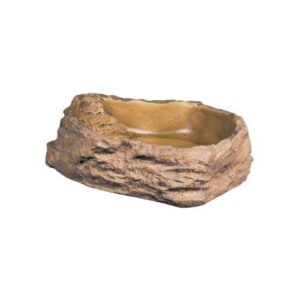
Step up from corner-mount models to Exo Terra’s freestanding dish, which anchors itself with a wide, one-kilogram footprint that won’t budge when your six-foot royal climbs in for a soak.
The food-grade resin interior features safety steps that prevent juveniles from slipping underwater, while the smooth, non-porous coating resists algae buildup better than textured alternatives—you’ll spend less time scrubbing between water changes.
Its natural rock finish disappears into Tropical Rainforest or Cave Dweller layouts, maintaining visual flow across your entire terrarium.
| Best For | Reptile owners who need a sturdy, no-tip water dish that’s easy to clean and works for both small and large species. |
|---|---|
| Material | Plastic |
| Brand | Exo Terra |
| Color | Multi |
| Primary Use | Water Dish |
| Weight | 1 kg |
| Maintenance Level | Easy to clean |
| Additional Features |
|
- Heavy one-kilogram base stays put even when larger reptiles climb in
- Built-in safety steps keep juveniles from accidentally drowning
- Smooth, non-porous surface resists algae and cleans up fast
- Weight makes it a pain to lift out for regular cleaning
- Textured exterior can trap debris in crevices
- Actual dimensions may differ from what’s listed
8. Coconut Fiber Reptile Bedding Substrate
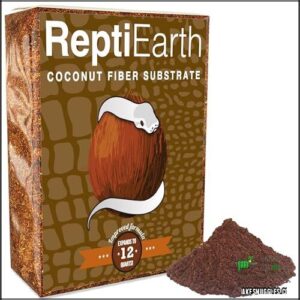
Reptichip’s triple-washed coconut fiber arrives ready to use, eliminating the guesswork that plagues compressed brick substrates—its exclusive 70-30 micro-strand blend resists compaction and stays dust-free even after months of burrowing activity.
You’ll achieve 50-60% humidity in Tropical Rainforest or Jungle Canopy setups by lightly misting the organic fibers, which retain moisture without turning to mud, and the three-pound bag fills a 40-gallon terrarium floor with two inches of soft, cushiony bedding that facilitates natural digging behaviors while controlling odors between your monthly substrate changes.
| Best For | Reptile owners who want a low-maintenance, ready-to-use substrate that supports natural behaviors like burrowing while maintaining consistent humidity for tropical and arid species alike. |
|---|---|
| Material | Coconut Fiber |
| Brand | Reptichip |
| Color | Coconut |
| Primary Use | Substrate |
| Weight | 3.64 lbs |
| Maintenance Level | Minimal |
| Additional Features |
|
- Arrives pre-washed and ready to use straight from the bag, saving you the hassle of soaking and expanding compressed bricks
- The 70-30 fiber blend stays loose and dust-free even after heavy digging, preventing the compaction issues common with cheaper substrates
- Manages humidity effectively without getting muddy, plus controls odors naturally between monthly changes
- Can cause a messy situation if you rinse it despite being triple-washed, leading to humidity problems in your setup
- May need mixing with other substrates depending on your specific reptile’s needs, adding extra cost and effort
- Poses an impaction risk if your pet accidentally ingests it during feeding time, requiring careful monitoring
9. Natural Reptile Hide Log
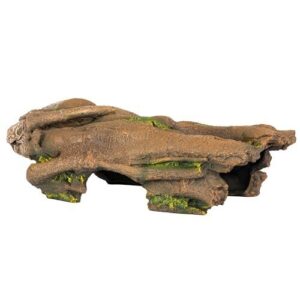
Orchid Valley’s fifteen-inch resin log delivers both shelter and stimulation with its twisted bark exterior that invites climbing, while the smooth interior chamber—featuring open ends and a centered peek hole—prevents stress injuries during shedding cycles or defensive retreats.
You’ll appreciate the natural wood aesthetic that blends seamlessly into Desert Oasis or Rocky Canyon themes, and at 26.5 ounces, this extra-large hide accommodates small to medium ball pythons without dominating your terrarium’s floor space or tipping during active exploration sessions.
| Best For | Small to medium reptiles like ball pythons, corn snakes, or leopard geckos that need a spacious hide with natural climbing opportunities. |
|---|---|
| Material | Resin |
| Brand | Orchid Valley |
| Color | Brown |
| Primary Use | Hide/Climbing |
| Weight | 26.5 oz |
| Maintenance Level | Easy to clean |
| Additional Features |
|
- Extra-large 15-inch design fits growing snakes and multiple small reptiles without cramping
- Dual-purpose structure works as both a hiding spot and climbing surface with textured bark exterior
- Open ends and peek hole reduce territorial stress while letting you check on your pet without disturbing them
- Interior edges may need filing before use to prevent scratches during shedding
- Won’t accommodate full-grown bearded dragons or snakes over 4 feet long
- Some pets ignore it entirely depending on their individual hiding preferences
10. Reptile Terrarium Plant Decor Set
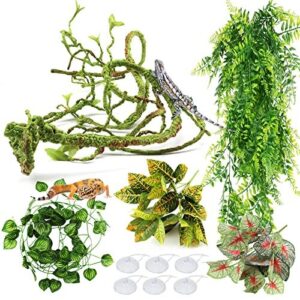
PietyPet’s six-piece terrarium set transforms blank enclosures into layered ecosystems with flexible foam vines, realistic plastic foliage, and bendable jungle branches that you can shape around heat sources or water bowls without compromising safety or stability.
The metal-core design lets you create custom climbing networks for Jungle Canopy or Tropical Rainforest themes, while included suction cups secure hanging ivy and broad-leafed plants to glass or PVC walls—delivering enrichment that withstands humidity cycles and daily exploration without fading under UV lighting.
| Best For | Reptile owners looking to create naturalistic habitats for arboreal species like chameleons, tree frogs, or climbing lizards without the maintenance hassle of live plants. |
|---|---|
| Material | Foam/Plastic |
| Brand | PietyPet |
| Color | Green |
| Primary Use | Decoration/Climbing |
| Weight | Not specified |
| Maintenance Level | Easy to clean |
| Additional Features |
|
- Bendable metal-core vines let you customize climbing routes and adjust layouts around existing tank equipment
- Six-piece set covers multiple terrarium zones—canopy, mid-level perches, and ground cover—in one purchase
- Suction cups and flexible materials make installation quick and allow for easy repositioning during cleanings
- Foam surfaces can tear if you bend the vines too aggressively or reposition them frequently
- Strong plastic smell out of the package requires airing out before placing in your pet’s enclosure
- Suction cups lose grip over time, especially in high-humidity environments, and may need replacement
Frequently Asked Questions (FAQs)
Can ball pythons swim in water features?
Yes, ball pythons can swim when necessary, but they’re not natural swimmers and prefer shallow water dishes for soaking during shedding or cooling off rather than deep pools that could cause stress or drowning risk.
Do ball pythons recognize their owners over time?
Ball pythons recognize their owners through scent and routine, showing calmer responses to familiar handlers over time.
While they don’t form emotional bonds, regular interaction builds familiarity that reduces stress during handling.
How often should substrate depth be adjusted?
While substrate depth might seem permanent, you’ll actually need to adjust it every 3 to 6 months during routine maintenance, checking more frequently after humidity or temperature changes affect your enclosure’s microclimate.
What sounds or vibrations disturb ball pythons most?
Bass-heavy music and floor vibrations stress your ball python most.
Strong ground tremors from footsteps, loud conversations, and door slams trigger startle responses, while continuous noise reduces appetite and increases hiding behavior to a great extent.
Are there benefits to housing multiple ball pythons together?
Most experts strongly advise against cohabitation because ball pythons are solitary creatures prone to stress when housed together, which increases disease risk, feeding complications, and territorial disputes despite rare reported successes.
How often should I rotate decorations?
You’ll want to rotate decorations every 6 to 8 weeks to keep your python’s environment stimulating without causing stress, while maintaining at least one familiar element to guarantee comfort during changes.
Can pythons recognize their own enclosure setup?
Your snake relies on scent markers, temperature zones, and visual landmarks to navigate its habitat, building familiarity over days that reduces stress and encourages confident use of hides, branches, and basking spots.
What materials should I avoid for python safety?
You must steer clear of cedar and pine, as they release toxic fumes.
You must also avoid pressure-treated lumber, painted wood, bare wires, soft plastics, uncured silicone, hot glue, and calcareous stones—all release toxic fumes, sharp edges, or harmful residues that threaten your python’s health.
Do pythons prefer darker or brighter enclosures?
Think twilight hours instead of midday sun—ball pythons thrive in dimly lit enclosures that mirror their crepuscular nature, with darker retreats and moderate lighting that encourages natural activity without causing stress.
How do I clean climbing structures effectively?
Remove branches and vines from the enclosure, then scrub them with diluted mild detergent and a soft brush, rinse thoroughly with clean water, and air dry completely before reinstalling to prevent mold growth.
Conclusion
The difference between a python that merely exists and one that truly thrives comes down to a single decision you’ll make today—will you settle for basic containment, or will you engineer a living masterpiece?
Every python habitat decoration tip you’ve explored here gives you the power to transform glass walls into an ecosystem that awakens instinct, reduces stress, and celebrates your snake’s wild ancestry. Your python’s best life starts with your next upgrade.