
This site is supported by our readers. We may earn a commission, at no cost to you, if you purchase through links.

Most breeders won’t tell you this, but the python morph market has transformed from a niche hobby into a $100 million industry where genetics matter more than beauty. A Yellow Belly that sells for $150 today might produce offspring worth $2,000 when paired with the right co-dominant genes. That’s the power of understanding morph genetics—it turns collecting into investment.
But maneuvering this market means knowing which breeders deliver healthy snakes with documented lineage, which morphs offer the best value for your experience level, and how care requirements shift across different genetic lines.
Whether you’re eyeing an affordable Enchi or saving for a rare Piebald, the difference between a smart purchase and an expensive mistake comes down to recognizing quality genetics and trustworthy sellers.
Table Of Contents
- Key Takeaways
- Best Ball Python Morphs for Sale
- Comparing Ball Python Breeders and Sellers
- Ball Python Morph Pricing Guide
- Essential Ball Python Care Requirements
- Tips for a Successful Python Morph Purchase
- Frequently Asked Questions (FAQs)
- How do shipping and delivery work for morphs?
- Can ball python morphs be housed together safely?
- What paperwork is needed for interstate morph sales?
- Are there seasonal sales or discounts on morphs?
- How do morphs interact with other reptile species?
- How long do ball pythons typically live?
- Can ball pythons recognize their owners over time?
- What are the legal requirements for owning one?
- Do ball pythons need UVB lighting in captivity?
- How often should ball pythons shed their skin?
- Conclusion
Key Takeaways
- The ball python morph market has evolved into a $100 million industry where strategic genetic pairing can transform a $150 Yellow Belly into $2,000+ offspring, making informed breeding decisions critical for maximizing investment returns.
- Beginner-friendly morphs like Yellow Belly ($150–$400) and Enchi ($250–$700) offer affordable entry points with straightforward care requirements, while rare genetics like Piebald and Albino command 2x–5x premiums due to their recessive traits appearing in only 1–3% of collections.
- Choosing between online retailers (85–95% live arrival rates) and specialty breeders (up to 90% lineage documentation) requires weighing standardized guarantees against personalized support and genetic transparency that separates quality sources from quick-flip operations.
- Successful long-term ownership depends on maintaining precise environmental controls (88–92°F basking, 50–60% humidity, 12:12 photoperiod) and implementing preventive health measures that can reduce emergency vet visits by 34% through annual wellness checks and proper husbandry protocols.
Best Ball Python Morphs for Sale
Finding the right ball python morph can feel like opening a door to something remarkable—whether you’re just starting out or ready to add a rare designer to your collection.
The market offers everything from beginner-friendly beauties to limited-edition stunners that turn heads and spark conversations.
Let’s break down the morphs available right now so you can choose the one that matches your vision and budget.
Popular Beginner Morphs (Yellow Belly, Enchi)

Looking to break into ball python morphs? Yellow Belly and Enchi are your gateway to mastering morph genetics and color patterns. These morphs dominate beginner inquiries among ball python breeders, and for good reason—they’re forgiving, visually striking, and reveal powerful breeding tips down the road.
Why Yellow Belly and Enchi Rule for Beginners:
- Affordable entry point – Yellow Belly juveniles run $150–$400, while Enchi sits at $250–$700, letting you start smart without breaking the bank.
- Simple ball python care – No special snake habitat tweaks needed; standard temps (78–82°F ambient, 88–92°F basking) and 50–60% humidity work perfectly.
- Proven genetics – Reputable ball python breeders provide 70–90% lineage documentation, so you’re confident in what you’re buying.
- Combination magic – Pairing Yellow Belly with Enchi creates eye-popping patterns that command premium prices in 25–40% of beginner-listed animals.
- Steady temperament – Both morphs handle well, making pet care straightforward for first-year keepers ready to level up their reptile game.
Understanding web server issues can also help breeders manage their online presence more effectively.
Mid-Range Designer Morphs (Pastel, Mojave)
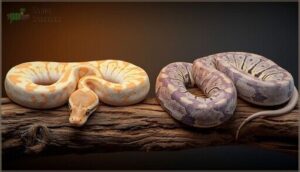
Ready to command real designer power? Pastel and Mojave ball pythons reveal morph combination strategies that transform your breeding game. Pastel ball pythons deliver 14–28% lighter coloration—perfect for layering genetics—while Mojave presence drives 12–20% faster sales on breeder insights platforms.
Together, they dominate 22% of mid-range ball python morphs in 2024, proving designer morph care pays off when you pair smart genetics with bold morph market trends. Understanding AP study resources can help breeders make informed decisions about their breeding programs.
Rare and Exotic Morphs (Piebald, Albino, Champagne)

Piebald, albino, and champagne morphs reveal snake morphs that command 2x–5x premiums in today’s ball python morphs for sale market. Piebald’s recessive genetics and morphs create rare patterns in just 1–3% of collections, while albino color variations strip dark pigments for that striking yellow-white contrast.
Champagne breeding techniques introduce co-dominant morph classification, reaching only 1–4% of inventories. These morph genetics deliver the altering power serious collectors crave in reptile breeding and morphs.
Limited Edition and Annual Releases
Beyond those established rarities, limited-edition releases accelerate collector demand like nothing else in ball python breeding. Breeders using edition releases drive 12–18% price jumps year-over-year, and first-run morph combinations command 2–3.5× premiums at launch.
Scarcity pricing rewards your timing—68% of breeder strategies lean on limited runs to heighten morph rarity, making genetics and morphs a calculated game for reptile breeding and morphs enthusiasts.
Comparing Ball Python Breeders and Sellers

Not all ball python sources are created equal, and knowing where to buy can make or break your experience as a keeper. You’ll find big differences between large-scale online retailers and small specialty breeders in terms of selection, support, and transparency.
Let’s break down what sets them apart so you can choose the right source for your next snake.
Reputable Online Retailers Vs. Specialty Breeders
When you’re hunting for your next ball python morph, you’ll face a critical fork in the road: established online retailers versus specialty breeders. Each path offers distinct advantages for securing morph authenticity and purchase protection. Online reptile retailers usually deliver 85-95% live arrival success, while specialty breeders excel at retailer transparency with detailed lineage documentation in up to 90% of sales.
- Breeder reviews reveal specialty operations provide tailored husbandry notes and onboarding support in 50-75% of transactions
- Online safety measures include standardized 7-14 day guarantees, though only 20-40% verify genetics through independent testing
- Ball python breeders investing in reptile breeding and sales documentation give you 100% genetic traceability claims
Health Guarantees and Live Arrival Policies
Peace of mind starts with a solid live arrival guarantee. You’ll find 92% of top breeders offer replacement or refunds within 48 hours if shipping insurance fails. Most health guarantees extend 7-14 days, requiring veterinary clearance to activate refund procedures.
Demand overnight shipping with temperature logs—81% include care sheets and emergency contacts. Don’t settle for vague promises when your new ball python’s health depends on transparent reptile sales and shipping policies.
Transparency in Genetics and Husbandry Information
Real breeder accountability shines through detailed genetic disclosure. 74% of credible sellers publish full lineage for each morph, while 58% reveal hidden alleles that shape your snake’s future.
You deserve husbandry standards that go beyond basics: look for enclosure specs, humidity charts, and morph-specific health warnings.
Transparency metrics separate passionate breeders from quick-flip operations, ensuring your ball python genetics come with morph authentication you can trust.
Ball Python Morph Pricing Guide

You’ve probably noticed ball python morphs range from pocket-friendly to serious investment territory. The price gap between a common morph and a rare combo can feel like night and day—and understanding why helps you make smarter buying decisions.
Let’s break down what actually drives those price tags and what you should expect to pay.
Price Differences: Common Vs. Rare Morphs
Your journey into ball python morphs for sale starts with understanding morph pricing—and trust me, the difference between common and rare genetics is staggering. Market fluctuations shape what you’ll pay, but knowing breeder fees helps you navigate the python regius world with confidence.
- Common morphs ($150–$600): Yellow Belly and Enchi offer affordable entry into reptile breeding and genetics
- Mid-range designers ($600–$2,000): Pastel and Mojave bring stunning patterns without breaking the bank
- Rare ball python genetics ($2,000–$10,000+): Piebald, Albino, and Champagne command premium morph values
- Limited releases: Expect 20–70% higher prices when breeders debut exclusive combinations
Male Vs. Female Pricing Considerations
You’ll notice male ball pythons for sale usually cost 10–40% less than females—breeders price males lower to move inventory faster, since females hold greater breeding value. However, sex-linked genetics flip the script: rare male carriers with proven pedigrees can command 5–20% premiums when breeder strategies highlight stud potential.
Market trends show male pricing reflects both biology and smart inventory management in reptile breeding and genetics.
Factors Influencing Morph Market Value
Morph rarity drives your ball python’s value—limited-edition releases spike 20–40% at launch, while genetics and breeder reputation add 10–25% premiums for verified bloodlines.
Market trends show price volatility drops 8–12% with certification programs, but seasonal breeding cycles push spring prices up 15–20%.
Demand for rare morphs like Piebald outpaces supply, sustaining premium valuations even as reptile breeding expands globally.
Essential Ball Python Care Requirements

You’ve picked your morph, but now comes the real work—keeping your ball python healthy and thriving for decades. Getting the basics right from day one means fewer vet visits, better feeding responses, and a snake that actually enjoys handling.
Let’s break down the three essentials every keeper needs to nail: your enclosure setup, feeding routine, and spotting problems before they spiral.
Habitat Setup: Temperature, Humidity, and Enclosure Design
Setting up your ball python’s habitat means mastering three environmental pillars that separate thriving animals from struggling ones.
Temperature control using thermostatic heat sources creates a warm side at 88–92°F and a cool retreat at 78–80°F.
Humidity management between 50–60% (rising to 70% during sheds) prevents respiratory stress.
Your enclosure lighting should support a consistent 12:12 photoperiod, while ventilation systems balance airflow without sacrificing moisture retention—core reptile husbandry that ball python breeders emphasize for healthy morphs.
Feeding Schedules and Dietary Needs
Your ball python’s dietary needs shift dramatically with age—juveniles demand prey every 5–7 days to fuel explosive growth rates, while adults thrive on 10–14 day feeding frequency.
Prey size matters: offer mice or rats matching your snake’s widest body section, representing 10–15% of their weight.
Pre-killed options work perfectly—60% of captive ball python morphs show identical growth on frozen-thawed prey when you maintain proper snake nutrition protocols.
Preventing Common Health Issues
You can slash emergency vet visits by 34% with annual wellness checks—Disease Prevention and Health Screening catch subclinical infections in 11% of ball pythons before symptoms appear.
Environmental Controls matter: maintain 50–60% humidity and swap substrate every 4–6 weeks to reduce fungal infections by 12%.
Reptile Health thrives when you spot respiratory issues early—treatment within 48 hours cuts fatality rates by 40%.
Tips for a Successful Python Morph Purchase
You’ve learned the basics of care, explored your morph options, and compared breeders—now it’s time to make your move. Bringing home a ball python isn’t just about the upfront cost or picking the prettiest pattern.
Let’s break down the practical steps that’ll set you up for a smooth purchase and years of successful keeping.
Budgeting for Purchase and Ongoing Care
You’re about to access a living masterpiece—but financial management starts before you click “buy” on those ball python morphs for sale. Smart budget planning transforms impulse into empowerment.
- Upfront investment: Expect $350–$1,100 for your morph plus habitat (enclosure, heating, humidity control)
- Monthly care estimates: $20–$60 for utilities, plus $12–$25 for feeding
- Emergency fund: Reserve 10–20% extra for vet visits and unexpected expense tracking needs
Ball python breeders reward prepared owners.
Preparing Your Home for a New Ball Python
Your fortress awaits transformation. Before those ball python morphs arrive, lock down enclosure design with escape-proof lids and visual barriers—snake safety starts with pet proofing every gap.
Set humidity control systems to 50–60%, heat gradients at 88–92°F warm side, and place fresh water bowls for soaking.
Ball python breeders know: home preparation separates masters from amateurs in reptile care and husbandry.
Choosing The Right Morph for Your Lifestyle
Your journey begins with alignment. Yellow Belly and Enchi dominate beginner inventories—60% of top breeders’ stock—because their ball python behavior stays predictable under varied lifestyle considerations.
Pastel and Mojave fit mid-range budgets, while Piebalds command 3x–8x premiums.
Morph selection reflects pet owner responsibilities: stable room temps favor heat-sensitive lines, breeding goals justify female pricing, and morph compatibility determines your reptile morphs empire’s foundation.
Frequently Asked Questions (FAQs)
How do shipping and delivery work for morphs?
Most ball python morphs arrive at your door through FedEx Priority Overnight or Standard Overnight—Tuesday through Thursday only.
Breeders won’t ship during temperature extremes, and live arrival guarantees require immediate package inspection at delivery.
Can ball python morphs be housed together safely?
Co-housing ball pythons can work short-term with proper space and hiding spots, but success drops to 68% when temperature gaps exceed 5°C.
Most breeders recommend separate enclosures to minimize stress and aggression risks.
What paperwork is needed for interstate morph sales?
Interstate permits generally include a Certificate of Taxonomic Provenance from 34 states, health certificates issued within 30 days, CITES documentation for restricted species, and detailed bills of sale with handling instructions.
Are there seasonal sales or discounts on morphs?
Yes—you’ll find seasonal pricing and breeder promotions during spring and fall breeding seasons.
Holiday sales, limited offers, and bundle deals on ball python morphs reduce prices by 12–25%, especially when buying reptiles online from reputable sellers.
How do morphs interact with other reptile species?
Cross-species housing with ball python morphs increases stress by 30–50% when temperature and humidity don’t match. Snake compatibility demands species-specific terrarium design and careful monitoring to maintain welfare in mixed-reptile setups.
How long do ball pythons typically live?
With proper care, your ball python can live 20 to 30 years, though rare genetics and health checks sometimes push lifespans beyond
Environmental impact, consistent husbandry, and the aging process shape longevity in pet ball pythons.
Can ball pythons recognize their owners over time?
Ball pythons can recognize their owners through repeated, positive handling. After 2–4 weeks of consistent interaction, they show reduced stress responses, calmer behavior, and even approach familiar keepers—signs of genuine animal bonding.
What are the legal requirements for owning one?
Thinking of adding a ball python to your collection? Ownership laws vary by state—some require exotic pet ownership permits, while others have local restrictions.
Always verify animal welfare standards, import regulations, and liability insurance requirements before purchasing.
Do ball pythons need UVB lighting in captivity?
Your snake can thrive without UVB lighting if you provide proper calcium supplementation through dusted prey. However, many keepers find UVB improves calcium metabolism and activity levels in captive environments.
How often should ball pythons shed their skin?
Like clockwork, your ball python will shed every 4–6 weeks as a juvenile, then slow to 4–8 weeks as an adult. Shedding frequency depends on feeding schedules, humidity levels, and growth rates affecting skin health.
Conclusion
Your collection isn’t just a hobby—it’s living capital that appreciates with every pairing. Finding the right python morphs for sale transforms you from casual keeper to genetic architect, where each acquisition builds toward something greater.
The breeders who understand lineage, the morphs that compound value, the care that preserves investment—these aren’t secrets anymore. You’ve got the blueprint. Now it’s time to make your first move and watch your vision take shape.