This site is supported by our readers. We may earn a commission, at no cost to you, if you purchase through links.
Some rosy boas outlive the dogs that grow up watching them from across the room. A snake purchased for a ten-year-old can still be curled in its enclosure when that same kid moves out for college, gets married, maybe has kids of their own. That kind of longevity isn’t an accident, and it isn’t guaranteed either.
Rosy boa lifespan and temperament go hand in hand more than most keepers realize. A calm, low-stress animal ages differently than one handled roughly or housed under poor conditions, and the difference shows up in decades, not days.
Good husbandry also shapes reproductive health, and rosy boa breeding frequency and live birth patterns puts that rhythm into practical context.
What follows breaks down exactly what drives a rosy boa toward 15 years or 30, how their famously steady temperament shapes the way you should handle them, and which husbandry habits separate animals that merely survive from ones that thrive.
Table Of Contents
- Key Takeaways
- Rosy Boa Lifespan Expectations
- Rosy Boa Temperament Traits
- Handling Rosy Boas Confidently
- Care That Supports Longevity
- Top 9 Rosy Boa Care Items
- 1. Natural Soft Paper Pet Bedding
- 2. Fluker’s Premium Tropical Cypress Bedding
- 3. Etekcity Infrared Laser Temperature Gun
- 4. Zoo Med Natural Red Sand
- 5. F10 Ready To Use Disinfectant
- 6. Repti Zoo Collapsible Glass Reptile Terrarium
- 7. Repti Zoo 50 Gallon Glass Terrarium
- 8. Repti Zoo Intense Basking Lamp
- 9. Exo Terra Yellow Desert Sand
- Frequently Asked Questions (FAQs)
- Do rosy boas like to be held?
- What is the friendliest boa?
- Are rosy boas aggressive?
- How expensive is a rosy boa?
- Do rosy boas brumate in captivity?
- Can rosy boas live with other snakes?
- How often do rosy boas shed skin?
- What sounds do rosy boas make?
- Do rosy boas need UV lighting?
- Do rosy boas make good pets for kids?
- Conclusion
Key Takeaways
- Rosy boas commonly live 15–25 years in captivity, and with consistent husbandry, some individuals reach 30 or more years, far outpacing their 15–20 year wild lifespans.
- Their calm, docile temperament—marked by slow movement, quick stress recovery, and defensive tactics like tail displays or musking rather than biting—makes them especially forgiving for beginner handlers.
- Longevity depends less on genetics and more on consistent daily care: proper enclosure size (36x18x12 inches for adults), stable temperature gradients (72–95°F), low humidity (30–50%), and a regular feeding schedule (every 7–14 days for adults).
- Respecting handling boundaries—full-body support, waiting 24 hours after feeding, and avoiding contact during shedding—builds trust over time and directly supports both welfare and lifespan.
Rosy Boa Lifespan Expectations
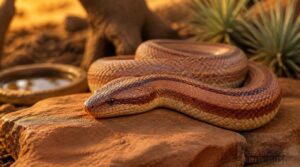
A rosy boa can be a companion for decades if you get the basics right, and that starts with knowing what a realistic lifespan looks like.
Beyond longevity, understanding what makes a rosy boa such a docile pet will help you build the kind of routine that keeps your snake calm and thriving for years.
Captive care and wild survival tell two very different stories, and the gap between them says a lot about what these snakes need.
Here’s what shapes how long your rosy boa lives, and how well it lives along the way.
Captive Lifespan Range
Twenty-five years isn’t unusual for a well-kept rosy boa, and that’s the number you should plan around. Captive lifespans commonly run 15 to 25 years, sometimes longer, when husbandry stays consistent. Consistent stable food supplies can also play a significant role in extending an animal’s life.
- Stable temperature gradients
- Age-related dietary shifts
- Routine snake health monitoring
Reaching thirty years reflects genuine animal welfare success, proving that impact of husbandry outweighs genetics for docile, long-lived rosy boas.
Wild Lifespan Differences
That well-kept enclosure buys years a wild burrow can’t. Free-ranging rosy boas usually reach 15 to 20 years, sometimes into their mid-20s, but natural predation risks, resource fluctuation impacts, and habitat fragmentation effects cut many lives short.
Environmental stress factors and wild disease exposure compound the toll. It’s a powerful lesson in why thoughtful rosy boa care—and species preservation—matters for this naturally docile species.
30. plus Year Potential
Push past 20 years with steady Rosy Boa Care, and 30-plus becomes realistic—some documented individuals reach their mid-30s.
That kind of span demands Optimizing Genetic Potential through selective sourcing, paired with Long-term Health Monitoring and Decadal Husbandry Shifts as metabolism slows.
Rosy boas stay docile and slowmouth throughout, but sustained wellness strategies and Aging Metabolism Management separate average lifespans from truly impressive ones in exotic pet maintenance.
Healthy Aging Signs
Getting to 30-plus means watching the right signals along the way. A stable feeding response—striking readily, then resuming normal exploratory movement—points to real vitality, not just survival.
Check muscle tone during handling: firm coils, not flattening, signal comfort. Clean sheds, clear eyes, and quiet respiratory breathing round out the picture.
Any wellness exam should confirm what you’re already seeing at home.
Longevity Care Factors
Rarely does one factor alone determine whether your rosy boa reaches 30-plus—husbandry consistency is what compounds over decades. The same principles that support human aging apply loosely here too: steady nutrition, activity, and stress reduction.
- Consistent feeding schedule (nutritional impact)
- Appropriate handling frequency (activity levels)
- Stable temperature and quiet housing (sleep quality, stress management)
Annual wellness exams catch problems early, much like preventive screenings do for us.
Rosy Boa Temperament Traits
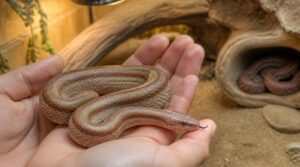
Once you know how long a rosy boa can live, the next question is what kind of personality you’re actually living with day to day.
This is a snake that behaves differently depending on its age, its mood, and how safe it feels in your hands.
Here’s what shapes that temperament, from calm adult composure to the defensive tricks juveniles pull out when startled.
Calm Adult Personality
Handle a rosy boa daily for a month and you’ll notice something rare among snakes: it barely reacts. This docile nature stems from a genuinely steady temperament, not just tolerance. Their nervous system recovers fast from minor stress, heart rate settling within minutes.
That predictability makes them forgiving for beginners still learning proper exotic pet care, and it’s exactly why keepers trust rosy boas for confident, low-drama handling sessions.
Slow-moving Behavior
Watch a rosy boa cross open ground and you’ll clock roughly 1 mile per hour, a pace rooted in motor cortex function and predictive movement strategies rather than sluggishness.
This unhurried tempo reflects real risk assessment tempo:
- Slower velocity profiles
- Extended sensorimotor planning
- Steadier, deliberate paths
- Conservative movement margins
That docile and slowmoving temperament, documented in every Lichanura trivirgata Rosy Boa Care Sheet, shapes safe, confident handling from the start.
Juvenile Skittishness
Young rosy boas trade that famous calm for quick, jittery reflexes—a 1 to 3 second startle burst, then a freeze. Expect more reactivity in the first 6 to 12 months, especially to overhead shadows or fast hand movement. Feeding time sharpens this tension, and low humidity, bright lighting, or vibration nearby only fuel it.
Gentle, consistent handling steadily reduces novelty fear.
Defensive Tail Displays
Ball up first, head tucked safely in the center of the coil, then the tail takes over as the star of the show. It waves and pivots, mimicking a striking head to redirect predator attacks away from essential organs.
This tail deflection tactic works because predators condition to strike the moving target, letting the real head escape unharmed.
Musking and Biting Risks
Two defenses stand out beyond the coil-and-tail act: musking and biting. Both stem from stress triggers, not aggression—handling-induced musk dissipates within minutes, while bites usually follow sudden movement or post-feeding confusion.
- Support the full body
- Avoid rough grips
- Skip handling after meals
- Watch for dehydration signs
Understanding species temperament (and biological sexing basics) helps beginner reptile species owners build confidence early.
Handling Rosy Boas Confidently
Handling is where trust between you and your rosy boa really takes shape, one calm interaction at a time. Getting it right means knowing when to pick your snake up, how to support it properly, and when to simply leave it alone. Here’s what confident, respectful handling looks like in practice.
Do Rosy Boas Like Handling
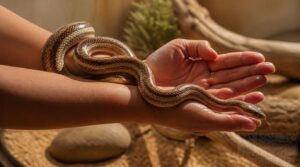
Do rosy boas actually enjoy being handled, or do they simply tolerate it? Evidence points to genuine tolerance built on trust.
Regular short sessions from a young age teach this beginner reptile species to relax under calm, steady contact. Watch their body language: slower movement and willingness to explore signal comfort.
Stress still shows through musking, so timing your interactions around calm periods matters for good reptile husbandry.
Full-body Support

That trust translates directly into how you physically hold your snake. Support the entire body at all times, letting its weight rest across your palms and forearms rather than dangling from one point. Uneven support causes struggling, which raises injury risk.
Think of it like carrying a heavy branch: distribute the load evenly, and your rosy boa stays calm and secure.
Support your rosy boa like a heavy branch, distributing weight evenly to keep it calm and secure
Post-feeding Handling Rules
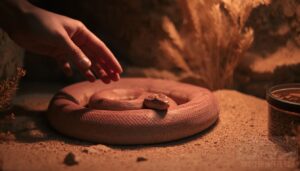
Even the best-supported grip won’t stop a full stomach from working against you.
Wait at least 24 hours after feeding before handling—this window lets digestion settle and prevents regurgitation.
Keep handling gentle if it’s unavoidable, skip the tail or midbody grip entirely, and watch for bloating or lethargy.
A quiet, warm hide does more for digestion support than any amount of reassurance from you.
Shedding-time Handling Limits
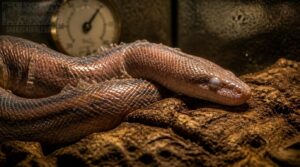
Digestion isn’t the only thing that demands a hands-off approach. Pre-shed signs—dulling skin, cloudy eyes—signal skin loosening has begun. Avoid handling for 24–48 hours once shedding starts, since shear stress can tear delicate tissue.
For partial sheds, offer gentle assistance only on stubborn patches; never restrain the tail or thorax. Retained shed often points to low humidity, so check your enclosure before assuming behavioral issues.
Building Trust Gently
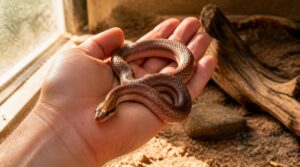
Confidence with a snake builds slowly, the same way it does with any wary animal. Stick to predictable interaction routines—same time, same approach—so your boa learns to anticipate rather than fear you.
Respect handling boundaries: if it retreats or musks, back off. Move slowly, watch feeding response, and let calm behavior guide progress. Over weeks, most captive boas relax considerably.
Care That Supports Longevity
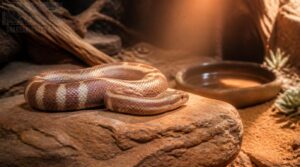
A rosy boa’s long life depends on the daily details you control, not luck. Enclosure size, temperature zones, humidity, feeding schedule, and health checks all work together to keep your snake thriving for decades. Here’s what proper setup looks like in practice.
Proper Enclosure Size
Floor space matters more than height for rosy boas, since they’re ground-dwellers, not climbers. Juvenile housing starts at 18x12x12 inches; adults need at least 36x18x12 inches of tank dimensions to move, coil, and explore comfortably.
Multi-level layouts work only if climbing structures avoid fall hazards. Undersized enclosures raise stress and shorten lifespan, so prioritize adult space over aesthetics.
Warm and Cool Zones
Set the basking spot at 90–95°F with ambient warmth around 78–85°F, using a thermostat-controlled heater for precision. The cool end should stay 72–78°F, giving your boa room to self-regulate.
Check both zones with an infrared thermometer daily, verify the thermal gradient, and adjust seasonally—nighttime dips of 5–10°F mimic natural microclimates rosy boas rely on for healthy digestion.
Low Humidity Needs
Rosy boas evolved in bone-dry desert ecosystems, so their bodies simply aren’t built for damp air. Keep relative humidity between 30% and 50% using a hygrometer for daily monitoring. Too much moisture invites mold and substrate rot; too little causes shedding discomfort and dry mucous membranes.
Balance humidity with your temperature zones and enclosure size, make sure you have solid ventilation, and you’ll protect respiratory health while replicating the arid habitat your boa instinctively expects.
Safe Feeding Schedule
Feed adults every 7–14 days and juveniles every 5–7, offering thawed frozen rodents sized to the snake’s midbody girth to prevent regurgitation.
- Keep prey at 5–10% of body weight
- Warm the feeding zone to 28–32°C for digestion
- Skip handling 24–48 hours post-meal
- Track weight to monitor body condition and adjust frequency accordingly
Common Health Warning Signs
Your boa’s body tells the truth long before you’d guess something’s wrong. Watch for respiratory distress signs like wheezing or open-mouth breathing, abnormal eating habits, and skin lesions or retained shed near rostral abrasion spots.
Neurological behavior changes, oral health redflags, and swollen bellies all warrant veterinary care. During spot clean routines, check feeding response daily.
Top 9 Rosy Boa Care Items
Good husbandry comes down to using the right gear, not guesswork or good intentions. The products below cover substrate, heating, cleaning, and enclosure needs that align with everything discussed so far. Here are nine items worth having on hand before you bring a rosy boa home.
1. Natural Soft Paper Pet Bedding
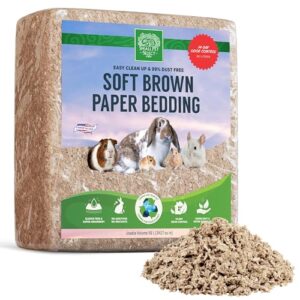
Paper-based substrate works well for keepers who want a soft, low-dust option for their rosy boa’s enclosure. Made from 100% unbleached virgin fiber, it expands to three times its packaged volume and absorbs moisture efficiently without artificial fragrances.
The material is biodegradable and safe if small amounts are ingested. Spot-clean soiled sections daily, since paper bedding lacks the odor-masking properties of cedar or pine (which you should avoid anyway). At 6.5 pounds covering 56 liters, one bag lasts for several substrate changes across your 20-40 gallon adult enclosure.
| Best For | Reptile keepers seeking a soft, low-dust, natural bedding option for their rosy boa’s enclosure. |
|---|---|
| Material | Paper |
| Weight | 6.5 lbs |
| Dimensions | 14x14x8 in |
| Target Animals | Rabbits, Guinea Pigs, Hamsters |
| Primary Use | Bedding |
| Maintenance Level | Daily Spot Cleaning |
| Additional Features |
|
- Made from 100% unbleached virgin fiber for a soft, chemical-free texture
- Expands to three times its packaged volume and absorbs moisture efficiently
- Biodegradable, compostable, and free of artificial fragrances
- Requires daily spot-cleaning of soiled sections to maintain hygiene
- Lacks the natural odor-masking properties found in cedar or pine bedding
- Compressed packaging means extra prep time is needed for full expansion before use
2. Fluker’s Premium Tropical Cypress Bedding
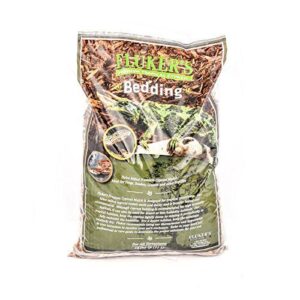
If you’re keeping species that favor higher humidity, cypress mulch is a better fit than paper. Twice-milled processing keeps edges smooth, cutting wound risk during burrowing, while the mulch resists mold and decay even in damp conditions.
Rosy boas come from arid desert terrain, though, so this substrate suits adaptable setups more than strict desert enclosures. It controls odor naturally and stays relatively low-dust, making cleanup manageable between spot checks.
| Best For | This bedding is best for reptile keepers with active, humidity-loving species who want a breeder-grade substrate that supports natural burrowing behavior. |
|---|---|
| Material | Cypress/Plastic |
| Weight | 3.9 lbs |
| Dimensions | 16x4x12 in |
| Target Animals | Reptiles |
| Primary Use | Substrate |
| Maintenance Level | Low |
| Additional Features |
|
- Twice-milled cypress keeps edges smooth, reducing wound risk during burrowing
- Naturally resists mold and decay, even in damp, high-humidity setups
- Controls odor and stays relatively low-dust for easier cleanup
- Not ideal for arid desert species like rosy boas, which do better with drier substrates
- Product listing shows conflicting details (material listed as plastic, color listed as black) that don’t match the cypress/brown description
- Higher humidity retention may require more frequent monitoring to prevent over-dampness
3. Etekcity Infrared Laser Temperature Gun

Substrate choices matter, but none of it counts for much if your thermal gradient is off. That’s where an infrared temperature gun earns its keep.
The Etekcity model reads surfaces instantly with ±2% accuracy, adjustable emissivity from 0.1 to 1.0, and a 12:1 distance ratio. Point it at basking spots or hides from 14 inches away and confirm you’re hitting that 88-92°F warm zone rosy boas need, no guesswork, no contact required.
| Best For | reptile keepers and home cooks who need fast, accurate, no-contact surface temperature readings for basking spots, grills, and more. |
|---|---|
| Material | Plastic Casing |
| Weight | N/A |
| Dimensions | 6.14×3.15×1.57 in |
| Target Animals | Reptiles, Hairless Cats |
| Primary Use | Temperature Measurement |
| Maintenance Level | None |
| Additional Features |
|
- Rapid sub-0.5-second response with ±2% accuracy for quick, reliable checks
- Adjustable emissivity (0.1–1.0) makes it versatile across different surfaces and materials
- Non-touch laser measurement keeps you safely away from hot or cold surfaces
- Not suitable for measuring human body temperature
- Accuracy depends on maintaining the recommended 12:1 distance ratio
- Reads an average of the circular area rather than a precise single point
4. Zoo Med Natural Red Sand
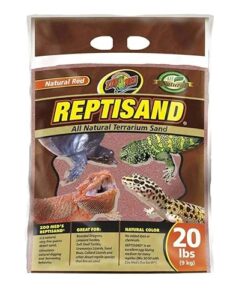
Once temperatures are dialed in, substrate choice rounds out the enclosure. Zoo Med Natural Red Sand is fine quartz with a naturally occurring red tint, no dyes or chemical additives involved, and it conducts heat well enough to support belly warmth during basking.
Its fine grain lets rosy boas dig and burrow the way they would in the wild, satisfying natural nesting instincts. It won’t clump when dry, either, which keeps maintenance simple: just spot-clean waste regularly and swap it out fully a few times a year.
| Best For | Rosy boa keepers and other desert-species owners with larger arid enclosures who want a substrate that encourages natural digging and burrowing while adding warm, natural color to the terrarium. |
|---|---|
| Material | Natural Rock |
| Weight | 20 lbs |
| Dimensions | 9.98x1x1 in |
| Target Animals | Bearded Dragons, Sand Boas, Turtles |
| Primary Use | Substrate |
| Maintenance Level | Low |
| Additional Features |
|
- All-natural composition with no added dyes or chemical treatments
- High thermal conductivity helps support belly warmth during basking
- Encourages natural digging, burrowing, and nesting behaviors
- Not suitable for species that need high-humidity substrates
- Best suited for active, arid setups rather than moisture-retentive environments
- At 20 lbs per bag, it may be more volume than smaller enclosures need
5. F10 Ready To Use Disinfectant
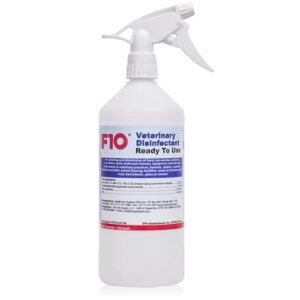
Every enclosure needs a reliable disinfectant, and F10 Ready To Use fits that role without extra steps. This pre-diluted formula kills bacteria, viruses, and fungi in one pass, no mixing required. It’s EPA registered (79755-5), unscented, and biodegradable, so residual odor or chemical exposure isn’t a concern for your boa.
Spray it on cages, water bowls, or hides, let it air-dry, and skip the rinse. For resistant pathogens, dilute 1:100 instead. Reliable disinfection like this helps maintain the low-humidity, clean conditions rosy boas need to thrive long-term.
| Best For | Reptile keepers, veterinarians, and zoological facilities who need a fast, no-mix disinfectant for cages, terrariums, and habitat accessories. |
|---|---|
| Material | Biodegradable Liquid |
| Weight | 2.65 lbs |
| Dimensions | 9.17×4.8×4.61 in |
| Target Animals | Multiple Species/Habitats |
| Primary Use | Disinfecting |
| Maintenance Level | Regular Application |
| Additional Features |
|
- Pre-diluted and ready to use, saving time with no mixing required
- EPA registered, unscented, and biodegradable, making it safe for enclosures and animal-adjacent surfaces
- No rinsing needed after application, simplifying cleanup
- Requires a separate 1:100 dilution step for resistant viruses and bacterial spores
- Not intended for general use on human skin beyond hand decontamination
- Effectiveness depends on proper application and full air-drying of the surface
6. Repti Zoo Collapsible Glass Reptile Terrarium
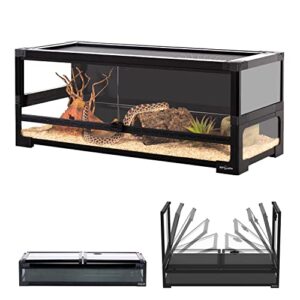
Six minutes is all it takes to fold out this collapsible design, thanks to a patent-pending mechanism that ships in knockdown pieces for easy transport. Tempered glass panels sit inside a lightweight aluminum frame, giving you real durability without wrestling a heavy tank into place.
Dual front doors open smoothly for cleaning, while secure latches and anti-escape seals keep a curious rosy boa from testing its luck. A vented top and raised bottom frame round out a setup built for quick assembly and long-term convenience.
| Best For | reptile owners who want a sturdy, full-view glass terrarium that’s easy to set up, clean, and adapt to either desert or rainforest pets. |
|---|---|
| Material | Glass/PVC/Aluminum |
| Weight | 27.2 lbs |
| Dimensions | 30x12x12 in |
| Target Animals | Reptiles |
| Primary Use | Habitat Enclosure |
| Maintenance Level | Moderate Assembly Care |
| Additional Features |
|
- Tempered glass and aluminum frame offer real durability with 360-degree viewing
- Detachable panels and a hinged top make cleaning and maintenance simple
- Built-in wire management and a raised base support heaters and other accessories without clutter
- Full setup takes some care, since glass panels need to be handled carefully during assembly
- At over 27 pounds, positioning the tank once assembled may require two people
- Assembly isn’t totally intuitive, since it calls for following specific step-by-step instructions
7. Repti Zoo 50 Gallon Glass Terrarium
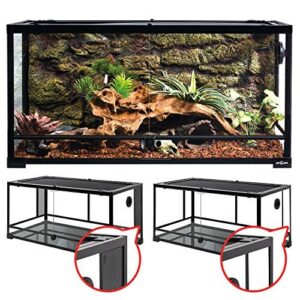
For a rosy boa that’s outgrown its starter tank, this 36 x 18 x 18-inch tempered glass terrarium offers real floor space to roam. The raised bottom frame accommodates substrate heaters, while double-hinge front doors let you feed and clean without wrestling the whole lid off.
Its waterproof base controls humidity swings from either desert or rainforest setups, and reinforced glass resists the scuffs a slow-moving boa’s daily explorations bring. Just remember: never cut or punch the glass panels.
| Best For | Reptile owners housing a growing rosy boa, ball python, bearded dragon, or similar mid-size species that needs a spacious, escape-proof enclosure for either desert or rainforest setups. |
|---|---|
| Material | Glass/Metal |
| Weight | 53 lbs |
| Dimensions | 36x18x17.75 in |
| Target Animals | Pythons, Boas, Bearded Dragons |
| Primary Use | Habitat Enclosure |
| Maintenance Level | Moderate Assembly Care |
| Additional Features |
|
- Raised bottom frame supports substrate heaters, and double-hinge front doors make feeding and cleaning easy without removing the whole lid
- Waterproof base handles humidity swings well, working equally for arid desert setups and humid rainforest environments
- Reinforced tempered glass stands up to daily wear from an active reptile, and the whole thing assembles or breaks down in under 5 minutes
- Tempered glass panels can’t be cut or punched, so adding custom equipment access points isn’t an option
- Requires careful handling during setup and moving, since glass damage is a real risk
- Large footprint (36 x 18 x 17.75 inches, 53 lbs) means you’ll need solid floor or stand space to fit it
8. Repti Zoo Intense Basking Lamp
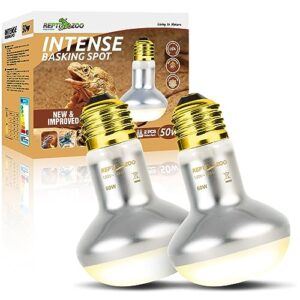
Getting the warm side to that 88–92°F sweet spot takes real wattage, and this 50-watt bulb delivers a concentrated basking zone without frying your boa’s eyes, thanks to its frosted glass design. The aluminum coating boosts thermal reflectivity by 35%, spreading heat evenly rather than in one harsh hotspot.
Pair it with a pulse-proportional thermostat, always. Rated for 3,000 hours and ETL-approved, it’s built for E26 dome fixtures — just never let your boa touch it directly.
| Best For | Reptile and amphibian keepers—like bearded dragon, gecko, and tortoise owners—who need a strong, reliable basking heat source with natural UVA light. |
|---|---|
| Material | Coated Glass |
| Weight | N/A |
| Dimensions | N/A |
| Target Animals | Reptiles, Amphibians, Birds |
| Primary Use | Heat/UV Lighting |
| Maintenance Level | Fixture Dependent |
| Additional Features |
|
- Aluminum coating boosts thermal reflectivity by 35%, spreading heat evenly instead of creating a harsh single hotspot
- Frosted glass design shields sensitive reptile eyes from intense light while still delivering strong basking warmth
- Works with dimmers and thermostats, making it easy to fine-tune temperatures for precise thermal control
- Requires a compatible lamp fixture, so it won’t work as a simple standalone bulb
- High thermal output means careful placement is needed to prevent overheating or injury to pets
- Built for concentrated spot basking rather than warming an entire enclosure evenly
9. Exo Terra Yellow Desert Sand
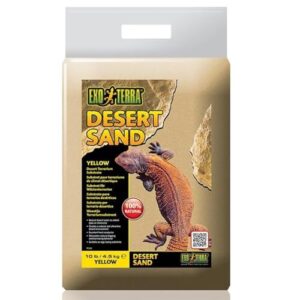
Sand isn’t just decoration — it’s a thermal tool. Exo Terra Yellow Desert Sand contains no dyes or chemicals, is sifted for uniform grain size, and conducts heat efficiently when paired with a heat mat, helping maintain stable warm-side temperatures.
Its texture encourages natural digging while reducing impaction risk compared to gravel substrates. It also works well as an egg-laying medium. Sold in 10-pound bags, it’s ideal for replicating your rosy boa’s arid, rocky native habitat.
| Best For | Rosy boa and other desert-species keepers who want a naturalistic, heat-efficient substrate that supports digging and egg-laying behaviors. |
|---|---|
| Material | Sand |
| Weight | 10 lbs |
| Dimensions | 1.5×9.2×2.5 in |
| Target Animals | Desert Reptiles |
| Primary Use | Substrate |
| Maintenance Level | Low |
| Additional Features |
|
- Free of added dyes or chemicals, with sifted grains for a consistent, impurity-free texture
- Conducts heat efficiently, helping maintain stable warm-side temperatures when paired with a heat mat
- Encourages natural digging and burrowing while doubling as a suitable egg-laying medium
- Comes only in a plastic bag, which some keepers may find less convenient for storage or dispensing
- Designed specifically for desert-style setups, so it’s not suited to humid or tropical terrariums
- As a loose sand substrate, it may require more frequent spot-cleaning than solid substrates
Frequently Asked Questions (FAQs)
Do rosy boas like to be held?
Ever wonder if a snake could actually enjoy your company? Adults generally tolerate and even seem to relax during gentle, supported handling, draping calmly over hands, while juveniles stay more hesitant until they build trust through consistent, calm sessions.
What is the friendliest boa?
Among boas, few rival this species for gentle temperament—calm, predictable, and low-strung compared to relatives like boa constrictors. Consistent handling and slow movements make them a top pick for anyone wanting a docile, easygoing snake companion.
Are rosy boas aggressive?
Not really. Rosy boas rarely bite and instead retreat or curl defensively when stressed. Aggression shows up only with mishandling or threat, not as a natural trait—healthy, well-socialized boas stay calm, favoring musk release or tail displays over striking.
How expensive is a rosy boa?
Expect to pay $25 to $200 for most rosy boas, though locality-specific or rare morphs can climb past $300–$400. Factor in shipping fees of $20 to $60, since distance and seller policy affect your final cost.
Do rosy boas brumate in captivity?
Your rosy boa can brumate in captivity, but it’s optional, not mandatory. If you’re not breeding, skip it entirely. Cooler nights (55–65°F) trigger the response; expect 6 to 12 weeks of reduced activity if you choose to brume.
Can rosy boas live with other snakes?
Solitary by nature — most pairings lead to stress, aggression, or cannibalism rather than companionship. Cohabitation only makes sense briefly during supervised breeding attempts. For everyday care, house each boa separately with its own hides and heat gradient.
How often do rosy boas shed skin?
Shedding rates vary by age: juveniles shed several times yearly as they grow rapidly, while adults slow to four or five sheds annually. Watch for a hazy blue-eye phase beforehand—it signals a shed is imminent within days.
For feeding guidance that supports healthy development, see this baby boa growth speed guide.
What sounds do rosy boas make?
Silence is the norm, but a soft, breathy hiss shows up when startled, produced by exhaling with the mouth cracked open. Juveniles occasionally chirp or squeak under stress—true vocal cords aren’t involved at all.
Do rosy boas need UV lighting?
Think of sunlight as a distant compass, not a lifeline: UVB isn’t mandatory, but a low-output bulb 12–18 inches above the basking spot helps with vitamin D3 synthesis and steadier circadian rhythm without demanding it for survival.
Do rosy boas make good pets for kids?
Yes — their calm, predictable temperament and non-venomous, low-bite-risk nature make them well-suited for kids, provided adults supervise handling sessions and teach gentle, respectful restraint from the start.
Conclusion
The irony of the rosy boa is that the snake famous for doing almost nothing ends up teaching you the deepest, most patient lessons in reptile keeping.
Rosy boa lifespan and temperament reward the keeper who resists rushing, handling roughly, or interfering too often.
Slow feeding schedules, gentle handling, and steady temperatures build decades, not days, one uneventful season at a time.
Give this animal calm, and it gives back thirty years of quiet trust.