This site is supported by our readers. We may earn a commission, at no cost to you, if you purchase through links.

Most new owners buy a tub that fits a hatchling and nothing else. Six months later, that same snake outgrows the setup, and they’re scrambling to rebuild everything from scratch. It’s an expensive mistake, and an avoidable one.
A solid ball python starter kit saves you that headache by planning for the adult snake from day one, not just the baby you bring home. Get the enclosure size, heat gradient, and humidity range right upfront, and you’ll spend your time enjoying your snake instead of troubleshooting it.
Here’s what actually belongs in that first setup, and why each piece earns its place.
Table Of Contents
- Key Takeaways
- Ball Python Starter Kit Essentials
- Top 4 Ball Python Starter Items
- Heating, Humidity, and Lighting Gear
- Hides, Substrate, and Enrichment
- Choosing The Best Starter Kit
- Frequently Asked Questions (FAQs)
- What do I need for my first ball python?
- Do snakes recognize their owners?
- How much does it cost monthly to own a ball python?
- Is a 20 gallon tank ok for a ball python?
- What is the new ball python starter set up kit?
- Where can I buy a child ball python?
- How to choose a ball python enclosure?
- Which Terrarium is best for Baby Ball pythons?
- What is the best tank for ball pythons?
- What is the best snake enclosure for a ball python?
- Conclusion
Key Takeaways
- Plan your ball python’s enclosure for its adult size (48"L x 24"W minimum) from the start, since hatchling-sized setups quickly become outgrown and costly to replace.
- Maintain a proper thermal gradient (88-92°F warm side, 75-82°F cool side) using a thermostat-controlled heat source to support digestion and prevent burns.
- Monitor humidity daily with two hygrometers, keeping levels between 55-70% (up to 80% during shedding) to ensure clean sheds and prevent skin issues.
- Choose a PVC enclosure with front-opening doors over glass for better heat retention, lower stress during handling, and long-term durability as your snake grows. For a deeper breakdown of what to look for, ball python enclosure sizing and setup guides can help you compare specific models before committing to one.
Ball Python Starter Kit Essentials
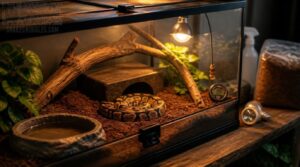
Setting up a ball python enclosure right the first time saves you money, stress, and a lot of guesswork down the road. There are a few non-negotiables here: proper size, secure access, and the ability to hold steady heat and humidity. Here’s what to look for before you buy anything.
If you’re new to the hobby, this ball python care guide for beginners breaks down tank size, ventilation, and lid security so you can shop with confidence.
Proper Adult Enclosure Size
Six feet of snake in a shoebox invites obesity and stress, plain and simple. Your adult ball python enclosure needs 48"L x 24"W minimum:
- 48×24" floor allows full-body extension
- 60×24" adds lateral movement space
- Depth stays at 24"+ for turning
- 48×30" suits larger adults
- Footprint matters more than height
Choosing species-specific habitat requirements ensures your pet remains healthy and active.
Prioritize floor space over height in your ball python starter kit.
Secure Front-opening Access
Once floor space is sorted, access matters just as much. Front-opening doors beat top-lift lids for shy ball pythons, cutting stress during feeding and cleaning.
Look for reliable locking mechanisms and reinforced door frames on any reptile enclosure you’re considering. Sturdy latches keep curious pets (and curious kids) from popping the door open by accident.
Warm and Cool Zones
Ball pythons rely on you for thermal regulation, since they can’t generate their own body heat. A proper thermal gradient means a basking side near 88-92°F and a cool side around 75-82°F, giving roughly 10-15°F of separation for real thermoregulation behavior.
Use a thermostat-controlled heat source always, monitor daily, and correct any heat spikes fast. Good gradients support digestion and prevent burns.
Daily Humidity Monitoring
Getting temperature dialed in solves half the battle, but moisture runs the other half. Grab two hygrometers: one on the warm side, one near your moist hide, checked twice daily. Watch for humidity fluctuation patterns after misting or cleaning.
- Track trends, not single readings
- Note spikes before shedding
- Adjust substrate for better moisture retention
Consistent monitoring beats guesswork every time.
Safe Beginner Setup Priorities
Nail the basics before chasing extras. Lock down secure enclosure, stable temps, and humidity control first—decor comes later.
Pick escape-proof substrate like aspen for easy cleaning routines. Add two hides minimum, set a weekly maintenance schedule, and budget ahead for upgrades.
Common beginner mistake? Overcrowding tanks with clutter before mastering husbandry fundamentals. One well-supported reptile enclosure setup beats a rushed, complicated one.
Master husbandry fundamentals before adding clutter—one well-supported enclosure beats a rushed, complicated one
Top 4 Ball Python Starter Items
You don’t need a mountain of gear to get started, just the right pieces working together. I’ve narrowed it down to four items that cover humidity, cleanliness, and housing in one shot. Here’s what earns a spot in your setup and why each one pulls its weight.
Before picking out humidity gear or hides, though, it’s worth nailing down the right corn snake tank size requirements, since that shapes everything else in your setup.
1. Natural long fiber sphagnum moss
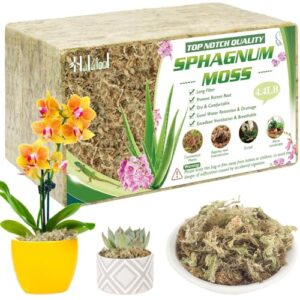
Think of it as nature’s own sponge, holding up to 20 times its dry weight in water while releasing moisture slowly instead of dumping it all at once. That slow-release quality makes it perfect for buffering humidity swings inside a humid hide or moist corner of the enclosure.
It’s also naturally resistant to bacteria and fungus, so odor stays low and shed events go smoother. A little goes a long way toward steady, worry-free humidity control.
| Best For | Reptile and invertebrate keepers, orchid and carnivorous plant growers, and anyone needing a natural, chemical-free substrate for humidity control or plant propagation. |
|---|---|
| Primary Material | Natural coconut fiber |
| Reptile Use | Substrate and humidity aid |
| Weight | 4.4 lbs |
| Preparation Required | Soaking to expand |
| Primary Setting | Terrarium substrate layer |
| Ease Of Use | Simple soak and spread |
| Additional Features |
|
- Holds up to 20 times its dry weight in water, releasing moisture slowly for steady humidity control
- Naturally resistant to bacteria and fungus, keeping odor low and supporting smoother sheds
- Pure natural material with no artificial colorings or additives, versatile enough for plants, reptiles, and packaging
- Must be soaked to expand, and excess water needs to be wrung out before use
- Final volume depends on how much water is used during preparation, so results can vary
- Compressed bricks require prep time before the moss is ready to use
2. Rescue disinfectant cleaner and deodorizer
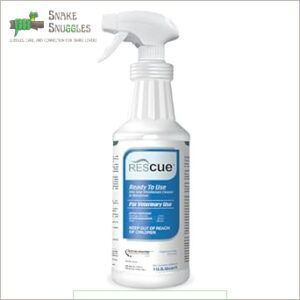
Sixty seconds is all Rescue disinfectant needs to knock out bacteria, viruses, and fungus on cage surfaces, litter boxes, and bowls. It’s EPA registered for animal care settings, using accelerated hydrogen peroxide that breaks down into water and oxygen, so you won’t gas out your snake room with harsh fumes.
Wipe away soil first, spray, wait a minute, then rinse anything near food or water. The built-in deodorizer knocks out kennel odor too, keeping your setup fresh between deep cleans without masking problems with heavy fragrance.
| Best For | Veterinary clinics, animal shelters, kennels, and pet foster homes looking for a fast-acting disinfectant to help prevent disease outbreaks. |
|---|---|
| Primary Material | Chemical disinfectant liquid |
| Reptile Use | Enclosure disinfecting |
| Weight | 2.09 lbs |
| Preparation Required | Ready to use |
| Primary Setting | Clinic or home cleaning |
| Ease Of Use | Spray and wipe |
| Additional Features |
|
- Eliminates pathogens, including canine parvovirus, in as little as 60 seconds
- Broad-spectrum formula also works as a deodorizer to control kennel odor
- Compact 32-ounce size with manageable 2.09-pound weight for easy handling
- Spray nozzle is not included, so you’ll need to supply your own
- Designed specifically for veterinary and animal use, limiting its versatility elsewhere
- Requires rinsing near food and water areas, adding an extra step to the cleaning process
3. JohnBee HDPE Empty Spray Bottles
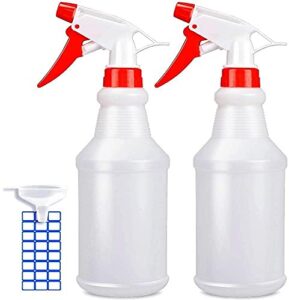
Every misting session and cleaning wipe-down calls for a reliable spray bottle, and this two-pack from JohnBee earns its spot in your kit. Built from BPA-free HDPE, they resist cracking and hold up against vinegar, rubbing alcohol, and diluted disinfectants alike.
The adjustable nozzle switches between fine mist and solid stream, handy for humidity boosts or targeted spot cleaning. A stainless steel spring and internal gasket keep the trigger leak-free, so you’re not wiping puddles off your rack shelves.
When it’s time to go deeper than daily sprays, a full terrarium deep clean pairs perfectly with a reliable spray bottle to reset your enclosure from top to bottom.
| Best For | Anyone who wants a dependable, leak-proof spray bottle for everyday cleaning, gardening, or DIY solutions using water, alcohol, or vinegar-based liquids. |
|---|---|
| Primary Material | HDPE plastic |
| Reptile Use | Misting and hydration |
| Weight | Under 1 lb |
| Preparation Required | Fill and adjust nozzle |
| Primary Setting | Household and outdoor use |
| Ease Of Use | Adjustable spray settings |
| Additional Features |
|
- Adjustable nozzle easily switches between fine mist and solid stream for different tasks
- Leak-proof design with internal gasket and stainless steel spring prevents drips and clogging
- Durable, BPA-free HDPE construction resists cracking and holds up to common cleaning chemicals
- Not suitable for oils, essential oils, or other viscous liquids
- May require nozzle rotation or tube adjustment before spraying works properly
- Semi-opaque bottles make it harder to see exact liquid levels at a glance
4. PVC reptile enclosure with leg stand
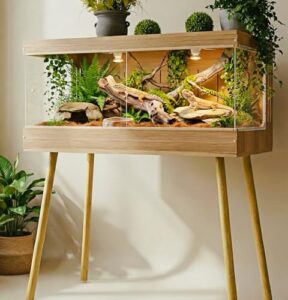
Rounding out your kit, the PVC TANK123 enclosure gives you a complete gradient setup right out of the box, with dual E27 sockets, a built-in digital thermostat, and two UVB bulbs included. The front-opening door means low-stress access for handling and cleaning.
Its sturdy leg stand lifts the tank to a comfortable working height, keeping substrate away from cold floors. At 44 pounds, grab a second set of hands for setup, but assembly itself takes roughly ten minutes.
| Best For | Bearded dragon, snake, gecko, and large lizard owners who want a complete, ready-to-heat indoor enclosure setup. |
|---|---|
| Primary Material | PVC panels |
| Reptile Use | Complete housing enclosure |
| Weight | 44 lbs |
| Preparation Required | Assembly required |
| Primary Setting | Indoor enclosure setup |
| Ease Of Use | Approx 10 minute build |
| Additional Features |
|
- Complete temperature gradient with built-in digital thermostat, dual E27 sockets, and two included UVB bulbs
- Front-opening design allows low-stress access for handling and cleaning
- Elevated four-leg stand keeps the tank away from cold, damp floors
- Requires assembly upon arrival, though it takes only about 10 minutes
- Only compatible with E27-type bulbs, limiting replacement options
- At 44 pounds, positioning the enclosure likely requires two people
Heating, Humidity, and Lighting Gear
Heat and humidity aren’t things you eyeball, they’re things you control with the right gear. Get this part wrong, and you’re looking at stuck sheds, respiratory issues, or a stressed-out snake that won’t eat. Here’s exactly what you need to keep your ball python’s climate dialed in.
Thermostat-controlled Heat Sources
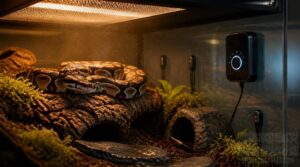
A heater without a thermostat is a burn waiting to happen. Every heat source, whether an 80 Watt Radiant Heat Panel or a VE200 Thermostat-controlled overhead heat source, needs regulation.
Proportional control (like PID) smooths swings better than On-Off cycling. Dual-stage regulation lets one unit handle both heating and cooling outlets. Add thermal fuse safety and redundant sensor setups, and you’ve got a digital temperature controller worth trusting.
Ideal Temperature Gradient
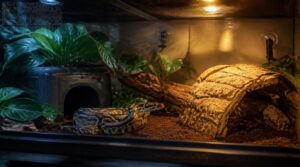
Your thermostat-controlled overhead heat source only works if the gradient behind it makes sense. Aim for 88-92°F on the warm side and 78-82°F cooling off, with roughly 6-10°F separating them. Measure at multiple heights, not just floor level, since heat rises unevenly.
Nighttime drops of a few degrees mimic nature. Watch for heat pockets, they wreck thermoregulation and stall digestion.
Humidity Range for Shedding
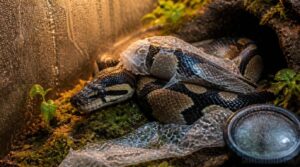
Get temperature dialed in, then shift focus to moisture. Ball pythons shed best between 55-70% humidity, spiking to 80% during blue phase hydration. A humidity holding substrate boosts retention between mistings.
Watch eye caps closely, retained caps signal microclimate humidity spikes are needed. Consistent humidity control prevents skin cracking and helps with proper keratin hydration techniques for clean, complete sheds.
Optional Low-level UVB
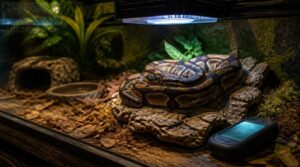
Ball pythons don’t need UVB to thrive, but low-level UVB offers real benefits if you want to add it.
Look for fixtures in the 280-315 nm range, low output intensity, like the Arcadia Lumenize Forest 6 Smart UVB Kit. Mount it above the basking spot, check UV Index with a meter, and swap bulbs every 6-12 months to prevent burns.
Infrared Temperature Checks
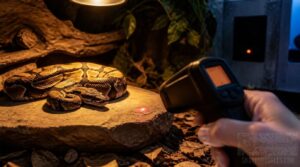
Trust your gauge, not your gut. A digital infrared thermometer reads surface heat within a close distance ratio, so hold it a few inches from basking spots for accuracy. Skin (or scale) emissivity runs near 0.98, close enough for reliable readings. Recalibrate occasionally to prevent drift.
Remember: this measures surface, not internal, temperature—pair readings with your thermostat-controlled heat source for true regulation.
Hides, Substrate, and Enrichment
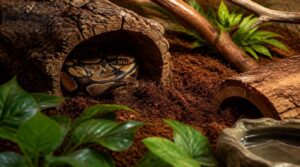
Your ball python’s enclosure needs more than heat and humidity to feel like home. Hides, substrate, and a few well-placed decorations give your snake security and let natural behaviors show through. Here’s what you need to get those elements right.
Warm Hide Placement
Where you place the warm hide can make or break your snake’s thermoregulation. Set it directly over your heat source, tucked near the enclosure edge, so warmth stays concentrated without thermal burn risk.
For even better heat retention and humidity balance, a custom snake enclosure design with PVC panels keeps warmth where it matters most while protecting your snake from unsafe temperature spikes.
| Element | Target | Why |
|---|---|---|
| Hide floor temp | 88-95°F | Prevents overheating |
| Placement | Warm side edge | Easy gradient access |
| Material | Solid, non-slip | Safety, stability |
Cool Hide Placement
Why does the far end of the enclosure matter so much? Because your ball python needs a true escape from heat, not just a shady spot. Position the cool hide at the opposite end, last 12 inches, keeping it snug for security and away from warm-side drift.
Aim for 76-82°F here—accurate thermal gradient readings keep husbandry honest.
Moist Hide Setup
Shedding season calls for a third hide, tucked into the cool zone and packed with damp sphagnum moss for moisture retention. This microclimate hits 70-90% humidity, softening old skin for a clean release.
Keep it ventilated to curb mold, and check daily. Dry, crumbly moss means it’s time to remist—soggy moss invites bacteria, so balance is everything.
Snake-safe Substrate Options
Substrate is where humidity retention lives or dies. Five options worth knowing: For a deeper dive into layering these materials for a naturalistic setup, this guide to ball python substrates for bioactive enclosures breaks down ideal ratios and moisture buffering tips.
- Coconut fiber (like ReptiEarth Coconut Fiber Mix): expands fluffy, holds moisture, minimal impaction risk
- Aspen shavings: dust-free, wicks moisture, dries fast
- Cypress mulch: mold-resistant, boosts shedding humidity
- Bioactive mix: microfauna handle waste naturally
- Paper bedding: ideal for quarantine, easy monitoring
Choose based on your snake’s needs, not habit.
Clutter and Climbing Branches
A bare enclosure breeds a bored, stressed snake. Add climbing branches made of maple or beech, angled diagonally, spaced to prevent entrapment. Pair with faux plants for microhabitats and sensory texture. Inspect clutter regularly for cracks, and thin it out during shedding. This enrichment mimics natural behaviors—exactly what a thoughtful ball python starter kit should encourage.
Choosing The Best Starter Kit
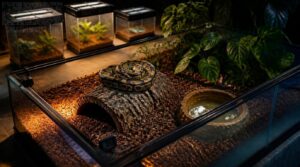
Picking the right enclosure isn’t just about looks, it’s about what actually keeps your snake healthy long-term. Budget matters, but so does thinking ahead to what your ball python will need as an adult. Let’s break down what separates a smart choice from a costly mistake.
Glass Versus PVC Enclosures
Glass versus PVC comes down to trade-offs. Glass terrariums offer astonishing visibility for observing your snake, but they’re heavy, need sturdy stands, and cool quickly without insulation.
A PVC reptile enclosure insulates better, retains heat with lower wattage, and allows custom sizing. For snake husbandry that prioritizes stability and heat retention, PVC usually wins for beginners building a lasting ball python starter kit.
Beginner Budget Considerations
Money matters just as much as material once you’ve picked your enclosure type. A realistic beginner budget breaks into four buckets:
- Enclosure: $60–$300
- Heating/humidity gear: $27–$75
- Substrate and hides: $18–$40
- Monthly feeding: $10–$25
Starter kits with bundled accessories often save money versus buying piecemeal, easing your pet reptile care investment right from day one.
Long-term Upgrade Needs
Your starter kit today isn’t your setup in three years. Plan for growth from the start, in both enclosure size and gear quality.
| Upgrade | Timeline | Cost Range |
|---|---|---|
| Thermostat | 3–5 years | $30–$60 |
| Enclosure ventilation | As needed | $15–$40 |
| Full enclosure swap | 2–4 years | $100–$300 |
Budget 5–10% of your kit’s cost annually, and favor modular Ball Python enclosure accessories that upgrade in pieces, not all at once.
Common Kit Mistakes
Budgeting for upgrades won’t help if the starting setup is flawed. Watch for inadequate enclosure size, dangerous substrate choices like cedar, improper thermostat calibration, and poor humidity monitoring.
- Skipping a thermostat on heat sources
- Choosing pine over reptile-safe substrate
- Neglecting UVB benefits during setup
These habitat essentials separate a thriving beginner snake from a stressed one in any reptile enclosure setup.
Monthly Care Supply Costs
Once your setup is solid, ongoing costs settle in fast. Expect $50-150 monthly for basic supplies, plus $20-60 for prey and supplements. Cleaning products run $8-20, while substrate and humidity upkeep add $10-25. Energy usage for thermostats and heat sources contributes another $5-20. Since substrate and humidity upkeep is part of that monthly cost, choosing safe, long-lasting options like ball python substrates for rescue owners can help you avoid pricier fixes down the road.
Budgeting these consumable frequencies upfront keeps your reptile husbandry sustainable long-term, not just affordable at purchase.
Frequently Asked Questions (FAQs)
What do I need for my first ball python?
You’ll need a secure enclosure, two-zone heating with a thermostat, a hygrometer, warm and cool hides, snake-safe substrate, a sturdy water bowl, feeding tongs, and low-D3 supplements—the true foundation of confident reptile husbandry.
Do snakes recognize their owners?
Not through affection like a dog, but through scent recognition and routine. Regular handling builds learned associations, calmer movement cues, and reduced stress indicators, so your ball python gradually tolerates—even relaxes with—you specifically.
How much does it cost monthly to own a ball python?
Your wallet won’t get squeezed like a ball python’s coil—expect $30-$70 monthly. Buying prey in bulk cuts feeding costs, while thermostats keep electricity usage predictable.
Budget extra for supplements and an emergency vet fund; reptile insurance premiums add $10-$60 if you want coverage.
Is a 20 gallon tank ok for a ball python?
Only for hatchlings—once your Python regius nears 2 feet, thermoregulation in small tanks gets tricky. Scale enclosure size to 40+ gallons; adults need room for movement, gradients, and stable microclimates a cramped 20 gallon just can’t provide.
What is the new ball python starter set up kit?
Ever notice how "some assembly required" always means a missing screw? Not here. This kit skips the drama with a stackable RUB enclosure, preinstalled heat mat, and thermostat regulation—12L and 33L options ready for hatchlings through juveniles, no guesswork included.
Where can I buy a child ball python?
Your best bets are reputable local breeders, reptile expos, or specialty pet stores stocking CB hatchlings. Online marketplaces work too, if you verify seller reviews. Don’t overlook rescue groups—adoption often means lower cost and hands-on support.
How to choose a ball python enclosure?
One decision determines your snake’s health for years to come: material durability, floor footprint, and escape prevention matter more than looks. Choose PVC reptile enclosures over glass for better heat retention, sized to your snake’s life stage transitions.
Which Terrarium is best for Baby Ball pythons?
A 20x11x13 inch glass terrariums works best for baby ball pythons, offering clear visibility, secure escape-prevention latches, and solid humidity retention—giving your hatchling a snug, safe footprint before you plan its eventual PVC enclosure upgrade.
What is the best tank for ball pythons?
Funny enough, the answer isn’t glass at all: a PVC reptile enclosure with a solid footprint, sturdy latches, and proper thermal gradient support beats any standard tank for adult ball python enclosures.
What is the best snake enclosure for a ball python?
A PVC reptile enclosure with front-opening doors wins hands down.
PVC beats glass for material heat retention, holds humidity better, and gives your ball python that secure, low-stress terrarium setup every beginner needs for lasting husbandry success.
Conclusion
A good enclosure is a foundation, not a cage; get it right, and everything else you do for your snake stands on solid ground. That’s the real payoff of a well-planned ball python starter kit: fewer emergency fixes, fewer guessing games, more time actually enjoying the animal you brought home.
Nail the gradient, the humidity, the hides, and the size from week one. Your snake settles in. You gain confidence. That’s what mastery looks like here.