This site is supported by our readers. We may earn a commission, at no cost to you, if you purchase through links.

Snakes don’t need much—a warm enclosure, fresh water, and the right bedding. That last one trips up a lot of apartment keepers.
Small spaces mean smells travel fast, humidity swings hit harder, and a bad substrate choice becomes your whole roommate’s problem.
The bedding you pick does more than cover the tank floor—it controls odor, holds moisture, and keeps your snake’s lungs clear.
Pick the wrong one, and you’re dealing with mold, respiratory issues, or a weekly cleaning nightmare.
The good news? Snake bedding for apartment living has some genuinely solid options, and the right match depends mostly on your snake’s species and your space.
Table Of Contents
- Key Takeaways
- Best Snake Bedding Types for Apartment Living
- Top 4 Snake Bedding Products for Apartment Keepers
- How to Choose Bedding Based on Your Snake’s Needs
- Controlling Odor and Moisture in Apartment Snake Enclosures
- Easy Maintenance Schedule for Apartment Snake Bedding
- Frequently Asked Questions (FAQs)
- Conclusion
Key Takeaways
- bedding choice controls odor, humidity, and air quality — get it wrong, and your whole apartment feels it.
- Match substrate to your snake’s species: aspen for dry dwellers, coconut fiber or cypress mulch for tropical ones.
- Never use cedar or pine shavings — they release toxins that damage your snake’s respiratory system.
- A simple daily spot-clean plus a full substrate swap every 4–6 weeks keeps things low-effort and smell-free.
Best Snake Bedding Types for Apartment Living
Picking the right bedding makes a bigger difference than most new keepers expect. The good news is you’ve got solid options, whether your snake likes it dry, humid, or somewhere in between.
For a deeper look at which substrates actually work, this ball python bedding guide breaks down the top picks by humidity needs and ease of maintenance.
Here are the best bedding types that work well in apartment setups.
Aspen Shavings for Low-Dust, Odor-Free Enclosures
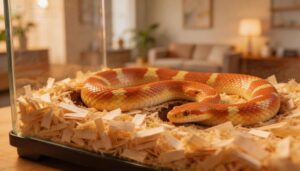
Aspen shavings are a go-to dust‑free snake substrate for apartment keepers — and for good reason. Kiln drying removes excess moisture and resins, so you’re left with a clean, odor‑controlling bedding that won’t irritate your snake’s lungs or yours.
Aim for a 1–2‑inch layer thickness to increase absorption capacity. Zoo Med Aspen Snake Bedding nails this balance — low‑dust, affordable, and biodegradable.
Its virtually dust‑free bedding also offers hypoallergenic benefits for both pets and owners.
Cypress Mulch for Humidity-Loving Species in Small Spaces
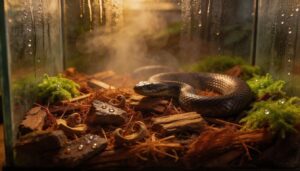
If your snake thrives in tropical humidity, cypress mulch is your best friend. It excels at moisture buffering — holding water slowly to keep levels steady without constant misting. You also get natural temperature insulation, which smooths out those apartment heating swings.
Top reasons cypress mulch works for humidity-loving species:
- Holds moisture longer through slow decomposition
- Natural nutrient release feeds beneficial enclosure microbes
- Controls odor without chemical additives
- Galapagos Cypress Tank Mulch offers reliable moisture control
- Safe sourcing means no dyes, cedar, or pine blends
Coconut Fiber Substrate for Compact Tropical Setups
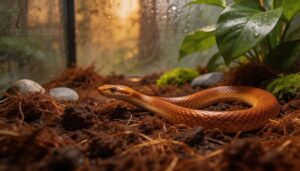
Coconut fiber takes moisture control a step further than cypress mulch. Its coir pith mix absorbs water slowly and releases it gradually, so your tropical setup stays humid without constant misting.
Compressed brick expansion is a win for small apartments — one compact brick unfolds into liters of lightweight, easy-to-pour bedding. It also facilitates drainage layer integration and plant growth support, making it a genuinely environmentally friendly bedding choice.
Newspaper and Paper Towels as Budget-Friendly Liners
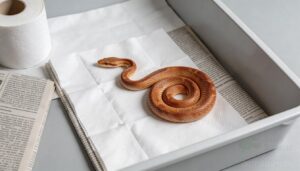
Not every snake keeper needs a fancy substrate. Sometimes, the best budget-friendly snake bedding alternatives are already in your recycling bin.
Newspaper and paper towels are low-maintenance, quick-replacement liners that work surprisingly well for dry-environment species or temporary setups.
- Cost Efficiency: Free or nearly free — hard to beat that.
- DIY Layering Techniques: Stack several sheets for better absorption.
- Ink-Free Materials: Use plain, unprinted paper towels to avoid chemical exposure.
- Disposal Options: Toss soiled paper liners straight in the trash.
Reptile Carpet and Reusable Artificial Substrates
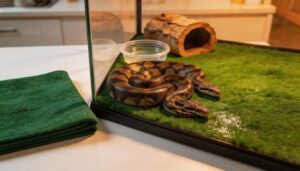
Want something you can wash and reuse? Reptile carpet checks that box. It’s a low-maintenance snake bedding solution — no dust, no loose fibers to worry about. Trim it to fit, toss it in the wash, done.
| Feature | Reptile Carpet | Disposable Paper |
|---|---|---|
| Carpet Texture | Soft, grippy surface | Flat, minimal grip |
| Cleaning Efficiency | Rinse and reuse | Toss after one use |
| Waste Reduction | High — reusable liners | Low — weekly disposal |
| Eco-Friendly Materials | Nylon/polyester, washable | Single-use paper waste |
| Durability Testing | Lasts months with care | Degrades immediately |
The Reptile Carpet Coconut Fiber Terrarium Mat takes it further — natural feel, dust-free snake substrate, and easy cleanup.
It’s one of the top picks in this boa constrictor substrate comparison guide for keepers who want low-maintenance bedding without sacrificing a natural look.
Top 4 Snake Bedding Products for Apartment Keepers
Finding the right bedding doesn’t have to mean scrolling through hundreds of options. four products stand out for apartment keepers who want something clean, low-maintenance, and snake-friendly.
Let’s break down what makes each one worth considering.
1. Prevue T3 Bird Cage Liner
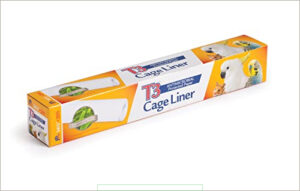
The Prevue T3 Cage Liner isn’t just for birds — it’s a surprisingly solid pick for snake keepers who want fast, no-fuss cleanups. This all-natural white paper roll has an antimicrobial layer that fights odor-causing bacteria without any harsh chemicals.
It’s safe for your snake, easy to cut to size, and one roll can last several months. Just peel, toss, and replace. For apartment keepers who hate dealing with loose bedding, this liner keeps things tidy with almost zero effort.
| Best For | Bird owners who want a clean, low-maintenance cage liner that’s safe, natural, and easy to swap out. |
|---|---|
| Material | White paper |
| Odor Control | Moderate absorption |
| Humidity Support | Low |
| Dust Level | Minimal |
| Enclosure Fit | Trimmable to size |
| Chemical Safety | Chemical-free paper |
| Additional Features |
|
- Made from all-natural, chemical-free paper — totally safe if your bird pecks at it
- Absorbent enough to handle droppings, seeds, and the occasional water spill
- One roll can last several months, so you’re not restocking constantly
- The paper tends to curl and roll back on itself, which makes fitting it flat a bit of a hassle
- Newer rolls have been thinner than older ones, so durability isn’t always consistent
- It only comes in one size and color, so larger cage trays will need trimming
2. Galapagos Cypress Tank Mulch Bedding
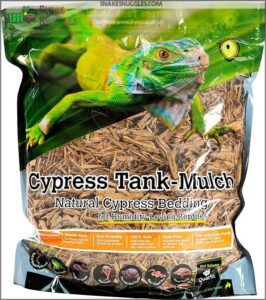
If your snake craves a tropical setup, Galapagos Cypress Tank Mulch is worth a serious look. Made from 100% natural cypress timber, it’s free of salts, oils, and parasites — so no nasty surprises for your reptile.
The chunky texture facilitates burrowing, and it holds moisture well without getting soggy.
At $11.99 for 8 quarts, it costs a bit more than paper options, but your humidity-loving python or boa will thank you. Just be ready to spot-clean more often with heavy drinkers.
| Best For | Humidity-loving reptiles like pythons, boas, iguanas, and monitors who need a naturalistic substrate that holds moisture and supports burrowing. |
|---|---|
| Material | Cypress bark |
| Odor Control | Natural cypress scent |
| Humidity Support | High |
| Dust Level | Low after settling |
| Enclosure Fit | Spot-clean friendly |
| Chemical Safety | Salt and oil free |
| Additional Features |
|
- Made from 100% natural cypress with no salts, oils, or parasites — totally safe for your animals
- Holds moisture well and lets reptiles burrow naturally, which keeps them less stressed
- Low dust means easier breathing for both your pet and you
- One 8-quart bag might not cut it for larger enclosures, so you may need to buy multiple
- Pricier than paper or coconut-based bedding options
- Not great at handling heavy urine loads, so spot-cleaning becomes a regular chore
3. Fluker’s Repta Bark Natural Bedding
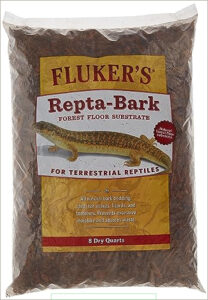
Fluker’s Repta Bark is basically a tiny forest floor packed into a bag — and your tropical reptile will love it.
Made from 100% natural orchid bark with no cedar, pine, or artificial additives, it’s safe for sensitive species.
The small-to-medium pieces (around half an inch) hold moisture well, cut down on odors, and even help with shedding.
One heads-up: rinse it before use, since dust and fine particles can sneak in.
Natural, effective, and apartment-friendly.
| Best For | Tropical reptile and amphibian owners — think tortoises, snakes, frogs, and lizards — who need a natural, humidity-friendly substrate that’s ready to go right out of the bag. |
|---|---|
| Material | Orchid bark |
| Odor Control | Natural odor reduction |
| Humidity Support | High |
| Dust Level | Noticeable, rinse recommended |
| Enclosure Fit | Ready to use |
| Chemical Safety | No added dye |
| Additional Features |
|
- 100% natural orchid bark with no dyes or additives, so it’s safe for even sensitive species
- Holds moisture well and cuts down on odors, making it easier to maintain the right humidity
- The rough texture gives snakes a natural surface to rub against during shedding
- Comes with noticeable dust and fine particles — you’ll probably want to rinse it before use
- Small splinters can be present in the bag, which is worth keeping in mind for delicate species
- After cleaning out the dust and unusable pieces, you might end up with about half the volume you expected
4. Bio Dude Terra Firma Bioactive Substrate
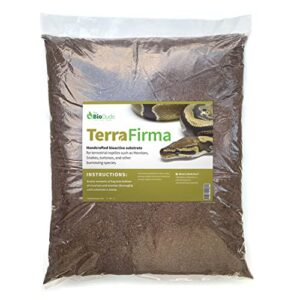
Bio Dude Terra Firma is the closest thing to a living ecosystem you can fit in an apartment tank.
At $59.95 for 36 quarts, it’s built for ball pythons, kingsnakes, and skinks that love to dig and burrow.
It holds humidity right around 50–70% without constant misting.
Toss in some springtails and isopods, and they’ll handle waste breakdown for you.
Just note — it’s a 35 lb bag, so maybe don’t skip leg day.
| Best For | Reptile keepers who want a natural, low-maintenance setup for ball pythons, kingsnakes, skinks, or similar species that like to burrow and need steady humidity. |
|---|---|
| Material | Mixed organic substrate |
| Odor Control | Bio-balanced ecosystem |
| Humidity Support | Moderate to high |
| Dust Level | Minimal |
| Enclosure Fit | Ready to use |
| Chemical Safety | Bio-balanced formula |
| Additional Features |
|
- Holds humidity at 50–70% on its own — no misting systems needed
- Supports a full bioactive setup with live plants and cleanup crews like springtails and isopods
- Ready to use right out of the bag with minimal prep
- At 35 lbs, the bag is heavy and a bit awkward to haul around
- Can get too moist in the lower layers, so you’ll want to keep an eye on it
- Too humid for desert species or any reptile that needs a dry environment
How to Choose Bedding Based on Your Snake’s Needs
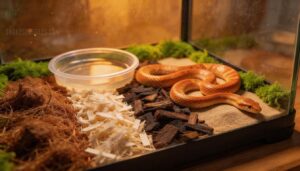
Not all bedding works the same way for every snake, and picking the wrong one can cause real problems. A few key factors — like humidity needs, dust levels, and burrowing habits — make the difference between a happy snake and a stressed one.
Here’s what to look for when choosing the right substrate for your specific setup.
Matching Substrate to Species Humidity Requirements
Not all snakes live in the same climate — and your substrate needs to match that reality. A tropical humidity substrate keeps moisture between 70–90%, perfect for rainforest species. Desert dry substrate stays well below 50%. Moderate moisture mix works for in‑between species.
Humidity gradient layers give burrowers a damp bottom and drier surface — low‑maintenance and smart.
- Tropical species: coconut fiber or cypress mulch for humidity regulation
- Desert dwellers: aspen shavings for fast-drying moisture control
- Moderate needs: species-specific substrate blends for substrate moisture balance
- Burrowers: layered setups hit Species Moisture Targets naturally
Selecting Dust-Free Options to Protect Respiratory Health
Humidity sorted? Now let’s talk air quality — yours and your snake’s.
Dusty bedding irritates respiratory systems fast. That’s why dustfree snake substrate matters. Aspen and coconut fiber shine here. Pre‑Moistening Bedding before setup keeps particles grounded.
Sealed Packaging Benefits mean less loose dust right out of the bag.
Good Ventilation Management and Air Filtration Strategies keep your apartment breathing easy too.
Supporting Natural Burrowing Behavior in Limited Space
Your snake isn’t just hiding — it’s doing what nature designed it to do.
A good burrowing substrate makes that possible, even in a tiny apartment tank. Think Layered Substrate Depth with Vertical Digging Zones built in:
- Pack 6–8 inches of Moisture-Stable Mix
- Add Removable Tunnel Inserts for burrow variety
- Use natural substrates like coconut fiber or sustainable wood reptile substrate
- Keep a simple Burrow Monitoring Log weekly
Low‑maintenance and dust‑free snake substrate? That’s the goal.
Avoiding Toxic Materials Like Cedar and Pine Shavings
Cedar and pine might seem like natural choices, but they’re actually bad news for your snake. Cedar releases phenols that burn respiratory tissue — Cedar Phenol Toxicity is real and serious. Pine Terpene Irritation works similarly, triggering wheezing and inflammation. Skip both entirely.
Cedar and pine release toxic phenols and terpenes that burn your snake’s respiratory tissue — avoid both entirely
Safe Wood Alternatives like Aspen contain zero harmful oils, giving you genuinely Allergen-Free Substrates with dust-free bedding, your snake can safely breathe around.
Controlling Odor and Moisture in Apartment Snake Enclosures
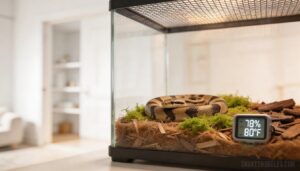
Living in an apartment means smells travel fast — and a musty snake enclosure won’t win you any points with neighbors.
The good news is right bedding does most of the heavy lifting for you. Here’s what actually works for keeping odor and moisture under control in a small space.
Best Absorbent Substrates for Odor Reduction
Odors in a small apartment can turn your snake’s home into a headache fast. The right substrate fights back hard.
Activated Carbon Layers and Zeolite Infusion trap ammonia before it spreads. Biochar Moisture Control keeps things dry while an Enzyme Odor Breakdown processes leftover waste molecules.
A Diatomaceous Earth Blend boosts absorption even further. Highly absorbent, dust free bedding means a genuinely low maintenance snake enclosure — no nose-wrinkling required.
Managing Humidity Levels in Small Living Spaces
Apartments trap humidity fast — and your snake feels every percentage point.
Aim for 40–50% in your living space using Smart Humidity Sensors with min/max alerts.
Seasonal Humidity Adjustments matter too; heating season dries air out; summer spikes it.
Pair Airflow Optimization through cross-ventilation with Moisture-Absorbing Materials and a substrate with strong absorbency for reliable, low-maintenance moisture control and solid odor absorption year‑round.
Preventing Mold, Bacterial Growth, and Scale Rot
Mold doesn’t knock before entering — it just moves in when things stay damp too long. Smart Heat Source Placement keeps bedding cycling between warm and dry zones, while proper Airflow Circulation stops moisture from settling.
Use Substrate Drying Techniques like daily spot-cleaning and prompt waste removal for bacterial contamination control.
Clean Water Practices and Biofilm Prevention around the bowl protect against scale rot. Low-maintenance and effective.
Sterilizing Natural Substrates by Freezing or Baking
Before you toss fresh bark or coconut fiber straight into the tank, give it the treatment. Freeze natural substrates at 0°C or below for 24 to 72 hours — that freeze duration eliminates most pests and eggs.
Prefer baking? bake temperature of 180–200°C for 20 to 60 minutes works great too.
Always check for substrate texture changes after cooling, and keep moisture monitoring consistent throughout.
Sterile bedding preparation is worth every minute.
Easy Maintenance Schedule for Apartment Snake Bedding
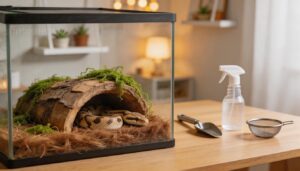
Keeping up with snake bedding doesn’t have to feel like a second job. simple routine makes all the difference, especially when you’re working with a smaller apartment setup.
Here’s what a low-stress maintenance schedule actually looks like.
Daily Spot Cleaning Techniques for Small Enclosures
Think of daily upkeep like brushing your teeth — skip it once, and things get gross fast. A quick spot clean each day keeps your apartment smelling fresh and your snake happy.
- Spot Waste Removal: Scoop feces and wet bedding immediately using a small reptile scoop or plastic card.
- Surface Wiping Techniques: Wipe glass and decor with a reptile-safe damp cloth daily.
- Cleaning Tool Choices: Use dedicated tools — never kitchen utensils.
- Hygiene Monitoring Logs: Jot down anything unusual during cleaning.
- Frequency Scheduling Tips: Build spot clean habits into your morning routine.
Full Substrate Replacement Timelines by Bedding Type
Each bedding type runs its own clock. For the Aspen Replacement Cycle, replace it every 4–6 weeks — sooner if it smells off.
Cypress Mulch Interval lands around 4–12 weeks. Coconut Fiber Turnover sits between 4–10 weeks.
Paper Substrate Frequency? Weekly — no wiggle room. Carpet Cleaning Schedule means a deep wash every 1–3 months.
Spot cleaning vs full replacement both matter for low-maintenance snake bedding solutions.
Storing Unused Bedding Safely in an Apartment
Leftover substrate doesn’t have to be a storage nightmare. Keep it fresh and pest-free with these simple steps:
- Use Airtight Storage Bins — moisture control is everything in a small apartment.
- Try Labeling & Dating each bin so you’re never guessing what’s inside.
- Add cedar blocks nearby as a natural Pest Deterrent Strategy.
Cool, dry shelf. Done.
Eco-Friendly and Biodegradable Disposal Options
Once you’ve sorted storage, think about where that used bedding actually goes. The good news: Most snake substrates are biodegradable, so home composting is totally an option.
Aspen and coconut fiber break down nicely when you balance carbon-nitrogen ratio with kitchen scraps. Paper liners go straight into green bins for anaerobic digestion or in-vessel composting.
Sustainable, low-maintenance, and honestly pretty satisfying.
Frequently Asked Questions (FAQs)
How to keep snakes out of an apartment?
Seal gaps, install door sweeps, and add perimeter fencing. Remove clutter, control moisture, and use scent repellents near entry points.
When in doubt, schedule a professional inspection before a problem slithers inside.
Can snakes share bedding with other reptiles?
Sharing bedding between reptiles sounds convenient, but it’s risky. Cross contamination and disease transmission risk make it a bad idea.
different humidity balance need different humidity balance, and mixed substrates rarely satisfy both.
Does bedding affect a snakes shedding process?
Like a too-tight sweater, the wrong bedding makes shedding rough.
Humidity retention, surface roughness, dust irritation, mold prevention, and bedding consistency all directly affect how cleanly your snake slips out of its old skin.
How does bedding impact snake feeding responses?
The right bedding quietly shapes how your snake eats. A stable, non-shifting surface improves feeding accuracy and bite alignment.
Good moisture control enhances digestion efficiency, while low-dust options cut snack ingestion risk dramatically.
Are certain substrates safer for snake hatchlings?
Yes — hatchlings are more vulnerable.
Paper towels eliminate substrate ingestion and impaction prevention risks entirely. Aspen shavings offer dust reduction and skin shedding support.
Avoid cedar — it’s a harmful material, full stop.
Can bedding choices reduce snake stress behaviors?
Absolutely — bedding choices directly impact stress. Softness level, dust reduction, and odor-controlling substrates calm snakes fast. Supporting burrowing behavior gives them security. The right microhabitat complexity makes a real difference.
Conclusion
So, you’ve made it this far—now it’s time to breathe easy, knowing your snake’s home is on the right track.
The perfect snake bedding for apartment living isn’t just a want; it’s a must. By choosing wisely, you’ll dodge drama like mold and respiratory issues.
Your snake will thrive, and so will your apartment’s air quality. With these top picks and care tips, you’re set to create a happy, healthy habitat—no more stressing about substrate choices.