
This site is supported by our readers. We may earn a commission, at no cost to you, if you purchase through links.

A King Cobra can strike faster than most people can blink—roughly 16 milliseconds, about half the speed of a human reflex.
For field researchers, that gap isn’t a statistic; it’s the margin between a controlled capture and a life‑threatening envenomation.
Yet many biologists still reach for whatever hand protection is available, treating it as an afterthought rather than critical equipment.
The right snake handling gloves for field research don’t just reduce risk—they change how confidently and precisely you work.
Knowing which gloves actually hold up against verified bite forces, fang penetration depths, and repeated field conditions makes every difference when you’re working with venomous species.
Table Of Contents
- Key Takeaways
- Key Features of Snake Handling Gloves
- Top Snake Handling Gloves for Field Research
- Choosing The Right Gloves for Fieldwork
- Care and Maintenance of Field Research Gloves
- Frequently Asked Questions (FAQs)
- What gloves are good for handling snakes?
- Should you wear gloves when handling snakes?
- Will Kevlar gloves protect from snake bite?
- What gloves do Tier 1 operators use?
- Are snake handling gloves legal in all regions?
- Can these gloves protect against insect stings too?
- Do gloves work in wet or rainy conditions?
- Whats the average lifespan of quality snake gloves?
- Can gloves protect against multiple snake bites?
- Are snake handling gloves legal for field research?
- Conclusion
Key Takeaways
- Puncture resistance in snake handling gloves isn’t just a spec — layered construction with Kevlar stitching and 8–15 mm palm thickness is what actually stops a fang from reaching skin.
- Cuff length matters as much as hand protection, with 23‑inch gauntlet‑style gloves covering the forearm zones where defensive strikes most often land during active field work.
- Fit and dexterity are a real tradeoff — gloves thick enough to stop a venomous bite will reduce fine motor control, so matching protection level to the specific species and task is essential before you reach in.
- Even the best gloves wear out, and you should inspect for seam failure, material thinning, and fang marks before every session, replacing them every 6–12 months under regular field use.
Key Features of Snake Handling Gloves
Not all snake handling gloves are built the same, and in the field, those differences really matter. Before you settle on a pair, it helps to know what separates a solid glove from one that could let you down at the worst moment.
Knowing when gloves are actually necessary for snake handling helps you choose the right level of protection before you ever reach for a pair.
Here are the key features worth checking before you buy.
Bite and Puncture Resistance
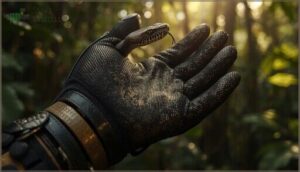
Puncture resistance isn’t just a spec — it’s what stands between you and a fang. Snake bite proof gloves rely on layered armor design, where offset material layers close the gaps a fang might slip through.
Puncture resistance isn’t a spec on paper — it’s the layered barrier standing between your hand and a fang
Look for these critical protection markers:
- Needle‑stick certification tested against 25‑gauge hypodermic needles
- ANSI/ISEA rating Level 5 puncture resistance (~150 newtons)
- Kevlar stitching reinforcing high‑impact zones
- Fang length limits addressed by 8–15 mm palm thickness
- Bite proof gloves validated against species like King Cobra
Understanding the EN388 puncture testing helps gauge glove performance.
Materials and Construction Quality
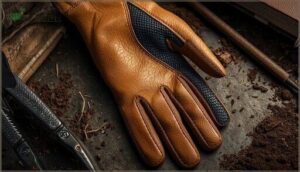
Once you understand bite resistance, the materials doing that job come into sharp focus. Glove Materials and Construction determine how long that protection actually holds up in the field.
| Feature | What to Look For |
|---|---|
| Leather Thickness | 1.2mm Cowhide Leather minimum |
| Kevlar Reinforcement | Layered Kevlar Stitching at palm and fingers |
| Layering Architecture | Offset multi-layer panels closing fang gaps |
| Stitching Techniques | Double-stitched seams resisting Cut Resistance stress |
Quality Puncture Resistance starts with how layers are built together, not just what’s on the outside.
Forearm Protection and Cuff Length
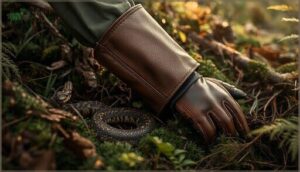
Materials carry you only so far — then cuff length takes over. When you’re reaching under debris or restraining a coiled snake, Forearm Coverage Zones matter as much as palm protection.
- Cuff Length Options range from 16 to 23.6 inches, covering the wrist to the upper forearm
- Gauntlet Shape flares at the opening, fitting over field clothing without gaps
- Adjustable Cuff Fit keeps sleeves upright, preventing collapse during active Snake Handling Safety work
extra-long forearm protection offers reinforced leather and Kevlar stitching for added durability.
Dexterity and Grip Design
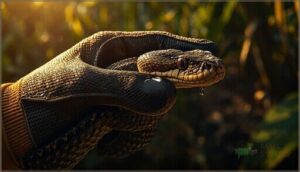
Cuff length keeps you covered, but grip design keeps you in control. When you’re guiding a defensive snake onto a hook, finger articulation and a pre-curved shape make the difference between a clean transfer and a scramble.
| Grip Feature | What It Does | Why It Matters |
|---|---|---|
| Textured Palm | Increases traction on smooth scales | Prevents slipping during wet transfers |
| Finger Articulation | Allows natural hand movement | Reduces fatigue in repeated sessions |
| Pre-Curved Shape | Matches resting hand position | Speeds up closing and gripping response |
| Moisture Grip Control | Wicks sweat from interior | Maintains consistent friction and control |
| Tool-Compatible Grip | Reinforces palm contact zones | Aids hook and tong handling stability |
Snake handling gloves with Kevlar stitching also reinforce high-wear zones, aiding hand protection and safety alongside puncture resistance during active animal handling gloves work.
Double leather padding across the palms and fingers makes veterinary snake handling gloves a reliable choice when working with unpredictable or defensive animals.
Comfort and Interior Lining

Long field sessions demand interior comfort as much as outer protection. What lines your bite‑proof gloves directly affects endurance and grip reliability.
- Cotton Canvas Lining reduces skin abrasion during extended wear
- Moisture‑Wicking Mesh pulls sweat away, supporting dry hand protection
- Thermal Insulation Liners help during cold early‑morning animal handling glove work
- Skin‑Friendly Soft Finish with breathable ventilation design minimizes fatigue across glove materials with strong puncture resistance
Top Snake Handling Gloves for Field Research
Finding the right gloves comes down to matching protection level, material quality, and cuff length to the specific conditions you’re working in.
After testing dozens of options across different field settings, a handful of gloves consistently stand out for snake handling research.
Here are five worth your attention.
1. WZQH Leather Animal Handling Gloves
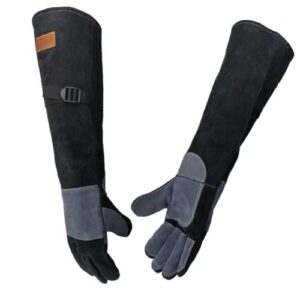
WZQH Leather Animal Handling Gloves are a solid choice when you’re working with unpredictable snakes in the field. Built from 1.2mm thick cowhide with double-layer reinforcement across the fingers, palm, and hand back, they hold up well against bites and scratches.
Kevlar stitching keeps the seams intact under pressure. At 23.6 inches long with adjustable cuffs, they cover a good stretch of your forearm — exactly where unexpected strikes tend to land.
| Best For | Anyone who regularly handles unpredictable animals — snakes, reptiles, or aggressive pets — and needs solid bite and scratch protection without sacrificing forearm coverage. |
|---|---|
| Material | Cowhide leather |
| Bite Resistant | Yes |
| Puncture Resistant | Yes |
| Heat Resistant | Yes |
| Sleeve Length | Standard cuff |
| Animal Handling | Yes |
| Additional Features |
|
- Thick cowhide with double-layer reinforcement means bites and scratches have a tough time getting through
- Kevlar stitching keeps everything held together even with repeated use and pressure
- At over 23 inches long, they cover well past your wrist — great for animals that strike high
- They run large, so you’ll likely need to size down to get a snug fit
- The thickness that protects you also makes fine motor tasks a bit awkward
- Not built for extreme heat above 900°F, so they have clear limits outside of animal handling
2. RAPICCA Bite Proof Animal Handling Gloves
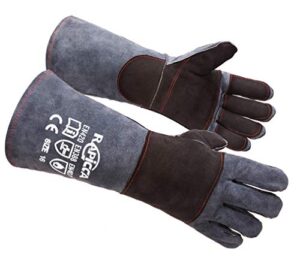
16-inch gloves punch above their weight for routine field handling.
Top grain cowhide with double leather reinforcement on the fingers, palms, and backs gives you solid bite resistance against small reptiles and non-venomous snakes.
Kevlar stitching holds the seams together even when a feisty corn snake decides to wrestle.
7.5-inch sleeve shields your lower forearm where strikes often catch you off guard.
Just don’t lean on these for venomous work — they’re a dependable second layer, not a standalone solution.
| Best For | Animal handlers, wildlife rescuers, and backyard gardeners who need solid everyday protection from bites, scratches, and thorns without breaking the bank. |
|---|---|
| Material | Cowhide split leather |
| Bite Resistant | Yes |
| Puncture Resistant | Yes |
| Heat Resistant | Yes |
| Sleeve Length | 16 inches |
| Animal Handling | Yes |
| Additional Features |
|
- Genuine cowhide leather with double reinforcement gives you real bite resistance for most small animals and reptiles
- The extra-long 16-inch design with a 7.5-inch sleeve covers your forearm — exactly where surprise strikes tend to land
- Versatile enough to pull double duty at the grill or fireplace when you’re not wrangling animals
- Bulkier fit can be a problem for smaller hands, and dexterity takes a hit on detailed tasks
- Won’t give you full peace of mind with large, aggressive dogs or venomous animals
- The thick build makes fine or delicate work pretty frustrating to attempt
3. DLY Bite Proof Leather Gloves
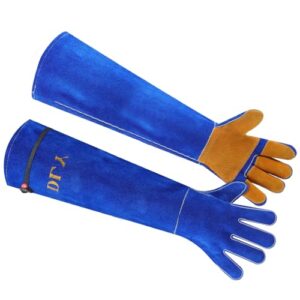
DLY gloves come in two lengths — 17.7 and 23.6 inches — so you can match coverage to your fieldwork demands.
The 1.2mm AB-grade double-layer cowhide holds up well against bites from medium-sized reptiles, and the reinforced palm and finger zones are where that extra leather counts most.
High-strength stitching keeps seams intact under repeated stress.
Adjustable cuffs help close the gap between glove and sleeve, which matters more than you’d think when a defensive snake is actively pushing upward.
| Best For | Anyone who regularly handles feral cats, reptiles, parrots, or other unpredictable animals and needs serious bite and scratch protection without sacrificing durability. |
|---|---|
| Material | AB grade cowhide |
| Bite Resistant | Yes |
| Puncture Resistant | Yes |
| Heat Resistant | Yes |
| Sleeve Length | Standard cuff |
| Animal Handling | Yes |
| Additional Features |
|
- Double-layer AB-grade cowhide with reinforced fingers and palm gives you real protection where bites and scratches actually land
- Adjustable cuffs seal the gap at your wrist, which is a small detail that makes a big difference with defensive animals
- Pulls double duty beyond animal handling — heat resistance means you can use them for grilling, welding, or gardening too
- The fingers run a bit large, so handling small or delicate animals can feel clumsy and imprecise
- Size options are limited, which could be a problem if you’re between sizes
- Some users noticed dye transferring to their skin, so you may want to wash them before the first use
4. Surfante Bite Proof Animal Gloves with Snake Hook
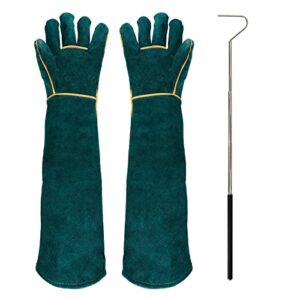
The Surfante kit gives you more than just gloves — it ships with a 40-inch collapsible stainless steel hook, which is genuinely useful when you’d rather not close the distance with an agitated specimen.
The thickened cowhide spans 23 inches up your forearm, with an 8.6-inch sleeve width that stays put during active restraint.
It resists heat, bite, scratch, and fire.
One caveat: the one-size design can feel snug on larger hands, so factor that in before ordering.
| Best For | Anyone who regularly handles snakes, reptiles, or unpredictable animals and wants solid arm and hand protection without buying separate gear. |
|---|---|
| Material | Thickened cowhide |
| Bite Resistant | Yes |
| Puncture Resistant | Yes |
| Heat Resistant | Yes |
| Sleeve Length | 23 inches |
| Animal Handling | Yes |
| Additional Features |
|
- The 23-inch cowhide sleeves give you serious forearm coverage — way more than standard gloves
- Comes with a 40-inch collapsible hook, so you’ve got the tools to keep a safe distance before you even reach in
- Handles more than just animals — heat, fire, and scratch resistance make it useful for grilling, welding, and gardening too
- One-size-fits-most is a gamble if you have larger hands — the fit can feel pretty tight
- The hook can bend or break under real pressure, so it’s not built for heavy-duty snake handling
- The cowhide can be stiff, especially in the palm and fingers, which makes fine motor tasks a bit awkward
5. Steiner Y Series 23 Inch Welding Gloves
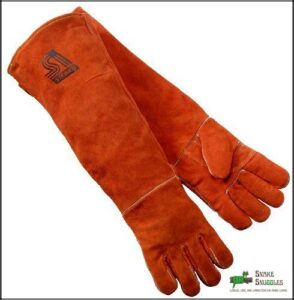
Not every glove on this list was built for snake handling — and that’s exactly what makes the Steiner Y Series worth mentioning.
Originally designed for welders, these 23‑inch select shoulder‑split cowhide gloves offer serious forearm coverage, Kevlar stitching, and ThermoCore foam insulation on the back.
The full cotton lining keeps your hand comfortable during longer sessions.
They won’t stop a determined fang, but paired with tongs or a hook, they’re a practical secondary layer for handling larger, calmer specimens in the field.
| Best For | Welders, gardeners, and hobbyist reptile handlers who need solid forearm protection for low-stakes tasks like handling calmer snakes, loading firewood, or working around heat and thorns. |
|---|---|
| Material | Split cowhide leather |
| Bite Resistant | Yes |
| Puncture Resistant | Yes |
| Heat Resistant | Yes |
| Sleeve Length | 23 inches |
| Animal Handling | Yes |
| Additional Features |
|
- 23-inch length gives you real forearm coverage — way more than a standard glove
- Foam-insulated back and full cotton lining make them comfortable for longer wear
- Versatile enough to pull double duty across welding, BBQing, gardening, and more
- Too thick for anything requiring fine motor skills or a delicate grip
- Won’t hold up against a serious bite from an aggressive or venomous snake
- May wear out in 3–4 years if you’re using them heavily on the regular
Choosing The Right Gloves for Fieldwork
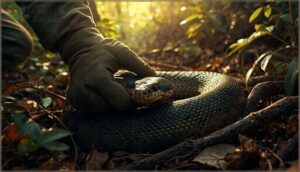
Not every glove works for every snake, and picking the wrong one can put you at real risk in the field. There are a few key things worth thinking through before you commit to a pair.
Here’s what to think about when matching gloves to your specific research needs.
Assessing Snake Species and Bite Risk
Before you strap on any snake handling gloves, species identification shapes everything. Knowing whether you’re working near cobras or rat snakes directly affects how much protective equipment you actually need.
Venom potency, size‑age factors, and behavioral cues all feed into your bite risk assessment. Habitat overlap with venomous snakes near wetlands or farmland edges means even routine reptile handling can carry real consequences.
Matching Glove Protection to Research Needs
Once you’ve assessed your species risk, matching your snake handling gloves to actual research tasks matters just as much. A quick relocation doesn’t demand the same puncture resistance as a full processing session.
For long surveys, task duration shapes your choice—Kevlar stitching and layered reptile handling gloves add protection but reduce dexterity.
Budget constraints are real, so prioritize species specificity and tool integration over unnecessary features.
Sizing and Fit Considerations
Getting the fit right is just as important as picking the right glove materials.
Measure palm circumference around the widest part of your hand, then check forearm length to confirm your animal handling gloves reach far enough up your arm.
Finger snugness keeps your protective gear responsive, while cuff adjustability lets bite proof gloves seal over jacket sleeves when layering allowance matters.
Balancing Protection and Dexterity
Once fit is confirmed, the real tradeoff begins: how much protection can you carry before your hands stop working for you?
Layered Material Optimization — like Kevlar Flex Integration inside leather shells — lets bite proof gloves hit Level A9 cut resistance while preserving roughly 85% hand mobility.
Grip Texture Balance on reinforced palms keeps control without sacrificing the dexterity your snake handling gloves actually need in the field.
Care and Maintenance of Field Research Gloves

Good gloves don’t last forever, but how you treat them between fieldwork sessions makes a real difference. A routine care keeps the materials intact and the protection reliable when you need it most.
Here’s what you should know about maintaining your snake handling gloves for the long haul.
Cleaning and Disinfecting After Use
After every field session, start with debris removal — brush off soil, scales, and organic matter before anything else. For leather cleaning, use lukewarm water and mild soap, never soak.
Disinfectant compatibility matters: confirm your chosen product works with the glove material. Then focus on drying conditions — air dry only, away from heat. Finish with conditioning and storage in a cool, sealed container.
Inspecting for Wear and Damage
Before each field session, run a quick but thorough inspection of your protective equipment. Even minor damage can compromise bite‑proof gloves when it matters most. For hand protection during snake handling, check these critical zones:
- Seam Integrity Checks: Look for skipped stitches at thumb crotch and knuckles
- Surface Puncture Inspection: Feel for pinpoint holes invisible to the eye
- Material Thinning Signs: Watch for shiny, smoothed leather patches on palms
- Pinch‑Fold Damage: Flex the wrist area for cracks or crazing
Two or more critical‑zone wear issues mean your gloves for handling animals need replacing immediately.
Storage Tips for Longevity
How you store your protective equipment between sessions matters more than most handlers realize. Keep your animal handling gloves in a cool, shaded spot — ideally around 18°C — since temperature stability and UV protection directly extend material life.
Maintain humidity control below 50%, apply a light conditioning routine every few weeks, and store snake proof gloves flat to support proper shape maintenance.
When to Replace Your Gloves
No piece of protective equipment lasts forever — and with snake handling, worn gloves can cost you dearly. Watch for these replacement signals in your animal handling gloves:
- Puncture Indicators: visible fang marks or holes in bite‑resistant layers
- Stitching Failure: loose or separated seams compromising structural integrity
- Material Thinning: shiny palms or reduced padding depth
- Grip Degradation: slippery surfaces reducing control during handling
Replace bite‑proof gloves every 6–12 months under regular use.
Frequently Asked Questions (FAQs)
What gloves are good for handling snakes?
Good snake handling gloves balance bite resistance, dexterity, and forearm coverage.
Look for Kevlar stitching, thick leather, and ANSI-rated puncture protection — options like RAPICCA Gloves and HexArmor R8E consistently earn strong user feedback.
Should you wear gloves when handling snakes?
Yes, you should.
Gloves reduce bite risk, support training protocols, and lower legal liability.
They won’t replace technique, but they do add a critical layer of snake protection when it counts.
Will Kevlar gloves protect from snake bite?
Kevlar stitching adds real durability, but don’t mistake it for a force field.
Against venomous snakes generating over 120 psi, layered design and tested pressure thresholds matter far more than Kevlar alone.
What gloves do Tier 1 operators use?
Tier 1 operators generally rely on HexArmor R8E Venom Defender gloves.
They are valued for their SuperFabric layering.
They also have an ANSI/ISEA rating.
And feature a forearm gauntlet length.
Field test feedback consistently confirms their edge over standard Kevlar reinforcement alternatives.
Are snake handling gloves legal in all regions?
snake handling gloves are legal to buy and own under Regional PPE Laws, though Permit Requirements, Species Restrictions, and Institutional Policies may govern when and how you can actually use them.
Can these gloves protect against insect stings too?
Snake bite proof gloves offer solid material thickness and seam reinforcement, blocking most insect stings.
Though no sting penetration tests or insect-resistant coatings are included, a layered glove strategy adds better outdoor and pet safety.
Do gloves work in wet or rainy conditions?
Rainy fieldwork can turn even the best protective equipment and gear into a liability.
Wet grip loss is real — leather softens, dexterity drops, and quick-dry linings matter more than most handlers expect.
Whats the average lifespan of quality snake gloves?
Quality snake proof gloves used few times monthly generally last two to three years.
Daily fieldwork shortens that to six to eighteen months depending on material degradation, environmental factors, and usage frequency impact.
Can gloves protect against multiple snake bites?
Yes, but not indefinitely. Multi-bite testing protocols show three-layer SuperFabric gloves withstand repeated strikes, though layered armor degradation and cumulative bite fatigue reduce long-term resistance over time.
Are snake handling gloves legal for field research?
In most countries, protective gloves are legal personal protective equipment.
Regulatory frameworks and institutional policies govern animal welfare, not the gear itself, so permit requirements and liability considerations vary by project and species.
Conclusion
Picture a researcher in Borneo, mid‑capture, feeling a King Cobra test the resistance of her gloves—and continuing her work without hesitation.
That confidence doesn’t come from luck; it comes from choosing the right snake handling gloves for field research before you ever enter the field. The gloves you wear define the margin between a clean data point and a medical emergency. Choose them with the same precision you bring to everything else.
- https://snakeprofessional.com/products/venom-defender-snake-gloves
- https://www.safetygloves.co.uk/blog/hexarmor-hercules-3180-protection-when-handling-snakes.html
- https://www.nhbs.com/venom-defender-gloves-2
- https://jeetekno.com/product-category/animal-reptile-handling-gloves/
- http://www.livetrap.com/index.php?dispatch=auth.logout&redirect_url=index.php