This site is supported by our readers. We may earn a commission, at no cost to you, if you purchase through links.

Your new ball python just refused its first meal, and you’re panicking—but here’s the thing: your snake isn’t picky, it’s probably just cold temperatures. Without a proper heating pad maintaining belly temps between 88-92°F, snakes literally can’t digest food; their enzymes won’t activate, and that mouse will just rot in their stomach.
I’ve seen too many beginner snake owners rush to buy the prettiest terrarium setup while skimping on the one piece of equipment that keeps their reptile alive—the heating pad. Getting this right isn’t complicated, but choosing the wrong pad or installing it incorrectly can lead to burns, regurgitation, or a stressed snake that won’t eat for weeks.
The good news? Once you understand the basics of snake heating pads for beginners—size, placement, and safety features—you’ll have a thriving snake that sheds beautifully and eats like clockwork.
Table Of Contents
- Key Takeaways
- Why Snakes Need Heating Pads
- Choosing The Right Heating Pad Size
- Safe Placement and Installation Tips
- Essential Features for Beginner Snake Owners
- Top 8 Snake Heating Pads for Beginners
- Maintenance and Troubleshooting Heating Pads
- Frequently Asked Questions (FAQs)
- Where to put a heating pad for a snake?
- What is the best heating for snakes?
- How to keep a snake warm in a cold house?
- How long can a snake go without a heating pad?
- Can I use heating pads with glass tanks?
- How long do snake heating pads typically last?
- Do different snake species need different temperatures?
- Should I turn off heating pads at night?
- What wattage heating pad does my snake need?
- Conclusion
Key Takeaways
- Your snake literally can’t digest food without belly temps between 88-92°F, so a properly controlled heating pad isn’t optional—it’s the difference between a healthy pet and a medical emergency.
- Position your heating pad under only one-third of the tank floor to create a thermal gradient your snake can navigate, and always pair it with a thermostat since even quality pads can develop deadly hot spots above 110°F.
- Look for heating pads with waterproof construction, chew-resistant designs, and built-in safety features like auto-shutoff, but remember that no pad is truly safe without a separate thermostat for precise temperature control.
- Check your heating pad’s surface temperature twice daily with a digital probe and inspect monthly for wear, warping, or adhesive failure—catching problems early prevents burns, regurgitation, and stressed snakes that refuse food for weeks.
Why Snakes Need Heating Pads
Your snake can’t warm up on its own—it needs you to step in. Without the right heat source, your pet won’t digest food properly, fight off illness, or even move around comfortably.
A reliable heating pad designed for glass tanks ensures your snake stays within its optimal temperature range throughout the day and night.
Without your help providing heat, your snake can’t digest, fight illness, or even move comfortably
Let’s break down exactly why heating pads matter so much for keeping your snake healthy and thriving.
Importance of External Heat for Reptiles
Your snake can’t make its own body heat—that’s why external heating is non-negotiable. Unlike us warm-blooded folks, reptiles rely entirely on their environment for thermal regulation and metabolic function.
Without proper temperature control through a heating pad or similar reptile heating source, your pet’s digestion stalls, immunity weakens, and heat stress or dangerous cooling can set in fast. Reptile thermoregulation depends on you creating those essential temperature gradients.
For more on setting up proper temperature gradients, see this thorough guide.
Role of Heating Pads in Snake Health
A heating pad delivers focused heat therapy that fuels digestion, promotes healthy shedding, and keeps your snake’s immune system strong.
When paired with temperature monitoring and a thermostat, it creates the thermal regulation zone your pet needs to thrive. Think of it as the engine behind snake wellness—without consistent warmth, metabolic functions slow down, leaving your reptile vulnerable to illness and stress.
For ideal health, always consider the importance of reptile comfort and safety when selecting and using a heating pad.
Effects of Improper Temperature Regulation
But when temperature control goes wrong, the health consequences can pile up fast. Poor thermoregulation disrupts reptile metabolism and triggers thermal stress—here’s what you might see:
- Heat dehydration from excessive sweating and rapid breathing
- Temperature fluctuations causing irregular digestion and weight changes
- Weakened immunity leading to respiratory infections and delayed shedding
Maintaining thermal balance isn’t optional—it’s survival.
Choosing The Right Heating Pad Size

Getting the right heating pad size isn’t just about picking what fits—it’s about creating a safe thermal gradient your snake can actually use.
Too big and you’ll overheat the whole enclosure; too small and your pet won’t have enough warmth to digest properly. Let’s break down exactly how to match pad dimensions to your setup, species, and snake’s specific needs.
Matching Pad Size to Enclosure Dimensions
Think of your snake enclosure like a custom pair of shoes—one size definitely doesn’t fit all. Measure your tank’s internal floor dimensions first, then grab a heating pad that covers about one-third of that space.
For a 20-gallon long tank, a 9×12-inch pad hits that sweet spot. Leave 2 cm clearance around edges so heat disperses evenly without creating dangerous hot zones.
Considering Snake Species and Enclosure Layout
Your snake’s lifestyle dictates the whole game plan. Arboreal species need vertical heat zones with climbing branches, while terrestrial snakes want wider floor space and low hides for ground exploration.
Check species research on natural habitat replication—desert dwellers thrive with undertank heater setups; tropical climbers need different thermal mapping. Match your enclosure design to snake behavior patterns, and you’ll nail reptile thermoregulation from day one!
Ensuring Even Heat Distribution
Hot spots ruin reptile thermoregulation faster than you’d think. Position your heating pad under one-third of the floor—never dead center—so heat mapping creates a smooth thermal gradient from warm to cool.
This pad placement gives your snake gradient control; it’ll self-regulate by moving between zones. Test warmth distribution with an infrared thermometer weekly, ensuring thermal balance stays consistent across the entire enclosure.
Safe Placement and Installation Tips
Getting your heating pad in the right spot isn’t just about sticking it under the tank and calling it done. Where you place it—and how you secure it—directly impacts your snake’s safety and comfort.
Let’s walk through the three critical steps that keep your setup both effective and hazard-free.
Positioning Pads for Optimal Thermal Gradients

Your snake’s thermal gradient is like a road map—it needs to guide them from hot to cool without detours. Position your reptile heating pad under one-third of the enclosure floor to create clear temperature zones.
- Warm basking zone – Place the pad under the mid to rear section for active thermoregulation
- Cool refuge zone – Leave the opposite side unheated so your snake can retreat
- Gradient control – Use a thermostat to stabilize heat distribution and prevent dangerous hot spots
This pad placement gives your snake the thermal balance they need!
Raising Tank Corners for Airflow

Ever wonder why your reptile heating pad seems to trap stale air? Lift each corner of your snake enclosure by 1–2 inches with heat-resistant corner support to open powerful airflow channels.
This simple trick promotes cross-ventilation, optimizes heat distribution, and prevents moisture buildup—giving you precise temperature control and thermal balance. Think of it as building tiny chimneys that keep your heating pad efficient and your snake comfortable!
Proper Cord Management and Pad Attachment

A tangled cord is more than messy—it’s a fire hazard waiting to happen. Route your heating pad cord along a single path from the mat to your power source, then bundle excess length with soft Velcro wraps to prevent crimping.
Attach the heat mat using manufacturer-approved adhesives rated for reptile heating pads, ensuring full contact with your snake enclosure for even heat distribution and reliable temperature control.
Essential Features for Beginner Snake Owners

Not all heating pads are created equal—and that matters when you’re keeping a snake safe. The right features can mean the difference between a healthy pet and a dangerous situation; beginners especially need gear that takes some of the guesswork out of temperature control.
Here are three non-negotiables to look for when you’re shopping for your first heating pad.
Thermostat Compatibility and Temperature Control
Your heating pad is only as safe as the thermostat controlling it—simple as that. Look for models with external temperature probes that measure actual substrate heat, not just ambient air.
Digital thermostats offer precise thermal regulation down to one degree, preventing dangerous hot spots and maintaining the thermal gradient your snake needs. Sensor accuracy matters; aim for probes with ±1°F precision.
Thermostat calibration ensures reliable temperature control, so your snake thrives without guesswork or worry.
Waterproof and Chew-resistant Designs
Accidents happen—water spills, curious snakes nibble, and you need gear that won’t quit. Waterproof materials like silicone or polyurethane coatings shield heat mats from moisture damage, while chew-resistant overlays protect against punctures.
Look for IP54-rated reptile heating pads with sealed seams; they pass durability tests and maintain even heat distribution inside your snake enclosure. These safety features mean reliable temperature control, even when life gets messy!
Built-in Safety Features to Prevent Overheating
Even high-quality waterproof pads need fail-safes to keep your snake safe. Modern reptile heating pads pack thermal sensors, overheat protection circuits, and automatic shutoff—you’ll never wake up to a fried enclosure. These safety circuits monitor heat distribution in real time, adjusting power when temperature regulation drifts.
Look for pads with:
- Built-in thermostats that cut power at your set limit
- Dual sensors confirming stable readings before operation
- Auto shutoff after predefined heating cycles
- Temperature lockout preventing unsafe high settings
Smart thermal balance means peace of mind!
Top 8 Snake Heating Pads for Beginners
You’ve learned what to look for—now let’s talk about the heating pads that actually deliver. These eight options combine safety features, reliable temperature control, and beginner-friendly designs that won’t leave you second-guessing your setup.
Each one brings something different to the table, so you can find the right fit for your snake’s specific needs.
1. Aiicioo Reptile Heat Mat
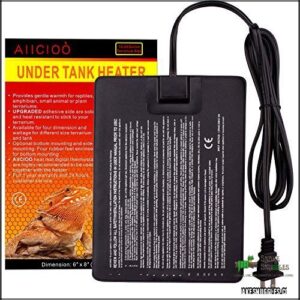
Your snake deserves steady warmth without hot spots—that’s where the Aiicioo Reptile Heat Mat shines. This 8-watt pad fits 10-20 gallon tanks perfectly, delivering gentle heat between 104℉ and 122℉. The solid-state nichrome wire spreads warmth evenly, while upgraded adhesive keeps it firmly attached to glass bottoms.
You’ll love how energy-efficient it’s for 24/7 use! Just remember: pair it with a thermostat since there’s no built-in gauge. It’s not compatible with plastic or acrylic tanks, but for glass setups, it’s a reliable choice.
| Best For | Snake and reptile owners with 10-20 gallon glass terrariums who need a reliable, energy-efficient heat source and are willing to use a separate thermostat for temperature control. |
|---|---|
| Power | 8W |
| Voltage | 120V |
| Tank Size | 10-20 gal |
| Temperature Range | 104-122°F |
| Adhesive Backing | Yes |
| Waterproof | No |
| Additional Features |
|
- Delivers consistent, gentle heat (104-122℉) with solid-state nichrome wire that eliminates hot spots
- Energy-efficient 8-watt design perfect for 24/7 operation without driving up electricity bills
- Upgraded adhesive keeps the mat securely attached to glass terrarium bottoms
- No built-in thermostat or heat gauge, so you’ll need to buy one separately to prevent overheating
- Only works with glass tanks—not compatible with plastic, acrylic, or water enclosures
- May not provide enough heat for larger tanks or reptiles that need higher temperatures
2. Aiicioo Reptile Heating Pad
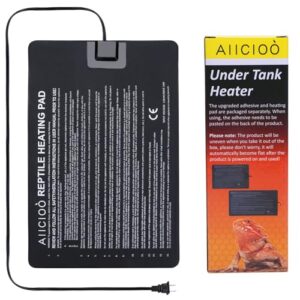
If your 30-40 gallon tank needs more coverage, the 16-watt Aiicioo Heating Pad steps up beautifully. At 8″ x 12″, it delivers steady warmth (104℉ to 122℉) for medium enclosures—perfect for growing snakes or multi-snake setups.
The nichrome wire and PVC construction mean durability you can count on, plus those rubber feet lift the tank slightly for safe heat escape. Just like its smaller sibling, you’ll want a thermostat since there’s no built-in gauge. Stick to glass tanks; plastic and acrylic don’t play well with this one!
| Best For | Owners of medium-sized reptile enclosures (30-40 gallons) who need reliable, steady heat for snakes, lizards, or hermit crabs and don’t mind adding a separate thermostat. |
|---|---|
| Power | 16W |
| Voltage | 120V |
| Tank Size | 30-40 gal |
| Temperature Range | 104-122°F |
| Adhesive Backing | Yes |
| Waterproof | No |
| Additional Features |
|
- Larger 8″ x 12″ coverage heats medium tanks evenly between 104℉ and 122℉
- Durable nichrome wire and PVC construction with rubber feet for safe heat ventilation
- Energy-efficient 16-watt design that’s easy to mount and clean
- No built-in temperature gauge means you’ll need to buy a separate thermostat
- Can’t be used with plastic, acrylic, or water tanks—glass only
- May produce a loud clicking sound when adjusting temperature
3. BN Link Reptile Heat Pad
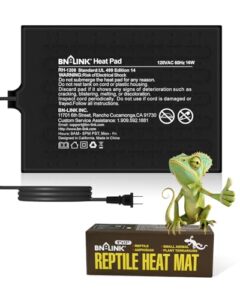
Looking for precision without the guesswork? The BN Link Reptile Heat Pad bundles a digital thermostat right in—no extra shopping needed! This 8″ x 12″ unit maintains rock-solid temps (78°F to 88°F range) for your 10-20 gallon setup, with a display that switches between Fahrenheit and Celsius.
At just 16 watts, it’s energy-smart and waterproof. The adhesive backing sticks firmly to glass tanks, while safety auto-shutoff kicks in if things get dicey. Just remember: glass only, folks—wood surfaces are a no-go here!
| Best For | Reptile owners with 10-20 gallon tanks who want a reliable heating solution with built-in temperature control and don’t want to buy a separate thermostat. |
|---|---|
| Power | 16W |
| Voltage | 120V |
| Tank Size | 10-20 gal |
| Temperature Range | Adjustable |
| Adhesive Backing | Yes |
| Waterproof | Yes |
| Additional Features |
|
- Includes digital thermostat with clear display—no need to purchase separately
- Energy-efficient at only 16 watts with waterproof, durable construction
- Safety auto-shutoff feature prevents overheating accidents
- Only works on glass surfaces—can’t use on wood or other materials
- Adhesive can be tricky to remove once applied
- Must be used carefully during installation to avoid damaging the tank
4. iPower Reptile Heat Mat
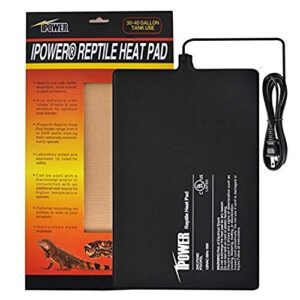
Simplicity meets function with the iPower Reptile Heat Mat—your budget-friendly entry point to safe snake heating! This 8 x 12, 16-watt workhorse uses PTC heating material to warm evenly without gulping electricity, and that 3M adhesive backing? It grips your tank bottom like it means business.
The flexible film conforms to glass surfaces and heats up fast—minutes, not hours. Just pair it with a thermostat (sold separately) to nail those species-specific temps. Moisture-resistant design copes with terrarium humidity like a champ, too!
| Best For | Budget-conscious reptile owners who need reliable, even heating for small to medium terrariums and are willing to use a separate thermostat for temperature control. |
|---|---|
| Power | 16W |
| Voltage | 120V |
| Tank Size | Medium |
| Temperature Range | N/A |
| Adhesive Backing | Yes (3M) |
| Waterproof | No |
| Additional Features |
|
- Energy-efficient PTC heating with strong 3M adhesive for secure mounting and even heat distribution
- Heats up quickly in minutes and works well for various reptiles like bearded dragons, leopard geckos, and turtles
- Versatile beyond terrariums—great for seed germination, home brewing, and DIY projects like heated filament storage
- Requires a separate thermostat purchase to prevent overheating and maintain safe temperatures
- Can pose fire risk if improperly installed without ventilation space underneath the terrarium
- Adhesive may struggle on certain surfaces, and the mat needs careful positioning to avoid heat buildup
5. PeSandy Reptile Heat Pad
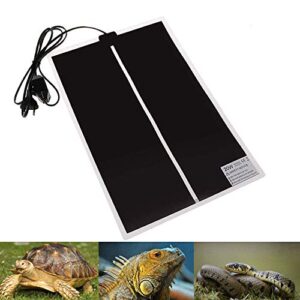
Flexibility is the main focus with the PeSandy Reptile Heat Pad—a non-adhesive 20-watt heat solution that you can move wherever your setup demands! This 16.93 x 12.87-inch mat uses upgraded materials for balanced warmth and slow heating that won’t spike dangerously.
Mount it under or on the side of your tank—no sticky residue, just dial-controlled temperature adjustment. Overheat protection keeps things safe, and it works beautifully for snakes, geckos, and more. Pair it with a thermostat, and you’ve got gentle, adjustable belly heat that adapts as your needs evolve.
| Best For | Reptile owners who want a flexible, repositionable heat source with adjustable temperature control for various species like snakes, geckos, and tortoises. |
|---|---|
| Power | 20W |
| Voltage | 110V |
| Tank Size | Medium-Large |
| Temperature Range | Adjustable |
| Adhesive Backing | No |
| Waterproof | No |
| Additional Features |
|
- Non-adhesive design lets you move or reposition the mat without leaving sticky residue
- Dial controller allows you to adjust temperature based on your pet’s specific needs
- Built-in overheat protection and slow heating prevent dangerous temperature spikes
- No digital display makes it hard to know the exact temperature you’ve set
- Heat distribution can be uneven across the mat’s surface
- Dial can get bumped and accidentally changed if you’re not careful
6. Reptile Heat Pad Mat
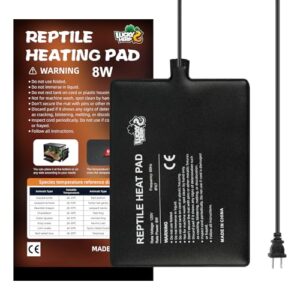
Sometimes all you need is reliable warmth without the frills—that’s exactly what this 6×8-inch, 8-watt Reptile Heat Pad Mat delivers! Its waterproof PVC construction stands up to daily wear, and the dual temperature protection system keeps things safe even when you’re still learning the ropes.
It stays comfortably warm (not scorching hot), making it ideal for smaller snakes or as a supplemental heat zone. Just know it lacks built-in temperature control, so you’ll definitely want to pair it with a thermostat for precise regulation.
| Best For | Beginners who need an affordable, simple heating solution for small reptiles or amphibians and are willing to use a separate thermostat for temperature control. |
|---|---|
| Power | 8W |
| Voltage | N/A |
| Tank Size | Small |
| Temperature Range | Constant |
| Adhesive Backing | Yes |
| Waterproof | Yes |
| Additional Features |
|
- Waterproof PVC material makes it durable and easy to clean for everyday use
- Dual temperature protection system adds a safety layer to prevent overheating
- Energy-efficient 8W design keeps operating costs low while providing consistent warmth
- No built-in temperature control means you’ll need to buy a separate thermostat
- Adhesive backing can be unreliable and may require extra effort to secure properly
- Only provides gentle warmth rather than high heat, which may not suit all reptile species
7. Pawfly Reptile Heat Pad Thermostat
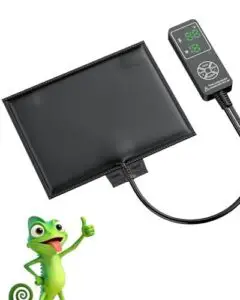
You can’t control what you can’t measure—that’s where Pawfly’s thermostat steps in. This compact controller pairs with compatible heat mats to maintain stable temps between 20°C and 50°C (68°F to 122°F), with fine adjustments for precision.
Its built-in probe monitors surface heat, cutting power when things get too toasty—essential protection against dangerous hot spots. The visual indicators make monitoring a breeze, and the chew-resistant housing keeps curious snakes from sabotaging their own comfort.
Perfect for beginners who need reliable, no-fuss temperature control!
| Best For | Reptile owners who want precise temperature control and automated heat management without constant monitoring. |
|---|---|
| Power | 7W |
| Voltage | N/A |
| Tank Size | Small-Medium |
| Temperature Range | 68-135°F |
| Adhesive Backing | No |
| Waterproof | Yes (IPX7) |
| Additional Features |
|
- Digital thermostat lets you dial in exact temperatures between 68-135°F with timer settings up to 12 hours
- Built-in safety probe prevents dangerous overheating by automatically cutting power when temps spike
- Durable waterproof design with chew-resistant housing stands up to curious pets and messy enclosures
- Heat distribution creates hot spots near the center instead of spreading evenly across the pad
- Short power cord limits placement options in larger setups or rooms
- Too powerful for small tanks where reptiles need cool zones to properly regulate their body temperature
8. ReptiKing Reptile Heat Pad
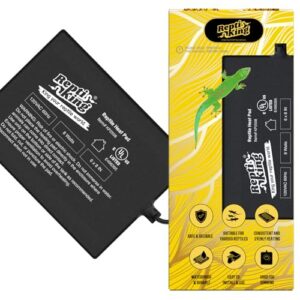
ReptiKing’s 8W heat pad delivers that warm basking spot your snake craves without breaking the bank. The carbon film heating element spreads warmth evenly across its 6.38 x 2.83-inch surface—no dangerous hot zones lurking under your substrate.
Its adhesive backing sticks firmly to tank bottoms, and the waterproof design laughs off humidity spills. You’ll need a separate thermostat (always!), but pairing one gives you precise temp control. The flexible, low-profile build fits most beginner setups perfectly, making installation straightforward for first-time keepers.
| Best For | Budget-conscious reptile owners with small to medium terrariums who need a reliable heat source for snakes, lizards, or other heat-loving reptiles. |
|---|---|
| Power | 24W |
| Voltage | 120V |
| Tank Size | 50 gal |
| Temperature Range | 104-122°F |
| Adhesive Backing | Yes |
| Waterproof | No |
| Additional Features |
|
- Even heating from carbon film technology prevents dangerous hot spots that could burn your pet
- Waterproof construction handles humid environments without failing
- Low 8W power draw keeps electricity costs minimal during 24/7 operation
- No built-in thermostat means you’ll need to buy one separately for safe temperature regulation
- Small 6.38 x 2.83-inch coverage area won’t work for larger tanks without buying multiple pads
- Adhesive backing may lose grip on certain materials or tank stand surfaces over time
Maintenance and Troubleshooting Heating Pads
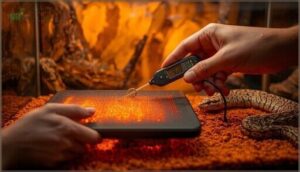
Your heating pad won’t run itself—you’ll need to check it regularly and know what to do when something goes wrong. Catching issues early keeps your snake safe and sound and saves you from scrambling during a temperature crisis.
Let’s walk through the simple routines that’ll help your heating pad work reliably for years.
Regular Inspection and Cleaning Routines
Inspect your heating pad every two weeks—think of it as a health checkup for your snake’s comfort. Wipe the pad surface with a damp cloth to remove dust that blocks heat transfer.
Check the adhesive monthly so it stays put, and clean beneath the pad weekly. Keep a simple log noting the date and pad condition; it’s your safety net for catching problems early.
Monitoring Temperature and Adjusting Settings
Once your pad stays clean, grab a temperature probe—those digital sensors hit accuracy within 0.5 degrees! Check warm-side readings twice daily; species-specific thermal gradients need that consistency.
Your thermostat’s set point usually lands between 85 and 90°F, depending on your snake. Log temps every few days to track heat distribution shifts, then tweak settings by 1–2 degrees if sensor calibration shows drift—easy thermoregulation wins!
Addressing Common Issues Like Hot Spots and Pad Wear
Even reliable temps can falter if your heating pad develops wear or hot spots—those concentrated burn zones that spike past 110°F. Lift your tank monthly to spot warping, scorching, or adhesive failure before your snake meets a dangerous surface.
- Watch for belly burns: reddened or blistered skin signals overheating
- Check for uneven warmth—cool patches near hot zones mean pad failure
- Replace cracked, bubbling, or discolored mats immediately
- Make certain of proper thermal gradient by monitoring heat distribution weekly
Frequently Asked Questions (FAQs)
Where to put a heating pad for a snake?
Place your heating pad under one side of the snake enclosure to create a thermal gradient. This setup allows proper heat distribution while giving your snake space to move between warm and cool zones for healthy thermoregulation.
What is the best heating for snakes?
Think your snake wants a spa day with a single heat lamp? Wrong. The best heating for snakes combines under-tank heating pads with ceramic heat emitters or radiant heat panels—creating thermal gradients for proper thermoregulation across your snake enclosure.
How to keep a snake warm in a cold house?
In a cold climate, you’ll want heating solutions that maintain thermal balance year-round.
Use a quality heating pad with a thermostat to create a proper thermal gradient in your snake enclosure—essential for winter care and healthy reptile heating.
How long can a snake go without a heating pad?
Most snakes tolerate a few hours without heat, but prolonged cold stress affects digestion and activity.
Temperature drops below species-specific minimums risk hypothermia—heating pad failure demands immediate backup solutions to protect snake health.
Can I use heating pads with glass tanks?
Absolutely—glass tanks work beautifully with heating pads. Just pair yours with a thermostat to avoid overheating risks, monitor thermal gradient carefully, and raise corners slightly for proper heat distribution and air circulation.
How long do snake heating pads typically last?
Most reptile heating pads last one to three years with proper thermostat use and regular maintenance.
Quality waterproof designs reach the upper range, while frequent cleaning and temperature cycling affect pad lifespan factors and replacement schedules substantially.
Do different snake species need different temperatures?
Yes—tropical species need warmer zones around 80 to 85°F, desert dwellers require hotter basking spots near 90 to 95°F, and temperate snakes like corn snakes prefer cooler ranges of 75 to 80°F for proper metabolism.
Should I turn off heating pads at night?
Don’t turn heating pads off at night—your snake needs consistent warmth for digestion and health.
Use a thermostat for burn prevention and proper temperature control, maintaining safe thermal gradient and heat distribution overnight.
What wattage heating pad does my snake need?
Think of wattage like fuel for your heating pad—too little won’t warm your snake’s habitat, too much risks burns.
For a 20-gallon enclosure, you’ll usually need 8 to 12 watts to create a safe thermal gradient.
Conclusion
Last month, a client’s ball python regurgitated three meals in a row—turns out, her heating pad was hitting 98°F and cooking the snake’s belly. She didn’t use a thermostat. Don’t let that be your story.
Now that you’ve got the rundown on snake heating pads for beginners, you’re equipped to avoid burns, failed feedings, and vet visits. Set up your pad correctly, monitor those temps religiously, and watch your snake thrive.