This site is supported by our readers. We may earn a commission, at no cost to you, if you purchase through links.

The floor of your snake’s enclosure does more than fill space—it shapes how your snake breathes, burrows, regulates moisture, and stays healthy over time. Many beginners choose substrate bedding based on what looks natural or costs least, then discover months later that their corn snake has respiratory issues or their ball python can’t hold humidity.
The wrong material isn’t just inconvenient; it can quietly cause harm before you notice anything is wrong. Choosing the right substrate means understanding your snake’s native environment and replicating it closely enough to keep their biology working as it should.
Table Of Contents
- Key Takeaways
- What is Substrate Bedding for Snakes?
- Factors to Consider When Choosing Substrate
- Best Substrate Types for Beginners
- Substrate Safety and Health Risks
- How to Set Up Substrate Bedding Step-by-Step
- Substrate Maintenance and Cleaning Tips
- Matching Substrate to Snake Species
- Top 5 Substrate Bedding Products for Beginners
- Common Substrate Mistakes to Avoid
- Frequently Asked Questions (FAQs)
- What is the best substrate for beginners?
- What is the easiest aquarium substrate to keep clean?
- What kind of bedding do you use for lizards?
- What’s the best substrate for ball pythons?
- Can substrate affect a snakes shedding process?
- How does substrate impact enclosure odor control?
- What substrate works best for snake egg incubation?
- Can bioactive substrates work for beginner snake keepers?
- How deep should substrate be for juvenile snakes?
- Conclusion
Key Takeaways
- Matching your substrate to your snake’s native environment isn’t optional — the wrong material quietly causes respiratory damage, stuck sheds, and chronic stress before you notice anything is wrong.
- Pine and cedar shavings are never safe choices; their aromatic phenols damage your snake’s lungs and liver even at low exposure levels, so always verify material safety before setup.
- Coconut coir is the most versatile beginner substrate, holding moisture beneath the surface while staying dry on top — making it the go-to choice for tropical species like ball pythons that need 60–80% humidity.
- Daily spot checks and full substrate replacements every 4–12 weeks aren’t optional maintenance tasks — skipping them lets ammonia, bacteria, and mold build up fast enough to cause scale rot and serious illness.
What is Substrate Bedding for Snakes?
Substrate bedding is the material lining the bottom of your snake’s enclosure, and it does a lot more than just look natural. It affects humidity, hygiene, your snake’s ability to behave naturally, and even their long-term health.
Getting the substrate right is one piece of a bigger puzzle—things like temperature and airflow matter just as much, so it’s worth brushing up on optimal snake room conditions to make sure everything works together.
Here are the most common materials beginners reach for first.
Definition and Role in Enclosures
Substrate is simply the material covering your reptile enclosure’s floor — the ground layer your snake rests, moves, and hides on. Think of it as habitat simulation in miniature: reptile bedding replaces the natural soil, leaf litter, or sand from your snake’s wild environment.
It’s also a core enclosure design element, influencing microclimate control, traction, and overall floor covering comfort. For an overview of the benefits and potential risks involved with different substrates, check out this guide on loose substrate considerations.
Key Functions for Snake Health
Beyond just covering the floor, the right reptile substrate does several things at once. It maintains humidity control for clean shedding support, protects skin health by keeping bacteria at bay, and offers disease prevention through proper hygiene.
It also provides stress reduction by letting snakes burrow and feel secure. Reptile care that gets substrate selection and safety right is care that works. For additional ways to keep your snake engaged and healthy, consider exploring.
Common Materials Used for Bedding
Not all bedding materials are created equal. Your reptile enclosure’s foundation shapes everything from humidity control to your snake’s daily comfort. Here are four common reptile substrate options worth knowing:
- Paper towels — easy monitoring, low cost
- Aspen shavings — fosters burrowing behavior
- Coconut fiber — excellent humidity control for tropical snake habitat
- Reptile carpet — solid surface, strong reptile safety record
Factors to Consider When Choosing Substrate
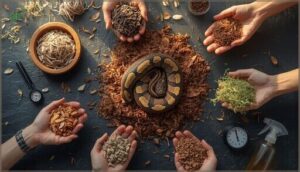
Picking the right substrate isn’t just about what looks good in the tank — it directly affects your snake’s health, comfort, and stress levels. Before you grab the first bag of bedding you see, there are a few key factors worth thinking through.
Here’s what to keep in mind as you choose.
Species-Specific Habitat Needs
No two snakes share the same natural home, and your reptile enclosure should reflect that. Species research isn’t optional — it’s the foundation of good reptile substrate choices.
A hognose needs 4–5 inches of loose, sandy substrate for burrowing needs, while a corn snake thrives in soil mimicking forest floor. Habitat mimicry and species-specific needs drive every smart substrate decision.
Humidity and Temperature Requirements
Matching your substrate to your snake’s climate zone is non-negotiable. Ball pythons need humidity levels around 60–70 percent, so moisture-retaining substrates like coconut coir support that range naturally. Desert species need drier options like aspen.
Thermal gradients matter too — warmer substrate on the basking side accelerates evaporation, raising local humidity, while the cooler end holds moisture longer, giving your reptile enclosure balanced temperature regulation throughout.
Cleaning and Maintenance Ease
How easy a substrate is to clean matters more than most beginners expect. Daily spotting and waste removal take just minutes with aspen shavings or paper towels, while reptile carpet demands soaking and air-drying.
Cleaning schedules stretch to every four to eight weeks with consistent substrate maintenance and cleaning routines. Choosing dust-free substrate and nontoxic bedding from the start makes substrate replacement faster and less stressful for your snake.
Safety and Toxicity Concerns
Safety isn’t optional — it’s the foundation of every substrate decision you’ll make. Pine and cedar top the list of toxic material risks because their aromatic phenols damage your snake’s respiratory system and stress the liver over time. Chemical contaminants from dyed or scented beddings add another layer of concern.
Pine and cedar shavings aren’t just bad choices — they’re silent threats that damage your snake’s lungs and liver over time
Loose particles raise substrate impaction risks, while dusty options create serious respiratory hazards. Choose safe bedding for reptiles from the start.
Best Substrate Types for Beginners
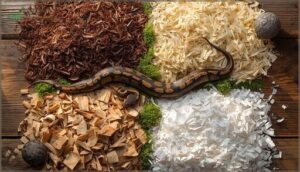
Not every substrate works for every keeper, and that’s okay — especially when you’re just starting out. The good news is that a handful of options consistently work well for beginners, each with its own strengths depending on your snake’s needs.
Here are the four worth knowing first.
Paper Towels and Newspaper
If you’re just starting out, paper towels and newspaper are your most practical reptile substrate. Their cleaning ease is unrivaled—roll up soiled sheets and you’re done.
Paper absorbency manages liquid waste fast, keeping your reptile enclosure sanitary. The tradeoff? Poor humidity control means you’ll need a humid hide.
For substrate safety and clear health monitoring, nothing beats this simple approach.
Reptile Carpet and Mats
Reptile carpet is a solid, reusable reptile substrate that makes reptile care straightforward for beginners. Mat materials range from polyester to felt blends, giving your snake reliable reptile grip on a non-slip surface.
Cleaning methods are simple—lift, rinse, disinfect, and swap. Just don’t expect humidity control here; carpet texture traps bacteria if neglected, so daily checks inside your reptile enclosure are non-negotiable for substrate safety.
Aspen Shavings
Aspen shavings hit a sweet spot most beginners don’t expect. This reptile substrate offers real aspen benefits without the aromatic oils found in pine or cedar, making substrate safety straightforward.
- Shaving depth: Aim for 2–3 inches to support natural snake behavior and burrowing
- Substrate quality: Choose dust-free, kiln-dried aspen for better reptile care
- Humidity control: Best for dry-climate species—not tropical snakes
Coconut Coir and Fiber
Where aspen falls short for tropical species, coconut coir picks up the slack. Coconut coir humidity control is genuinely impressive—it holds moisture beneath the surface while staying dry on top, which matters for snakes prone to stuck sheds.
The loose fiber accommodates reptile burrowing behavior naturally, and its substrate safety profile is clean—no aromatic oils, no coconut allergies risk from quality bagged fiber.
Substrate Safety and Health Risks
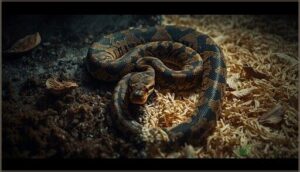
Not every substrate is safe, and the wrong choice can seriously harm your snake. Some materials look fine on the surface but hide real dangers, from toxic fumes to life-threatening blockages.
Here’s what you need to watch out for before you commit to a bedding option.
Dangers of Pine and Cedar Shavings
Pine shavings and cedar shavings are two reptile substrate options you should never use. Their aromatic oils release phenols that cause direct respiratory damage to your snake’s lungs and trachea — even in low concentrations.
Toxicity effects extend to liver stress and skin irritation from prolonged contact. Ingestion risks are real too, since bark particles leach resin into water dishes, threatening reptile health quietly over time.
Risks From Artificial Colors and Scents
Artificial dyes and synthetic fragrances carry their own chemical exposure risks — less obvious than cedar, but just as real.
Dye hazards include leaching pigments that cause skin irritation along your snake’s belly scales. Fragrance toxicity compounds that problem: scented substrates release volatile compounds that compromise respiratory health inside a closed enclosure.
For reptile care that prioritizes reptile health, stick to nontoxic bedding and skip anything artificially colored or scented.
Impaction and Ingestion Hazards
Loose reptile substrate creates real ingestion risks every time your snake strikes at prey. Bedding sticks to wet food, gets swallowed, and can form dense gut blockages — especially calcium sand or clumping fiber, which harden inside the digestive tract.
These feeding hazards turn substrate toxicity into a digestive issues nightmare fast. Juveniles face the highest impaction danger since their narrower tracts can’t pass even small amounts safely.
Dust and Respiratory Issues
Dusty bedding is one of the quieter substrate hazards — but it hits hard on respiratory health. Fine particles from dry aspen, sand, or ground coconut fiber become airborne every time your snake moves, compromising air quality inside the enclosure.
Repeated exposure inflames respiratory tracts, triggering wheezing, mucus buildup, and breathing difficulties. Switching to a dust-free substrate protects reptile health before symptoms escalate.
How to Set Up Substrate Bedding Step-by-Step
Getting the substrate right starts before you ever pour anything into the tank. A little prep work upfront saves you from having to redo everything a week later.
Here’s exactly how to set it up the right way, from bare enclosure to finished floor.
Preparing The Enclosure
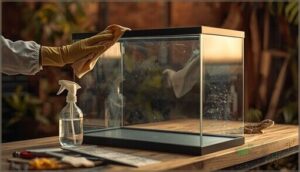
Before any reptile substrate goes down, the enclosure itself needs to be truly ready. Think of it as setting the stage — the substrate can only do its job if the space beneath it’s clean, sealed, and stable.
- Scrub with reptile-safe disinfectant, rinse fully, and dry completely before adding bedding.
- Seal gaps in corners and cable holes to support substrate safety and prevent escapes.
- Confirm ventilation systems are clear for proper humidity control and airflow.
Installing The Chosen Substrate
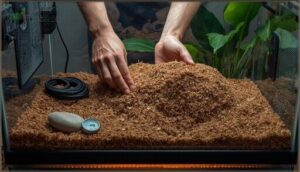
With your enclosure clean and dry, it’s time to lay in your reptile substrate the right way. Place any liner flat against the floor first, then add your chosen bedding.
Keep moisture control in mind — coconut fiber should feel damp, not dripping.
Position heat source placement probes at substrate level, and never pack bedding against walls where ventilation management matters most.
Layer Depth and Distribution
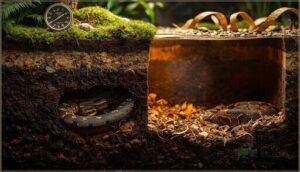
Depth isn’t just filler — it’s functional. Getting substrate layering right shapes how your snake thermoregulates, hides, and behaves. Aim for 2–4 inches for most beginners, deeper for burrowing needs.
- Start at 2–3 inches for non-burrowing species
- Add 4–5 inches for fossorial snakes needing depth control
- Build humidity gradients by layering moist coco coir beneath drier surface material
- Create zone creation with a deeper hide corner (4–6 inches) alongside a shallower open area
- Adjust substrate depth as your confidence and the snake’s behavior develop
Initial Cleaning and Inspection
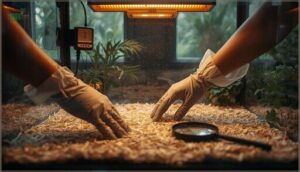
Before your snake ever touches the floor, do one final sweep. Scan for sharp splinters, plastic packaging scraps, and leftover tools — small hazards that a curious snake will find first. Check glass walls and décor for disinfectant streaks or standing water.
Run heating for a few hours, then verify humidity with a hygrometer. Clean substrate bedding and a stable environment mean a safer start.
Substrate Maintenance and Cleaning Tips
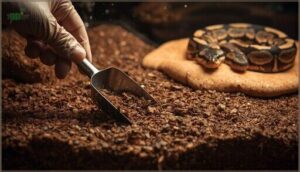
Keeping your substrate clean is just as important as choosing the right one in the first place. A solid maintenance routine protects your snake from bacteria, mold, and stress before problems have a chance to build up.
Here’s what that routine should actually look like.
Daily Spot Checks
Think of daily spot checks as your first line of defense in substrate maintenance and cleaning. Each day, scan the bedding for feces, urates, mold, and wet clumps—then remove them with tongs or a small scoop.
This simple waste removal routine protects snake health by limiting ammonia buildup and bacterial growth, keeping your substrate safer between full changes.
Full Replacement Schedules
Even with daily spot checks, full substrate replacement still needs to happen on a regular schedule. For most loose reptile substrate like aspen or coco husk, complete Substrate Rotation falls somewhere between every 4 to 12 weeks.
Watch for ammonia smell, mold, or recurring damp patches — those are your real Replacement Timing signals, not just the calendar.
Hygiene Best Practices
Cleaning tools matter more than most beginners realize. Give each enclosure its own labeled scoop and tongs — that single biosecurity measure cuts cross-contamination risk dramatically. When tools must be shared, disinfect them with chlorhexidine or F10, then rinse thoroughly.
Change gloves between enclosures, and always clean healthy animals first.
Proper substrate sanitizing and waste removal keep odor control consistent and your snake safer.
Signs of Substrate Degradation
Good hygiene tools only get you so far — you also need to know when the substrate itself is done. Watch for persistent ammonia odors after spot cleaning, fuzzy mold growth on wood or coco fiber, and compacted clumps signaling substrate breakdown.
Moisture imbalance and pest infestation, like fungus gnats, point to bacterial balance problems. These degradation signs mean full replacement, not a quick spot fix.
Matching Substrate to Snake Species
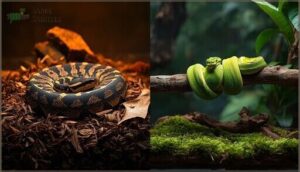
Not every snake wants the same thing under its belly. A ball python’s needs look nothing like a green tree python‘s, and getting the substrate wrong affects everything from shedding to stress levels.
Here’s how to match your choice to what your specific snake actually needs.
Desert Vs. Tropical Species Needs
Desert and tropical snakes live on opposite ends of the humidity spectrum, and your reptile substrate has to match that reality. Desert-dwelling reptiles thrive at 20–40% humidity using dry aspen or sand, while tropical species need 60–80% with coconut fiber or cypress mulch for proper habitat variation and reptile health.
- Desert climate setups: dry, fast-draining substrate with a single humid hide
- Tropical humidity setups: moisture-retentive substrate supporting environmental control and healthy sheds
- Species adaptation starts with researching your snake’s native conditions before buying anything
Burrowing and Arboreal Snake Preferences
Burrowing and arboreal snakes need completely different reptile substrate strategies — what works for one can stress the other.
| Feature | Burrowing Snakes | Arboreal Snakes |
|---|---|---|
| Burrow Depth | 3–6+ inches | 1–2 inches |
| Substrate Texture | Fine, compactable coco fiber or aspen | Soft bark chips or coco husk |
| Snake Hiding Style | Full-body underground tunnels | Elevated hides, leaf litter cover |
| Humidity Control | Moist lower layers, drier surface | Ambient enclosure humidity |
| Arboreal Needs | Minimal priority | Smooth, scale-safe ground surface |
Substrate safety and smart reptile care mean matching depth and texture to how your snake actually lives.
Adjusting Substrate for Juveniles and Adults
Age changes everything about how you approach reptile substrate. Juveniles do best on shallow 0.5–1 inch layers — easier for substrate maintenance and cleaning, and safer from impaction risks.
As your snake grows, scale up substrate depth to 2–3 inches, adjusting humidity control to match enclosure size.
Smart reptile care means letting snake behavior guide each upgrade, keeping reptile health front and center.
Top 5 Substrate Bedding Products for Beginners
Finding the right substrate product doesn’t have to feel like a guessing game. The five options below are beginner-tested, widely available, and suited to common snake species you’re likely to keep.
Here’s what’s worth your attention.
1. Zilla Reptile Terrarium Bedding
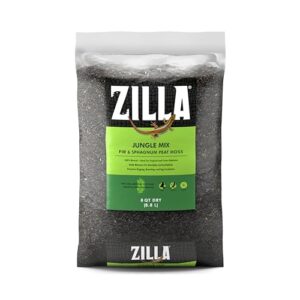
The Zilla Reptile Terrarium Bedding Floor Liner is a solid-sheet substrate that removes the guesswork from beginner setups. You can trim it to fit any tank, lay it flat under hides and dishes, and spot-clean waste without digging through loose material.
Its enzyme treatment controls odor between full cleans, and the non-ingestible construction eliminates impaction risk. Replace it monthly or sooner if heavily soiled.
It won’t support burrowing, but for low-humidity species like corn snakes, it’s a reliable, low-stress starting point.
| Best For | Reptile owners setting up tropical or forest terrariums for frogs, toads, snakes, or rainforest geckos who want a natural, humidity-friendly substrate. |
|---|---|
| Primary Material | Douglas fir bark & peat moss |
| Humidity Control | High absorbency |
| Burrowing Support | Yes |
| Suitable Animals | Frogs, geckos, snakes, toads |
| Odor Management | Earthy scent present |
| Bioactive Compatible | Yes |
| Additional Features |
|
- 100% organic blend of Douglas fir bark and sphagnum peat moss keeps things natural and chemical-free
- Highly absorbent, so it actually helps maintain the humidity levels your reptiles need
- Encourages natural behaviors like digging and nesting, which keeps your animals happy and active
- Can splinter if you’re not careful when handling it, so wear gloves
- The earthy scent is pretty strong and not everyone’s cup of tea
- Needs regular upkeep and swapping out, so it’s not a set-it-and-forget-it solution
2. Bio Dude Terra Aranea Substrate
Bio Dude Terra Aranea isn’t your typical beginner substrate — it’s a full ecosystem in a bag. Originally tested for over a year before its 2019 release, this 6-quart bioactive mix nourishes plants, springtails, and invertebrates while maintaining a natural moisture gradient.
The top layer stays dry while deeper layers hold humidity, making it flexible across setups. At $24.95, it costs more upfront, but with proper maintenance it can last over a decade without full replacement.
| Best For | Hobbyists setting up bioactive terrariums for tarantulas, scorpions, centipedes, or other invertebrates who want a substrate that actually supports a living ecosystem long-term. |
|---|---|
| Primary Material | Proprietary bioactive blend |
| Humidity Control | Maintains humidity, dry top layer |
| Burrowing Support | Yes |
| Suitable Animals | Tarantulas, scorpions, isopods |
| Odor Management | Low dust, odor managed |
| Bioactive Compatible | Yes |
| Additional Features |
|
- Holds a natural moisture gradient — humid at the bottom, dry on top — so you’re not constantly tweaking conditions
- Works with springtails and other microfauna, so the enclosure basically maintains itself over time
- Low dust formula is a nice bonus if you’re sensitive to allergens
- At $24.95 plus potentially steep shipping, it’s one of the pricier substrate options out there
- A few buyers have reported finding debris or foreign objects mixed in, which is frustrating at this price point
- Shipping directly from the manufacturer can add significant cost depending on where you live
3. Halatool Coconut Fiber Reptile Substrate
The Halatool Coconut Fiber Reptile Substrate keeps things refreshingly simple. It comes as a compressed 1.4-pound brick that expands into 2.1 gallons of loose, soil-like bedding once you add warm water.
Made from natural coconut husk fiber, it holds moisture without turning soggy — a real advantage for tropical species like ball pythons and corn snakes. It’s also low in oils and resins, so you’re not exposing your snake to harsh aromatic compounds.
One brick, minimal prep, solid results.
| Best For | Reptile and tarantula owners who need a natural, humidity-friendly substrate for tropical or burrowing species. |
|---|---|
| Primary Material | Coconut husk fiber |
| Humidity Control | Excellent moisture retention |
| Burrowing Support | Yes |
| Suitable Animals | Reptiles, tarantulas, amphibians |
| Odor Management | Minimizes odor |
| Bioactive Compatible | Yes |
| Additional Features |
|
- Holds moisture well without getting soggy — great for ball pythons, corn snakes, and other humidity-loving reptiles
- Made from natural coconut husk fiber, so no harsh chemicals or aromatic compounds to worry about
- Compact brick expands to 2.1 gallons, making it easy to store until you need it
- Not a good fit for baby reptiles — small pieces can be accidentally swallowed or trap tiny animals
- Expanding the brick can get messy, so you’ll want to do it carefully (maybe outside or over a tub)
- Some pieces run a bit large, and you may need to blend or break them down further depending on your setup
4. Josh’s Frogs Burrowing Substrate
Josh’s Frogs Dig It Burrowing Substrate is built for animals that need to dig — and it delivers. The blend of peat moss and vermiculite holds its shape when damp, meaning your snake can actually form stable burrows rather than watching them collapse.
It works well in humid hides, lay boxes, and full enclosures. The 2-pound bag covers a small to medium setup comfortably. Spot clean as needed, and do a full swap every 2 to 3 months.
| Best For | Burrowing lizards, invertebrates, and reptiles that need a lay box or humid hide with stable, diggable substrate. |
|---|---|
| Primary Material | Peat moss & vermiculite |
| Humidity Control | Climate controlled by misting |
| Burrowing Support | Yes |
| Suitable Animals | Lizards, invertebrates, reptiles |
| Odor Management | Not specified |
| Bioactive Compatible | Yes |
| Additional Features |
|
- Holds its shape when damp, so burrows actually stay intact instead of caving in
- Works as a lay box substrate, humid hide filler, or full enclosure bedding — pretty versatile
- Supports live plants and helps maintain humidity without much fuss
- A bit pricey for a 2-pound bag, especially if you’re running multiple enclosures
- Not a good fit for pets that eat their substrate — choking hazard worth taking seriously
- Needs regular misting to stay effective, so it’s not exactly low-maintenance
5. Riare Coconut Fiber Reptile Substrate
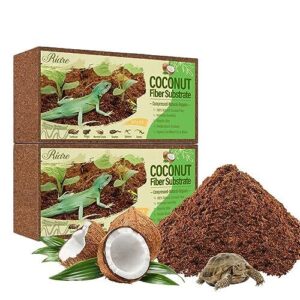
If you want something that expands big and holds moisture well, Riare Coconut Fiber is worth a look. Each compressed brick soaks up water fast and fluffs into a loose, soil-like bedding your snake can actually dig through.
It’s odorless, biodegradable, and gentle enough on scales that belly abrasions aren’t a concern. Humidity stays stable without getting swampy, which matters for shedding.
Buy a multipack — four to eight bricks — so you’re never scrambling when it’s time for a full swap.
| Best For | Snake and reptile owners who want a natural, moisture-retaining bedding that supports digging behavior and helps with shedding. |
|---|---|
| Primary Material | Coconut fiber |
| Humidity Control | Retains humidity well |
| Burrowing Support | Yes |
| Suitable Animals | Reptiles, amphibians, invertebrates |
| Odor Management | Odorless |
| Bioactive Compatible | Yes |
| Additional Features |
|
- Expands big from a compact brick, so you get a lot of usable bedding from a small package
- Holds humidity well without getting soggy, which is key for healthy sheds
- Biodegradable and odorless — good for your pet and easy to compost when you’re done
- Needs to be soaked and expanded before use, which adds a step to setup
- Can get messy if you’re not careful during the process
- Some buyers have reported damaged packaging on arrival
Common Substrate Mistakes to Avoid
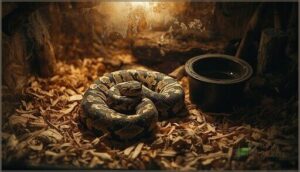
Even experienced keepers slip up with substrate, and beginners tend to hit the same walls. A few missteps can put your snake’s health at serious risk before you even realize something’s wrong. Here are the most common substrate mistakes to watch out for.
Using Toxic or Unsafe Materials
One of the most damaging mistakes in reptile care is reaching for the wrong bedding without checking material safety first. Pine and cedar shavings are prime examples of unsafe bedding options — their volatile phenols damage your snake’s respiratory tract and stress the liver over time.
Artificially dyed or fragranced substrates carry hazardous chemicals that absorb through scales. Always verify substrate safety before setup.
Insufficient Substrate Depth
Toxic materials aren’t the only substrate safety concern — substrate depth requirements matter just as much.
Shallow reptile substrate creates real problems. Burrowing restrictions leave snakes stressed and exposed, since depth requirements start at 4 to 8 inches for most diggers.
Thin substrate thickness also causes humidity issues, making stable shedding conditions nearly impossible to maintain and contributing directly to snake stress.
Neglecting Regular Cleaning
Depth problems set the stage for trouble, but neglecting cleaning and maintenance seals the deal. Skipping daily spot checks lets ammonia buildup, mite risks, and bacterial balance issues spiral fast.
Damp, soiled substrate invites scale rot and leaves your snake weak and vulnerable. Reptile health depends on consistent removal of waste — every one to three months for full replacement, no exceptions.
Overlooking Species-Specific Needs
Convenience is tempting, but fitting every snake into the same reptile substrate ignores the species-specific needs that actually drive animal behavior and long-term health.
- Humidity control matters: tropical snakes need moisture-retentive substrate, desert species don’t
- Burrowing needs require 2–3 inches of loose material for colubrids
- Species research prevents mismatches that cause stuck sheds or scale rot
- Substrate depth fosters naturalistic pet environments and reduces stress
- Substrate for burrowing pets must allow full submersion, not just surface coverage
Frequently Asked Questions (FAQs)
What is the best substrate for beginners?
Paper towels top the list for beginner reptile care — simple, sanitary, and budget-friendly.
For Snake Health and Enclosure Design, Coconut Coir ranks close behind as your most adaptable Reptile Substrate option.
What is the easiest aquarium substrate to keep clean?
For pure aquarium maintenance ease, bare bottom tanks win. No substrate means waste stays visible on the glass, your filter maintenance improves, and water quality stays stable — ideal for aquarium setup basics.
What kind of bedding do you use for lizards?
The best lizard bedding depends on your species. Desert lizard care calls for aspen shavings or tile, while tropical habitat creation needs coconut fiber.
Reptile carpet works well for beginners prioritizing reptile substrate safety.
What’s the best substrate for ball pythons?
For ball pythons, coconut husk is hard to beat. It nails humidity control, accommodates natural burrowing needs, and stays manageable with spot cleaning. Aim for 3–6 inches of substrate depth.
Can substrate affect a snakes shedding process?
Yes, substrate directly impacts your snake’s shedding cycle. Moisture-retaining reptile bedding aids humidity control, scale health, and respiratory safety, while dry or dusty options cause stuck sheds and serious reptile health complications.
How does substrate impact enclosure odor control?
Your substrate choice directly drives odor control. Absorbent materials like coconut fiber trap ammonia fast, while poor moisture balance lets smells build.
Aeration, bacterial balance, and regular substrate maintenance and cleaning keep enclosures fresh.
What substrate works best for snake egg incubation?
For snake egg incubation, moist vermiculite and perlite shine, offering reliable Egg Humidity and Substrate Sterilization.
Balanced Incubation Mediums like a 50/50 mix help with Humidity Control, Substrate Safety, and support ongoing Reptile Health and Substrate Maintenance.
Can bioactive substrates work for beginner snake keepers?
Bioactive setups can thrive — but they’re not plug-and-play. For beginners still mastering humidity control and feeding basics, a simpler reptile bedding is smarter before tackling full bioactive terrarium design.
How deep should substrate be for juvenile snakes?
For most juvenile snakes, 2 to 3 inches works well. Burrowing species like hognose snakes need at least 3 inches. Match substrate depth to your snake’s natural behavior and enclosure size.
Conclusion
What separates a thriving snake from one quietly struggling? Often, it’s what’s beneath them. Choosing the right substrate bedding for beginners isn’t just a setup decision—it’s an ongoing commitment to your snake’s respiratory health, hydration, and natural behavior.
Match the material to the species, maintain it consistently, and inspect it regularly. The enclosure floor you build today shapes every shed, every feeding, and every healthy year that follows.
- https://www.visionproducts.us/blog/reptile-substrate/
- https://imperialreptiles.com/blogs/news/bedding
- https://newagepet.com/blogs/learning-center/choosing-reptile-substrate
- https://www.reptiles.swelluk.com/help-guides/reptile-bedding-the-choice-is-yours/
- https://docs.google.com/document/d/1h19-v0htgsnWrGNF_8mA2MgxV6AiuZsxeQ1mXPAoM7g/mobilebasic