This site is supported by our readers. We may earn a commission, at no cost to you, if you purchase through links.

A new snake arriving in your collection carries risks you can’t see. Pathogens like cryptosporidiosis spread through shared tongs, contaminated water bowls, and even your hands, and a single oversight can wipe out animals you’ve kept healthy for years.
Understanding snake quarantine procedures means building a physical and behavioral barrier between your new animal and your existing collection. Six weeks in an isolated setup with dedicated tools isn’t overcaution; it’s the minimum experienced keepers trust.
This guide walks you through every stage, from setting up your quarantine area to knowing when it’s safe to move on.
Table Of Contents
- Key Takeaways
- Why Quarantine a New Snake?
- How Long Should You Quarantine a Snake?
- How to Set Up a Snake Quarantine Area
- Daily Snake Care and Health Monitoring
- Veterinary Checks and Ending Snake Quarantine
- Frequently Asked Questions (FAQs)
- How long should you quarantine a snake?
- What’s the friendliest snake to own?
- What US state is snake free?
- How does quarantine work?
- How long should quarantine last for different snake species?
- Can quarantined snakes be housed together temporarily?
- What specific tests confirm a snake is disease-free?
- How do I safely introduce a snake post-quarantine?
- Should I quarantine captive-bred snakes from reputable breeders?
- Can quarantine procedures vary between snake morphs?
- Conclusion
Key Takeaways
- Quarantine every new snake for 30 to 90 days—six weeks minimum, extended to 90 for wild-caught or unknown-history animals—and never shorten it, since pathogens shed intermittently and a clean test early on doesn’t guarantee health later.
- House the newcomer in a separate room with independent ventilation and dedicated tools (tongs, water bowls, cleaning supplies) that never touch your main collection, and clean healthy enclosures first to prevent cross-contamination.
- Monitor daily for mites and respiratory distress (gaping, wheezing, nostril bubbles), log every observation, and follow PCR swab testing with a fecal exam plus a veterinary check before ending quarantine—any illness resets the clock.
- Even captive-bred snakes from reputable breeders can silently carry cryptosporidium or nidovirus, so co-housing quarantined snakes is never acceptable and post-quarantine introduction should use clean equipment, minimal handling, and continued monitoring for late-emerging issues.
Why Quarantine a New Snake?

Treat every new snake as a potential disease carrier. You can’t see infectious agents like parasites, bacteria, or viruses in a seemingly healthy animal, and transport stress often suppresses early symptoms while the pathogen keeps shedding.
Since transport stress actively compromises immunity, newly acquired snakes are especially vulnerable — understanding how a suppressed immune system affects snakes helps explain why even a seemingly healthy animal can decline rapidly after rehoming.
Every new snake is a potential disease carrier—what you cannot see can still shed and spread
Your existing collection has no immunity to what a newcomer brings. Disease transmission happens fast: shared tongs, your hands, contaminated tubs, even respiratory droplets between close enclosures. One careless introduction can seed infections across every rack you own.
Quarantine breaks that contact chain. You isolate the animal, use dedicated supplies, and practice strict biosecurity protocols until its health status is confirmed. This buys you time to catch problems early and keeps any emerging illness contained to a single enclosure instead of your entire collection. Pathogen prevention starts here, before day one.
How Long Should You Quarantine a Snake?

Quarantine duration is the single most common mistake keepers make. Don’t cut it short.
Standard quarantine duration guidelines call for 30 to 90 days, with most experienced keepers defaulting to a sixweek quarantine period minimum. Why so long? Pathogens incubate silently, and shedding is intermittent. A snake can test clean in week two and still be infectious in week six. This timing matters more than most new keepers realize — reptile quarantine protocols and best practices explain exactly why a single clean test result is never enough to end isolation early.
Base your timeline on risk. Consider these five factors:
Prioritizing by severity helps you act faster where it matters most, much like the targeted isolation strategies outlined in this ball python quarantine tank setup guide.
- Wild-caught origin: extend to 90 days.
- Unknown health history: extend to 90 days.
- Shared air space: treat as high-risk, extend.
- Shared tools or handlers: extend.
- Known healthy captive-bred: 30 days minimum.
Watch the whole window, not one good day. Any illness resets your clock. Quarantine procedures only work if your quarantine environment stays isolated for the full duration.
How to Set Up a Snake Quarantine Area
Your 60- to 90-day clock only matters if the setup actually isolates. Choose a separate room or enclosure that never shares airspace with your established collection; independent ventilation prevents aerosolized pathogens from drifting between racks. Install physical barriers against escapes: locking lids, sealed gaps, no wedging points. (https://everysimply.com/reptile+enclosure+locking+lid+clamps+secure+tub/search/snakesnuggles0s-20/) are worth adding to every quarantine tub, giving you reliable escape prevention without relying on lid weight alone.
Stock your quarantine area with dedicated tools only: A reptile quarantine supplies kit makes it easy to keep everything purpose-built and contained from day one.
Keep separate feeding tongs, water dishes, and cleaning supplies in the quarantine space — everything a sick or new snake might need, as outlined in this guide to recognizing and managing common snake diseases.
- Separate hooks, tongs, and feeding tongs
- Its own water bowls and hides
- Disposable or washable substrate liners
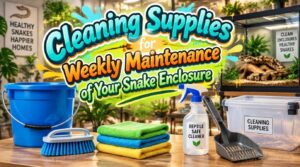
- Dedicated cleaning spray bottles and scrub brushes
Everything here stays here. Use non-porous, easily disinfected surfaces like tubs and plastic, and replace flooring cheaply when soiled. Follow a fixed disinfection protocol: remove waste first, clean, then apply disinfectant with full wet-contact time. Store quarantine gear apart so you never carry contamination back to your main snakes.
A purpose-made reptile-safe enclosure disinfectant spray makes hitting that full wet-contact time easier without risking residue harmful to your snake.
Daily Snake Care and Health Monitoring
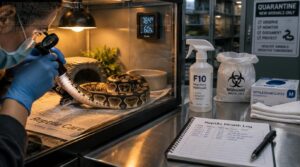
Your daily checks are your first line of defense, and they need to be sharp and consistent. Every inspection should cover behavior, breathing, stool, and skin, because problems show up in small changes.
Below are the two routines you can’t afford to get wrong: spotting mites and respiratory trouble, and cleaning without spreading pathogens.
Recognizing Mites and Respiratory Symptoms
A keeper spots pepper-like specks moving along her new ball python’s scale edges. That’s your cue. Check the vent and between scales, where mite infestations cluster first.
Watch for respiratory distress signs: gaping, wheezing, or nostril bubbles. Symptoms worsening across the day signal active respiratory infections, not stress. Log every observation. Persistent or spreading signs mean call your vet for parasite identification.
While tracking symptoms, many keepers find a vet-recommended reptile mite treatment spray helps eliminate parasites before respiratory complications develop further.
Cleaning Without Cross-contamination
Designate dedicated equipment for quarantine use only, and never share it with your healthy collection.
Follow this sequence every session:
- Clean healthy enclosures first
- Glove up; change gloves between animals
- Discard paper substrate; apply F10SC or chlorhexidine
- Allow full contact time, then ventilate before returning the snake
- Dispose of all cleaning materials; never reuse them
For reliable pathogen detection, PCR swab testing protocols recommend collecting the first swab within days of arrival and repeating at least twice more during quarantine.
Cross-contamination prevention requires strict consistency.
Veterinary Checks and Ending Snake Quarantine
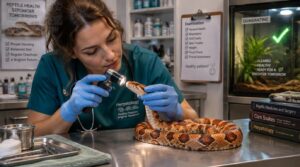
Schedule a veterinary exam before you end quarantine, not after. A clinician must confirm your snake’s oral and respiratory health, body condition, and skin integrity, because subclinical disease won’t always surface through daily health monitoring alone.
Fecal tests are standard, especially for wild-caught or imported animals. If your vet finds respiratory abnormalities or external parasite signs, quarantine duration extends until those concerns are fully resolved and documented. Don’t rush this step. Some owners use a reptile fecal parasite test kit to collect and preserve samples at home before the appointment, which keeps the process smooth and stress-free.
Veterinary clearance must be recorded: exam date, findings, and any diagnostics performed. That documentation officially ends the period. Each animal gets its own timeline.
For postquarantine shift, move your snake only after clearance is confirmed, using clean equipment that never touched the quarantine space. Keep monitoring for late-emerging issues.
Frequently Asked Questions (FAQs)
How long should you quarantine a snake?
Plan for 30 to 90 days minimum. Wild-caught or recently imported snakes always need the full window. If illness or parasites appear, extend it until treatment completes and veterinary clearance confirms your snake is healthy.
What’s the friendliest snake to own?
Most first-time keepers choose corn snakes, and you’ll quickly understand why. They’re gentle, slim, and forgiving of mistakes, rarely bite, and settle fast with regular handling. Ball pythons and rosy boas make excellent alternatives too.
What US state is snake free?
Two US states are completely snake-free: Alaska and Hawaii. Alaska’s extreme cold and permafrost make snake survival impossible. Hawaii’s geographic isolation, combined with strict biosecurity laws and felony charges for snake ownership, keeps it protected.
How does quarantine work?
Think quarantine is just a waiting game? It’s not. Quarantine procedures isolate your new snake in a completely separate quarantine area, using dedicated tools and independent ventilation to block pathogens from reaching your existing collection.
How long should quarantine last for different snake species?
Does the species you’re keeping actually change your timeline? Captive-bred snakes like corn snakes and ball pythons need 60 to 90 days. Larger constrictors require up to 180 days, and wild-caught snakes always need longer.
Can quarantined snakes be housed together temporarily?
Sure, just go ahead and house them together temporarily. That’s a wonderful quarantine strategy. Co-housing undermines physical distance biosecurity immediately, creating cross-contamination pathways through shared surfaces, airspace, and tools, making your entire quarantine process worthless.
What specific tests confirm a snake is disease-free?
Your vet runs fecal flotation tests, PCR testing, and serological tests to screen for dangerous pathogens. Parasite screening confirms internal parasites. Histopathology methods apply only when tissue lesions are present. No single test covers everything.
How do I safely introduce a snake post-quarantine?
Schedule a final vet check 24 hours before transfer. Set up the main enclosure fully, then let the snake exit voluntarily. Keep conditions identical for one week, maintain minimal handling, and monitor stress signals closely.
Should I quarantine captive-bred snakes from reputable breeders?
Think a reputable breeder guarantees a healthy snake? Wrong. Even captive-bred snakes can carry nidovirus or cryptosporidium silently. Shipping stress triggers hidden illness. Quarantine every arrival, use dedicated tools, and protect your collection.
Can quarantine procedures vary between snake morphs?
Yes, but not because genetics alone. Morph-linked skin sensitivity can force gentler disinfectants, and coloration alters your baseline for spotting lesions. Pathogen exposure, dedicated tools, and species-specific needs still drive your essential quarantine procedures.
Conclusion
Picture your collection as a fortress, and the quarantine room as its gate. Every new snake passes through that gate on your terms, not the pathogen’s.
Understanding snake quarantine procedures isn’t paperwork; it’s the discipline that separates a thriving collection from a devastated one.
Six weeks feels long until you compare it to losing animals you’ve kept for a decade. Build the barrier. Watch closely. Your herd’s future depends on what you do before day one.