
This site is supported by our readers. We may earn a commission, at no cost to you, if you purchase through links.

A snake that stops eating, moves sluggishly, and sits hunched in a corner isn’t being difficult—it’s cold. Reptiles can’t generate their own body heat the way you do, so when their enclosure drops below the right temperature range, everything slows down: digestion stalls, immunity weakens, and basic functions start to fail.
Most people focus on what to feed their reptile or how to decorate the tank, but the heating setup quietly determines whether the animal thrives or just survives. Understanding why reptiles need under tank heating—and how it works—gives you the foundation to build an environment where your pet can actually function the way nature intended.
Table Of Contents
- Key Takeaways
- Why Do Reptiles Need Under Tank Heating?
- How Under Tank Heating Supports Reptile Health
- Species-Specific Heating Needs and Preferences
- Creating a Safe and Effective Heating Setup
- Comparing Under Tank Heating to Other Methods
- Frequently Asked Questions (FAQs)
- Do reptile heating pads use a lot of electricity?
- Why is heat important for reptiles?
- How long can reptiles go without a heat lamp?
- How often should under tank heaters be replaced?
- Can under tank heating be used for aquatic reptiles?
- What substrate works best with under tank heaters?
- Are under tank heaters safe for baby reptiles?
- Do under tank heaters increase electricity bills significantly?
- Conclusion
Key Takeaways
- Reptiles cannot make their own body heat, so the temperature of their enclosure directly controls their digestion, immune system, and overall health.
- An under-tank heater mimics the warm ground reptiles rely on in the wild, giving them the belly heat they need to stay active and digest food properly.
- Always pair your heat mat with a thermostat — without one, surface temps can climb high enough to burn your reptile or create a fire hazard.
- Different reptiles have different heating needs, so match your setup to your specific pet — ground-dwelling snakes do well with heat mats alone, while lizards like bearded dragons also need overhead basking light.
Why Do Reptiles Need Under Tank Heating?
Reptiles can’t make their own body heat — they depend entirely on their environment to stay warm and healthy.
That’s why getting the temps right really matters — this guide to reptile temperature control and thermoregulation breaks down exactly what your pet needs to thrive.
Without the right setup, even a well-fed reptile can struggle to digest food, fight off illness, or behave normally. Here’s why under tank heating plays such a key role in all of that.
Ectothermy and Body Temperature Regulation
Reptiles are ectothermic animals — they can’t generate their own body heat the way you or I do. Instead, body temperature regulation depends entirely on their surroundings. Without proper temperature control, reptile metabolism slows, immunity drops, and health suffers.
Here’s what ectothermic adaptations mean for your pet:
- Body temperature rises and falls with surface heat
- Thermal gradients let reptiles self-regulate throughout the day
- Thermoregulation through behavior replaces internal heat production
- Heat sources directly control energy, digestion, and activity
Maintaining a is essential for preventing health complications in reptiles.
Mimicking Natural Heat Sources in Captivity
In the wild, sun-baked soil and warm rocks do the heavy lifting for reptile thermoregulation needs. An undertank heating pad recreates that same belly warming effect by keeping the floor surface between 32°C and 40°C — just like naturally heated ground.
This naturalistic heating approach promotes a proper thermal gradient, steady heat retention through the night, and ambient warmth that makes your naturalistic vivarium feel genuinely home-like for your reptile.
For a thorough understanding of proper temperature, humidity and lighting requirements, it’s important to research your reptile’s specific needs.
Consequences of Insufficient Heat for Reptiles
When the temperature gradient in your enclosure drops too low, the effects show up fast. Skipping proper reptile heating requirements invites digestive issues, immune suppression, and cold shock.
Without an undertank heating pad maintaining that thermal gradient, food sits undigested, infections take hold, and lethargy sets in. Long-term, inadequate reptile thermoregulation needs dramatically raise the risk of organ damage and reptile mortality.
How Under Tank Heating Supports Reptile Health
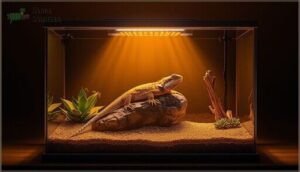
Getting the temperature right isn’t just about comfort — it directly shapes how well your reptile thrives day to day.
The right setup matters especially after dark — heat lamps for nocturnal reptiles can make a real difference when natural warmth disappears.
Under tank heating plays a bigger role in your pet’s health than most keepers realize. Here’s how it makes a real difference in three key areas.
Digestive Efficiency and Metabolism
Your reptile’s gut is basically a slow engine — it only runs well when warm. Under tank heating delivers steady belly heat that fuels digestive enzymes, speeds gut health, and triggers a natural metabolic boost after meals.
A reptile’s gut only runs well when warm — belly heat fuels digestion, enzymes, and metabolism
Thermoregulation benefits show up fast:
- Nutrient uptake improves when core temps stay ideal
- Digestion finishes in hours, not days
- Thermal gradient lets them self-regulate naturally
Immune System Function and Disease Prevention
Your reptile’s immune response depends heavily on warmth. When core temperatures drop below their preferred range, infection control weakens and disease prevention breaks down fast.
Thermal stress from inconsistent floor heat strains reptile health in ways that aren’t always obvious until illness appears. Proper thermoregulation through a thermal gradient enhances antibody production and keeps your reptile’s natural defenses strong against everyday pathogens.
Encouraging Natural Behaviors and Activity
A warm floor does more than just heat your reptile — it wakes them up. Under tank heating facilitates thermoregulation strategies that drive natural foraging, basking behaviors, and full activity cycles.
With proper thermal gradient creation, your reptile moves between basking zones and cooler areas on their own terms. That freedom to self-regulate is the heart of true environmental enrichment and reptile thermal management.
Species-Specific Heating Needs and Preferences

Not every reptile warms up the same way, and that’s actually a good thing to know before you set up any tank. Whether you’re caring for a snake, a lizard, or a turtle, their heating needs can look pretty different from one another.
Here’s a closer look at what sets each group apart.
Ground-Dwelling Snakes and Belly Heat
Ground-dwelling snakes like corn snakes and ball pythons depend on snake belly regulation to stay healthy. They press against warm surfaces to draw heat directly into their body, making under tank heating essential.
After eating, post-meal warming through natural ground warmth helps speed digestion. A UTH with a thermostat keeps surface temperature safe, giving your snake the belly heat it needs without risk of burns.
Nocturnal Vs. Diurnal Reptiles
Not all reptiles follow the same schedule — and that changes everything about how you heat their enclosure. Diurnal species like bearded dragons rely on overhead basking lamps during the day, while nocturnal geckos need under tank heaters to stay warm after lights go off.
Both benefit from a thermal gradient, but their reptile heating requirements and heat sources must match their natural diurnal cycles or nocturnal behavior.
Differences Among Snakes, Lizards, and Turtles
Snakes, lizards, and turtles each have unique ectothermic adaptations that shape their species-specific heating needs.
Ball pythons thrive with undertank heaters providing substrate warming, while bearded dragons depend on overhead basking.
Aquatic turtles need water heaters plus a basking platform.
Understanding habitat diversity and reptile anatomy helps you build reptile enclosures with proper thermal gradients — making your heating solutions work smarter, not harder.
Creating a Safe and Effective Heating Setup
Getting the heating setup right makes all the difference for your reptile’s comfort and safety. There are a few key things you’ll want to get right before your pet ever sets foot in the enclosure.
Here’s what to focus on.
Proper Placement of Under Tank Heaters
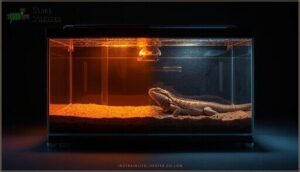
Where you place your under tank heaters matters just as much as which one you buy. Position heat mats under one end of the tank, covering roughly half to two-thirds of the floor, so your reptile can choose between warm and cool zones.
Watch substrate depth — thick bedding insulates the glass and traps dangerous heat underneath. Always raise the tank slightly for ventilation, protecting both your reptile and your furniture.
Importance of Thermostats and Temperature Monitoring

Getting placement right is a great first step, but without a thermostat, your heat mat can quietly climb to dangerous levels. Thermal Control starts here — thermostats cut power when the probe hits your set point, keeping your reptile’s thermal environment stable and safe.
Good Heat Monitoring protects your reptile by:
- Preventing belly burns from unregulated heat mats
- Holding a steady temperature gradient day and night
- Alerting you when ambient heating drifts out of range
- Supporting consistent Reptile Thermoregulation without guesswork
Avoiding Common Heating Mistakes and Hazards
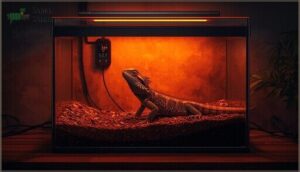
You want your reptile heating solutions to work for you—not against you. For example, a poorly installed heat mat or skipped thermostat can quickly turn a safe reptile enclosure setup into a fire hazard.
Keep this table handy as you check your own setup:
| Hazard | Safe Practice |
|---|---|
| Thermal Burn Risk | Use thermostat, monitor temps |
| Overheating Risks | Limit mat to 30-50% floor area |
| Electrical Safety | Plug directly, avoid daisy chains |
| Fire Hazard Mitigation | Insulate, check for air gaps |
Comparing Under Tank Heating to Other Methods
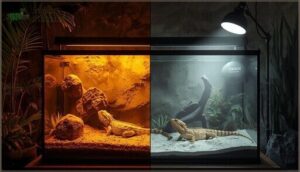
Not all heating methods work the same way, and picking the wrong one can leave your reptile struggling to stay comfortable.
The good news is that once you understand how your options stack up, the right choice becomes much clearer. Here’s a closer look at what sets each method apart.
Heat Mats Vs. Heat Lamps and Ceramic Emitters
Each heating mechanism works differently, and knowing which one fits your reptile’s needs makes all the difference. Heat Source Comparison matters because reptile thermoregulation depends on how and where heat reaches them.
- Heat mats use conduction for belly warmth, ideal for nocturnal ground-dwellers
- Heat lamps deliver overhead infrared, supporting natural basking in diurnal species
- Ceramic heat emitters offer emitter efficiency — heat without light disruption
- Temperature gradient creation requires combining reptile heating solutions strategically
Integrating Heating With UVB Lighting
Heat sources and UVB light work best when they overlap in the same basking zones. Think of it as building a patch of sunlight — your reptile gets warmth and UVB gradients together, just like outdoors.
Good thermal management means aligning your lighting systems so the warmest spot in the temperature gradient also delivers the strongest UVB. Your reptile heating equipment should always support both needs at once.
Choosing The Right Heating Solution for Your Reptile
Every reptile is different, and the right setup depends on your species’ natural habits. A corn snake thrives with heat mats alone, while a bearded dragon needs overhead basking plus belly warmth. Match your reptile heating methods to how your animal actually lives.
- Under tank heating works best for ground-dwelling, nocturnal, or burrowing species
- Thermal gradient creation requires covering roughly half the tank floor
- Species-specific heating needs may call for combining heat mats with overhead sources
Frequently Asked Questions (FAQs)
Do reptile heating pads use a lot of electricity?
Like a nightlight left on in a hallway, reptile heat pads draw surprisingly little power.
Most run between 4 and 24 watts, making energy consumption and power costs minimal for effective thermal management.
Why is heat important for reptiles?
Reptiles are cold blooded animals, so they can’t make their own body heat.
Their reptile metabolism, digestion, and immune function all depend on the right environmental temperature in their thermal environment.
How long can reptiles go without a heat lamp?
Without heat, your reptile is on thin ice. Most healthy reptiles tolerate one night near 70°F, but cold stress, digestion slowdown, and hypothermia risks rise fast beyond 24 hours.
How often should under tank heaters be replaced?
Most heat mats last two to three years. Replace yours sooner if you notice uneven warmth, scorching, or temperature swings.
A quality thermostat helps extend heater lifespan, but don’t skip annual heating maintenance checks.
Can under tank heating be used for aquatic reptiles?
Think of under tank heaters like a wool blanket — cozy for land reptiles, but useless in a pool.
For aquatic turtles, they pose glass risks, burn hazards, and heating ineffectiveness. Safer solutions exist.
What substrate works best with under tank heaters?
Tile and paper towels work best with under tank heating because they support even heat distribution, safe surfaces, and belly comfort — keeping substrate heating effective and thermal gradients clear for your reptile’s daily needs.
Are under tank heaters safe for baby reptiles?
Under tank heaters can be safe for baby reptiles, but only with a thermostat and careful setup.
Baby reptile care demands close attention to thermal burns, temperature control, and heat mat risks to protect delicate hatchlings.
Do under tank heaters increase electricity bills significantly?
Surprisingly, under tank heating won’t drain your wallet. Most heat mats draw just 8 to 24 watts, costing roughly one to three dollars monthly — far less than a single basking lamp.
Conclusion
Think of your reptile’s enclosure as a living thermostat—every degree matters. Understanding why reptiles need under tank heating isn’t just technical knowledge; it’s the difference between an animal that merely exists and one that truly thrives.
When you get the heat right, digestion works, immunity holds, and natural behaviors return. Your pet can’t tell you it’s cold, but a well-heated setup speaks for itself—in every meal eaten, every shed completed, every active, healthy day.
- https://www.evolutionreptiles.co.uk/care-hub/reptile-care-checklists/environment-checklist-temperature-and-humidity/
- https://www.familyreptiles.com/post/should-i-use-a-heat-lamp-or-an-under-tank-heating-pad-or-both-for-my-reptile
- https://training.zoomed.com/associate-heating/
- https://www.zenhabitats.com/blogs/reptile-care-sheets-resources/overhead-heating-vs-under-tank-heating-for-leopard-geckos-pros-and-cons
- https://reptilesmagazine.com/ideal-heating-for-your-reptiles/