This site is supported by our readers. We may earn a commission, at no cost to you, if you purchase through links.

Most keepers learn fast that caring for boa constrictor morphs isn’t a one-size-fits-all game—what works for a classic Colombian can leave a Sunglow or Ghost morph stressed and off-feed. Each subspecies and morph brings its own quirks, from sudden growth spurts that test your enclosure setup to subtle pattern shifts that reveal hidden health issues.
If you’ve ever watched a boa outgrow its hide overnight, or puzzled over humidity swings that send your prized morph into shed trouble, you know the stakes. Mastering their care means tuning in to the details—nutrition, environment, enrichment—where small changes can make all the difference.
Table Of Contents
Key Takeaways
- Each boa morph demands tailored husbandry because subspecies like Boa constrictor occidentalis carry CITES restrictions, while designer morphs such as Super Motley can show lethal genetics—so verify breeder documentation and avoid lines with shortened lifespans before you buy.
- Enclosure size scales directly with growth stages, starting at 2 ft × 1.5 ft for hatchlings and reaching 8 ft × 4 ft for giant morphs, while thermal gradients of 86–90°F basking and 75–80°F cool zones with 55–75% humidity prevent digestive stalls and shed complications.
- Frozen-thawed prey under 10% of body weight fed every 10–12 days for neonates and every 4–8 weeks for adults eliminates injury risks, but strict quarantine protocols lasting 90 days to six months block viral diseases like IBD that spread rapidly through collections.
- Environmental enrichment with climbing structures, live plants like pothos, and rotational décor increases brain volume and feeding speed compared to barren setups, while handling sessions of 5 minutes every few days during acclimation build trust without triggering chronic stress.
Identifying Boa Constrictor Morphs
Before you can properly care for a boa constrictor, you need to understand what you’re actually working with. The term “boa constrictor” covers multiple species, subspecies, and dozens of captive-bred morphs, each with subtle differences that matter for husbandry and breeding.
Let’s break down how to identify what type of boa you have or are considering.
Common Boa Constrictor Species and Subspecies
You’ll encounter three recognized Boa constrictor species—Boa constrictor, Boa imperator, and Boa sigma—each with distinct geographic distribution. Boa constrictor includes eight subspecies spanning South America, while Boa imperator ranges from Mexico through Central America and dominates the pet trade.
Subspecies identification matters because Boa constrictor occidentalis carries CITES Appendix I status, and taxonomic debates continue around forms like Boa constrictor amarali. These snakes are important because they help with controlling rodent populations.
Morph Vs. Locality Vs. Subspecies Explained
Taxonomic distinctions separate subspecies from morph and locality labels in your collection. Subspecies—such as Boa constrictor constrictor—reflect genetic divergence across natural ranges, while localities like Hog Island denote documented geographic origin within a subspecies. Morphs arise from selective breeding for traits like albino or hypo, often in one to three generations. Color morphs are often crossbred animals.
- Subspecies preserve region-specific genetic diversity and conservation value
- Localities maintain wild-type phenotypes tied to provenance
- Morphs combine Mendelian alleles (hypo, motley, albino) for novel visuals
- Market demand drives pricing—pure-bred red-tails doubled over five years
Hobbyist terminology often blends these categories (e.g., “Hypo Hog Island”), but understanding each term sharpens your Boa constrictor subspecies identification and aids responsible Boa breeding and morphs projects.
Recognizing Color and Pattern Variations
Once you’ve mapped taxonomy, you’ll decode morph visuals by base coloration and pattern. Wild-type Boa constrictor imperator shows tan ground with brown saddles—your reference point.
Albino identification relies on yellow-orange tones and pink eyes; anerythristics trade reds for silver-gray. Pattern aberrations like Motley stretch saddles into partial stripes, while designer morphs such as Ghost layer hypo over anery for soft, low-contrast composite traits.
Age changes darken Blood boas and lighten hypomelanistics over years.
Selecting Healthy Morphs for Captivity
Color and pattern ID gets you started, but genetics and health lock in the right purchase. Super Motley and Super Jungle morphs carry lethal or severely shortened lifespans—avoid them outright.
Before buying, confirm consistent feeding, check for kinks or lumps, and verify the breeder’s biosecurity history. Ask about IBD screening and line diversity; closed collections with documented genetics reduce disease risk and inbreeding complications down the road.
Setting Up The Ideal Boa Enclosure
Getting your boa’s enclosure right from the start makes all the difference in their long-term health and behavior. You’ll need to think about several interconnected factors, from the physical dimensions of the habitat to the equipment that maintains proper temperatures and humidity levels.
Let’s break down each element so you can build an environment where your boa will thrive.
Minimum Enclosure Size by Morph and Age
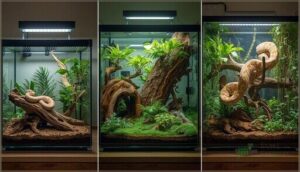
Your boa’s enclosure size isn’t negotiable—it directly shapes health, stress, and growth. Neonate enclosure size starts at 2 ft × 1.5 ft × 1 ft for hatchlings under 2 ft, while juvenile morph differences emerge as standard lines outgrow 4 ft × 2 ft × 2 ft housing requirements around 5–6 ft.
Adult space needs scale to 6 ft × 3 ft × 3 ft for most morphs; giant morph housing demands 8 ft × 4 ft × 4 ft. Enrichment considerations increase with enclosure complexity.
Substrate Options and Maintenance
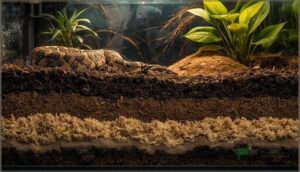
Choosing the right bedding shapes humidity retention, impaction risks, and cleaning frequency—decisions that cascade through your boa’s long-term welfare. Substrate options range from moisture-holding blends to disposable sheets:
- Mix 40% topsoil, 40% coconut fiber, 20% play sand to balance humidity retention and impaction safety.
- Cypress mulch layers (several inches) hold moisture and invite natural burrowing.
- Paper substrates enable daily spot-cleaning and fast detection of waste.
Avoid substrate toxicity from pine or cedar; aromatic oils damage respiratory and liver function.
Enclosure cleaning involves daily waste removal, with bioactive vivariums reducing disinfection demands. For loose bedding, substrate replacement and full disinfection—using 10% bleach or F10SC—should occur every 3–6 months.
Bioactive substrate setups with live microfauna can extend intervals but still require periodic renewal to prevent pathogen buildup and maintain environmental quality.
Heating and Thermal Gradients

Without proper temperature regulation, your boa’s digestion stalls and immunity falters. Set the basking spot at 86–90°F and the cool side at 75–80°F, then watch your snake shuttle between zones—that’s thermoregulation in action.
| Zone | Day Range | Night Range |
|---|---|---|
| Basking temperature | 86–90°F | Heat off |
| Warm ambient | 80–85°F | 70–75°F |
| Cool side ambient temperature | 75–80°F | 68–75°F |
| Surface (optional) | Up to 95°F | — |
Use a thermostat with ceramic heat emitters or halogen floods over mesh; gradient monitoring tools like infrared guns confirm surface accuracy. B. c. nebulosa and other morph-specific needs may shift your targets slightly. Heat source safety demands guarded bulbs to prevent burns.
Humidity Control and Monitoring
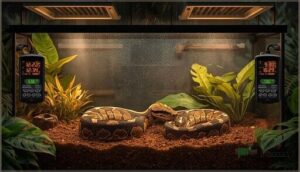
Humidity measurement is your first line of defense against shedding issues and respiratory health problems. Target 55–75% during normal conditions, then push to 75% when your boa enters shed.
Digital probe hygrometers with ±3–5% accuracy reveal microclimate creation opportunities: place one hot-side, another cool, and adjust misting frequency or substrate moisture accordingly.
Fungal prevention demands ventilation when readings climb past 80%, so balance humidity control methods with airflow to maintain suitable boa constrictor housing conditions.
Lighting and UVB Requirements

Your boa won’t die without UVB lighting, but Ferguson Zone 2 guidance recommends it for long-term skeletal health and immune support.
Position a 5–6% T5 HO bulb 25–35 cm above the basking site to hit a UVI of 2.0–3.0.
Run a 12–13 hour photoperiod with complete nighttime darkness to preserve natural circadian rhythms and prevent stress.
Feeding and Nutrition for Boa Morphs
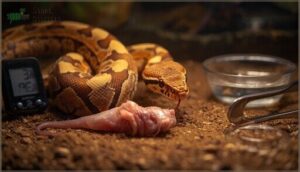
Boa constrictors are obligate carnivores, meaning their entire diet consists of whole prey animals that provide complete nutrition. Getting feeding right isn’t complicated, but it does require understanding what size prey to offer, how often to feed, and how to do it safely.
Let’s walk through the essentials of keeping your boa well-fed and healthy.
Prey Selection and Feeder Options
Your boa’s nutritional needs depend entirely on appropriate prey size and safe feeder options. Frozen-thawed rodents remain the best practice, eliminating injury risks from live feeding while meeting complete dietary requirements.
Most captive boas readily accept frozen prey when properly thawed—first in cold water, then warmed in hot tap water for 10-15 minutes. This approach prevents regurgitation risks while providing valuable nutrition through whole vertebrate prey.
Feeding Frequency by Age and Size
Once you’ve selected appropriate frozen-thawed rodents, feeding frequency becomes your next priority. Neonates require meals every 10–12 days, while juveniles shift to 10–14-day intervals as growth slows. Subadults generally eat every 2–4 weeks, and adults may extend to 4–8 weeks between feedings.
Seasonal adjustments matter—cooler winter temperatures naturally lengthen these intervals, mimicking wild metabolic cycles.
Safe Feeding Practices
After timing your feedings, pay close attention to prey size—keep rodents under 10% of your boa’s weight and match girth to the snake’s mid-body.
Always thaw frozen prey in cold water, never the microwave, and discard leftovers.
Practice strict hygiene control, wash hands after handling, and use separate tools for feeding to minimize disease prevention and handling risks.
Water Bowl Placement and Maintenance
Once feeding is sorted, turn your focus to water bowl placement and maintenance. Choose a bowl size that lets your boa soak fully—aim for 30–40% of body length. Place it in the cooler third of the enclosure to manage humidity levels.
Daily water changes, proper cleaning protocols, and monitoring hydration indicators are non-negotiable for best boa constrictor care.
Maintaining Boa Health and Hygiene
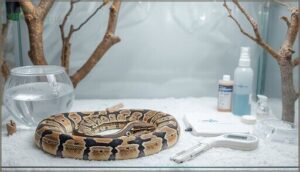
Keeping your boa healthy means paying close attention to more than just feeding and habitat. There are several key steps you’ll want to follow to protect your snake and keep its environment safe.
Here’s what you should focus on to maintain good health and hygiene.
Recognizing Signs of Illness
Ever notice your boa holding its head high or breathing with effort? These are classic Respiratory Distress signals. Watch for Regurgitation Signs, Neurological Signs like “stargazing,” and sudden Weight Loss—each points to underlying health symptoms.
Skin Abnormalities and mouth issues often signal deeper problems. Recognizing these Signs of illness means you’ll know when Veterinary care for boas is urgent.
Quarantine Procedures for New Morphs
When you bring home a new morph, start your boa constrictor quarantine procedures with a strict 90-day isolation period—many specialists extend it to six months for IBD prevention.
Use a simple, disinfect-friendly enclosure with paper towels for mite control and easy monitoring of health symptoms.
Dedicated tools, diagnostic testing, and handling quarantined boas last in your routine minimize stress reduction risks while protecting your collection.
Enclosure Cleaning and Disinfection
You’ll maintain ideal boa constrictor care by spot-cleaning daily and performing deep enclosure disinfection every 1–3 months, depending on soiling levels. Proper cleaning frequency and substrate choices prevent ammonia buildup and pathogen transmission.
- Replace aspen weekly; bioactive mixes last 3–6 months
- Use F10SC (1:250) or 10% bleach with 10-minute contact time for disinfectant efficacy
- Dedicate separate tools per enclosure to prevent cross-contamination
- Disinfect all equipment after each use with reptile-safe disinfectants
- Rinse thoroughly to remove residues before reintroducing your boa
Tool maintenance protects your collection.
Preventing Respiratory and Viral Diseases
Because respiratory and viral diseases spread quickly through collections, you’ll protect your boas by maintaining strict biosecurity protocols and ideal husbandry. Preventive measures greatly reduce disease incidence when implemented consistently.
| Prevention Factor | Recommended Practice | Disease Impact |
|---|---|---|
| Humidity Control | 60–70% range with ventilation needs met | Prevents respiratory irritation and ammonia buildup |
| Quarantine Length | 3–6 months minimum; 12 months for high-value morphs | Detects subclinical viral carriers before collection exposure |
| Biosecurity Protocols | Dedicated tools per enclosure; reptile-safe disinfectant between handling | Blocks serpentovirus and reptarenavirus transmission via fomites |
| Stress Reduction | Avoid overcrowding, excessive handling, cohabitation | Maintains immune function and boa constrictor health |
| Temperature Gradients | 86–90°F basking, 75–80°F cool zone | Bolsters immune response against pathogens |
Test new morphs with RT-PCR and blood smears during quarantine. Separate airspace, disposable substrates, and feeding quarantined animals last minimize cross-contamination risk in your breeding operation.
When to Seek Veterinary Care
You’ll know it’s time to call a reptile veterinarian when you observe emergency signs like open-mouth breathing abnormalities, persistent appetite changes, or neurologic signs such as tremors. Weight loss, aggressive behavior shifts, or repeated regurgitation also warrant immediate veterinary care.
Schedule routine checkups annually to catch subclinical issues early, protecting your boa constrictor health and breeding investment before problems escalate.
Enrichment and Handling for Boa Morphs
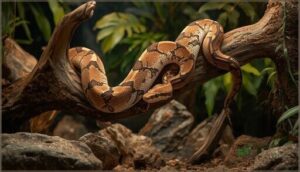
Keeping your boa mentally stimulated and properly handled doesn’t just make for a calmer snake—it actually improves their cognitive function and overall health. Research shows that enriched environments lead to larger brain volumes and faster feeding responses compared to barren setups.
Enriched environments for boas boost their brain size, feeding speed, and overall well-being compared to barren setups
Let’s walk through how to create a stimulating habitat and build trust through safe handling practices.
Environmental Enrichment and Enclosure Décor
Think of your boa’s enclosure as a living blueprint—vertical space and substrate complexity aren’t luxuries, they’re necessities. Climbing structures, dense décor, and security features like multiple hides create real enrichment.
Rotational enrichment and varied enrichment items keep behaviors sharp. In bioactive vivariums, these enrichment activities mirror wild instincts, making your morph’s world both stimulating and secure.
Live Plant Options for Vivariums
Live plants bring microclimate benefits and enrichment items that artificial décor can’t match—but species selection matters. Dense foliage from pothos or ferns can raise localized humidity by 10–15 percentage points, supporting healthy sheds and reducing misting frequency. Choose plants for both plant toxicity safety and durability, and adjust your planting design around heavy travel zones to balance bioactive substrate goals with maintenance needs in your bioactive vivariums.
- Pothos and Philodendron: Tolerate trampling, low light, and high humidity in enclosure décor
- Sansevieria: Endures repeated flattening; root systems survive 20+ years indoors
- Fittonia and ferns: Create humid microclimates near leaf clusters for shedding support
- Avoid toxic species: Skip Dieffenbachia, oleander, and spiny bromeliads entirely
- Pot individually: Reduces root disturbance during spot-cleaning in live plant options for boas
Safe Handling Techniques and Taming
Once your vivarium is planted, an acclimation period and physical support become critical for boa constrictor handling techniques. Give new arrivals 7 days undisturbed, then start with 5-minute sessions every few days. Support at least one-third of the snake’s length to prevent spinal injury, and use a hook before opening the enclosure for bite prevention—tap training signals “handling time,” not feeding. Handling frequency of 1–2 weekly sessions maintains taming boa constrictors without chronic stress. Watch for stress recognition cues: loud hissing, rigid coiling, and rapid tongue flicks mean it’s time to stop. Large boas over 6 feet demand two handlers for safety, and you should never handle during the opaque-eye “blue” phase or within 48 hours post-feeding to avoid regurgitation.
| Phase | Duration/Frequency | Key Action |
|---|---|---|
| Initial acclimation | 7 days, no handling | Allow feeding to stabilize |
| Early taming | 5 min every few days | Build trust, prevent defensiveness |
| Long-term maintenance | 1–2 times per week | Sustain habituation, monitor health |
Reducing Stress in Captive Boas
Building trust through thoughtful Boa constrictor handling techniques sets the stage for stress reduction. Balancing gentle handling with time for captivity adjustment ensures healthier, more confident snakes.
Enclosure enrichment, from ample hiding opportunities to proper enclosure size, gives your boa security and room to stretch. Consistent thermal gradients, humidity levels, and temperature regulation keep activity patterns stable.
Frequently Asked Questions (FAQs)
How long do boa constrictor morphs live?
Boa constrictor morphs generally live 20–30 years in captivity with proper care, though some individuals reach 40 years or more. This lifespan greatly exceeds their wild counterparts, which average 15–20 years.
Can boa morphs be housed together safely?
You shouldn’t house boa morphs together long-term. Cohabitation risks include disease transmission, feeding competition, and hidden stress indicators.
Individual enclosures prevent these problems and let you monitor each animal’s health closely.
What causes color changes in boa morphs?
Your boa’s coloration shifts due to shedding effects, age maturation, genetic morphs, physiological firing, and reproductive shedding. Pattern variations intensify post-shed, while daily temperature and lighting trigger dramatic fired-up versus fired-down transformations.
Are boa constrictor morphs legal everywhere?
Ironically, captive-bred morphs face the same legal barriers as wild animals. State-level restrictions, CITES regulations, and Federal limitations don’t distinguish between color variants, so morph legality depends entirely on your jurisdiction’s treatment of Boa constrictor itself.
Do boa morphs require special permits or paperwork?
Yes, permits and CITES compliance vary by state. Transport rules often require permits, while breeding permits depend on local regulations.
Check state-specific captive care guidelines to make sure your boa constrictor meets legal requirements.
Conclusion
Each morph isn’t difficult—it just demands attention to the details that matter. When you dial in the thermal gradient, read the subtle cues during shed cycles, and adjust feeding windows as your boa matures, caring for boa constrictor morphs becomes second nature.
The difference between a thriving specimen and one that’s merely surviving lies in your willingness to observe, adapt, and improve. Put these practices to work, and you’ll see the results in every confident movement your boa makes.