This site is supported by our readers. We may earn a commission, at no cost to you, if you purchase through links.

A snake cramped in a too-small enclosure won’t just feel uncomfortable—it’ll show you through stress behaviors, poor appetite, and declining health. The question of how much space does a pet snake need isn’t about arbitrary tank sizes. It’s about providing room for your snake’s essential behaviors: stretching its full body length, thermoregulating between warm and cool zones, and moving with the natural locomotion patterns its species evolved over millions of years.
A corn snake needs different dimensions than a ball python, and a young boa requires forward planning as it grows from eighteen inches to eight feet. Getting enclosure size right from the start prevents costly upgrades, reduces veterinary visits, and gives your snake the physical and psychological space to thrive rather than merely survive.
Table Of Contents
- Key Takeaways
- How Much Space Does a Pet Snake Need?
- Factors Influencing Snake Enclosure Size
- Enclosure Size Recommendations by Snake Type
- Environmental Controls for Snake Enclosures
- Enrichment and Accessories to Maximize Space
- Maintenance and Practical Space Considerations
- Frequently Asked Questions (FAQs)
- Conclusion
Key Takeaways
- Your snake’s enclosure length should equal at least two to three times its full body length, with minimum 20-gallon tanks for juveniles and 40+ gallons for adults to allow proper stretching, thermoregulation, and natural movement patterns.
- Species-specific needs trump generic guidelines—arboreal snakes like green tree pythons require vertical climbing space while terrestrial species like ball pythons need horizontal floor area, and active foragers demand more territory than ambush hunters.
- Undersized enclosures trigger measurable stress responses including elevated stress hormones, weakened immune function, repetitive behaviors, and disrupted shedding cycles that directly compromise your snake’s physical health.
- Plan enclosure dimensions for your snake’s adult size from the start rather than its hatchling measurements, since most species reach near-final length within 2-4 years and upgrading later creates unnecessary stress and expense.
How Much Space Does a Pet Snake Need?
Your snake’s enclosure size isn’t just about fitting them inside—it’s about giving them room to move, thermoregulate, and behave naturally. The right amount of space depends on your snake’s species, adult size, and activity level.
Let’s look at the minimum guidelines and how enclosure size affects your snake’s health and behavior.
Minimum Enclosure Size Guidelines
Your snake’s enclosure dimensions start with one simple rule: length should equal at least two to three times your snake’s body length. For a small juvenile, think 20-gallon minimum; adults need 40 gallons or more depending on snake length. This baseline guarantees proper temperature control and humidity levels throughout the habitat size, giving your pet room to stretch, coil, and thrive without cramping natural movement.
When designing the enclosure, consider the importance of clear structure and writing clear science to guarantee a well-organized and easy-to-follow environment.
Species, Size, and Activity Level Factors
Beyond baseline measurements, you need to factor in your snake’s growth curve and natural behavior. Species variations make all the difference—an arboreal green tree python demands vertical climbing space, while a terrestrial ball python prefers horizontal floor area. Metabolic needs and activity patterns also shape enclosure dimensions: active foragers require more territory than ambush hunters. Understanding these needs requires applying scientific writing techniques to research and analyze the behavior of different species.
- A hatchling corn snake doubling in length within two years
- A sedentary ball python coiled in its hide for days
- An energetic rat snake exploring every branch at dusk
- A slow-growing boa reaching adult size after five years
Effects of Enclosure Size on Health and Behavior
Space directly shapes your snake’s well-being. When enclosure size falls short of habitat size requirements, stress hormone levels climb and behavioral frustration emerges—you’ll see restricted movement, less exploration, and repetitive behaviors.
Undersized enclosures trigger stress hormones, reduce exploration, and trap snakes in repetitive, frustrated behaviors
Physiological impacts include weakened immune function, skin problems, and disrupted thermoregulation.
Meeting proper snake tank size standards promotes space optimization, lowering snake stress while improving body condition, shedding cycles, and health outcomes across all life stages.
Factors Influencing Snake Enclosure Size

Choosing the right enclosure size isn’t just about measuring your snake’s length. You need to account for how fast your species grows, how active it is throughout the day, and what kind of space it needs to express natural behaviors.
Let’s break down the key factors that determine how much room your snake actually requires.
Growth Rate and Adult Size Considerations
You can’t plan the right enclosure size without understanding how your snake will grow. Growth patterns vary dramatically by species and individual genetics—corn snakes usually reach 4–6 feet, ball pythons 3–5 feet, while boas often exceed 6 feet.
Consider these key factors:
- Most snakes reach near-final length by 2–4 years but continue minor growth for 6–8 years
- Females often grow larger than males in many species
- Diet adequacy and feeding frequency directly influence maturity rates
- Rapid juvenile growth slows substantially with age
Plan your snake habitat size requirements for the adult snake, not the hatchling.
Activity Level and Natural Behaviors
Your snake’s activity patterns directly shape its enclosure needs beyond simple measurements. Terrestrial snakes like ball pythons cruise horizontally and need adequate floor space, while arboreal snakes such as green tree pythons climb vertically and require height.
Behavioral patterns vary—crepuscular species become active at dawn and dusk, nocturnal types move primarily at night. Thermoregulation needs drive movement between warm and cool zones throughout activity cycles.
Ethical Aspects of Space Requirements
Responsible ownership means moving past arbitrary minimums to design enclosures that honor your snake’s welfare standards and species prioritization needs. Ethical guidelines recommend space auditing against behavioral benchmarks—adequate room prevents chronic stress markers like repetitive pacing or retained shed.
Animal welfare depends on environments that support natural thermoregulation and exploration. Snake habitat size requirements should reflect adult dimensions and activity patterns, not convenience.
Reptile enclosure design becomes an accountability measure tied directly to animal behavior and welfare outcomes you can observe daily.
Enclosure Size Recommendations by Snake Type
Your snake’s species determines its space needs more than anything else. A corn snake and a reticulated python don’t just differ in size—they’ve completely different spatial requirements based on their natural behaviors and adult dimensions.
Let’s break down what different snake types need so you can choose the right enclosure from the start.
Small Snakes (e.g., Corn, King, Garter)
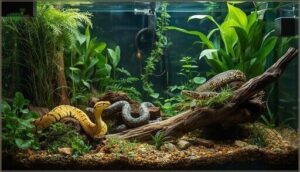
Corn snakes, king snakes, and garter snakes usually reach 4 to 5 feet, though garters often stay smaller at 1 to 3 feet.
Your snake habitat size requirements should provide at least 1.5 times their body length in floor space. A 20-gallon long works for hatchlings, but upgrade to a 40-gallon snake enclosure as they mature to support natural snake behavior and wellness.
Medium Snakes (e.g., Ball Pythons, Milk Snakes)
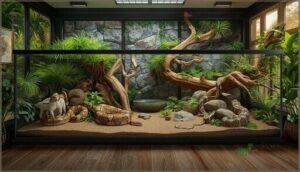
Ball pythons and milk snakes typically reach 4 to 5 feet, demanding more substantial snake habitat planning than smaller species.
Your medium snake enclosure size should provide at least 40 to 60 gallons of floor space—roughly 1.5 to 2 times their body length in linear movement area.
This snake tank size facilitates natural behaviors like stretching, exploring, and thermoregulation essential for proper ball python pet care.
Large Snakes (e.g., Boa Constrictors, Pythons)

Boa constrictors and large pythons demand serious snake habitat design. Adults often exceed 6 to 8 feet, requiring enclosures measuring at least 6 by 3 by 3 feet.
Your snake enclosure must accommodate full-body stretching to support constrictor behavior and prevent python health issues.
Proper habitat size with secure temperature gradients and snake enrichment activities reduces stress, improves large snake feeding responses, and maintains ideal snake tank size for lifelong well-being.
Custom Enclosures for Unique Species

Arboreal green tree pythons and fossorial sand boas can’t thrive in standard boxes. You need species-specific design customized to natural movement—vertical climbing space for tree dwellers, deep custom substrates for burrowers.
Modular enclosures with adjustable shelves adapt as your snake grows. Prioritize escape proofing with secure seals and reinforced corners.
Proper reptile enclosure design matching habitat size to behavior prevents stress and promotes long-term health in specialized collections.
Environmental Controls for Snake Enclosures
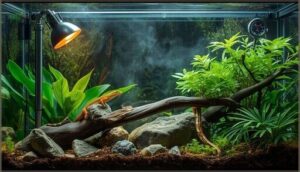
Even with the right enclosure size, your snake won’t thrive without proper environmental controls. Temperature and humidity aren’t optional extras—they’re fundamental to your snake’s survival and health.
Let’s cover the three key environmental systems you need to get right.
Temperature Gradients and Heating Options
Thermal regulation drives everything your snake does, so you need a proper thermal gradient in the enclosure. Set up a heat source—under-tank heaters or ceramic emitters work well—to create a warm basking zone of 88–92°F and a cooler area around 78–82°F.
Always use thermostats to prevent overheating and monitor temperatures with digital thermometers at multiple spots. Gradient control isn’t optional; it’s essential for your snake’s survival.
Humidity Management and Substrate Selection
Once you’ve nailed temperature gradients, humidity control becomes your next priority. Tropical species need 60–80% relative humidity, while desert snakes thrive at 30–50%. Choose appropriate substrate like cypress mulch or coco coir that holds moisture without molding. Use hygrometers to monitor levels in your snake enclosure, and adjust substrate depth for burrowers.
Proper humidity maintains shedding and air quality—core elements of reptile care and habitat design.
Importance of Thermostats and Safety Measures
Temperature control isn’t just about plugging in a heat mat—it’s about creating stable thermal gradients that prevent metabolic stress. Install thermostats on all heat sources to avoid dangerous spikes, and calibrate sensors monthly for accurate readings.
Add emergency backup systems like uninterruptible power supplies during outages. Pair heating and lighting with a secure lid to maintain escapeproof conditions.
Regular safety protocols protect your snake when equipment fails.
Enrichment and Accessories to Maximize Space

A well-sized enclosure means nothing if your snake can’t express natural behaviors inside it. The right accessories and enrichment features transform empty space into a functional habitat that bolsters physical health and mental stimulation.
Let’s examine the essential elements that optimize your enclosure’s usability.
Hides, Climbing Branches, and Basking Areas
Your snake habitat won’t work if you skip the core trio: hides, climbing structures, and basking spots. These aren’t optional—they’re survival tools that directly influence thermal gradients and stress levels in your snake enclosure.
Strategic hide placement and climbing structures create a functional reptile habitat design that facilitates natural behavior:
- Two minimum hides—one warm end, one cool—covering 15–25% of floor space for larger species
- Securely anchored branches with 1–3 inch diameters for smaller snakes, larger for heavy-bodied species
- Non-slip climbing surfaces that support full body weight during vertical movement
- Defined basking spots reaching 28–32°C with stable, heat-radiating surfaces
- Multiple height options for basking that accommodate both diurnal and nocturnal patterns
Position hides and enrichment to maintain clear temperature gradients across zones. Your snake should move freely between microclimates without obstruction—that’s how thermoregulation actually works in practice.
Bioactive Setups and Live Plants
A living ecosystem transforms your reptile habitat design into a self-sustaining vivarium. Bioactive setups integrate microfauna management—springtails and isopods—that process waste while live decor like pothos and snake plants regulate humidity.
You’ll select plants based on lighting requirements and substrate compatibility, avoiding toxic species.
Naturalistic enclosures demand bioactive maintenance: monitor ecosystem balance, trim vegetation, and verify proper drainage. These environmental enrichment strategies reduce cleaning frequency while supporting natural behaviors.
Foraging, Burrowing, and Sensory Enrichment
Complexity unlocks cognition—you’ll improve your reptile habitat and environment through proper enrichment that mirrors natural behaviors. Environmental complexity in your snake enclosure reduces stress and promotes activity.
Introduce foraging techniques using scent trails or puzzle feeders on randomized schedules. Deep burrowing substrates (layered soil and sand) encourage digging, while textured branches and rocks provide sensory stimulation. Ball pythons respond to hide-based scent cues; corn snakes investigate climbing structures.
Monitor animal behavior weekly, adjusting enclosure size and enrichment as needed.
Maintenance and Practical Space Considerations
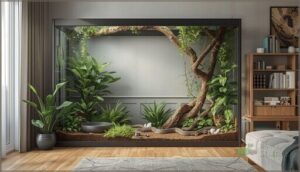
Even the best enclosure won’t stay healthy without a solid maintenance routine. Regular cleaning, water management, and waste removal keep your snake safe from bacteria and stress.
Beyond day-to-day care, you’ll also need to think about the practical side—budget, space in your home, and long-term planning as your snake grows.
Cleaning and Substrate Replacement
A clean home keeps your snake healthy and stress-free. Here’s your maintenance routine for reptile care success:
- Spot-clean feces and urates daily or several times weekly to control odor and bacteria
- Replace appropriate substrate every 2–4 weeks for small enclosures during active shedding periods
- Deep-clean with reptile-safe disinfection methods every 3–6 months
- Monitor humidity control to prevent mold on substrate options like cypress mulch
- Use dedicated tools for pet snake care and maintenance in your snake enclosure
Water Changes and Waste Removal
Fresh water is essential for your snake’s survival. Change water bowls at least twice weekly, and more frequently if your snake soaks or eliminates in it. Daily waste removal is crucial to prevent ammonia buildup, which can threaten respiratory health. In humid enclosures, test water quality regularly to maintain safe ammonia and nitrite levels. The depth of the substrate also plays a role in cleaning ease; while deeper bedding can hide waste, it requires more frequent replacement. Your cleaning schedule directly impacts both animal welfare and enclosure size efficiency.
| Task | Frequency |
|---|---|
| Water bowl changes | 2+ times weekly |
| Waste spot-cleaning | Daily or every few days |
| Substrate inspection | Weekly for deeper layers |
Financial and Space Planning for Snake Owners
Before you bring home your first snake, run a thorough budget analysis that includes enclosure size, heating, and annual care. Initial costs for a proper tank size range from $50 to $400, while monthly maintenance averages $30 to $90.
Financial planning for long-term investment in reptile enclosure design ensures your pet ownership and responsibility doesn’t strain your household. Cost estimation now prevents space optimization headaches later.
Frequently Asked Questions (FAQs)
Can multiple snakes share one enclosure safely?
Most snake species shouldn’t share enclosures due to cohabitation risks like stress, competition, and injury. Even with ample horizontal space, snake compatibility issues arise.
Multi-snake housing demands constant monitoring and identical temperaments—separate housing remains safest.
How often should I upgrade my snakes tank?
Most snakes require Tank Expansion every 2–5 years as Snake Growth accelerates, though some species need upgrades annually.
Monitor Tank Size against body length and Snake Activity levels to minimize Relocation Stress during Enclosure Planning transitions.
Do snakes need vertical or horizontal space more?
It depends on your snake species. Arboreal snakes need vertical space for climbing needs and thermoregulation zones, while terrestrial snakes prioritize horizontal floor area.
However, spatial complexity combining both dimensions aids best reptile enclosure design.
What are signs my snake needs more space?
Like a caged athlete pacing endlessly, your snake may glass-surf, coil along edges, or refuse food—stress behaviors and environmental cues signaling cramped conditions that compromise proper snake posture, reptile enclosure design, and overall pet snake welfare.
Are glass tanks better than plastic tubs?
Visual clarity and thermal efficiency favor glass tanks for reptile enclosure design, while plastic tubs offer portability.
Glass excels in humidity control and durability tests, making it preferable for long-term reptile housing and monitoring.
Conclusion
Think of your snake’s enclosure like a Victorian parlor—constrained spaces breed malaise. Understanding how much space a pet snake needs means committing to dimensions that allow full-body extension, thermoregulation, and natural movement patterns.
You’re not just housing a reptile; you’re creating conditions where instinctive behaviors emerge. The right enclosure size doesn’t guarantee thriving, but inadequate space guarantees stress. Your snake’s physical health and behavioral wellness depend on this single foundational decision.