This site is supported by our readers. We may earn a commission, at no cost to you, if you purchase through links.
A small white patch near your reptile’s gum line can seem harmless—maybe food residue, maybe nothing. But that’s often how mouth rot begins, quietly and without obvious drama.
Infectious stomatitis spreads fast in reptiles, turning minor oral inflammation into deep tissue damage within days. Many owners miss the early signs of mouth rot because the symptoms blend into normal reptile behavior: a little less eating, a little less movement.
By the time pus or facial swelling appears, the infection has already taken hold. Catching it early makes all the difference between a straightforward vet visit and a fight for your animal’s life.
Table Of Contents
- Key Takeaways
- What is Mouth Rot?
- Early Signs of Mouth Rot
- Advanced Symptoms and Complications
- Causes and Risk Factors
- When to Seek Veterinary Care
- Preventing Mouth Rot
- Frequently Asked Questions (FAQs)
- What are the symptoms of mouth rot?
- What does mouth rot look like?
- How do you know if a dragon has mouth rot?
- How do you know if a fish has mouth rot?
- What are the early signs of mouth rot?
- Can mouth rot be cured?
- How to check for mouth rot?
- How long does mouth rot last?
- Can mouth rot spread to other reptiles?
- How long does mouth rot take to heal?
- Conclusion
Key Takeaways
- Mouth rot often starts as a small white or red patch on the gums, and by the time pus or facial swelling appears, the infection has already caused serious damage — so early detection is everything.
- The root causes almost always trace back to husbandry failures: wrong temperatures, poor hygiene, or a nutrient gap that quietly weakens your reptile’s immune system before bacteria ever get the chance to move in.
- Behavioral shifts like skipping meals, hiding more, or flinching when touched near the head are often the first warning signs — showing up before any visible mouth changes do.
- When caught early, mouth rot is curable within a few weeks, but untreated cases can spread to the bloodstream and turn fatal within days, making a prompt vet visit non-negotiable.
What is Mouth Rot?
Mouth rot is a bacterial infection that targets the soft tissues of the mouth — and it’s more common in reptiles and fish than most pet owners realize. It doesn’t show up overnight; it builds quietly until the signs become hard to ignore.
Small injuries like bite wounds or jaw trauma often open the door — you can see exactly how mouth rot develops in snakes from these seemingly minor starting points.
Here’s what you need to know about what it is, which animals are most at risk, and how it takes hold.
Definition and Overview
Mouth rot — medically called infectious stomatitis — is one of the most common oral diseases vets see in captive reptiles. It’s an infection targeting key oral structures: the gums, tongue, and inner lips. This condition is often triggered by poor reptile husbandry, including issues with temperature, humidity, hygiene, and nutrition.
Here’s what defines it:
- Starts as localized inflammation, then spreads deep
- Driven by opportunistic bacteria like Aeromonas or Pseudomonas
- Linked almost entirely to husbandry problems
- Can extend into the jaw or lungs if ignored
Common Species Affected
Any captive reptile can develop this infection, but some face much higher odds. High Risk Snakes — especially ball pythons, boas, and corn snakes — top the list. Common Pet Lizards like bearded dragons and iguanas follow closely. Vulnerable Chelonians, including tortoises and aquatic turtles, round out the most affected captive reptile species.
Understanding these species susceptibility patterns helps you stay one step ahead. In particular, bearded dragon keepers should be aware of bearded dragon mouth rot risks associated with poor habitat conditions, malnutrition, and other stressors.
How Mouth Rot Develops
Knowing which species are at risk is one thing — understanding how infection takes hold is another.
Mouth rot follows a predictable path once it starts:
- Bacterial Entry Points open when rough decor or cage walls create tiny cuts
- The Local Inflammation Phase brings redness, swelling, and pinpoint hemorrhages
- Ulceration And Necrosis follow as opportunistic pathogens destroy soft tissue
- Immune Defense Breakdown occurs when environmental stress or unsanitary living conditions suppress your reptile’s defenses
- Systemic Infection Spread happens fast — bacteria enter the bloodstream, threatening organs
This bacterial infection moves quickly when a weakened immune system can’t keep up.
Early Signs of Mouth Rot
Mouth rot doesn’t always announce itself loudly — it often starts with small, easy-to-miss changes. Catching those early clues is what separates a quick recovery from a serious health crisis.
Knowing the early signs of a sick snake — from subtle posture shifts to off eating — gives you a real head start before mouth rot takes hold.
Here’s what to watch for first.
Visible Changes in The Mouth
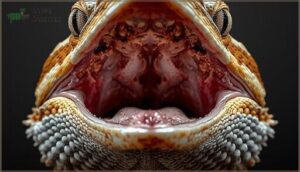
Your reptile’s mouth tells a story before any other symptom appears. Watch for Discolored Oral Tissues — healthy pink turning patchy yellow, gray, or white. Abnormal Oral Coatings, like sticky mucus or firm plaques, signal early infection. Lesions and Ulcers, Lip Margin Damage, and Tooth and Jaw Changes follow fast.
| Visible Change | What You’ll See | Urgency Level |
|---|---|---|
| Discoloration | Yellow, gray, white patches | Moderate |
| Abnormal Coatings | Sticky mucus, firm plaques | Moderate |
| Lesions and Ulcers | Raw sores, tissue erosion | High |
Reddened or Swollen Gums
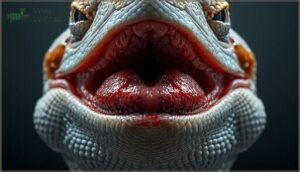
Gum color changes are often the first clue something’s wrong. Healthy gums look pale pink — once they shift to bright red or deep crimson, that’s stomatitis signaling trouble. Localized gum swelling may appear on one side, making the jaw look thicker.
Left unchecked, gum infection progression moves from redness through ulcer development stages into raw, pus-filled sores. Don’t wait on these mouth rot symptoms.
Loss of Appetite and Behavioral Changes

Before you notice anything in the mouth, your animal’s behavior often tells the story first. Early Feeding Hesitation — skipping meals, dropping food mid-bite, or rejecting a Favorite Food — signals oral pain.
Watch for Lethargy and Hiding, Social Withdrawal Signals, and Handling Intolerance Behaviors like flinching when touched near the head.
These behavioral changes are mouth rot symptoms and diagnosis clues you shouldn’t ignore.
Advanced Symptoms and Complications

When mouth rot isn’t caught early, it stops being a mouth problem — and starts becoming a whole-body problem. The infection can move fast, and the signs become harder to ignore.
Here’s what severe mouth rot actually looks like.
Pus, Discharge, and Sores
By this stage, the infection makes itself unmistakably visible. Pus color variations range from off-white to deep yellow, collecting along the gum line like curdled material — a hallmark of stomatitis.
Exudate odor characteristics are distinctly foul, signaling active tissue decay. Oral sore appearance shifts from small blisters to raw ulcers.
Crusted mouth edges and lesion spread patterns confirm advancing bacterial infection requiring immediate care.
Swelling of Mouth and Face
Swelling tells you a lot about how far a bacterial infection has spread. It usually starts at the lips and gum line — subtle at first — then moves into the cheeks and jaw. Facial Asymmetry Indicators like a thicker jaw on one side are hard to miss.
Texture and color shift too: skin looks glossy, tight, even reddened. Swelling Severity Stages escalate fast, eventually impacting breathing.
Systemic Illness and Weight Loss
When mouth rot goes untreated, the infection doesn’t stay local — bacteria enter the bloodstream, triggering Systemic Infection Spread that strains organs far beyond the mouth. Organ Function Decline follows quietly, often before visible Progressive Emaciation Stages appear. Appetite loss deepens nutritional deficiencies, weakening the immune system and reptile health further.
Untreated mouth rot doesn’t stay local — bacteria enter the bloodstream, silently destroying organs from within
- Dehydration And Shock can develop rapidly alongside weight loss
- Systemic infection compromises kidney and liver function simultaneously
- Long-Term Prognosis worsens markedly without early intervention
Causes and Risk Factors
Mouth rot doesn’t just appear out of nowhere — something in your pet’s environment or care routine usually opens the door for it. Understanding what puts your animal at risk is the first step toward keeping them healthy.
Here are the key causes and risk factors you need to know.
Environmental Stressors (Temperature, Humidity)
Temperature Range Errors and humidity mismatches are two of the biggest environmental factors in mouth rot. Chronic Overheating Stress above 95°F weakens your reptile’s tissue defenses, while temps below 75°F suppress immunity just as badly.
Dehydrating Low Humidity cracks delicate oral tissues open to bacteria. Flip that, and Excessive Humidity Exposure breeds pathogens fast.
Monitoring Tank Climate consistently is your first line of defense.
Poor Hygiene and Unsanitary Enclosures
Just as a poorly maintained habitat stresses your reptile’s immune system, it also hands bacteria the perfect breeding ground. Dirty substrate sanitation, water bowl hygiene lapses, and contaminated cage décor all raise cross-contamination risks fast. Fecal buildup and rotting food can spike bacterial counts within 48 hours.
A consistent cleaning schedule frequency isn’t optional — it’s foundational terrarium hygiene and direct environmental impact on reptile health.
Physical Injuries and Immune Suppression
Physical injuries open the door, and a weakened immune system lets bacteria walk right in. Sharp cage décor, live feeder bites, and repeated nose-rubbing create oral trauma pathways that bacteria exploit fast. Chronic stress immunosuppression, nutrient deficiency immunity gaps, and concurrent illness impacts all reduce your reptile’s defenses simultaneously.
Watch for these handling trauma risks and causes of mouth rot in animals:
- Rough handling or forced mouth-opening bruises soft gum tissue, turning minor wounds into infected ulcers.
- Vitamin A deficiency dries the oral lining, cracking surfaces where bacteria settle and spread.
- Systemic illness pulls immune cells away from the mouth, leaving existing injuries dangerously unprotected.
When to Seek Veterinary Care
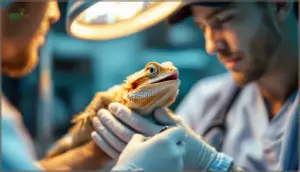
Some symptoms are easy to brush off at first, but a few clear warning signs mean it’s time to stop waiting and call your vet. Knowing which signs cross that line can make the difference between a straightforward treatment and a serious health crisis.
Here’s what to watch for.
Identifying Severe or Persistent Symptoms
Some symptoms go beyond "watch and wait." Severe symptom flags include thick yellow or gray pus packed into the gums, loose teeth, blackened tissue, and open sores that bleed on contact — these signal serious oral damage.
Persistent swelling benchmarks matter too: if jaw swelling lasts more than two days, that’s infection spreading. Lethargy, loss of appetite lasting multiple feeding cycles, and open-mouth breathing are systemic decline clues and respiratory spread signs. Don’t wait.
Importance of Prompt Professional Treatment
Once you’ve spotted those warning signs, acting fast makes all the difference. Early veterinary care for mouth rot delivers real, measurable benefits:
- Faster Recovery Outcomes — Most reptiles resume normal feeding within one to two weeks when antimicrobial therapy starts early.
- Preventing Tissue Destruction — Prompt veterinary intervention stops bacterial toxins before they destroy gums, bone, or surrounding tissue.
- Reducing Systemic Spread — Early supportive care and treatment strategies for mouth rot keep infection from reaching the bloodstream, directly improving Better Survival Rates and Minimizing Treatment Intensity long-term.
Risks of Untreated Mouth Rot
Skipping veterinary intervention doesn’t just slow recovery — it opens the door to serious, cascading health complications. Jawbone destruction, respiratory pneumonia, and septicemia risk are all real endpoints when bacterial infections in animals go unchecked.
Chronic pain reduces appetite, causes rapid weight loss, and directly shortens your reptile’s lifespan.
Systemic infections can turn fatal within days. Animal welfare depends on acting before the damage becomes irreversible.
Preventing Mouth Rot

Mouth rot is largely preventable when you stay consistent with the basics. Most cases trace back to a few avoidable habits — and fixing them isn’t complicated.
Here’s what you can do to keep your animal healthy and your enclosure working in their favor.
Proper Habitat and Enclosure Maintenance
Your enclosure is either your dragon’s best defense or its biggest risk factor. Get the basics right: basking zones at 38–42°C, cool sides at 24–27°C, and stable humidity.
Daily spot-cleaning, proper ventilation and airflow, safe substrate options like paper towels during recovery, and smart hide and décor placement all reduce bacterial buildup.
Solid habitat maintenance for bearded dragons makes mouth rot far less likely.
Nutrition and Immune Support
Diet is your reptile’s first line of defense. Nutritional deficiencies quietly weaken immunity long before mouth rot appears.
- Balanced Species Diet matches natural food types, closing nutrient gaps
- Vitamin A Support keeps mouth tissues smooth and infection-resistant
- Calcium–D3 Balance prevents jaw deformities that invite oral trauma
- Hydration and Healing improves saliva quality, flushing bacteria naturally
- Gut Microbiome Health trains immune cells that fight oral infections
Regular Health Monitoring and Hygiene Practices
Think of preventive care as your reptile’s early warning system. Weekly health checklists covering the mouth, eyes, skin, and behavior catch symptoms of bearded dragon mouth rot before they escalate.
Gentle oral inspections, consistent enclosure cleaning routines, and safe handling hygiene all reduce bacterial risk markedly.
Feeding and behavior logs make subtle changes impossible to miss — keeping oral hygiene in reptiles exactly where it belongs: under control.
Frequently Asked Questions (FAQs)
What are the symptoms of mouth rot?
Mouth rot shows up fast once it takes hold. You’ll notice oral tissue discoloration, excessive drooling, chewing difficulty, abnormal mouth odor, and behavioral changes like refusing food — early signs that demand immediate attention.
What does mouth rot look like?
Early mouth rot looks like red or purple spots on pale pink gums, stringy saliva, and slight swelling — subtle changes most owners miss until the infection has already taken hold.
How do you know if a dragon has mouth rot?
You can spot bearded dragon mouth rot by checking for yellow or gray patches, swollen gums, thick drooling, or appetite loss. These early signs mean it’s time to act fast.
How do you know if a fish has mouth rot?
What does a sick fish actually look like? In fish, identifying mouth rot starts with mouth color changes — pale or grey patches near the lips. Flavobacterium columnare drives cottonmouth disease fast.
What are the early signs of mouth rot?
Watch for subtle color changes on the gums, thickened ropey saliva, minor gum bleeding, feeding hesitation patterns, and mouth rubbing behavior.
These early signs often appear before obvious visible changes or behavioral changes become unmistakable.
Can mouth rot be cured?
Yes, mouth rot is curable — especially when caught early. Mild cases often resolve within three to nine weeks with antibiotics and proper supportive care.
Severe infections involving bone carry a much poorer prognosis.
How to check for mouth rot?
Tilt your reptile’s head gently and check the lip line for redness, crust, or uneven swelling. Look inside for cheesy pus or dark spots — early signs you shouldn’t ignore.
How long does mouth rot last?
Mild mouth rot often clears in 2–3 weeks with prompt treatment. Moderate cases take 3–4 weeks, while severe infections involving bone can stretch recovery to 1–2 months or longer.
Can mouth rot spread to other reptiles?
Mouth rot isn’t classically contagious, but the bacteria behind it can spread through shared enclosures, water bowls, and handling tools — putting other reptiles at real risk if you don’t quarantine and clean promptly.
How long does mouth rot take to heal?
Healing time depends on how early you catch it. With consistent treatment, mild mouth rot often clears in 2–4 weeks. Severe cases can stretch to several months.
Conclusion
A thousand reptile owners have lost animals to something that started as a tiny white spot—completely preventable with the right knowledge. Recognizing the signs of mouth rot early is the single most powerful thing you can do for your reptile’s survival.
Keep their habitat clean, their stress low, and their health monitored. Check that mouth regularly. When something looks off, trust your instincts and call your vet.
Early action saves lives—waiting rarely does.
- https://dakotahillsveterinary.com/2013/12/15/mouth-rot-in-reptiles/
- https://www.petplace.com/article/reptiles/general/mouth-rot-infectious-stomatitis-ulcerative-stomatitis
- https://www.petmd.com/reptile/conditions/mouth/mouth-rot-bearded-dragons
- https://www.anapsid.org/stomatitis.html
- https://www.reptileknowledge.com/reptile-pedia/what-is-mouth-rot-in-lizards