This site is supported by our readers. We may earn a commission, at no cost to you, if you purchase through links.
Your snake hasn’t eaten in two weeks, and you’re starting to worry. Before you panic, understand that healthy snakes regularly refuse food for reasons that have nothing to do with illness—shedding cycles, seasonal breeding behavior, and even minor temperature fluctuations can trigger temporary fasting.
The challenge lies in distinguishing normal appetite loss from symptoms that signal genuine health problems. Weight loss paired with cloudy eyes points to shedding, while wheezing combined with feeding refusal suggests respiratory infection. Learning to read these symptom patterns helps you decide whether to adjust your husbandry practices or schedule an urgent vet visit.
Table Of Contents
- Key Takeaways
- Common Reasons Your Snake Won’t Eat
- Health Problems That Cause Loss of Appetite
- Warning Signs Your Snake is Sick
- Fixing Feeding Problems at Home
- When to See a Reptile Veterinarian
- Frequently Asked Questions (FAQs)
- What should I do if my snake won’t eat?
- What does it mean when a snake refuses to eat?
- What’s the longest a snake has gone without eating?
- Can snakes survive without eating for months?
- Do different snake species have unique feeding patterns?
- Will changing substrate type encourage my snake to eat?
- Should I force-feed a snake refusing food?
- How does prey size affect feeding response?
- Conclusion
Key Takeaways
- Most feeding refusals stem from fixable environmental issues like incorrect temperature gradients (31–35°C warm, 24–27°C cool) or humidity levels outside the 60–75% range, not actual illness.
- Healthy snakes regularly fast during shedding cycles (7–10 days) and breeding seasons (2–5 months for males), making temporary appetite loss normal if body condition stays stable.
- Warning signs requiring urgent veterinary care include wheezing or respiratory distress, weight loss exceeding 10% within four weeks, regurgitation, or neurological symptoms like abnormal posture paired with feeding refusal.
- Track your snake’s weight weekly and temperatures twice daily to distinguish between normal fasting patterns and genuine health emergencies that demand professional intervention within 48 hours.
Common Reasons Your Snake Won’t Eat
When your snake refuses food, it’s usually one of a few predictable culprits—and most of them are straightforward to fix. Environmental issues, natural biological cycles, and stress top the list of common causes.
During shedding, skip feeding entirely—here’s expert guidance on safe meal timing to protect your snake’s health.
Let’s walk through the most frequent reasons so you can pinpoint what’s going on with your pet.
For reptiles especially, regular preventive health screenings can catch early warning signs that most owners miss until symptoms become severe.
Incorrect Temperature or Humidity
Inside your snake’s enclosure, temperature gradients and humidity levels control whether it eats or refuses food entirely. Most species need a warm zone between 31–35°C and a cooler retreat around 24–27°C for proper thermoregulation and digestion.
If your snake still won’t eat despite correct temps, seasonal changes and brumation patterns often explain winter feeding strikes.
When temperatures drop too low or humidity strays from 60–75 percent, feeding refusal and appetite loss follow—your snake’s metabolism slows, environmental stress builds, and climate control becomes critical.
Understanding seasonal appetite changes in snakes helps you distinguish normal winter fasting from stress-driven refusal tied to poor climate settings.
Studies show that appropriate housing, including animal welfare considerations, plays a significant role in supporting healthy behaviors and feeding responses.
Shedding Cycle
A few days before your snake sheds its skin, you’ll notice it refuses food completely—this temporary fast is a natural protective response during a vulnerable period. Research has shown that differences in can markedly impact their growth and health. During ecdysis care, cloudy eyes and dull scales signal the shedding process has begun. Most snakes won’t eat for 7–10 days until moulting problems resolve and new skin emerges—this reptile care pattern repeats every 4–8 weeks depending on age and growth rate.
Breeding Season
Unlike shedding, hormonal changes trigger reproductive behavior that suppresses your snake’s appetite for months—not days. Male ball pythons commonly fast 2–5 months during breeding cycles, driven by elevated testosterone and mate-seeking activity. Females often refuse food during ovulation and late pregnancy. This seasonal fasting is normal if body condition stays stable:
- Males become hyperactive and patrol constantly
- Appetite suppression overrides normal hunger cues
- Breeding season timing varies by species and region
- Tropical snakes may fast year-round when hormones peak
- Weight loss signals problems beyond normal reproductive fasting
Stress From Handling or Environment Changes
Beyond hormones, your hands can be the problem. Snakes perceive frequent handling and sudden cage changes as threats that shut down appetite for days to weeks.
When you move your snake to a new enclosure or handle it heavily, familiar scent cues vanish—triggering heightened alertness instead of feeding response.
Minimize handling during shift periods and keep feeding schedules predictable to reduce Environmental Stress and restore normal snake behavior.
Improper Enclosure Setup
Even in your cleanest enclosure, design flaws sabotage appetite. Temperature gradients that lack a 10°F spread, humidity levels mismatched to species needs, and sparse hiding cover all trigger chronic refusal—because your snake can’t thermoregulate, hydrate properly, or feel secure enough to hunt.
Fix these five enclosure design errors first:
- Insufficient thermal gradient between warm and cool zones
- Wrong substrate type causing irritation or impaction risk
- Inadequate hiding places on both temperature sides
- Poor lighting cycles disrupting circadian feeding cues
- Undersized enclosure preventing normal thermoregulation behavior
Health Problems That Cause Loss of Appetite

Sometimes your snake’s refusal to eat isn’t about husbandry—it’s about health. Illness can shut down appetite fast, and the underlying conditions range from infections you can spot to internal problems you can’t see without help.
Here are the most common health issues that cause snakes to stop eating.
Respiratory Infections
Respiratory infections rank among the most serious causes of appetite loss in snakes. You’ll notice wheezing, open-mouth breathing, or mucus bubbles around the nostrils—classic infection symptoms signaling snake pneumonia.
If your boa shows these warning signs alongside refusing food, check our complete boa species care guide for proper husbandry adjustments that support respiratory health.
Breathing issues that start mild can progress to respiratory failure within days if left untreated. This respiratory disease demands immediate veterinary care, as bacterial and viral pathogens won’t resolve without proper intervention.
Mouth Rot
Mouth rot—technically called infectious stomatitis—creates painful lesions that make every meal feel like chewing glass for your snake. You’ll spot redness, swelling, or cheesy discharge along the gum line—bacterial mouth infections that fungal diseases can complicate.
Jaw problems develop as tissue damage worsens. This oral infection requires immediate veterinary care with antibiotics and proper dental care protocols to restore your snake’s appetite and prevent systemic reptile health complications.
Intestinal Parasites
Invisible invaders in your snake’s digestive tract steal nutrients meal after meal, leaving your pet progressively weaker despite a consistent feeding schedule.
Intestinal parasites cause weight loss and lethargy that veterinary care treats through proper parasite diagnosis. Your vet performs fecal exams to identify roundworms, hookworms, or protozoa disrupting gut health.
Deworming methods target specific parasites without creating intestinal blockage, breaking the parasite life cycle before reptile health deteriorates further.
Metabolic Bone Disease
Calcium deficiency silently weakens your snake’s skeleton over months, eventually making every movement painful and feeding impossible. Metabolic bone disease creates bone deformities you’ll notice through:
- Jaw misalignment preventing prey capture
- Spinal curvature affecting movement
- Tremors during handling
- Soft, rubbery bones
- Complete feeding refusal
Your vet corrects mineral imbalance through dietary supplements containing vitamin D3, restoring snake health before permanent damage occurs.
Physical Injuries
Trauma from rough handling, escape attempts, or enclosure hazards can leave your snake too injured to swallow prey comfortably. Check for bleeding, swelling, or abnormal positioning that signals fracture management needs.
| Injury Type | Feeding Impact |
|---|---|
| Jaw fractures | Complete food refusal |
| Rib damage | Pain during swallowing |
| Burns/abrasions | Infection risk affecting appetite |
Wound healing requires surgical repair for severe cases—don’t wait when your snake won’t eat after visible trauma.
Warning Signs Your Snake is Sick
A snake that stops eating might be perfectly healthy, or it could be your first clue that something’s seriously wrong.
The key is knowing what other symptoms to watch for alongside appetite loss.
Here are the warning signs that mean it’s time to take action.
Weight Loss and Sunken Eyes
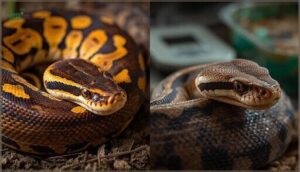
Two critical dehydration signs and malnutrition effects you can spot immediately are weight loss and sunken eyes—especially when your snake won’t eat for extended periods. These visible changes often signal serious underlying reptile nutrition problems or environmental factors gone wrong.
Track these health monitoring basics:
- Weigh your snake monthly—10% loss within four weeks demands veterinary attention
- Check eye appearance—sunken, dull eyes indicate dehydration or reduced tissue turgor
- Monitor body condition—visible ribs or spine suggest prolonged appetite loss
Lethargy and Reduced Activity
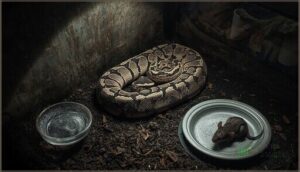
When your snake stops eating, watch for reduced activity alongside appetite loss—this combination signals illness. Healthy snakes explore, bask, and respond to handling during active hours.
A lethargic snake that won’t eat remains motionless, ignores prey, and hides constantly. Check environmental factors first: thermal stress from incorrect temperatures slows metabolism, while dehydration signs like sunken eyes compound feeding refusal.
Activity monitoring reveals whether husbandry or health needs correction.
Wheezing and Breathing Difficulties

If you’ve noticed your snake slowing down and skipping meals, keep an ear out for wheezing or labored breaths—these sounds often point to deeper trouble brewing in their lungs. Respiratory infections cause mucus buildup, creating audible breathing problems that demand immediate veterinary care.
Watch for these warning signs alongside inappetence:
- Open-mouth breathing or head elevation while resting
- Bubbles around nostrils or mouth indicating airway obstructions
- Clicking sounds during respiration suggesting tracheal infections
Pulmonary disease progresses quickly in reptiles—don’t wait.
Regurgitation or Vomiting
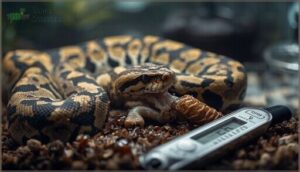
When your snake brings up partially digested prey hours or days after feeding, you’re witnessing more than just an upset stomach—you’re seeing a red flag that demands your attention.
Regurgitation signs include undigested prey appearing 12-48 hours post-feeding, while vomiting brings up clear fluid or mucus. Both digestive issues stem from handling too soon after meals, incorrect temperatures (below 75°F), or underlying stomach problems requiring immediate veterinary assessment.
Abnormal Posture or Movement

Your normally graceful serpent suddenly looks like it’s struggling through invisible quicksand—that unnatural stiffness or weakness tells you something’s gone seriously wrong with its nervous system or muscles.
Neurological signs pointing to critical reptile health issues include:
- Muscle spasms or involuntary twitching during rest
- Abnormal gait with wobbling or tilting motions
- Posture changes like holding the head at strange angles
- Movement disorders with uncoordinated striking attempts
These symptoms demand immediate veterinary attention.
Fixing Feeding Problems at Home

Most feeding issues stem from environmental problems you can fix without a vet visit. Start by tackling the basics—temperature, humidity, and prey presentation—since these account for roughly 80% of appetite problems in healthy snakes.
Here’s what you can adjust at home to get your snake eating again.
Adjusting Temperature and Humidity Levels
Think of thermal gradients as your snake’s internal thermostat—without proper temperature zones (warm side 85-95°F, cool side 70-80°F), digestion stalls and appetite loss occurs. Humidity control matters equally: ball pythons need 40-70% to maintain respiratory health. Use multiple thermometers to verify actual conditions rather than guessing.
| Parameter | Recommended Range |
|---|---|
| Warm zone temperature | 85-95°F |
| Cool zone temperature | 70-80°F |
| Ball python humidity | 40-70% |
| Tropical species humidity | 60-80% |
Temperature monitoring prevents feeding refusal—rheostats fine-tune heat sources while thermostats prevent overheating. For humidity levels, mist daily with dechlorinated water and use moisture-retaining substrates like coconut fiber. Proper enclosure design and climate management resolve most cases where your snake won’t eat without medication.
Trying Different Prey Types
Switching from mice to rats—or vice versa—can flip a reluctant eater into an enthusiastic hunter within minutes. Try different prey colors (white, brown, or black) since some snakes won’t eat based on visual cues alone.
Improve prey presentation with chicken broth on frozen-thawed items—this feeding strategy mimics natural scent trails. When your snake won’t eat, prey variety often solves feeding refusal faster than environmental tweaks.
Warming Prey Properly
Cold prey triggers the same response in your snake as a rubber toy would—zero interest, zero feeding instinct.
Cold prey triggers zero feeding instinct in snakes—just like offering them a rubber toy
Heat frozen-thawed prey to 98-102°F using warm water—this thermal stimulation mimics live body temperature and triggers appetite enhancement through your snake’s heat-sensing pits. Verify prey presentation temperature with an infrared thermometer before offering.
Proper prey temperature converts feeding refusal into immediate strikes within seconds.
Reducing Stress During Feeding
Snakes experience feeding anxiety just like you might feel uncomfortable eating at a crowded, noisy restaurant. Create a calming feeding environment that eliminates stress triggers and stimulates appetite through gentle handling techniques.
- Dim the lights during feeding sessions to reduce visual overstimulation
- Minimize noise from household activities and vibrations
- Cover three sides of the enclosure with towels for privacy
- Avoid handling for 24-48 hours before offering prey
- Remove cage-mates temporarily to prevent competition stress
Creating a Feeding Schedule
Establishing a consistent feeding routine helps your snake’s digestive system function predictably, much like how you feel hungrier when meals arrive at expected times. Match feeding frequency to your snake’s age and species requirements—juveniles need weekly meals, while adults thrive on 10-14 day intervals.
| Snake Age | Feeding Frequency | Prey Size |
|---|---|---|
| Hatchling | Every 5-7 days | Pinkie mice |
| Juvenile | Every 7-10 days | Fuzzy-hopper |
| Adult | Every 10-14 days | Adult rodent |
| Senior | Every 14-21 days | Smaller prey |
Track meal timing and appetite loss patterns in a feeding log. This documentation helps identify feeding refusal early and guides appropriate prey presentation adjustments when your snake won’t eat.
When to See a Reptile Veterinarian

Sometimes home fixes aren’t enough, and waiting too long can turn a manageable problem into a medical emergency. Knowing when your snake needs professional care can save its life.
Watch for these red flags that mean it’s time to call a reptile veterinarian.
Prolonged Refusal Beyond Normal Fasting
Most species can skip meals for weeks, but your snake’s safe fasting threshold depends heavily on size and species. Ball pythons often tolerate 1–3 months; corn snakes manage 4–8 weeks.
Beyond these windows—or if you see more than 10% weight loss—feeding refusal shifts from normal appetite loss to genuine anorexia signs. Prolonged starvation effects include organ damage and dehydration risks that demand urgent rehydration methods and veterinary care.
Concurrent Symptoms With Appetite Loss
When appetite loss arrives with vomiting, wheezing, or blood in the stool, you’re looking at gastrointestinal problems or respiratory issues that need immediate attention.
Neurologic signs—head tilts, poor coordination, muscle tremors—alongside feeding refusal often signal serious systemic infections. Dermatologic lesions, mouth rot, or visible mites combined with snake won’t eat behavior? That cluster demands veterinary diagnosis, not home troubleshooting.
Visible Dehydration Signs
Sunken eyes and skin that doesn’t snap back after you gently pinch it tell you dehydration has moved past the early stages. Dry mouth with sticky mucus, weight loss, and wrinkled skin layer additional evidence that your snake needs professional intervention.
Dehydration symptoms requiring immediate veterinary attention:
- Oral mucus that’s thick, ropy, or discolored
- Eyes recessed noticeably into the skull
- Skin remaining tented after gentle manipulation
- Progressive weight decline despite adequate prey offerings
Sudden Behavioral Changes
Your normally calm ball python that suddenly strikes at the glass or refuses to leave its hide signals something’s wrong beyond simple feeding reluctance. Dramatic shifts in snake behavior and psychology—constant hiding, defensive postures, or erratic movement—point to environmental triggers or stress factors affecting both appetite loss and overall well-being.
These behavioral cues demand veterinary assessment to identify underlying health problems or habitat changes.
Frequently Asked Questions (FAQs)
What should I do if my snake won’t eat?
First, verify your enclosure temperature is correct using a reliable thermometer. Minimize handling for 24 to 48 hours. Document changes in weight and behavior, then adjust your feeding schedule if needed.
What does it mean when a snake refuses to eat?
When a snake refuses food, it signals either normal fasting behavior—healthy adults can skip meals for two to three months—or underlying issues like poor husbandry, stress, or illness requiring veterinary attention.
What’s the longest a snake has gone without eating?
In captivity, healthy ball pythons have survived food deprivation exceeding 12 months, though wild fasting records reach 2+ years for some species.
However, prolonged appetite loss always requires veterinary evaluation to rule out illness.
Can snakes survive without eating for months?
Yes, but surviving isn’t thriving—fasting adaptations allow some species to endure six months through metabolic rates dropping 70%, yet weight loss beyond 10% crosses starvation thresholds where snake physiology shifts from survival strategies to organ failure.
Do different snake species have unique feeding patterns?
Absolutely. Ball pythons often fast for months during breeding season, while corn snakes maintain consistent weekly feeding cycles.
Species-specific dietary needs vary dramatically—arboreal species prefer birds; aquatic snakes require fish—making habitat influence critical to feeding strategies.
Will changing substrate type encourage my snake to eat?
Substrate quality alone won’t solve appetite loss, but dusty or irritating materials can worsen respiratory issues affecting snake health.
Switch to paper towels or cypress mulch if current substrate causes discomfort or impacts overall enclosure design.
Should I force-feed a snake refusing food?
Never force-feed your snake without veterinary guidance. Improper feeding techniques can cause serious injuries, aspiration pneumonia, or increased stress.
A vet will determine if assisted feeding is truly necessary for your snake’s health.
How does prey size affect feeding response?
You’ve hit the nail on the head—prey size limits directly shape feeding response triggers through gape limitation effects.
Ideal prey range (10-30% body mass) maximizes strike probability while minimizing handling effort costs and regurgitation risk.
Conclusion
Trust your instincts, but verify the facts. When your snake won’t eat symptoms appear, methodical observation beats guesswork—track weight weekly, measure temperatures twice daily, and photograph any physical changes.
Most feeding refusals resolve through simple husbandry adjustments within 2-3 weeks. The snakes showing respiratory distress, rapid weight loss, or concurrent lethargy need veterinary intervention within 48 hours. Your willingness to investigate rather than wait separates temporary fasting from preventable tragedy.