This site is supported by our readers. We may earn a commission, at no cost to you, if you purchase through links.
A snake that won’t stop musking, striking at the air, or pressing its nose raw against the glass isn’t being difficult — it’s scared. Snakes can’t exactly tell you what’s wrong, so stress comes out in behavior, and most people misread it as aggression.
The two look similar but need completely different responses. Getting that distinction right is what separates a snake that eventually settles into a calm pet from one that stays a nervous wreck for years. Understanding what triggers stress — and how to fix it — makes all the difference when you’re trying to calm a nervous snake down.
Table Of Contents
- Key Takeaways
- Recognizing Signs of a Nervous Snake
- Creating a Calming Snake Environment
- Step-by-Step Handling Techniques
- Adjusting Care to Reduce Snake Stress
- When to Seek Professional Help
- Frequently Asked Questions (FAQs)
- How to handle a nervous snake?
- How do I calm my snake down?
- How to get a snake to stop striking?
- How to reduce stress in snakes?
- Can music or white noise soothe snakes?
- Do snakes recognize their owners over time?
- How does shedding affect a snakes mood?
- Can handling a snake after feeding cause stress?
- Do certain colors or lights stress snakes out?
- Conclusion
Key Takeaways
- Snake stress and aggression look almost identical, but they need completely different responses — misreading the two is the most common reason a nervous snake never settles.
- A snug hide, stable temps, and covered enclosure sides do most of the calming work before you ever pick your snake up.
- Short, consistent handling sessions — 5 minutes, a few times a week — build trust far faster than longer, less predictable ones.
- When stress signs like open-mouth breathing, nose damage, or appetite loss stick around for weeks, it’s time to stop troubleshooting and call a reptile vet.
Recognizing Signs of a Nervous Snake
Before you can calm a nervous snake, you need to know what nervous actually looks like.
A stressed snake might hiss, freeze up, or coil defensively — behaviors covered in this boa constrictor stress and body language guide that makes reading the signs a lot easier.
Snakes can’t exactly tap you on the shoulder and tell you they’re stressed — so their body does the talking.
Here’s what to watch for.
Common Behavioral Indicators
Reading your snake’s body language is half the battle. A nervous snake rarely hides its feelings — if you know what to look for.
Watch for these stress signals:
- Frantic escape behavior, like nonstop wall-pushing
- Defensive posturing with the front body coiled back
- Hyper alertness and rigid, tense muscles
- Tail thrashing against enclosure surfaces
- Sudden freezing while tracking your every move
Understanding these actions can help you identify relaxed versus stress signals and react appropriately.
Physical Signs of Stress
Behavioral clues are telling, but physical signs of snake stress can be even harder to ignore. Your snake’s body keeps score — and it shows.
| Physical Sign | What It Means |
|---|---|
| Breathing Changes | Rapid or open-mouth breathing signals distress |
| Muscle Tension | Stiff, rigid body means the snake feels threatened |
| Skin Problems | Stuck shed or wrinkled skin suggests chronic stress |
| Eye Issues | Sunken, dull eyes often point to dehydration from stress |
| Nose Damage | Scuffed snout scales from repeated escape attempts |
Understanding environmental factors affecting stress can help you identify and address the root causes to keep your snake healthier.
Differences by Snake Species
Not every snake reads from the same script. Snake behavior and species traits vary a lot — a ball python freezes and curls into a ball when scared, while a corn snake bolts in every direction at once.
Getting a feel for your specific snake’s quirks makes a real difference, and these snake handling tips for building trust and bonding can help you figure out what actually works for your individual animal.
Kingsnakes musk and thrash. Boas go rigid. Knowing your snake’s breed differences shapes your handling tips, care variations, and overall reptile care approach.
Creating a Calming Snake Environment

Your snake’s enclosure isn’t just a tank — it’s their whole world, and the setup matters more than most people realize.
A few smart changes can make the difference between a snake that’s constantly on edge and one that actually settles in.
Here’s what to focus on.
Providing Secure Hiding Spaces
Think of a hide as your snake’s safe room — and hide size optimization matters more than most keepers realize. A snug fit, where the snake touches the walls on most sides, triggers a calm response almost immediately.
For snake hide placement, tuck one on the warm side, one on the cool side. Use smooth, easy-clean calming hide materials like PVC or resin, and add visual barrier effects with opaque panels nearby to complete a truly secure enclosure design.
Maintaining Optimal Temperature and Humidity
Temperature and humidity are two thermal levers you control — and your snake feels every shift. A proper thermal gradient means a warm hide around 88 to 92°F for ball pythons, with a cooler zone near 78°F on the other end.
Use reliable tools and moisture-retaining substrates for humidity control. Stable snake enclosure conditions make nervous snakes noticeably calmer, faster.
Minimizing Noise, Vibrations, and Distractions
Beyond temperature, your snake feels the whole room. Vibration reduction starts with placement — keep the enclosure off the floor, away from speakers, and out of high-traffic zones.
Noise minimization matters too: close the door during vacuuming or loud gatherings. A quiet enclosure creates calm environments that support better snake behavior, making every snake handling session easier for both of you.
Visual Barriers for Security
Glass tanks feel like fishbowls to a nervous snake — exposed from every angle. Smart enclosure design flips that. Cover three sides with black foam board or contact paper, add a textured background, and throw in some visual clutter like artificial plants near the front glass.
Here’s what works best for calming environments:
- Background options: Cork, foam, or printed rock panels absorb reflections and give snake behavior something natural to orient to.
- Secure hides: One on each end — warm and cool — so your snake always has a safe retreat.
- Side covers: Opaque material on the back and sides cuts the “fishbowl” effect dramatically.
- Plant cover: Leafy décor near the front lets the snake sit close without feeling watched.
Better reptile care and management starts with less glass, more cover.
Step-by-Step Handling Techniques
How you pick up your snake matters more than most people realize.
A nervous snake doesn’t need perfect technique right away — it needs consistency and a handler who isn’t rushing.
Here’s what that actually looks like in practice.
Approaching Your Snake Calmly

Your approach is everything — snakes key in on sudden motion, so slow movements and predictable actions are your first tools. Come from the side, not above. Pause when your snake notices you, then continue steadily. Soft voices and a calm environment help too. Think of it like not startling a cat napping in a sunbeam.
Approach your snake from the side, slow and steady — sudden motion is the only thing working against you
| Approach Element | Do This | Avoid This |
|---|---|---|
| Movement speed | Slow, steady hands | Quick, jerky motions |
| Entry angle | Side of body | Directly overhead |
| Sound level | Soft voices, quiet room | Loud speech, sudden noise |
Using Gentle and Supportive Handling

Once you’re in, how you hold your snake matters as much as how you got there. Good snake handling comes down to three calming techniques:
- Use full body support — cradle at least a third of their length so they don’t feel like they’re falling.
- Keep a loose relaxed grip — guide, don’t pin.
- Practice head neck safety — redirect gently, never grab.
Natural movement follows when your snake feels secure, not restrained.
Limiting Handling Frequency and Duration
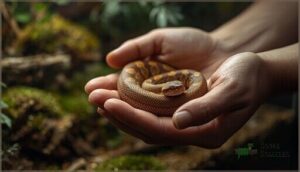
Less is genuinely more in the context of snake handling. For nervous snakes, start with 5-minute sessions — that’s your handling limit while they’re still adjusting.
Choosing the right hook matters just as much as timing your sessions, and this guide on training a snake to accept hook handling walks through how to introduce it without triggering stress.
Frequency control matters too: aim for 2 to 4 times weekly, never daily. Skip handling for 48 hours after feeding.
These stress management boundaries feel small, but consistent, gentle approach sessions build real trust over time.
Hook Training for Nervous Snakes
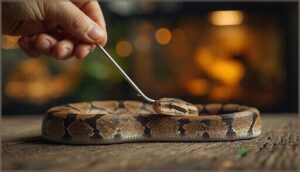
Hook training takes snake handling from guesswork to a clear, predictable routine your nervous snake can actually learn. Pick the right hook first — hook selection matters. A lightweight aluminum hook suits most small to medium snakes, while larger boas need something sturdier.
Here’s what good hook training looks like in practice:
- Touch the mid-body gently — never the head — to signal handling time, not feeding time
- Approach from the side so your snake’s predator instincts stay quiet
- Wait a few seconds after the cue before lifting, giving the snake a moment to register what’s happening
- Use slow, steady movements — quick jerks flip a curious snake straight into defensive mode
- Stay consistent with the routine, because predictability is the foundation of calming strategies that actually stick
Adjusting Care to Reduce Snake Stress

Handling is just one piece of the puzzle — how you care for your snake day-to-day matters just as much.
Small changes to routine and environment can make a surprisingly big difference in how relaxed your snake feels overall.
Here are a few key areas worth looking at.
Consistent Feeding and Routine
Snakes thrive on predictability — and a consistent feeding schedule is one of the simplest calming strategies you can use. Stick to the same day, time, and prey size each week.
Most adult snakes do well every 7 to 10 days. A steady routine in snake care removes the guesswork, settles snake behavior, and makes meal planning a genuine stress reduction tool.
Monitoring Behavior and Activity Changes
Beyond feeding schedules, tracking your snake’s behavior patterns is just as telling. Keep a simple log — phone notes work fine. Jot down activity tracking details like when it hides, roams, or glass-surfs.
Environmental factors like a moved enclosure or new décor often explain sudden stress signals. Spotting these shifts early makes calming techniques and smarter snake handling decisions so much easier.
Enclosure Enrichment and Comfort
Your snake enclosure itself does a lot of the calming work. Substrate options like coconut fiber let nervous snakes burrow and feel hidden — that alone reduces stress fast.
Add climbing structures for arboreal species, visual barriers along the glass, and solid thermal gradients with two snug hides. Good humidity control, minimal foot traffic, and smart environmental enrichment round out your reptile care and management toolkit.
When to Seek Professional Help
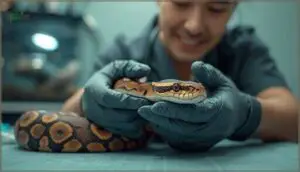
Sometimes, no matter how patient you’re, a snake’s stress levels go beyond what better husbandry can fix.
Persistent symptoms or worrying behavior changes are your cue to bring in a reptile vet. Here’s when it’s time to stop troubleshooting on your own and call a reptile vet.
Persistent Signs of Stress or Illness
Some stress signals aren’t just quirks — they’re your snake telling you something is wrong. Ongoing behavioral changes like constant hiding, chronic glass surfing, or persistent open-mouth breathing point to more than anxiety.
Watch for dehydration signs, respiratory issues, and appetite loss stretching past four weeks. Effective snake stress reduction starts with health monitoring. When symptoms stack up and linger, a reptile vet isn’t optional.
Unusual Aggression or Self-Injury
Aggression that comes out of nowhere is a red flag worth taking seriously. Cage aggression, sudden striking, or snake biting itself — these aren’t personality quirks. They’re distress signals tied to real causes.
Watch for these Environmental Stressors and Self Injury Causes:
- Striking at the glass the moment the enclosure opens
- Tail biting, especially during shedding
- Nose rubbing until scales bleed
- Defensive behaviors triggered by temperature extremes
- Sudden aggression after enclosure changes
Finding a Reptile Veterinarian
Finding the right vet for your snake isn’t as hard as it sounds. Start with the Association of Reptile and Amphibian Veterinarians directory — it filters by location and confirms vet credentials in reptile care.
Check clinic reviews on Yelp or ReptiFiles for real feedback. Ask about emergency services and specialist referrals upfront. Snake health moves fast, so know your options before you need them.
Frequently Asked Questions (FAQs)
How to handle a nervous snake?
Believe it or not, the gentlest snake handling tips start before you even touch the animal.
Slide one hand under the front third, support the midsection with the other — slow, steady, done.
How do I calm my snake down?
Calming a nervous snake comes down to patience and consistency. Slow your movements, keep sessions short, and support its body fully.
Over time, gentle handling and a secure enclosure do most of the work.
How to get a snake to stop striking?
Most strikes are just a scared snake saying “back off.”
Approach from the side, move slowly, and use a hook tap first — those three steps alone cut most defensive behaviors fast.
How to reduce stress in snakes?
Snake stress reduction starts with getting the basics right — proper snake care, stable temps, snug hides, and consistent routine.
Gradual acclimation, lighting adjustments, and meeting dietary needs all support long-term reptile welfare.
Can music or white noise soothe snakes?
Not exactly. Snake hearing is built for vibration, not melody — so sound therapy has real limits.
White noise kept low and far from the tank may soften sudden household sounds, but loud music often adds stress, not Snake Stress Reduction.
Do snakes recognize their owners over time?
Sort of — but not the way your dog does.
Through scent memory and repeated snake handling, your pet snake builds familiarity with you via reptile cognition and habituation process, not owner bonding or emotional attachment.
How does shedding affect a snakes mood?
Shedding behavior brings real mood changes. Your snake’s irritability factors are simple — blurry vision from the blue phase makes everything feel threatening.
Boost humidity, skip handling, and most snake stress responses fade once the shed is complete.
Can handling a snake after feeding cause stress?
Absolutely — handling right after a meal can wreck your snake’s entire digestion process.
Post feeding stress spikes fast, raising regurgitation risks within 24 to 48 hours.
Smart snake care and management means keeping handling techniques on pause until digestion settles.
Do certain colors or lights stress snakes out?
Yes — light intensity and color both affect snake behavior.
Most snakes have limited color vision, but they’re sensitive to brightness and blue-rich light, which can trigger stress responses and disrupt normal activity patterns.
Conclusion
Trust is a slow drip, not a flood — and that’s exactly how you calm a nervous snake down. Every quiet session, every consistent feeding, every hide box placed just right adds another drop.
Your snake isn’t broken; it’s just waiting for proof that you’re safe. Give it time, keep the routine steady, and one day you’ll realize the striking has stopped. That’s not luck. That’s patience doing its job.
- https://www.behavioreducation.org/post/minimizing-transition-stress-for-snakes-a-guide-to-low-stress-home-and-habitat-changes
- https://journal.iaabcfoundation.org/enrichment-for-snakes/
- http://www.delphihealthgroup.com/
- https://faseb.onlinelibrary.wiley.com/doi/10.1096/fasebj.2018.32.1_supplement.878.10
- https://www.mdpi.com/2072-6643/8/1/53