This site is supported by our readers. We may earn a commission, at no cost to you, if you purchase through links.

Most snakes aren’t born mean — they’re shaped by genetics, experience, and how we treat them. A ball python curled like a sleepy knot in your hands behaves worlds apart from a wild-caught corn snake still learning to trust its new life indoors.
The calmer a snake feels, the safer and smoother daily care becomes. For first-time keepers, that difference can turn nervous encounters into quiet confidence.
Knowing which species naturally carry the best beginner snake temperament — and what influences that behavior — helps you start your reptile journey with gentle handling, steady routines, and mutual comfort.
Table Of Contents
Key Takeaways
- Ball pythons top beginner choices with their shy, curling defense and manageable 3-5 foot size.
- Corn snakes offer easygoing, docile temperaments that shift from cautious to curious with gentle handling.
- Captive-bred snakes adapt faster to captivity than wild-caught ones, showing lower stress and better handling tolerance.
- Proper handling starts with short 5-10 minute sessions using full body support to build trust and calm behavior.
What is Snake Temperament?
A snake’s temperament is basically its personality—how calm, curious, or defensive it often is. It’s shaped by things like species, age, and how it’s been handled over time. Knowing what affects temperament helps you choose the right setup and care routine for your snake.
You can also check out this guide on how to tame a snake and build trust through handling for practical ways to encourage a calmer temperament.
Defining Temperament in Pet Snakes
Snake temperament is simply how your snake typically acts across situations over time—its usual mood and style, not a single moment. It sits on a Temperament Spectrum from shy and defensive to bold and curious, shaping Reptile Temperament and Behavior and overall Snake Behavior and Temperament, including how much Docile Behavior you see and how they cope with handling.
- Temperament is an Animal Temperament trait, present from birth with a strong Genetic Basis.
- It shows in Handling Tolerance: some snakes stay relaxed during gentle, regular handling while others react quickly.
- Defensive Responses, like musking or rapid strikes, mark the “shy” end of the Snake Temperament spectrum.
- Bold snakes explore more, tongue-flick often, and accept interaction more easily.
- Understanding Snake Temperament and Behavior helps you choose and work with a species that matches your comfort level.
Because habitat issues are a major source of stress for many pet snakes, learning to recognize can make handling safer and more predictable.
Factors Influencing Snake Behavior
Several factors shape your snake’s temperament beyond its base personality. Species genetics set the stage—ball pythons stay calmer than flighty types. Early handling builds trust; rough grabs make them defensive. Health status, feeding cycles, and hormonal balance tweak Snake Behavior and Temperament daily.
| Factor | Impact on Temperament |
|---|---|
| CaptiveBred vs WildCaught | CaptiveBred chill out faster with Handling Techniques |
| Early Handling | Gentle sessions = bold explorers |
| Health Status | Illness sparks hiding or strikes |
Environment seals it—steady temps keep stress low.
Why Temperament Matters for Beginners
When your setup is right, the next big piece is Snake Temperament—and this is where beginners either relax or quit. With Beginner Snakes that show Docile Behavior, Bite Prevention becomes almost automatic, so you can focus on Handling Confidence instead of “what if it bites?”
You’ll read Stress Signals sooner, enjoy long-term handling, and actually look forward to holding an easy-to-handle pet. Calm, predictable confident snake handling techniques also help reduce defensive reactions and stress for your snake.
Key Traits of Beginner-Friendly Snakes
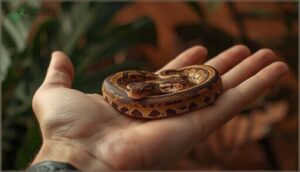
When choosing your first snake, it helps to know what makes some species easier to live with than others.
For a quick overview of beginner-friendly breeds, check out this guide to the most popular pet snake species and their temperaments.
Beginner-friendly snakes share a few simple traits that make them calm, manageable, and easy to care for. Let’s take a closer look at what those traits are.
Docility and Calmness
Want Beginner Snakes that actually feel relaxed in your hands? Look for clear Calmness Indicators: slow exploring, steady tongue flicks, and no frantic escape attempts. Docile Behavior means they’d rather hide or “freeze” than bite, which helps with Preventing Jumpy reactions as you’re Building Trust.
When Stress Responses like nose rubbing or pacing pop up, adjust your Handling Techniques and setup so your snake stays easy to handle and keeps a stable Snake Temperament.
Ease of Handling and Care
Usually, the Beginner Snakes that feel easiest to live with are the ones that fit your life, not fight it. You’ll want a simple Snake Care and Handling routine: clear Feeding Routines, predictable Handling Frequency, and quick Enclosure Cleaning you can stick to.
With Safe Pickup and calm, Docile Behavior, Snake Handling and basic Reptile Husbandry stay manageable instead of stressful.
Adaptability to Captivity
Captive-bred snakes shine here—they adjust fast to your home setup, showing solid Stress Tolerance and Feeding Consistency right away. Look for Adjustment Cues like calm exploration and steady eating, signs of great Snake Adaptability and Beginner Snake Characteristics.
With proper Sourcing, Enclosure Comfort, and gentle Snake Handling and Behavior, their Snake Temperament stays relaxed for years.
Top Snake Species With Gentle Temperament
Some snakes are just known for being naturally calm and easy to handle. These species tend to stay relaxed even when you’re still learning the ropes.
Here are a few gentle snakes that make great companions for beginners.
Ball Pythons
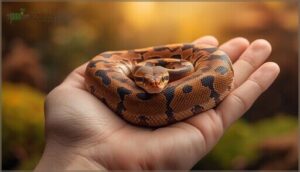
Ball pythons are the classic “confidence booster” for new keepers, thanks to their shy disposition and beginner reliability. As beginner snakes, they usually curl into a ball when nervous instead of striking and stay a manageable size of about 3–5 feet, so they’re easy to handle. With gentle handling and calm, predictable snake temperament, they make snake handling feel safe fast.
Ball pythons are calm, beginner-friendly snakes that curl up when nervous, making handling feel safe and simple
Corn Snakes

Corn snakes are the “easygoing extroverts” of beginner snakes, with a naturally docile nature and steady temperament that suits nervous new keepers. Their adult size of about 3–5 feet gives you plenty of snake to hold without feeling overpowered, and most captive breeding lines are bred for calm handling and behavior.
With relaxed handling techniques and regular, gentle sessions, their handling response usually shifts from cautious to curious, letting you enjoy their classic maize patterns while you build real confidence.
Kenyan Sand Boas
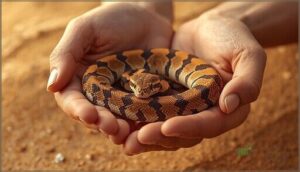
Looking for a truly low-drama snake? Kenyan Sand Boas are compact, calm Beginner Snakes with a naturally sedentary nature and strong Burrowing Habits that keep them feeling secure. Their gentle Snake Temperament suits slow, deliberate Snake Handling, as long as you bring a bit of Handling Patience and respect their beginner-friendly snakes vibe.
- Calm, slow movers that rarely bite when handled correctly
- Compact adults, usually around 1.5–2.5 feet, easy to support fully
- Spend most of their time burrowed, so great if you prefer a “peekaboo” pet
- Do best with short, consistent handling sessions to build trust over time
Rosy Boas

Craving a snake with a truly gentle disposition and steady nature? Rosy Boas stay a modest size (around 2–4 feet), are easy to handle, and usually glide slowly through your hands, making calm handling feel natural even if you’re new to snake temperament and snake handling.
| Why you’ll love them | What it feels like owning one |
|---|---|
| Beginner-friendly snakes with calm, steady nature | Low-anxiety, predictable interactions |
| Modest size that’s easy to support | You stay in control during handling |
| Relaxed, easy-to-handle body language | Sessions feel smooth, not stressful |
Western Hognose Snakes
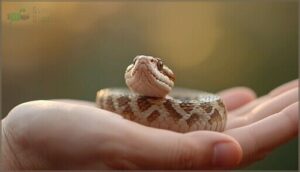
If rosy boas are your calm cup of tea, a Western Hognose Snake might be your curious little wildcard. Known for funny Bluff Displays and a Small Size that fits right in your palm, they’re surprisingly Docile companions, showing solid Handling Tolerance with the right Handling Techniques.
- Curious behavior keeps handling interesting
- Rarely bite, even when startled
- Beginner-friendly snakes with soft, sturdy bodies
- Ideal for people who enjoy expressive snake temperament
Influences on Individual Snake Temperament

A snake’s temperament isn’t just about its species—it’s shaped by where it comes from, how it’s cared for, and even the setup of its home. Small details, like steady temperatures or a quiet enclosure, can make a big difference in how relaxed your snake feels.
Let’s take a closer look at the key factors that shape a snake’s individual temperament.
Captive-bred Vs. Wild-caught Differences
From a temperament standpoint, captive-bred snakes are your best bet for beginner snakes because they grow up around people, routine handling, and captive setups, so their Stress Responses stay lower and more predictable.
In contrast, wild-caught snakes often arrive with Health Disparities, parasite loads, tricky Feeding Adaptations, and higher baseline stress, which all work against calm Snake Temperament and Ethical Snake Ownership built on Ethical Sourcing.
Age and Sex Considerations
Age shapes Snake Temperament more than most keepers realize. Juveniles often show quicker, jumpier Reptile Behavior, while Adult Calmness builds with confidence and routine.
Males usually have higher Activity, exploring more, whereas females grow larger—Female Size means more handling weight later.
Unless you plan Snake Breeding, temperament differences mostly come down to comfort and consistent Handling Techniques.
Importance of Environment and Enclosure Setup
A calm snake isn’t just born that way—it’s made through comfort and consistency. Good temperature gradients, like 88–92°F on the warm side and 75–80°F on the cool, help them regulate stress. Provide snug hides on both ends and steady humidity.
When snakes feel secure in their space, their behavior naturally settles.
Tips for Encouraging a Calm Snake

Keeping your snake calm starts with how you handle and care for it each day. Even a gentle species can get stressed if its routine feels unpredictable or uncomfortable.
Here are a few reliable ways to help your snake feel safe and settle in over time.
Proper Handling Techniques
Think of good Reptile Handling like lifting a fragile, living rope: your goal is steady, predictable support, not control. Use a calm Sideways Approach, tap mid-body with a hook, then lift with Full Body Support so the snake can flow through your hands—this keeps Snake Temperament easy to handle while you read Body Language cues, respect Session Limits, and follow strict Hygiene Practices in all your Handling Techniques and Snake Handling and Behavior work.
- Approach from the side or rear, avoid looming over the snake, and use a gentle hook tap so it knows you’re coming.
- Support the middle and let the body move hand-over-hand, never grab the head or tail or pin the first third.
- Start with short sessions of 5–10 minutes, only a few times a week, and stop if tongue flicks speed up or the body tenses.
- Wash your hands before and after handling, and always use tools or tongs on feeding days to prevent food association with your fingers.
Building Trust and Routine
Consistency is everything regarding trust. A steady rhythm of Consistent Handling, predictable feedings, and a regular Light Cycle helps your snake feel secure.
Combine gentle Reptile Handling with Respecting Boundaries—let the snake approach first—and you’ll see Snake Behavior shift toward calm predictability, the heart of stable Snake Temperament and good Snake Handling and Behavior.
Monitoring Health and Stress Factors
Monitoring isn’t about paranoia; it’s about patterns that protect Snake Health and keep Snake temperament steady and predictable. Watch for:
- Stress Signals like glass surfing, tight coiling, or nonstop escape attempts
- Feeding Changes such as repeated refusals or regurgitation
- Shedding Quality issues: stuck shed, dry or wrinkled skin, retained eye caps
- Enclosure Impact from wrong heat, humidity, or too much light and traffic
- Breathing, weight, or skin problems that need a reptile vet’s eyes fast
Frequently Asked Questions (FAQs)
What snake has the best temperament?
Like picking the chillest kid in class, your best Temperament Ranking usually points to ball pythons—famously Predictable, with a Calm demeanor, strong Handling Tolerance, and Beginner snake characteristics that make them an Ideal Beginner Docile companion in any Species Comparison for Gentle demeanor and overall Snake temperament.
What is the best python snake for beginners?
Ball Python is usually the best python for first-time snake owners: manageable Ball Python Size, simple Enclosure Needs, and a solid Lifespan Expect. Just remember possible Feeding Challenges.
Childrens Python also ranks among beginner-friendly snakes, perfect for beginners.
How can I tell if my snake trusts me?
You’ll know your snake trusts you when it shows a calm demeanor—relaxed muscles, no hissing, steady movement, and handling comfort.
Those behaviors reveal positive reptile behavior, snake adaptability, and well-developed temperamental trust.
What signs show a snake is stressed or scared?
When a snake is stressed or scared, its whole body tells on it. You’ll see tense Defensive Postures (tight S‑coil, hissing, striking), frantic Escape Behaviors (glass surfing, bolting away), Breathing Changes, sudden Feeding refusal, and overall off Reptile Behavior and Animal Behavior and Psychology patterns that usually calm Handling Techniques can’t easily settle—classic Snake temperament and behavior red flags that also hint at Reptile Health and Wellness issues.
How often should a beginner handle their snake?
After a short Settling Period, start with one or two brief sessions a week.
Keep Session Duration around 10–15 minutes, watch for Stress Signs, and Adjust Handling Frequency gradually as your Easy to handle snake acclimates.
Do snakes recognize their owners over time?
Ever wonder if your snake knows it’s you? They don’t spot faces like dogs do. But over time, your scent, heat, and gentle moves become familiar.
Ball pythons often chill out more with their regular handler—pure habituation, not hugs. Patience pays off.
Can a snake’s temperament change as it ages?
Yes, a pet snake’s temperament can shift over time. Juvenile defensiveness often softens with gentle handling, while hormonal shifts or aging bring senior calm, showing how snake adaptability evolves with proper snake care requirements and handling basics.
Conclusion
As the saying goes, “slow and steady wins the race,” and that applies to snake keeping too. When you choose species known for the best beginner snake temperament and pair them with calm handling, clear routines, and solid husbandry, you stack the odds in your favor.
Your snake learns you’re safe; you learn to read its body language. That steady partnership turns feeding, cleaning, and handling from stressful chores into calm moments you can enjoy.