This site is supported by our readers. We may earn a commission, at no cost to you, if you purchase through links.
A snake that sheds cleanly tells you everything is working—the right humidity, the right nutrition, the right setup. When pieces of old skin cling stubbornly to the body, especially over the eyes or tail tip, that’s your enclosure talking back to you.
Stuck shed isn’t just cosmetic. Left alone, retained eye caps can cause permanent vision damage, and constricted tail tips can cut off circulation entirely.
The good news is that preventing stuck shed issues comes down to a handful of consistent habits, and most cases are completely avoidable with the right conditions in place.
Table Of Contents
- Key Takeaways
- What is Stuck Shed in Snakes?
- Main Causes of Stuck Shed Issues
- Recognizing Early Signs of Stuck Shed
- Optimizing Humidity and Enclosure Conditions
- Nutrition and Hydration for Healthy Shedding
- When to Seek Veterinary Assistance
- Frequently Asked Questions (FAQs)
- What happens if you don’t treat a stuck shed?
- What to do if your dog has a stuck shed?
- What happens if shedding doesn’t go smoothly?
- How do you keep a gecko from shedding?
- Can stress cause more frequent shedding problems?
- How often should enclosures be deep-cleaned during shedding?
- Does age affect a snakes shedding efficiency?
- Are certain snake species more prone to stuck shed?
- Can handling a snake during shedding cause complications?
- Conclusion
Key Takeaways
- Humidity between 60–80% (species-dependent) is the single biggest factor in preventing stuck shed, so a digital hygrometer and a damp moss hide on the warm side are non‑negotiable.
- Stuck shed isn’t just cosmetic — retained eye caps can cause permanent vision loss, and skin wrapped around the tail tip can cut off circulation and cause tissue death within days.
- A 15–20 minute soak in shallow lukewarm water restores skin elasticity fast, but if shedding problems keep coming back despite good enclosure conditions, that’s your cue to see a vet.
- What your snake eats matters more than most owners realize — whole prey keeps the calcium, vitamin A, and protein levels steady, and nutritional gaps quietly show up as patchy, incomplete sheds.
What is Stuck Shed in Snakes?
Stuck shed — or dysecdysis — happens when a snake can’t fully remove its old skin during a shed cycle.
This usually traces back to dehydration, so it’s worth checking your snake for signs of snake dehydration before the next shed cycle rolls around.
It most often clings to specific spots on the body, and if left alone, it can cause real problems. Here’s what you need to know about how it happens, where it usually gets stuck, and why treating it quickly matters.
Definition and Shedding Process
Every shed starts deep inside your snake’s body. A hormonal trigger signals the skin to begin building a fresh reptile skin layer beneath the old one. Fluid fills the gap, causing eye cap separation and that familiar cloudy look.
The full shedding cycle duration runs 9 to 14 days.
After a clean shed, post-shed recovery reveals brighter, more vibrant skin underneath.
Ensuring proper humidity and clean water helps prevent stuck sheds.
Common Areas Where Shed Gets Stuck
Once shedding begins, certain spots are real trouble zones. Eye caps, tail tip, and neck region top the list — and midbody patches aren’t far behind. Toe and vent areas also trap old skin surprisingly often.
Low humidity is usually the culprit in every case. Knowing where to look gives you a head start on catching shedding problems before they become serious. Inadequate humidity levels can cause retained eye caps.
Consequences of Untreated Stuck Shed
Leaving stuck shed in place isn’t just cosmetic — it can spiral fast. A tight ring of old skin around the tail acts like a tourniquet, cutting off blood flow and leading to necrosis risk within days.
Untreated stuck shed can act like a tourniquet, cutting off blood flow and causing necrosis within days
Retained eye caps cause vision loss over time.
Trapped moisture invites scale rot and systemic infection.
Behavioral stress and appetite loss often follow, signaling deeper reptile health issues that need veterinary care.
Main Causes of Stuck Shed Issues
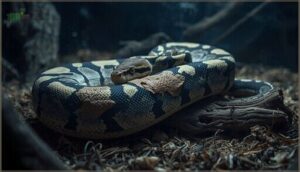
Stuck shed rarely happens without a reason — something in your snake’s environment or health is usually off.
Pinning down the exact cause makes fixing it a lot easier.
Here are the main culprits worth looking at.
Low Humidity and Poor Enclosure Setup
Low humidity is the single biggest driver of shedding problems I see in clinical practice. When enclosure humidity drops below your snake’s target range, the outer skin layer dries and grips instead of lifting cleanly. Poor ventilation balance, wrong substrate moisture, and careless hide placement all quietly stack against your snake. Here’s what matters most:
- Humidity control: Keep ambient levels at 60–75%, species-dependent
- Substrate moisture: Choose coconut husk or cypress mulch for stable humidity
- Hide placement: Position a humid hide on the warm side
- Airflow management: Partially cover mesh lids to prevent moisture loss
- Temperature gradient: Make sure warm and humid zones overlap for effective shedding
Incorrect Temperature Ranges
Temperature control matters just as much as humidity control.
A warm soak around 80–85°F makes the whole process gentler, as covered in this snake eye cap removal and safe shedding guide.
Without a proper thermal gradient, your snake can’t regulate the skin turnover process.
Ball pythons need a warm side around 31–33°C and a cool side no lower than 23°C.
At night, keep temps stable — drops below 22°C disrupt reptile health and lead to patchy, incomplete sheds.
| Zone | Ideal Range | Risk if Wrong |
|---|---|---|
| Warm side | 31–33°C | Poor skin turnover |
| Cool side | 23–27°C | Reduced movement, less rubbing |
| Nighttime | 22–24°C minimum | Irregular, stuck shed |
Dehydration and Inadequate Hydration
Water keeps your snake’s skin elastic enough to peel away cleanly. Without it, the old layer dries and clings — exactly what you don’t want. Poor drinking behavior, a small or dirty water bowl, and low humidity microclimate all stack against a clean shed.
Hydration issues:
- Wrinkled, slow-snapping skin
- Dull, sunken eyes or dented eye caps
- Chalky, dry urates
- Sheds coming off in pieces
A 15–20 minute soaking routine in shallow lukewarm water helps restore skin elasticity fast.
Nutritional Deficiencies
What your snake eats directly shapes how cleanly it sheds. Nutritional deficiencies — including Vitamin A deficiency, Calcium D3 imbalance, Vitamin E shortage, Protein energy deficit, and Trace mineral gaps — quietly degrade skin quality over months.
The following table summarizes the nutrient gaps and their shedding effects.
| Nutrient Gap | Shedding Effect |
|---|---|
| Vitamin A | Dry, thickened skin; retained eye caps |
| Calcium/D3 | Thin, patchy, tearing shed |
| Vitamin E | Flaky, inelastic scales |
| Protein/Trace Minerals | Wrinkled skin; incomplete shed cycles |
Underlying Health Problems
stuck shed isn’t about humidity at all — it’s your snake’s body signaling something deeper. Kidney disease, parasitic infestations, infectious disease, and hormonal imbalance can all trigger chronic shedding problems that no humid hide will fix. Metabolic disorders quietly disrupt skin renewal from the inside.
If enclosure conditions are solid but shedding problems persist, reptile health and wellness depends on veterinary care for reptiles, not another soak.
Recognizing Early Signs of Stuck Shed
Catching stuck shed early makes all the difference — waiting too long turns a simple fix into a real problem. snake will usually give you a few clear signals before things get serious.
Here’s what to watch for.
Visible Retained Skin and Flaky Patches
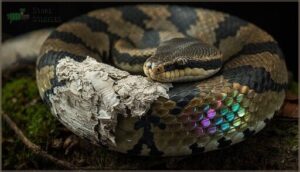
Spotting stuck shed early can save your snake from real harm. Patchy skin appearance is your first clue — look for dull, whitish flakes still clinging after the shed is done. Healthy shedding leaves smooth, vibrant scales behind. Watch for these specific signs:
- Color Changes — Retained patches look faded or blurred compared to fresh scales
- Texture Differences — Stuck skin feels rough and raised, not smooth
- Flaky rings — Especially around the tail tip, where circulation risks are highest
- Differentiating Normal Flakes — Loose bits lift easily when damp; true stuck shed resists removal
These shedding problems matter for overall reptile health and wellness. Don’t wait.
Behavioral Changes and Stress

Your snake’s behavior is often the earliest warning sign. Increased hiding, restlessness pacing the glass, and defensive aggression — like sudden hissing or striking — all point to discomfort from a stuck shed.
Altered handling tolerance and thermoregulation shifts, such as constantly switching between warm and cool spots, are equally telling. If your normally calm snake seems on edge, trust that signal.
Appetite Loss and Lethargy
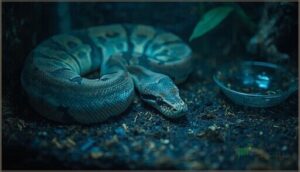
Beyond behavior, watch for pre‑shed fasting and unusual stillness.
A short appetite pause is normal — most snakes skip a meal or two and bounce back quickly once the shed is complete.
But stress‑induced lethargy paired with a dehydration appetite drop and visible stuck shed is different.
That combination, especially alongside weeks of not eating, is an illness appetite cue worth a vet visit.
Optimizing Humidity and Enclosure Conditions

Getting the environment right is often the single biggest factor in whether your snake sheds cleanly or not. Humidity, substrate, decor, and temperature all work together, and a weak link in any one of them can cause problems.
Here’s what to focus on inside the enclosure.
Maintaining Species-Appropriate Humidity Levels
Getting humidity right starts with knowing your snake’s native range — this is called Habitat Humidity Mapping.
A ball python needs 60–80%, while a corn snake thrives at 40–60%.
Use Microclimate Monitoring Techniques with two digital hygrometers placed at opposite ends of the enclosure. Here’s what to track daily:
- Morning humidity before lights on
- Midday drop near heat sources
- Evening levels after misting
Creating and Using Humid Hides
Once you’ve mapped your snake’s humidity range, a humid hide becomes your most practical tool. Think of it as a private spa — a small, moist microclimate where shed skin softens before it peels. Container selection matters: use a dark, opaque plastic box with a snug entry hole design, smoothed edges, and moist substrate like sphagnum moss inside.
| Feature | Recommendation | Why It Matters |
|---|---|---|
| Container | Dark, opaque plastic | Feels secure, holds moisture |
| Entry hole design | Slightly wider than midsection | Prevents escapes and trapping |
| Moist substrate | Sphagnum moss or damp paper towel | Softens skin effectively |
| Placement strategy | Warm side or enclosure middle | Heat boosts evaporation |
| Maintenance routine | Check daily, replace weekly | Prevents bacterial buildup |
Your placement strategy keeps the hide accessible without blocking normal thermoregulation. Check the moss daily — damp, not dripping.
Choosing The Right Substrate and Decor
What’s inside the enclosure matters just as much as the humid hide itself. A moisture retaining substrate like coconut fiber or cypress mulch holds ambient humidity steadily — critical for ball pythons and other tropical species prone to stuck shed.
Pair that with rough textured decor: cork bark, natural branches, anything a snake can rub against. That friction helps old skin peel cleanly.
Monitoring and Adjusting Temperature
Temperature drives everything. Place digital thermometers at snake level on both ends — thermometer placement on the cool side and warm side tells you what your snake actually experiences.
Your warm zone should sit between 85 and 95°F; anything lower disrupts shedding. Seasonal heat adjustments matter too — winter rooms drop quickly. Use thermostat calibration and consistent gradient stability checks to catch problems before your snake’s next shed suffers.
Nutrition and Hydration for Healthy Shedding

what your gecko eats and drinks directly affects how well its skin sheds.
well-fed, properly hydrated reptile rarely struggles with stuck shed the way a nutritionally deficient one does.
Here’s what to focus on inside the enclosure to keep shedding smooth and consistent.
Providing a Balanced Diet
Your skin health starts at feeding time. Whole prey nutrition delivers the calcium, vitamin A, and organ‑sourced micronutrients that keep scales flexible and shed‑ready — no supplements needed when prey size guidelines and feeding frequency schedules are followed correctly.
Aim for prey matching your snake’s widest girth, and maintain a calcium‑phosphorus ratio near 2:1. Nutritional deficiencies show up quickly as retained eye caps and patchy sheds.
Ensuring Constant Access to Fresh Water
Hydration quietly drives the whole shed cycle.
Bowl your snake can coil into — made from non‑porous materials like glass or ceramic — provides both drinking and soak opportunities throughout pre‑shed. Daily change routine stick to a daily change routine and place it on the cooler side for better water quality.
- Heavy, tip‑proof bowls
- Position away from heat sources (bowl placement matters)
- Refresh water every 24 hours
- Dechlorinate tap water before use
Supplementing Essential Vitamins and Minerals
Think of supplements as the behind-the-scenes crew keeping every shed on track.
Vitamin A dosing prevents thickened, retained skin—dust prey with preformed retinol weekly, not just beta-carotene.
Keep your calcium-phosphorus ratio at 2:1, and add calcium with D3 every other feeding to support Vitamin D3 absorption.
B-complex support accelerates cell turnover pre-shed, while Vitamin E antioxidant properties protect the epidermal barrier for clean, complete peels.
When to Seek Veterinary Assistance
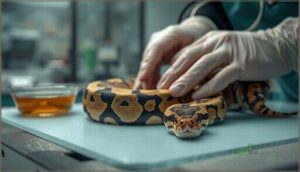
Most stuck shed cases clear up with a warm soak and some patience — but not all of them.
Sometimes home care isn’t enough, and waiting too long can turn a manageable problem into a serious one.
Here’s how to know when it’s time to call your vet, what they can do, and how to keep your snake safe in the meantime.
Red Flags That Require Professional Help
Some shedding problems go beyond what a warm soak can fix. Call your vet when you notice any of these warning signs:
- Eye cap retention that persists after shedding — cloudy spectacles left behind risk infection and vision loss
- Tail tip constriction with swelling or blackening, which signals circulation loss within days
- Scale infection showing redness, blisters, or foul odor beneath a stuck shed
- Persistent lethargy or appetite refusal lasting over two weeks alongside shedding problems
How a Vet Treats Severe Stuck Shed
A vet visit gives your snake a full assessment most owners can’t do at home.
Your vet will use moistening techniques — like lukewarm soaks at 85–90°F and mineral oil on retained eyecaps — before applying mechanical removal tools such as cotton swabs or blunt forceps. Severe cases may need medication protocols or necrosis management, including amputation under local anesthesia.
At-Home Steps While Awaiting Care
While you wait for your appointment, keep things simple. Give your snake a lukewarm soak — shallow enough to keep its head above water — for about 15 to 20 minutes.
A damp towel rub or rough surface aid helps loosen stuck shed naturally. Boost humidity, refresh the humid hide with damp moss, and skip any oil application near the eyes.
Frequently Asked Questions (FAQs)
What happens if you don’t treat a stuck shed?
stuck shed turns a fixable problem into a crisis. Retained skin dries and tightens like a rubber band, cutting off circulation.
Tissue necrosis, auto‑amputation, vision loss, systemic infection — the consequences are real and fast.
What to do if your dog has a stuck shed?
Gentle brushing removes trapped undercoat before it mats. A warm soak softens stubborn areas.
Watch for redness — that signals infection. If mats are tight to the skin, a vet visit beats risking a tear.
What happens if shedding doesn’t go smoothly?
When Stuck Shed goes wrong, the consequences stack fast.
Circulation loss can kill tail tissue, Eye cap blockage clouds vision, and Skin infection risk climbs daily.
Stress‑induced aggression and Appetite decline follow.
How do you keep a gecko from shedding?
You can’t stop a gecko from shedding — and you wouldn’t want to. Shedding is how they grow. Your job is making sure it goes smoothly every time.
Can stress cause more frequent shedding problems?
Yes, absolutely. As the saying goes, "a calm mind heals."
Chronic stress disrupts hormones, dries skin, and fragments sheds.
Addressing hide security, handling frequency, and noise levels transforms gecko shedding problems noticeably.
How often should enclosures be deep-cleaned during shedding?
Deep clean the enclosure right after each shed. Monthly works well for most snakes, but bump it to every four weeks if you’re boosting humidity or seeing mold.
Does age affect a snakes shedding efficiency?
Absolutely.
Age-related shedding efficiency declines as snakes grow older.
Juvenile growth cycles drive frequent sheds, while senior skin elasticity fades, making aging hydration needs and humidity support critical for clean, complete sheds.
Are certain snake species more prone to stuck shed?
Some snakes are simply more vulnerable. Ball pythons, boa constrictors, and corn snakes top the list, while arboreal tropical and desert species also struggle without proper humidity support.
Can handling a snake during shedding cause complications?
Handling a snake during shedding does carry real risks. Skin tearing risk is genuine — rough contact can lift healthy scales. Eye cap damage, behavioral aggression, and stress‑induced anorexia may follow.
Handling duration guidelines brief: under two minutes, hands gentle.
Conclusion
ball python named Noodle came in last spring—retained eye caps, patchy shed, anxious owner.
Two weeks of proper humidity and a humid hide, and his next shed came off in one clean piece.
That’s what preventing stuck shed issues looks like in practice: not a dramatic intervention, but quiet consistency.
Get the humidity right, keep fresh water available, and know when to call for help.
Your snake will tell you when everything’s working.